Cubism
Father (Marcel Duchamp)
Marcel Duchamp (1887–1968) a realizat Father. Face parte din mișcarea Cubism. Este realizată în Acrylic On Canvas.
- Acrylic On Canvas

 Previzualizare

 Tablou în ulei pictat manual
 Trimite prin felicitare
 Distribuie
 Fișă informativă


 Descarcă imaginea
 Produse similare
 Radiografie
 Galerie foto
 Întrebări și răspunsuri

 Statistici
Father, pe scurt
- Titlu
- Father
- Artist
- Marcel Duchamp (1887–1968)
- Artist născut în
- Blainville-Crevon, Franța
- Medium
- Acrylic On Canvas
- Mișcare
- Cubism
- Subiect
- portrait, cubism, fragmentation, introspection, earth tones, older man
Ce reprezintă Father?
Marcel Duchamp’s ‘Father’: A Cubist Portrait of Introspection
Marcel Duchamp's “Father,” painted in 1910, stands as a poignant testament to the artist’s exploration of familial bonds and psychological depth within the framework of Expressionism. More than just a likeness of his father, Eugène Duchamp, the painting delves into themes of vulnerability, contemplation, and the quiet dignity of aging—elements that resonate powerfully with viewers today.
- Style & Technique: The artwork embodies the stylistic hallmarks of Expressionism, characterized by bold brushstrokes and dramatic lighting. Thick impasto creates a palpable textural surface, conveying emotion through physicality rather than meticulous realism. Duchamp’s masterful manipulation of pigment captures the nuances of light and shadow, emphasizing the figure's solemn expression.
- Composition: The painting utilizes a simplified geometric composition—primarily dominated by the central figure seated in a chair—to heighten its impact. Overlapping planes contribute to a sense of depth, subtly disrupting traditional perspective conventions. This deliberate distortion serves not merely as aesthetic choice but as a symbolic representation of fractured perception.
- Color Palette: Employing earthy tones—primarily browns and ochres—the color palette evokes a mood of melancholy and introspection. The subdued hues underscore the painting’s contemplative atmosphere, mirroring the quiet contemplation conveyed by the subject’s gaze.
- Symbolism: “Father” transcends a simple portrait; it embodies Duchamp's preoccupation with familial relationships and the passage of time. The posture of Eugène Duchamp—seated calmly yet thoughtfully—suggests resilience amidst vulnerability, encapsulating the artist’s desire to portray dignity and inner strength.
Exploring Cubism: A Revolutionary Approach
“Father” is firmly rooted in the burgeoning movement of Cubism, spearheaded by Picasso and Braque. Duchamp's engagement with Cubist principles—particularly the fragmentation of form and simultaneous viewpoints—represents a radical departure from academic painting traditions. This stylistic influence underscores his commitment to questioning established artistic conventions and prioritizing conceptual exploration over visual representation.
- Geometric Abstraction: The artwork’s geometric abstraction—evident in the simplified shapes defining the chair and the man's facial features—reflects Cubist’s rejection of illusionistic depth. Instead, Duchamp prioritizes structural clarity and intellectual engagement, inviting viewers to consider the painting on a deeper level.
- Multiple Perspectives: The depiction of Eugène Duchamp from various angles simultaneously challenges conventional notions of perspective. This technique mirrors Cubism's ambition to capture reality as it is perceived by multiple observers—a concept that fundamentally altered artistic discourse.
The Significance of Impasto and Texture
Duchamp’s deliberate use of impasto—thickly applied paint—is crucial to conveying the painting’s emotional resonance. The textured surface captures the physicality of the brushstrokes, mirroring Eugène Duchamp's own presence within the artwork. This tactile element enhances the viewer’s experience, inviting contemplation and fostering a connection with the artist’s expressive intent.
- Material Choice: Oil paints on canvas—a standard medium for Expressionist painters—were selected to maximize textural impact and luminosity. Duchamp skillfully utilizes brushwork to sculpt form and imbue the painting with palpable energy.
- Emotional Impact: The resulting surface contributes significantly to “Father’s” emotional depth, mirroring Eugène Duchamp's inner life and conveying a sense of quiet dignity—a testament to Duchamp’s artistic vision.
A Legacy Beyond Representation
"Father" exemplifies Duchamp’s broader philosophical stance: rejecting the pursuit of visual beauty in favor of intellectual inquiry. By prioritizing conceptual exploration over realistic depiction, he ushered in a new era of art history—one characterized by questioning assumptions and redefining artistic value. This enduring legacy continues to inspire artists and collectors alike who appreciate the profound emotional impact of art that transcends mere surface appearance."
Imagini la înaltă rezoluție ale lui Father
Protected by copyright: these files are for personal reference, not a licence to republish.
Marcel Duchamp, Father.
Întrebări despre Father, răspunsuri
Din ce materiale este realizată „Father”?
Tehnica utilizată pentru "Father" de Marcel Duchamp este Acrylic On Canvas, iar reproducerile urmăresc să reducă aspectul acestei tehnici.
Ce reprezintă "Father" de Marcel Duchamp?
"Father" de Marcel Duchamp surprinde: portrait, cubism, fragmentation, introspection, earth tones, older man, abstract form, depth.
Imaginea pentru "Father" de Marcel Duchamp poate fi reprodusă liber?
Statusul drepturilor de autor pentru "Father" de Marcel Duchamp: opera este încă protejată de drepturile de autor. Acest lucru determină dacă reproducerile imaginii pot fi realizate liber.
Cine a creat "Father"?
Artistul din spatele operei „Father” este Marcel Duchamp. Lucrarea este catalogată sub numele lui Marcel Duchamp.
Din ce stil face parte "Father"?
"Father" de Marcel Duchamp face parte din mișcarea Cubism. Acest curent oferă contextul stilistic al operei.
Din ce perioadă a carierei lui Marcel Duchamp face parte „Father”?
„Father” aparține perioadei Mature Period din cariera lui Marcel Duchamp. Această clasificare corelează opera cu evoluția artistului.
Este "Father" de Marcel Duchamp în domeniul public și care este motivul?
„Father” de Marcel Duchamp este încă protejată de drepturile de autor. Termenul de protecție a drepturilor de autor se calculează de la data decesului artistului, iar Marcel Duchamp a decedat în 1968.
Cum se încadrează „Father” în temele și stilul lui Marcel Duchamp?
"Father" face parte din perioada Cubism a lui Marcel Duchamp, ale cărei teme recurente includ father portrait series, exploration of identity, shift towards abstraction, expressionism, cubism, early 20th century art, introspection, melancholy.
În ce măsură subiectul operei „Father” se regăsește în temele obișnuite ale lui Marcel Duchamp?
"Father" înfățișează portrait, cubism, fragmentation, introspection, earth tones, older man, abstract form, depth, în timp ce temele recurente ale lui Marcel Duchamp sunt father portrait series, exploration of identity, shift towards abstraction, expressionism, cubism, early 20th century art, introspection, melancholy. Compararea celor două relevă modul în care această lucrare se raportează la subiectele obișnuite ale artistului.
Despre artistul Marcel Duchamp
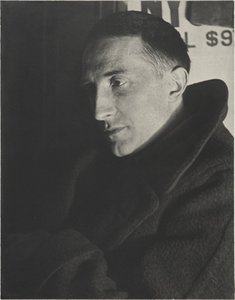
1887–1968, Franța
Marcel Duchamp
Viața și Arta lui Marcel Duchamp Născut pe 28 iulie 1887, în Blainville, Normandia, Franța, Marcel Duchamp a pășit într-o lume în care impulsul creației îi era profund înnăscut în sânge. Era al patrulea din cei șapte copii născuți de Eugene și Lucie Duchamp. Aceasta era o cămin al creatorilor și al gânditorilor; frații săi împărtășeau aceeași neliniște creatoare, la fel ca frații săi Jacques Villon și Raymond Duchamp-Villon, precum și sora sa Suzanne Duchamp-Crotti, toți urmărind vieți de artiști. Deși în cele din urmă urma să devină o figură franco-americană de o complexitate imensă, originile sale au rămas ancorate în liniștea Normandiei.
Despre Marcel Duchamp Lucrări remarcabile ale lui Marcel Duchamp
Alte lucrări ale lui Marcel Duchamp
 Nude Descending a Staircase, No.21912
 Om tânăr trist într-un tren1911
 Dat: 1. Cascada, 2. Gazul de iluminat1966
 Fântâna1917
Eseuri despre Father
 Deconstructing Reality: Cubism's Revolutionary Impact on 20th-Century ArtExplore the revolutionary world of Cubism with OriginalUniqueArt. Discover Picasso & Braque's groundbreaking techniques, its philosophical …
 The Sculptural Surface: Analyzing the Impact of Impasto and Texture in Oil PaintingMaster the science of impasto and oil texture through expert analysis. Explore the depth of fine art mastery now.
 Marcel Duchamp: The Top 25 Most Influential Artworks of a Modern IconExplore 25 iconic Marcel Duchamp masterpieces and Dadaist gems. Discover the full collection online at OriginalUniqueArt.com.