() ·

A painting made for you, by hand

Chess Game

Reproducere pictată manual în ulei

Pictură în ulei pe pânză, pictată manual de artiștii noștri la dimensiunea și ramele dorite de dumneavoastră, pe comandă. ( Comută pe versiunea Print Comută pe Imagine Digitală)

Descriere obiect de colecție

Experience Marcel Duchamp's 'The Chess Game,' a captivating post-impressionist oil painting from 1910. Explore themes of boredom, social constraints & Cubism at OriginalUniqueArt.com.

Biografie artist

Marcel Duchamp: Artist revoluționar care a provocat definiția artei prin Dadaism și readymade-uri precum „Fountain”. Descoperă operele sale iconice și impactul său filosofic.

from ·

Chapter 1

How large should it be?

Slide to change the size; the picture on the left shows the frame at its real width. The proportions of the original are kept.

Standard
personalizat
CM
INCH

Alegeți dintre dimensiunile noastre prestabilite, care respectă proporțiile originale ale operei de artă.

lățime
înălțime

Introduceți lățimea și înălțimea necesare pentru a se potrivi ramei sau peretelui dumneavoastră. Această lucrare este pictată manual, așa că, pentru o dimensiune cu o formă diferită, artistul poate picta puțin mai mult în jurul imaginii sau poate tăia puțin din margini — dumneavoastră decideți. Vă vom trimite o simulare digitală pentru aprobare înainte de a începe pictarea. Imaginea afișată pe această pagină nu reprezintă rezultatul real — doar simularea este reprezentativă.

Chapter 2

How should it arrive?

Choose the edges of the stretched canvas

Choose your frame

Corner sample of the WhiteWrap canvas edge finish, stretched on lemn masiv bars
White lei1
Corner sample of the BlurSideWrap canvas edge finish, stretched on lemn masiv bars
Blurside lei1
Corner sample of the ExtendedWrap canvas edge finish, stretched on lemn masiv bars
Extended lei1
Corner sample of the P118B picture frame: polistiren turnat, 5 cm wide and 3 cm thick
P118B lei10
Corner sample of the P118H picture frame: polistiren turnat, 5 cm wide and 3 cm thick
P118H lei10
Corner sample of the P118W picture frame: polistiren turnat, 5 cm wide and 3 cm thick
P118W lei10
Corner sample of the P438Z picture frame: polistiren turnat, 5.5 cm wide and 3.5 cm thick
P438Z lei10
Corner sample of the P508JH picture frame: polistiren turnat, 7 cm wide and 3.5 cm thick
P508JH lei12
Corner sample of the P508YH picture frame: polistiren turnat, 7 cm wide and 3.5 cm thick
P508YH lei12
Corner sample of the P805H picture frame: polistiren turnat, 5 cm wide and 3.5 cm thick
P805H lei10
Corner sample of the P805Z picture frame: polistiren turnat, 5 cm wide and 3.5 cm thick
P805Z lei10
Corner sample of the P919BZ picture frame: polistiren turnat, 7 cm wide and 3.5 cm thick
P919BZ lei10
Corner sample of the P919G picture frame: polistiren turnat, 7 cm wide and 3.5 cm thick
P919G lei10
Corner sample of the P919XJ picture frame: polistiren turnat, 7 cm wide and 3.5 cm thick
P919XJ lei10
Corner sample of the P959ZH picture frame: polistiren turnat, 5 cm wide and 3 cm thick
P959ZH lei10
Corner sample of the P968JZ picture frame: polistiren turnat, 6 cm wide and 4 cm thick
P968JZ lei12
Corner sample of the W106C picture frame: lemn masiv, 5 cm wide and 3 cm thick
W106C lei8
Corner sample of the W218G picture frame: lemn masiv, 5 cm wide and 3 cm thick
W218G lei10
Corner sample of the W218JH picture frame: lemn masiv, 5 cm wide and 3 cm thick
W218JH lei8
Corner sample of the W218Y picture frame: lemn masiv, 5 cm wide and 3 cm thick
W218Y lei10
Corner sample of the W307PJ picture frame: lemn masiv, 6 cm wide and 3 cm thick
W307PJ lei10
Corner sample of the W316G picture frame: lemn masiv, 6 cm wide and 3 cm thick
W316G lei10
Corner sample of the W316PJ picture frame: lemn masiv, 6 cm wide and 3 cm thick
W316PJ lei8
Corner sample of the W316Y picture frame: lemn masiv, 6 cm wide and 3 cm thick
W316Y lei10
Corner sample of the W398PJ picture frame: lemn masiv, 5 cm wide and 3 cm thick
W398PJ lei8
Corner sample of the W4111J picture frame: lemn masiv, 6.5 cm wide and 3.5 cm thick
W4111J lei10
Corner sample of the W500HY picture frame: lemn masiv, 7 cm wide and 5 cm thick
W500HY lei15
Corner sample of the W500JH picture frame: lemn masiv, 7 cm wide and 5 cm thick
W500JH lei15
Corner sample of the W692G picture frame: lemn masiv, 8 cm wide and 4 cm thick
W692G lei12
Corner sample of the W849H picture frame: lemn masiv, 5 cm wide and 3 cm thick
W849H lei8
Corner sample of the W940BG picture frame: lemn masiv, 7.5 cm wide and 4.5 cm thick
W940BG lei15
Corner sample of the W953PJ picture frame: lemn masiv, 6 cm wide and 3.5 cm thick
W953PJ lei8
Corner sample of the H24-GOLD picture frame: lemn sculptat cu gesso, 10 cm wide and 6 cm thick
H24-GOLD lei30
Corner sample of the H24-SILVER picture frame: lemn sculptat cu gesso, 10 cm wide and 6 cm thick
H24-SILVER lei30
Corner sample of the H36-GOLD picture frame: lemn sculptat cu gesso, 15 cm wide and 6.5 cm thick
H36-GOLD lei45
Corner sample of the H36-SILVER picture frame: lemn sculptat cu gesso, 15 cm wide and 6.5 cm thick
H36-SILVER lei45

Moulding: . Overall size with the frame: .

Chapter 3

Who paints it, and should anything change?

Examples of what can be changed: Replace face with customer photo; Add pet (e.g., replace cat with dog); Include hidden message in background; Change background landscape or elements.
After order, OriginalUniqueArt.com team will email client for instructions and provide a mockup preview

Livrare în întreaga lume () în 3-4 săptămâni, în loc de cele 5 săptămâni standard. (1 Noiembrie). Fără compromisuri în ceea ce privește calitatea.

Chapter 4

The finishing touches

A nameplate, as in a museum?

Detalii plăcuță din bronz gravat

This elegant plaque features the artist's name and the title of the artwork, finely engraved for a timeless presentation.

It is made from bronze with a refined, elegant finish. The text is precisely laser-engraved for a sharp and permanent result. Measuring 9x2 cm, the plaque is compact yet easy to read. It's built to be durable and scratch-resistant, offering a professional, museum-quality look. Mounting is simple thanks to the included adhesive backing.

Detalii plăcuță din acril transparent

The plaque includes essential engraved details such as the artist's name, the title of the artwork, the date it was created, the type of media used-like oil on canvas or watercolor-a brief description of the piece, and a QR code that links to the complete artwork information.

It is crafted from clear acrylic, offering a sleek, modern appearance. The text is UV-engraved in black to ensure strong visual contrast. With a size of 10x15 cm, it ensures optimal readability. It comes equipped with two metal hooks for secure wall mounting. The plaque is designed to be weather-resistant, making it suitable for various environments, and it includes interactive features that work seamlessly with smartphone scanning.

Detalii placă din acril negru

This elegant plaque includes engraved information such as the artist's name, the title of the artwork, the date it was created, the type of media used (like oil on canvas or watercolor), a short description of the artwork, and a QR code for quick access to more information.

The plaque itself is made from refined black acrylic with a premium finish. The text is laser-engraved in white for high contrast and readability. Its size is 10x15 cm, designed to be easy to read. It comes with two metal hooks for professional mounting. The design is sleek and fits any interior style. It is also weather-resistant and durable, with built-in digital integration for mobile compatibility.

A protective varnish?

When do you need it?

Chapter 5

Your painting, as you ordered it

Chess Game

Tehnică de reproducere

Dimensiune reproducere

-

Selecție de artiști de elită

Mai multe detalii, rafinament și timp suplimentar de execuție

-

Ramă pentru reproducere artistică

-

-

Pentru opere de artă sau reproduceri care depășesc 105 cm (aproximativ 41 de inch) pe oricare dintre laturi, cadrul va fi livrat demontat, sub formă de kit. Această metodă asigură o livrare sigură și previne deteriorarea în timpul transportului.

Este necesară asamblarea profesională – acest produs nu este de tip DIY (de făcut singur).
Kitul trebuie asamblat, iar pânza întinsă, de către un legător de cadre experimentat, utilizând adeziv pentru lemn (neinclus în colet), o cheie pentru întinderea pânzei și cleme pentru a menține barele la unghi drept în timp ce adezivul se usucă. Asamblarea incorectă sau tensiunea neuniformă a pânzei pot deteriora permanent opera de artă și nu sunt acoperite de garanția noastră.

  • Toate barele din lemn masiv sunt incluse, tăiate cu precizie la dimensiunea necesară.

  • Asamblat cu șuruburile incluse, plus adeziv pentru lemn pentru îmbinările de colț, care nu este furnizat și trebuie achiziționat de către tâmplarul dumneavoastră.

  • Sunt necesare unelte profesionale care nu sunt incluse: o șipte de întindere a pânzei (tensionator) și cleme pentru a menține barele la unghi drept în timp ce adezivul se usucă.

Important:
Îmbinările de colț necesită adeziv pentru lemn, barele trebuie fixate cu clești de strângere până când adezivul este complet uscat, iar întinderea pânzei pe cadrul asamblat necesită un clește pentru întins pânza. Niciunul dintre aceste elemente nu este inclus în kit. Vă rugăm să consultați un încadrator profesionist cu experiență înainte de a comanda această dimensiune.

Etichetă de prezentare

-

-

Lac de protecție

Lac lucios (intensifică nuanțele și oferă protecție împotriva luminii și a umidității)

-

Personalizează opera mea de artă

Exemple de elemente ce pot fi personalizate: Înlocuirea feței cu fotografia clientului; Adăugarea unui animal de companie (de exemplu, înlocuirea unei pisici cu un câine); Includerea unui mesaj ascuns în fundal; Modificarea peisajului sau a elementelor din fundal.

-

Livrare rapidă

Livrare la nivel mondial () în 3-4 săptămâni, în loc de cele 5 săptămâni standard. (1 Noiembrie). Fără compromisuri când vine vorba de calitate.

-

Livrare rapidă

Livrare la nivel mondial () în 5 săptămâni. (8 Noiembrie).

Inclus

Preț total calculat

lei 1423

Preț total lei 1423

Opțiunea cu sticlă este disponibilă doar pentru dimensiuni de sub 110 cm

Included with every order

  • Livrare expres gratuită la nivel mondial
  • Pânză de in de înaltă calitate
  • Asigurare completă pentru transport
  • Garanție de rambursare a taxelor vamale
  • Garanția fidelității culorilor
  • Politica de retur în 100 de zile (doar pentru defecte de fabricație)
  • Garanție de rambursare 100%
  • Ofertă pentru comenzi multiple

A Game of Shadows: Marcel Duchamp’s “The Chess Game”

Marcel Duchamp's "The Chess Game," painted in 1910, isn’t merely a depiction of a game; it’s a meticulously crafted tableau of ennui, social constraint, and the burgeoning anxieties of modern life. Housed within the walls of the Philadelphia Museum of Art, this oil on canvas invites viewers into a world where strategic decisions collide with unspoken tensions, all rendered in Duchamp's signature post-impressionist style – a deliberate departure from the naturalistic focus of his predecessors. The painting’s power lies not just in its visual elements but in the complex web of symbolism it weaves, reflecting the intellectual currents of early 20th-century Europe and hinting at Duchamp’s revolutionary approach to art itself.

Duchamp's artistic journey leading up to "The Chess Game" was marked by a restless experimentation. Initially drawn to Cubism – evident in his earlier work, *Portrait of Chess Players* – he soon found himself increasingly dissatisfied with the purely formal concerns of the movement. He sought to capture not just the appearance of objects but their underlying essence, their emotional weight. This pursuit led him toward Dadaism and ultimately, Conceptual Art, where the idea behind a work often superseded its physical form. “The Chess Game” embodies this shift, prioritizing atmosphere and psychological suggestion over straightforward representation.

  • Post-Impressionist Influence: Duchamp’s use of bold colors – particularly the muted greens and browns that dominate the scene – is characteristic of post-impressionism. However, he employs these colors not to faithfully reproduce reality but to evoke a specific mood: one of quiet desperation and stifled energy.
  • Gustave Flaubert's Echoes: The painting’s pervasive sense of boredom and restlessness directly reflects the themes explored by Gustave Flaubert in *Madame Bovary*. Duchamp, deeply influenced by Flaubert’s exploration of female dissatisfaction and the limitations imposed upon women in 19th-century society, uses the chess game as a metaphor for life itself – a strategic battle fought within restrictive social boundaries.
  • Brotherly Portraiture: The inclusion of Duchamp's brothers, Raymond and Jacques Villon, alongside their wives, Yvonne and Gaby, is particularly significant. Their postures—hunched over the chessboard, Yvonne reclining languidly on the grass, Gaby nervously fiddling with a tea set—suggest a subtle power dynamic. The exclusion of the women from the game underscores the societal constraints placed upon them at the time, highlighting their limited roles and unspoken frustrations.

The Scene Unfolds: A Garden of Contemplation

The setting itself is crucial to understanding the painting’s emotional impact. It's a meticulously rendered garden scene, yet one devoid of warmth or vitality. The furniture—a table laden with cups, bowls, and spoons—suggests a comfortable domesticity, but it’s juxtaposed against the palpable sense of unease. The chessboard, positioned at the center of the composition, becomes a potent symbol: a battlefield where men engage in intellectual warfare while women are relegated to the periphery. The careful arrangement of objects – the strategically placed cups and bowls, the precise positioning of the chairs – creates a visual rhythm that mirrors the strategic thinking required for success in chess, yet simultaneously underscores the artificiality of the situation.

Symbolism and the Chessboard as Metaphor

Beyond its immediate depiction, “The Chess Game” is rich with symbolic meaning. The chessboard itself represents life’s complexities – a series of choices, strategies, and potential outcomes. The players, engrossed in their game, are trapped within this metaphorical landscape, navigating challenges and making decisions that shape their destinies. Duchamp's brothers, as the dominant figures at the table, embody the masculine ideals of the era—intellectual prowess, strategic thinking, and a perceived control over their own lives. The exclusion of the women suggests a critique of patriarchal structures and the limited opportunities available to women in that society. Yvonne’s semi-recumbent position speaks to a sense of passive acceptance, while Gaby's nervous fidgeting hints at suppressed anxieties.

Artistic Significance and Reproduction

“The Chess Game” stands as a pivotal work in Duchamp’s artistic development, demonstrating his early experimentation with post-impressionism and foreshadowing his later embrace of Cubism and Conceptual Art. It's a remarkably prescient painting, capturing the anxieties and social tensions of its time while simultaneously anticipating the radical shifts that would transform the art world in the 20th century. OriginalUniqueArt.com offers meticulously crafted oil painting reproductions of this captivating masterpiece, ensuring that every detail—from the subtle nuances of color to the intricate textures of the furniture—is faithfully recreated. These handmade reproductions provide a tangible connection to Duchamp’s revolutionary vision, allowing art enthusiasts and collectors alike to experience the power and beauty of “The Chess Game” in their own homes.
  • High-Quality Reproduction: Our skilled artists use traditional oil painting techniques to meticulously recreate Duchamp's original work, capturing its unique atmosphere and emotional depth.
  • Authentic Materials: We employ only the finest pigments and canvases to ensure that our reproductions are durable and visually stunning.
  • A Window into Modernity: Own a piece of art history and gain a deeper understanding of Duchamp’s artistic vision.

Explore more post-impressionist masterpieces and discover the beauty of handmade art at Marcel Duchamp: Chess Game and The Chess Game on OriginalUniqueArt.com.

Întrebări și răspunsuri

Cum se încadrează "Chess Game" în rândul temelor recurente ale lui Marcel Duchamp?

Printre temele consacrate ale lui Marcel Duchamp, post-impressionism, flaubert’s ennui, cubist elements, distorted forms, early experimentation, chess game series, dada precursors, exploring modern life – „Chess Game” oferă o perspectivă proprie asupra chess, game, boredom, women, exclusion, flaubert, garden, strategy.

Ce dimensiune de reproducere se recomandă pentru "Chess Game" de Marcel Duchamp?

Dimensiunea de imprimare recomandată pentru "Chess Game" de Marcel Duchamp este Medium.

Care este formatul pentru "Chess Game"?

"Chess Game" de Marcel Duchamp este o compoziție de tip Landscape. Proporțiile merită verificate înainte de a alege dimensiunea printului.

More about this painting

Previzualizare Previzualizare AR Comută pe versiunea Print Comută pe Imagine Digitală Trimite prin felicitare
Detalii despre lucrare Ghid Adaugă la favorite Descarcă imaginea Produse similare Radiografie Galerie foto Q&A Statistici

In numbers

  • 1910the year it was painted
  • 29frames to choose from
  • standard sizes, in its own proportions
  • 5weeks to paint and deliver it

About the original

Dimensiuni
114.0 x 146.0 cm
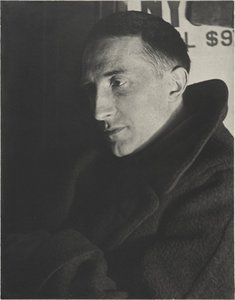
Marcel Duchamp

Marcel Duchamp

1887 - 1968, Franța

Quick facts about Marcel Duchamp

  • Artistic Movement Or Style:
    • Cubism
    • Dadaism
  • Artists Or Movements Influenced By This Artist: ['Conceptual Art']
  • Date Of Birth: 28 iulie 1887
  • Date Of Death: 2 octombrie 1968
  • Full Name: Marcel Duchamp
  • Nationality: Francez-American
  • Notable Artworks:
    • Fountain
    • L.H.O.O.Q.
    • The Large Glass
  • Place Of Birth: Blainville, Franța

Biografie artist

Un Spirit Revoluționar: Viața și Arta lui Marcel Duchamp

Marcel Duchamp, născut Henri-Robert-Marcel Duchamp în 1887 la Blainville-Crevon, Normandia, a fost mai mult decât un artist; a fost un provocator filosofic care a schimbat fundamental cursul artei moderne. Primii săi ani de viață, deși aparent convenționali – crescut într-o familie care aprecia exprisia artistică, cu ambii frați urmărind cariere reușite în artă – au prefigurat iconoclasmul ce urma să vină. Inițial, Duchamp a urmat o pregătire formală, stăpânind tehnici tradiționale și experimentând cu stiluri post-impresioniste. Cu toate acestea, această bază academică nu a servit ca un scop în sine, ci ca o trampolină pentru a pune sub semnul întrebării însăși natura artei, scopul său și definiția sa. Nu era mulțumit să reprezinte pur și simplu lumea; căuta să provoace modul în care o percepem și ceea ce constituie valoarea artistică. Această curiozitate intelectuală nesățioasă avea să devină caracteristica definitorie a carierei sale prolifice.

De la Cubism la Dadaism: O Refuzare a Convențiilor

Călătoria artistică a lui Duchamp a fost marcată de o evoluție constantă, de o lepădare deliberată a normelor stabilite. Implicarea sa inițială în Cubism, evidentă în lucrări precum Portrait of Chess Players (1911), a demonstrat un interes pentru formele fragmentate și perspectivă multiple – o îndepărtare de reprezentarea tradițională. Totuși, el a depășit rapid preocupările pur estetice, recunoscând că simpla rearanjare a elementelor vizuale nu era suficientă pentru a aborda întrebările profunde care îi revoltau. Horrorul Primului Război Mondial a alimentat acest nemulțumire, conducing-l pe Duchamp să îmbrățișeze Dadaismul, un mișcare născută din deziluzie și din respingerea logicii, a rațiunii și a valorilor artistice tradiționale. Într-un cadru dadaist, Duchamp a început cu adevărat să deconstruiască noțiunile convenționale de artă. Nu era interesat să creeze obiecte frumoase; dorea să provoace gândirea, să sfideze presupunerile și să expună arbitrarul judecății estetice. Această perioadă a văzut nașterea celei mai radicale inovații a sa: „readymade”-ul.

Readymade-urile și Subversiunea Artei

Introducerea readymade-urilor – obiecte fabricate obișnuite, selectate și prezentate ca artă – a fost cea mai semnificativă contribuție a lui Duchamp la secolul XX. Acestea nu erau pur și simplu obiecte găsite; erau acte deliberate de subversiune artistică. Luând un obiect cotidian, precum un urinar (Fountain, 1917), semnându-l cu „R. Mutt” și prezentându-l la o expoziție de artă, Duchamp a provocat însăși definiția îndemânării artistice și a autoratului. Era mâna artistului cea care crea lucrarea sau era vorba despre ideea artistului? Această întrebare a devenit centrală în practica sa și a pus bazele Artei Conceptuale. Alte readymade-uri notabile, precum L.H.O.O.Q. (1919), o reproducere pe o felicitare a Mona Lisa defasată cu o mustață și o barbă mică, au fost critici jucăușe, dar incisive, aduse istoriei artei și iconelor culturale consacrate. Aceste opere nu erau menite să fie admirate pentru calitățile lor estetice; ele aveau scopul de a provoca dezbaterea și de a forța privitorii să își reevalueze noțiunile preconcepute despre ceea ce constituie arta. Duchamp credea că arta trebuie să rezide în minte, nu doar în ochi.

Moștenire și Influență Durabilă

Impactul lui Marcel Duchamp asupra generațiilor ulterioare de artiști este nemăsurabil. El a alterat fundamental înțelegerea noastră asupra artei, deschizând calea pentru mișcări precum Arta Conceptuală, Minimalismul, Pop Art și numeroase altele. Accentul său pus pe ideea artistului – conceptul din spatele lucrării – în detrimentul calităților estetice, continuă să inspire artiștii și astăzi.
  • Cubism: Explorarea timpurie a formelor fracturate și a reprezentării spațiale.
  • Dadaism: Refuzul logicii, al rațiunii și al valorilor artistice tradiționale ca răspuns la Primul Război Mondial.
  • Artă Conceptuală: Accentul pe ideea din spatele operei de artă, mai degrabă decât pe calitățile sale estetice.
Opera sa continuă să provoace dezbateri și să îi provoace pe spectatori să își reexamineze presupunerile despre creativitate și exprimare artistică. Duchamp nu a fost pur și simplu un artist; a fost un filosof, un provocator și un revoluționar care a îndrăznit să pună totul sub semnul întrebării. El rămâne o figură centrală în discuțiile despre natura artei și rolul său în societate, moștenirea sa rezonând puternic în lumea artei contemporane. The Large Glass (1915-1923), cu simbolismul său complex și imaginile sale enigmatice, stă ca o mărturie a rigoarei sale intelectuale și a influenței sale durabile. Opera lui Duchamp nu este despre oferirea de răspunsuri; este despre punerea de întrebări – întrebări care continuă să ne provoace și să ne inspire și astăzi.

Informații rapide

  • Dimensions: 114 x 146 cm
  • Artistic style: Cubist influence
  • Year: 1910
  • Influences: Flaubert
  • Location: Philadelphia Museum
  • Movement: Post-Impressionism

Test de cunoștințe despre artă

Fiecare întrebare are un singur răspuns corect.

Întrebare 1:
What artistic movement is Marcel Duchamp primarily associated with in this painting?
Întrebare 2:
The scene depicted in 'The Chess Game' primarily reflects which theme?
Întrebare 3:
Which literary work heavily influenced Duchamp's interpretation of the scene in 'The Chess Game'?
Întrebare 4:
What is the significance of the exclusion of Yvonne and Gaby from the chess game in the painting?
Întrebare 5:
The chessboard itself serves as a metaphor for what concept within the painting?