

 Vezi în context
 Trimite
 Distribuie
 Detalii
 Ghidul

 Descarcă
 Produse similare
 Radiografie
 Diaporama
 Statistici
Serious Man, or The Serious One


 Citește mai mult
Lucrarea de artă afișată pe această pagină este protejată de legile privind drepturile de autor, ceea ce înseamnă că nu putem crea sau vinde în mod legal o reproducere identică. Această protecție este garantată prin acorduri internaționale, precum Convenția de la Berna și de legile naționale, inclusiv cele prevăzute de Legea dreptului de autor din S.U.A. – Titlul 17. Toate drepturile rezervate. Orice reproducere neautorizată este interzisă.
Ca alternativă respectuoasă și legală, oferim tablouri pictate manual, personalizate, inspirate de original. Artistii noștri experimentați și profesioniști studiază cu atenție stilul, starea de spirit și esența artistică a originalului pentru a crea o piesă nouă și unică, care evocă aceeași emoție – rămânând, în același timp, o creație originală în sine.
Această metodă respectă pe deplin reglementările privind drepturile de autor, deoarece nu implică copierea sau duplicarea operei protejate. În schimb, este o reinterpretare creativă – o pictură nouă, influențată de original, dar care nu este identică cu acesta.
Reproducere pictată manual în ulei
Pictură în ulei pe pânză, realizată manual de artiștii noștri la dimensiunea și ramele dorite de dumneavoastră, pe comandă. ( Comută pe versiunea Print Treci la imagine digitală)




P118B lei10

P118H lei10

P118W lei10

P438Z lei10

P508JH lei12

P508YH lei12

P805H lei10

P805Z lei10

P919BZ lei10

P919G lei10

P919XJ lei10

P959ZH lei10

P968JZ lei12

W106C lei8

W218G lei10

W218JH lei8

W218Y lei10

W307PJ lei10

W316G lei10

W316PJ lei8

W316Y lei10

W398PJ lei8

W4111J lei10

W500HY lei15

W500JH lei15

W692G lei12

W849H lei8

W940BG lei15

W953PJ lei8




Alegeți dintre dimensiunile noastre prestabilite, care respectă proporțiile originale ale operei de artă.

Introduceți lățimea și înălțimea de care aveți nevoie, pentru a se potrivi ramei sau peretelui dumneavoastră. Această lucrare este pictată manual, așa că pentru o dimensiune cu o formă diferită, artistul poate picta puțin mai mult în jurul imaginii sau poate tăia puțin din margini — dumneavoastră decideți. Vă vom trimite o simulare digitală pentru aprobare înainte de a începe pictarea. Imaginea afișată pe această pagină nu reprezintă rezultatul real — doar simularea este reprezentativă.
După plasarea comenzii, echipa OriginalUniqueArt.com va contacta clientul prin e-mail pentru instrucțiuni și îi va furniza o previzualizare a machetei
Livrare în întreaga lume () în 3-4 săptămâni, în loc de cele 5 săptămâni standard. (24 Octombrie). Fără compromisuri în ceea ce privește calitatea.

Livrare expres gratuită la nivel mondial

Pânză de in premium

Asigurare completă pentru transport

Garanție de rambursare a taxelor vamale

Garanția fidelității culorilor

Politica de retur în 100 de zile (doar pentru defecte)

Garanție de rambursare 100%

Reducere pentru comenzi multiple
 Opțiunea cu sticlă este disponibilă doar pentru dimensiuni de sub 110 cm

Serious Man, or The Serious One
Tip de reproducere
Dimensiune reproducere
-


Preț total
lei 1389
Serious Man, or The Serious One
The American artist Man Ray (1890-1976) fundamentally reshaped photography’s role—shifting it from mere documentation of reality into an expressive art form itself. His artistic journey commenced in New York with paintings; however, a pivotal encounter with Dadaism, spearheaded by Marcel Duchamp in 1915, propelled his conceptual explorations far beyond conventional boundaries. Ray embraced the ready-made principle, exemplified by “The Gift” (1921)—a flatiron meticulously affixed with tacks—demonstrating an audacious challenge to artistic norms and elevating commonplace objects into potent symbols of artistic inquiry. Paris became Ray’s crucible for diverse artistic pursuits, encompassing cinema alongside portraiture and fashion photography. It was within this realm that he honed his photographic skills, aligning himself with Surrealism and establishing himself as a trailblazer of innovative techniques. His experimentation sought to capture the subconscious mind's elusive imagery—a core tenet of Surrealist thought.- Subject Matter: Ray’s oeuvre centers on abstract compositions featuring stacked rectangular forms in shades of brown and beige, resembling an open envelope or stack of documents. This deliberate simplification underscores a preoccupation with conveying essential ideas through geometric shapes and subtle textural nuances.
- Style: The artwork leans toward abstract expressionism, prioritizing emotional resonance over representational accuracy. Lines predominantly traverse horizontally, fostering a sense of order and stability—a counterpoint to the inherent dynamism of Surrealist aesthetics.
- Technique: Ray’s masterful approach involves layering pigment on paper—often utilizing silkscreen printing—creating nuanced tonal variations and textural surfaces that contribute significantly to the artwork's overall impact. This meticulous process reflects a commitment to capturing fleeting moments of perception and conveying complex emotions through visual language.
Historical Context & Dada Influence
Ray’s artistic trajectory coincided with the burgeoning Dada movement—a reaction against rationalism and bourgeois values following World War I. Influenced profoundly by Duchamp's conceptual provocations, Ray embraced the ready-made as a subversive tool for questioning established artistic conventions. “The Gift,” alongside other Dada assemblages, challenged notions of originality and authorship—demanding viewers reconsider their preconceptions about art’s definition. This embrace of chance and absurdity mirrored Dada’s broader ethos—a deliberate rejection of traditional artistic forms in favor of spontaneous expression and intellectual disruption.Symbolism & Emotional Resonance
The stacked rectangular forms within “Serious Man” serve as evocative symbols—suggesting documents, memories, or perhaps the layered complexities of human experience. The muted brown palette contributes to a contemplative mood—inviting viewers to engage in introspection and contemplate profound questions about identity and perception. Ultimately, Ray’s artwork transcends mere visual representation—eliciting an emotional response rooted in ambiguity and intellectual curiosity. It encourages contemplation on themes of order versus chaos, stability versus dynamism—reflecting the artist's enduring fascination with exploring the boundaries of consciousness.Material Considerations & Reproduction Quality
Typically executed on archival-grade paper—often textured linen or Somerset Satin—Ray’s prints benefit from exceptional pigment dispersion and color fidelity. High-resolution reproductions capture the subtle tonal variations and textural nuances inherent in the original artwork—preserving its artistic integrity for discerning collectors and interior designers alike. Careful attention to printing techniques ensures that the reproduced image faithfully conveys Ray's vision—allowing viewers to appreciate the beauty and complexity of this seminal Surrealist masterpiece.Întrebări și răspunsuri
Pot vedea o previzualizare a "Serious Man, or The Serious One" de Man Ray înainte de a comanda?
O previzualizare a operei "Serious Man, or The Serious One" de Man Ray este disponibilă pe pagina de Previzualizare a lucrării.
Este "Serious Man, or The Serious One" de Man Ray o operă de artă cunoscută?
Nivelul de popularitate înregistrat pentru "Serious Man, or The Serious One" de Man Ray este Iconic.
Ce amplasare se potrivește formatului lucrării "Serious Man, or The Serious One" de Man Ray?
Formatul Portrait al operei "Serious Man, or The Serious One" de Man Ray este recomandat pentru o Hotel Lobby. Formatul și spațiul împreună ghidează amplasarea unei reproduceri.
Biografie artist
A Life Illuminated by Shadows
Emmanuel Radnitzky, a name that would eventually transform into Man Ray, was born in Philadelphia in 1890 to Russian-Jewish immigrant parents. His early life was steeped in the traditions of his family’s heritage and shaped by the bustling energy of New York City, where they relocated when he was young. From a tender age, he displayed an innate artistic sensibility, nurtured by his father's tailoring business – a world of fabrics, patterns, and meticulous craftsmanship that would subtly inform his later work. His mother, a skilled seamstress, instilled in him a love for creativity and experimentation, fostering a spirit of innovation that would become central to his artistic identity. This early exposure to both the practicalities of textile production and the imaginative possibilities of design laid the groundwork for his future explorations across various mediums. The Ferrer Centre, with its emphasis on free expression and radical ideas, proved particularly formative during this period. Surrounded by artists and intellectuals committed to challenging conventional norms, Ray developed a deep appreciation for avant-garde movements and embraced a philosophy that prioritized experimentation and artistic liberation. This environment fostered a sense of intellectual curiosity and encouraged him to break away from traditional constraints—a crucial step in his journey towards becoming a truly original artist. It was here he first encountered the work of European modernists, whose bold visions ignited his own desire to push the boundaries of art.Dada, Surrealism, and the Pursuit of the Impossible
Man Ray’s artistic trajectory took a dramatic turn with his encounter with Marcel Duchamp in New York around 1915. This meeting sparked a shared fascination with challenging traditional notions of art, leading to explorations of “ready-mades”—ordinary manufactured objects elevated to the status of artwork. This rebellious spirit propelled Ray into the heart of the Dada movement, an anti-art protest born from the disillusionment of World War I. Dada artists sought to dismantle established artistic conventions and expose the absurdity of bourgeois society through provocative displays and conceptual challenges. Man Ray’s involvement in this movement was characterized by a willingness to embrace radical ideas and experiment with unconventional materials and techniques. He actively participated in organizing exhibitions, publishing manifestos, and engaging in debates about the future of art—all while maintaining a distinct artistic voice that blended Dada’s irreverence with his own unique sensibilities. His association with Duchamp proved particularly influential, shaping his approach to conceptual art and encouraging him to question the very definition of what constitutes “art.” Ray's exploration of ready-mades paved the way for later developments in Pop Art and Conceptualism, demonstrating his pioneering role in challenging traditional artistic hierarchies. This period marked a significant shift in his artistic practice—a move away from representational painting towards abstraction and experimentation with new forms of expression.Rayographs and the Alchemy of Light
Perhaps Man Ray is most celebrated for his invention of the “rayograph,” a cameraless photographic technique he stumbled upon almost by accident. These images—created by placing objects directly onto light-sensitive paper and exposing them to light—resulted in ethereal, ghostly compositions that defied conventional photographic representation. The rayograph wasn't simply an alternative method; it was a philosophical statement about the nature of photography itself. By eliminating the camera lens, Ray stripped away the illusion of objectivity, revealing the inherent subjectivity of the medium. These weren’t representations *of* things, but rather direct imprints *from* them, imbued with a sense of mystery and otherworldliness. Beyond rayographs, his photographic portraits – particularly those of artists like Lee Miller (who would become both his muse and collaborator) – are renowned for their striking compositions and psychological depth. He experimented relentlessly with solarization, multiple exposures, and darkroom manipulation, pushing the boundaries of what photography could achieve. Solarization, in particular, became a signature technique, creating dramatic reversals of tone that added an element of the uncanny to his portraits.Beyond Stillness: Film and a Lasting Legacy
Man Ray’s artistic curiosity extended beyond still images into the realm of filmmaking. His experimental films, such as *Le Retour à la Raison* (1923) and *L'Étoile de Mer* (1928), were characterized by their surreal imagery, unconventional editing techniques, and rejection of narrative conventions. These weren’t stories told in a traditional sense; they were visual poems, explorations of form, rhythm, and the subconscious. He often employed innovative techniques like stop-motion animation and superimposition to create disorienting and dreamlike effects. Though his film work remained relatively small in volume, it was profoundly influential on subsequent generations of avant-garde filmmakers. Throughout his long career, Man Ray continued to challenge artistic norms, refusing to be confined by labels or expectations. He died in Paris in 1976, leaving behind a body of work that continues to inspire and provoke. His legacy lies not only in his technical innovations but also in his unwavering commitment to artistic freedom and his relentless pursuit of the impossible—a true pioneer who forever altered our perception of art and reality. His influence can be seen across various disciplines, from contemporary photography and film to fashion and design, demonstrating the enduring power of his vision.A Continuing Influence
- Photography: Man Ray’s techniques, particularly rayography and solarization, continue to be explored by contemporary photographers.
- Surrealism: His contributions solidified the movement's visual language and inspired countless artists across disciplines.
- Experimental Film: His pioneering work in film laid the groundwork for future generations of avant-garde filmmakers.
- Fashion Photography: Ray’s innovative approach to portraiture and composition influenced the development of modern fashion photography.

Man Ray
1890 - 1976 , Statele Unite ale Americii
Informații rapide
- Artistic Movement Or Style: Dada, Surrealism
- Artists Or Movements Influenced By This Artist: ['Surrealism']
- Artists Who Influenced This Artist: ['Marcel Duchamp']
- Date Of Birth: 27 august 1890
- Date Of Death: 18 noiembrie 1976
- Full Name: Emmanuel Radnitzky
- Nationality: American
- Notable Artworks:
- Rayographs
- L'Étoile de Mer
- Place Of Birth: Philadelphia, SUA
Articole conexe

Wassily Kandinsky: Cele Mai Iconice 25 De Opere – Artă Abstractă pentru Decor Rafinat
Descoperă cele mai emblematice 25 de opere ale lui Wassily Kandinsky, pionierul artei abstracte! Explorează culorile vibrante, compozițiile unice și istoria fascinantă din spatele fiecărei picturi. Reproduceri de calitate muzeală pe OriginalUniqueArt.com – inspiră-ți decorul cu artă modernă!

Top 10 Capodopere ale Expresionismului Abstract: Artă, Artiști și Decorațiuni de Lux | OriginalUniqueArt.ro
Descoperă Top 10 capodopere ale Expresionismului Abstract! Explorează poveștile lui Pollock, Rothko și De Kooning. Reproduceri de artă de lux & inspirație decor pe OriginalUniqueArt.ro. Găsește pictura perfectă pentru spațiul tău!

Pure Chaos & Color: The High-Voltage World of Abstract Expressionism
Dive into the high-voltage world of Abstract Expressionism. Explore the raw energy of Action Painting and the legendary masters of the New York School through a visual journey of pure chaos and color. Discover how to bring bold, high-impact abstract art into your modern space.

Cele mai importante 10 capodopere ale abstracției geometrice | Artă & Decor de lux pe OriginalUniqueArt.com
Descoperă cele mai importante 10 capodopere ale abstracției geometrice! Explorează istoria, artiștii (Mondrian, Kandinsky) și culorile vibrante care au definit arta modernă. Reproduceri de tablouri de lux pe OriginalUniqueArt.com pentru un decor interior rafinat. Explorează colecția online!
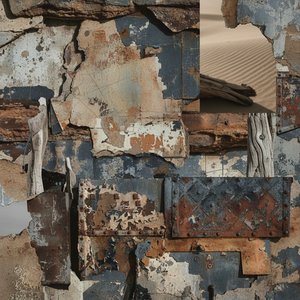
Aaron Siskind: Deconstructing Reality – A Photographic Exploration of Texture, Form & the Abstract Landscape
Explore the transformative journey of Aaron Siskind, from social realism to pioneering abstract photography. Discover his iconic series & lasting influence on modern art. A guide for collectors.
