
 Previzualizare
 Trimite prin felicitare
 Distribuie
 Detalii despre lucrare
 Ghid
Ghid

 Descarcă imaginea
 Produse similare
 Radiografie
 Galerie foto
 Întrebări și răspunsuri
 Statistici
A la baignade au fleuve Niger

- 43.0 x 41.0 cm


 Vezi mai mult
Lucrarea de artă afișată pe această pagină este protejată de legile privind drepturile de autor, ceea ce înseamnă că nu putem crea sau vinde în mod legal o reproducere identică. Această protecție este garantată prin acorduri internaționale, precum Convenția de la Berna și de legile naționale, inclusiv cele prevăzute de Legea dreptului de autor din S.U.A. – Titlul 17. Toate drepturile rezervate. Orice reproducere neautorizată este interzisă.
Această metodă respectă pe deplin reglementările privind drepturile de autor, deoarece nu implică copierea sau duplicarea operei protejate. În schimb, este o reinterpretare creativă – o pictură nouă, influențată de original, dar care nu este identică cu acesta.
Giclée / Imprimare artistică
Printuri giclée sau pe canvas de calitate muzeală, cu proces de producție rapid și opțiuni flexibile de finisare. ( Comandă pictură realizată manual Comută pe Imagine Digitală)




P118B lei10

P118H lei10

P118W lei10

P438Z lei10

P508JH lei12

P508YH lei12

P805H lei10

P805Z lei10

P919BZ lei10

P919G lei10

P919XJ lei10

P959ZH lei10

P968JZ lei12

W106C lei8

W218G lei10

W218JH lei8

W218Y lei10

W307PJ lei10

W316G lei10

W316PJ lei8

W316Y lei10

W398PJ lei8

W4111J lei10

W500HY lei15

W500JH lei15

W692G lei12

W849H lei8

W940BG lei15

W953PJ lei8




Alegeți dintre dimensiunile noastre prestabilite, care respectă proporțiile originale ale operei de artă.

Introduceți lățimea și înălțimea necesare pentru a se potrivi ramei sau peretelui dumneavoastră. O printare poate fi doar tăiată, niciodată extinsă dincolo de dimensiunea imaginii originale, astfel încât o dimensiune cu o formă diferită va pierde o parte din imagine. Vă trimitem o simulare digitală pentru aprobare înainte de a imprima orice. Imaginea afișată pe această pagină nu prezintă tăierea reală — doar simularea arată acest lucru.
Livrare în întreaga lume () în 2 săptămâni, în loc de cele 4/5 săptămâni standard. (3 Noiembrie)

Livrare expres gratuită la nivel mondial

Pânză de in de înaltă calitate

Asigurare completă pentru transport

Garanție de rambursare a taxelor vamale

Garanția fidelității culorilor

Politica de retur în 100 de zile (doar pentru defecte de fabricație)

Garanție de rambursare 100%

Ofertă pentru comenzi multiple
 Opțiunea cu sticlă este disponibilă doar pentru dimensiuni de sub 110 cm

A la baignade au fleuve Niger
Giclée / Imprimare artistică
Dimensiune reproducere
-


Preț total calculat
lei 385
A Moment Frozen in Time: Malick Sidibé’s “À la Baignade au Fleuve Niger”
Malick Sidibé's "À la Baignade au Fleuve Niger" (On the Beach of River Niger), a captivating black and white photograph from 1973, isn’t merely a depiction of a riverside gathering; it’s a vibrant snapshot of burgeoning youth culture in post-colonial Bamako, Mali. The image, rendered with Sidibé's signature documentary style – reminiscent of the pioneering work of Malick Sidibé – captures a scene brimming with youthful energy and a subtle defiance against traditional societal constraints. It feels less like a staged portrait and more like a fleeting glimpse into a spontaneous celebration, a testament to the photographer’s ability to freeze a moment of genuine human connection.
The composition immediately draws the eye to a central figure standing confidently, his posture suggesting both authority and openness. Around him, a group of young men – many adorned in distinctive Keffiyeh scarves – are engaged in playful interaction, dancing, flirting, and simply enjoying each other’s company. The arrangement isn't formal; it feels organic, mirroring the unscripted nature of the scene itself. Diagonal lines created by the bodies contribute to a dynamic sense of movement, while horizontal elements define the shoreline and riverbank, providing a grounding stability to the image. The photograph’s power lies in its ability to convey a feeling of immediacy – as if we've stumbled upon this joyful moment unexpectedly.
The Photographer’s Vision: Technique and Context
Sidibé’s technical approach is rooted in traditional black-and-white photography, utilizing a combination of flash for outdoor shots and tungsten lighting within his studio. This deliberate choice reflects his commitment to capturing the essence of the scene without overly manipulating it. The image's grainy texture, characteristic of silver gelatin prints on photographic paper, adds a layer of authenticity and reinforces the documentary feel. It’s a testament to Sidibé’s skill that he manages to imbue such a simple composition with so much visual richness.
Born in 1936 in Sologo, Mali, Malick Sidibé's early life was deeply connected to the rhythms of rural Fulani culture. This experience profoundly shaped his artistic vision, fostering an appreciation for storytelling and a keen eye for capturing the nuances of everyday life. His apprenticeship with photographer Gérard Guillat-G allowed him to hone his craft, but it was in Bamako that Sidibé truly found his voice, documenting the city’s evolving social landscape during a period of significant transformation. The photograph's creation coincided with a shift in Malian society – a move towards greater freedom and self-expression among young people.
Symbolism and Emotional Resonance
The Keffiyeh scarves worn by many of the figures are particularly symbolic, representing both cultural identity and a subtle act of rebellion. These traditional head coverings were often associated with nomadic traditions but here they’re adopted as markers of youthful style and social engagement. The photograph evokes a powerful sense of nostalgia – a longing for simpler times and genuine human connection. It speaks to the universal desire for joy, freedom, and belonging.
Beyond its immediate visual appeal, “À la Baignade au Fleuve Niger” offers a poignant commentary on the transition from traditional values to modern aspirations. The photograph captures a moment of liberation – a young generation embracing new possibilities while retaining their cultural roots. It’s a reminder that even in times of rapid change, the fundamental human need for connection and celebration endures.
A Legacy Preserved: Reproduction and Appreciation
Reproduced with meticulous attention to detail, this artwork offers a remarkable opportunity to bring Sidibé's evocative vision into any space. The original’s rich textures and tonal range are faithfully recreated in high-quality reproductions, ensuring that the photograph retains its emotional impact. Whether displayed as a statement piece or incorporated into a broader collection of African art, “À la Baignade au Fleuve Niger” serves as a powerful reminder of Malick Sidibé's enduring legacy – a testament to his ability to capture the heart and soul of a nation through the lens of his camera.
Întrebări și răspunsuri
Ce utilizare și ce spațiu sunt recomandate pentru "A la baignade au fleuve Niger" de Malick Sidibé?
„A la baignade au fleuve Niger” este recomandat pentru Statement, iar spațiul ideal de expunere este o Living Room.
Cât de multă lumină par să reflecte culorile din "A la baignade au fleuve Niger"?
"A la baignade au fleuve Niger" de Malick Sidibé are o luminanță de Luminous. Luminația descrie câtă lumină par să reflecte culorile.
Ce dimensiuni are "A la baignade au fleuve Niger" de Malick Sidibé în realitate?
Dimensiunile înregistrate pentru "A la baignade au fleuve Niger" de Malick Sidibé sunt 43 x 41 cm. Reproducerile pot fi comandate în alte dimensiuni, păstrând aceleași proporții.
Biografie artist
A Chronicler of Joy: The Life and Legacy of Malick Sidibé
Malick Sidibé emerged from the rural heartland of Mali to become one of Africa’s most celebrated photographers, a visual poet who captured a nation in transition with an unparalleled eye for intimacy and dynamism. Born in 1936 in Sologo, his early life was steeped in traditional Malian existence – herding animals, working the land, far removed from the burgeoning urban center of Bamako. This formative period instilled within him a deep connection to his cultural roots, a sensibility that would profoundly shape his artistic vision. A pivotal moment arrived when he was selected by the village chief to attend school in Yanfolila, an opportunity that opened doors to education and ignited a nascent passion for art. His talent for drawing quickly became apparent, leading to commissions for official events and ultimately securing his acceptance into the Institut National des Arts de Bamako. It was there he encountered Gérard Guillat-Guignard, a French photographer who served as his mentor, guiding him through the technical intricacies of the medium not through formal instruction, but through observation and practical experience. This apprenticeship laid the foundation for Sidibé’s distinctive approach – one that prioritized capturing life as it unfolded, rather than staging contrived scenes.Bamako in Bloom: Documenting a Generation
In 1952, Sidibé relocated to Bamako, a city pulsating with energy and undergoing rapid transformation as Mali approached independence. He began his formal photographic training under Guillat-Guignard at the Gégé la Pellicule photo service boutique in 1955, honing his skills before acquiring his first camera, a Brownie Flash, in 1956. By 1957, he had established Studio Malick, becoming a fixture in Bamako’s social landscape. Sidibé didn't merely document the city; he immersed himself within it, drawn to the vibrant youth culture that was blossoming in the wake of colonial rule. His lens found its focus on sporting events, lively beach gatherings, pulsating nightclubs, and intimate moments of courtship – scenes that encapsulated a generation’s newfound freedoms and aspirations. He eschewed the formality of traditional studio portraiture, preferring instead to capture his subjects in candid moments, amidst the energetic backdrop of Bamako's social life. This approach resulted in striking black-and-white images imbued with an immediacy and authenticity that resonated deeply within Malian society and would eventually captivate audiences worldwide. His work wasn’t simply about *what* was being photographed, but *how* it felt to be alive during this exhilarating period of change.Style and Substance: A Unique Photographic Vision
Sidibé's artistic style is characterized by a remarkable blend of technical skill and empathetic observation. His background in drawing profoundly influenced his approach to portraiture; he carefully considered composition, posing subjects not for static representation but to convey a sense of life and movement. He possessed an innate ability to connect with his subjects, fostering a relaxed atmosphere that allowed their personalities to shine through. This intimacy is palpable in his photographs, creating a powerful connection between the viewer and those depicted. A recurring theme throughout his work is the celebration of post-colonial joy and the burgeoning youth culture of Mali during the 1960s and 70s. Music played an integral role in this era, and Sidibé’s images frequently depict scenes of dancing and revelry, capturing the liberating spirit of a generation embracing newfound freedoms. He utilized simple props – hats, scarves, sunglasses – to enhance the narratives within his photographs, transforming everyday objects into symbols of status and identity. His compositions often featured low camera angles, emphasizing the subjects' energy and confidence. Nuit de Noël (Christmas Eve), perhaps his most iconic image, exemplifies this perfectly: a smiling couple lost in dance, radiating an infectious energy that transcends cultural boundaries.Studio Malick: A Hub of Creativity
Alongside his celebrated documentary photographs of the Bamako nightlife, Sidibé created iconic portraits within his studio, named ‘Studio Malick’ and operating in the popular neighborhood of Bagadadji. The studio functioned as an important meeting place for the city youth. “The studio was like no other,” he recalls: “It was… relaxed. I did formal family shots, too, but often it was like a party. People would drop by, stay, eat. I slept in the developing room.” Studio Malick became more than just a photography studio; it evolved into a social hub where young people could gather, express themselves, and celebrate their newfound freedoms. The portraits created there reflected the changes that were happening in society. Unlike the official photographs created during the French rule that were used predominantly in the identification documents, on Sidibé’s images Malians were able to represent themselves freely. According to Candace M. Kelle, a specialist in modern African art and photography, “in the newly independent country ‘photography provided Malians with a new medium and venue in which to invent and preserve personal and collective identities.’” Through incorporating particular commodities onto the images: cars, cameras, radios, or Western clothing, the subjects were seeking to stress their position as successful and modern. Photography functioned as an important tool in expressing the belonging (actual or desired) to particular social and economic class, allowing people to reclaim the agency over their image and to construct their identities.International Recognition and Lasting Influence
Malick Sidibé’s work gained international recognition in the 1990s thanks to the efforts of photographer Françoise Haguier and curator André Magnin, who were dispatched by collector Jean Pigozzi to explore West African art. His photographs began appearing in exhibitions around the globe, garnering critical acclaim and establishing him as a major figure in contemporary photography. He received numerous prestigious awards throughout his career, culminating in the Golden Lion Award for Lifetime Achievement at the Venice Biennale in 2007 – a historic moment that made him both the first photographer and the first African to receive this honor. Other accolades included the Hasselblad Award, the International Center of Photography Infinity Award, and a World Press Photo Award. His work is now held in prominent collections worldwide, including the Contemporary African Art Collection (CAAC), the J. Paul Getty Museum, and the Museum of Modern Art in New York. Sidibé’s influence extends beyond the art world; his distinctive style has been acknowledged in popular culture, most notably inspiring Janet Jackson's 1997 music video "Got 'Til It's Gone," and Inna Modja’s 2015 video for “Tombouctou,” filmed within Studio Malick itself.A Legacy of Cultural Preservation
Malick Sidibé passed away in April 2016, leaving behind a profound legacy as one of Mali's most important photographers and a pivotal figure in the history of African art. His work provides an invaluable visual record of post-colonial Malian society, offering a unique perspective on a period of rapid social and cultural change. He elevated documentary photography to new heights, demonstrating that powerful storytelling could emerge from seemingly ordinary moments. He wasn’t simply taking pictures; he was preserving memories, celebrating life, and documenting the evolution of a nation. His photographs serve as a testament to the resilience, joy, and creativity of the Malian people, ensuring that their stories are told and remembered for generations to come. Sidibé's enduring influence continues to inspire contemporary artists and photographers, solidifying his position as a master chronicler of Malian culture and a celebrated figure in the global art landscape.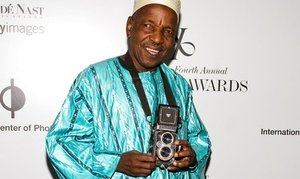
Malick Sidibé
1936 - 2016 , Mali
Detalii rapide
- Artistic Movement Or Style: Fotografie documentară
- Artists Or Movements Influenced By This Artist:
- Inna Modja
- Janet Jackson
- Artists Who Influenced This Artist: ['Gérard Guillat-Guignard']
- Date Of Birth: 1936
- Date Of Death: 2016
- Full Name: Malick Sidibé
- Nationality: Malian
- Notable Artworks:
- Nuit de Noël
- James Brown Fans
- Place Of Birth: Sologo, Mali
Articole similare

Monochrome Visions: Exploring the Aesthetic & Historical Significance of Black & White Photography
Explore the rich history & artistic power of black and white photography. From early techniques to iconic masters like Ansel Adams, discover why monochrome continues to captivate art lovers today. Expert insights for collectors.

Shadow & Soul: Why Black & White Photography Remains the Ultimate Power Move in Modern Art
Discover why black & white photography remains a powerful force in contemporary art. Explore the impact of light, shadow, and texture through a visual journey of monochrome mastery and learn how to elevate your space with timeless grayscale aesthetics.

Beyond Color: The Timeless Power and Artistry of Black and White Photography
Explore the profound artistry of black and white photography. From the chemistry of gelatin silver to the chiaroscuro of the Old Masters, discover how monochrome captures the eternal essence of light, form, and emotion for the discerning art collector.

Timeless Shadows: The Artistry, History, and Emotional Resonance of Black and White Photography
Explore the profound artistry of black and white photography. From historical mastery to the interplay of light and shadow, discover how monochrome captures timeless emotion and form through a sophisticated lens of art history.

Top 10 Capodopere Alb-Negru: Frumusețe Atemporală în Artă | OriginalUniqueArt.ro
Descoperă top 10 picturi celebre dominate de alb, de la Monet la Kandinsky! Explorează istoria artei, tehnicile artistice și frumusețea atemporală a capodoperelor clasice. Reproduceri de calitate muzeală pe OriginalUniqueArt.com – inspiră-ți decorul!