
 Previzualizare
 Trimite prin felicitare
 Distribuie
 Detalii despre lucrare
 Ghid
Ghid

 Descarcă imaginea
 Produse similare
 Radiografie
 Galerie foto
 Q&A
Q&A Statistici
Portrait of Anna Codde

- 86.0 x 66.0 cm


 Vezi mai mult
Giclée / Imprimare artistică
Printuri giclée sau pe canvas de calitate muzeală, cu proces de producție rapid și opțiuni flexibile de finisare. ( Comandă pictură realizată manual Comută pe Imagine Digitală)




P118B lei10

P118H lei10

P118W lei10

P438Z lei10

P508JH lei12

P508YH lei12

P805H lei10

P805Z lei10

P919BZ lei10

P919G lei10

P919XJ lei10

P959ZH lei10

P968JZ lei12

W106C lei8

W218G lei10

W218JH lei8

W218Y lei10

W307PJ lei10

W316G lei10

W316PJ lei8

W316Y lei10

W398PJ lei8

W4111J lei10

W500HY lei15

W500JH lei15

W692G lei12

W849H lei8

W940BG lei15

W953PJ lei8




Alegeți dintre dimensiunile noastre prestabilite, care respectă proporțiile originale ale operei de artă.

Introduceți lățimea și înălțimea necesare pentru a se potrivi ramei sau peretelui dumneavoastră. O printare poate fi doar tăiată, niciodată extinsă dincolo de dimensiunea imaginii originale, astfel încât o dimensiune cu o formă diferită va pierde o parte din imagine. Vă trimitem o simulare digitală pentru aprobare înainte de a imprima orice. Imaginea afișată pe această pagină nu prezintă tăierea reală — doar simularea arată acest lucru.
Livrare în întreaga lume () în 2 săptămâni, în loc de cele 4/5 săptămâni standard. (2 Noiembrie)

Livrare expres gratuită la nivel mondial

Pânză de in de înaltă calitate

Asigurare completă pentru transport

Garanție de rambursare a taxelor vamale

Garanția fidelității culorilor

Politica de retur în 100 de zile (doar pentru defecte de fabricație)

Garanție de rambursare 100%

Ofertă pentru comenzi multiple
 Opțiunea cu sticlă este disponibilă doar pentru dimensiuni de sub 110 cm

Portrait of Anna Codde
Giclée / Imprimare artistică
Dimensiune reproducere
-


Preț total calculat
lei 380
A Window into the Dutch Renaissance: The Portrait of Anna Codde
Maerten van Heemskerck’s “Portrait of Anna Codde,” painted in 1529, isn't merely a likeness; it’s a meticulously crafted tableau vivant – a snapshot of life within the burgeoning world of early Dutch Renaissance society. More than just a portrait, this work offers a rare glimpse into the domestic sphere, revealing a woman engaged in a timeless activity: spinning wool. The scene unfolds with quiet dignity and understated elegance, capturing not only Anna’s physical appearance but also her role as a skilled artisan and devoted wife – a common yet increasingly valued ideal within the Dutch merchant class of the era.
The painting immediately draws the eye to Anna herself, seated comfortably in a simple chair. Her long, flowing hair is partially arranged, suggesting a deliberate effort towards presentation, while her gaze is direct and engaging, inviting the viewer into her world. The spindle she holds isn’t just an object of craft; it's a symbol of domesticity, industry, and the woman’s vital contribution to the household economy. Her dress, though modest in style, speaks volumes about her status – a subtle indication of wealth and refinement. Notice the careful attention to detail in the rendering of her hands, demonstrating Heemskerck’s mastery of capturing texture and form.
The Painter's Palette: Technique and Style
Heemskerck’s style is immediately recognizable as a masterful blend of Italian Renaissance ideals with distinctly Dutch sensibilities. The influence of Jan van Scorel, his former teacher, is evident in the use of light and shadow – a technique known as *chiaroscuro* – which creates a sense of depth and volume within the composition. However, Heemskerck departs from the purely idealized forms often found in Italian portraits, opting for a more naturalistic approach that reflects the growing interest in portraying individuals with greater realism.
The painting’s color palette is restrained yet sophisticated, dominated by earthy tones – browns, ochres, and muted greens – which evoke the textures of the wool and the surrounding domestic environment. The background, featuring a chair and a clock on the wall, provides context without overwhelming the central figure. Heemskerck's skill lies not just in depicting individual features but also in creating a harmonious whole, where every element contributes to the overall narrative.
A Portrait of an Era: Historical Context
“Portrait of Anna Codde” was painted during a period of significant social and economic transformation in the Netherlands. The rise of merchant families like the Coddes fueled a burgeoning economy and a growing emphasis on wealth, status, and family lineage. Portraits became increasingly important as a means of documenting these achievements and solidifying one’s place within society. The inclusion of domestic scenes like this one was not uncommon; it served to portray the subject as both a successful businesswoman and a devoted wife – qualities highly valued in 16th-century Dutch culture.
Furthermore, the painting reflects the growing interest in secular portraiture during this time. While religious subjects remained important, artists began experimenting with depicting everyday life and capturing the personalities of their patrons. The meticulous detail and realistic portrayal of Anna Codde demonstrate Heemskerck’s commitment to portraying his subject with honesty and dignity.
Symbolism and Emotional Resonance
Beyond its technical merits, “Portrait of Anna Codde” is rich in symbolism. The spinning wheel represents not only her craft but also the woman's role as a provider for her household – a vital contribution to the family’s well-being. The clock on the wall serves as a reminder of time and the passage of life, subtly emphasizing the importance of cherishing each moment. The birds in the background, one near the top right corner and another towards the bottom left of the painting, may represent good fortune or simply add to the idyllic scene.
Ultimately, “Portrait of Anna Codde” is a poignant reminder of a bygone era – a time when domesticity was intertwined with prosperity and artistry. It’s a testament to Heemskerck's skill as a painter and his ability to capture not just a likeness but also the essence of a human being within her historical context. Reproductions of this captivating work offer a beautiful window into the heart of the Dutch Renaissance.
Întrebări și răspunsuri
"Portrait of Anna Codde" de Maerten Van Heemskerck este o pictură, un desen sau o printă?
"Portrait of Anna Codde" de Maerten Van Heemskerck este clasificată ca WallArt. Această categorie descrie tipul de operă de artă din care este compusă originalul.
Unde pot vedea originalul "Portrait of Anna Codde" de Maerten Van Heemskerck?
Puteți vedea originalul "Portrait of Anna Codde" la Rijksmuseum, Amsterdam, Netherlands.
"Portrait of Anna Codde" de Maerten Van Heemskerck face parte din domeniul public?
"Portrait of Anna Codde" de Maerten Van Heemskerck este în domeniul public (în domeniul public – drepturile de autor au expirat). Acest statut reglementează modul în care imaginea lucrării poate fi reprodusă.
Biografie artist
primii ani și formarea artistică
maerten van heemskerck, un pictor olandez de renume în domeniul portretului și al scenelor religioase, s-a născut pe 1 iunie 1498, în satul Heemskerk, din Olanda de Nord. Călătoria sa artistică a început sub îndrumarea lui Cornelius Willemsz în Haarlem, fiind urmată de o scurtă perioadă de formare în Delft alături de Jan Lucasz. În cele din urmă, acesta a devenit ucenicul lui jan van scorel, adoptând stilul influențat de estetica italiană al mentorului său.momente de glorie în carieră
- opera lui maerten van heemskerck este definită de o fuziune inovatoare între influențele olandeze și cele italiene, așa cum se poate observa în celebrul său portret de familie, considerat primul de acest gen într-o lungă tradiție a picturilor de familie olandeze.
- colaborarea sa cu antonio da sangallo the younger, battista franco și francesco de' rossi (il salviati) la redecorarea porta san sebastiano din Roma — un arc triumfal dedicat lui Carol al V-lea — demonstrează măiestria sa și rapiditatea de execuție în pictura de decor.
- desenele lui heemskerck care surprind sculpturile clasice și arhitectura, păstrate astăzi în două albume de schițe la kupferstichkabinett berlin, dovedesc talentul său deosebit în a capta însăși esența artei italiene.
opere memorabile și moștenire
- donatorul și sfânta marie magdalena (vizualizează pe OriginalUniqueArt)
- fecioara și sfântul ioan evangelistul (vizualizează pe OriginalUniqueArt)
- samson zdrobind stâlpii templului, maarten van heemskerck (vizualizează pe OriginalUniqueArt)
concluzie
maerten van heemskerck a lăsat o amprentă profundă și incontestabilă asupra lumii arte. Operele sale, care fac acum parte din diverse colecții de muzeu, inclusiv Rijksmuseum, continuă să îi inspire pe artiști și pe iubitorii de artă deopotrivă. Pentru a explora mai multe dintre capodoperele sale, vizitați pagina lui maerten van heemskerck pe OriginalUniqueArt. Pentru o înțelegere mai profundă a vieții și lucrărilor sale, consultați biografia sa de pe wikipedia.
Maerten Van Heemskerck
1498 - 1574 , Țările de Jos
Detalii rapide
- Artistic Movement Or Style: Maniereism
- Artists Who Influenced This Artist:
- Jan van Scorel
- Antonio da Sangallo the Younger
- Date Of Birth: 1 iunie 1498
- Date Of Death: 1 octombrie 1574
- Full Name: Maerten Jacobsz van Heemskerck
- Nationality: Olandez
- Notable Artworks:
- Plângerea lui Hristos Mort
- Pieter Jan Foppeszoon și familia sa
- Hristos ca Omul Durerilor
- Place Of Birth: Heemskerk, Țările de Jos
Articole similare

Maerten van Heemskerck: Bridging Mannerism & Renaissance Ideals
Explore the captivating world of Maerten van Heemskerck, a pivotal Dutch Renaissance painter bridging Mannerism & Italian influence. Discover his masterpieces and legacy with OriginalUniqueArt.

Willem van de Velde the Elder: Master of Maritime Painting & Chronicler of the Dutch Golden Age
Discover the captivating maritime paintings of Willem van de Velde the Elder, a master chronicler of the Dutch Golden Age. Explore his unparalleled realism and lasting influence on naval art history.

Jan van Goyen: Master of Dutch Landscape & Atmospheric Perspective
Discover Jan van Goyen, the master of Dutch landscape painting. Explore his subtle technique, atmospheric realism & lasting influence on art history. Learn about this 17th-century pioneer at OriginalUniqueArt.
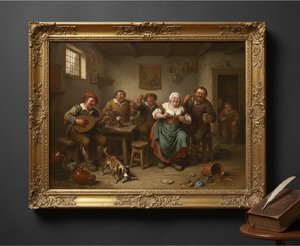
Adriaen van Ostade: A Master of Dutch Genre Painting & Social Commentary
Explore the life & work of Adriaen van Ostade, a leading Dutch Golden Age painter. Discover his realistic genre scenes, social commentary, and lasting influence on art history. Learn more at OriginalUniqueArt.

Rembrandt van Rijn: Cele Mai Frumoase 25 de Capodopere – Artă, Istorie și Decorațiuni Interioare
Descoperă cele mai frumoase 25 de picturi ale lui Rembrandt van Rijn! Explorează capodopere baroce, portrete emoționante și peisaje iconice. Reproduceri de artă de calitate muzeală pentru un design interior rafinat. Descoperă toate operele pe OriginalUniqueArt.com!
