

 Vezi în context
 Trimite
 Distribuie
 Detalii
 Ghidul

 Descarcă
 Produse similare
 Radiografie
 Diaporama
 Statistici
Double Portrait
 Oil On Canvas
- WallArt
- Contemporary Realism
 1986
1986- Contemporary
 88.0 x 78.0 cm
 Citește mai mult
Giclée / Imprimare artistică
Printuri giclée sau pe canvas de calitate muzeală, cu proces de producție rapid și opțiuni flexibile de finisare. ( Comandă pictură realizată manual Treci la imagine digitală)




P118B $10

P118H $10

P118W $10

P438Z $10

P508JH $12

P508YH $12

P805H $10

P805Z $10

P919BZ $10

P919G $10

P919XJ $10

P959ZH $10

P968JZ $12

W106C $8

W218G $10

W218JH $8

W218Y $10

W307PJ $10

W316G $10

W316PJ $8

W316Y $10

W398PJ $8

W4111J $10

W500HY $15

W500JH $15

W692G $12

W849H $8

W940BG $15

W953PJ $8




Alegeți dintre dimensiunile noastre prestabilite, care respectă proporțiile originale ale operei de artă.

Puteți introduce propriile dimensiuni pentru a se potrivi unui anumit cadru sau spațiu. Dacă dimensiunea selectată nu corespunde proporțiilor imaginii originale, vom decupa lucrarea de artă sau vom extinde imaginea cu margini oglindite sau cu o culoare uniformă. Un mockup digital va fi trimis pentru aprobarea dumneavoastră înainte de începerea producției.
Vă rugăm să rețineți că previzualizarea de pe ecran nu reflectă decuparea sau extinderea reală. Doar mockup-ul va arăta cu exactitate compoziția finală.
Deși dimensiunile personalizate sunt disponibile, vă recomandăm să selectați o dimensiune din lista predefinită pentru a păstra proporțiile originale.
Livrare în întreaga lume () în 2 săptămâni, în loc de cele 4/5 săptămâni standard. (26 Septembrie)

Livrare expres gratuită la nivel mondial

Pânză de in premium

Asigurare completă pentru transport

Garanție de rambursare a taxelor vamale

Garanția fidelității culorilor

Politica de retur în 100 de zile (doar pentru defecte)

Garanție de rambursare 100%

Reducere pentru comenzi multiple
 Opțiunea cu sticlă este disponibilă doar pentru dimensiuni de sub 110 cm

Double Portrait
Giclée / Imprimare artistică
Dimensiune reproducere
-


Preț total
$ 80
An Intimate Encounter: The Raw Humanity of Lucian Freud
In the quiet, heavy atmosphere of Double Portrait, created in 1986, we are invited into a private sanctuary of rest and vulnerability. This masterpiece by Lucian Freud, one of the most formidable portraitists of the twentieth century, transcends mere representation to capture a profound moment of shared existence. The painting depicts Freud’s daughter and her dog, caught in a state of deep, undisturbed slumber. There is an undeniable weight to the scene, a sense of time slowing down as the human figure and the animal companion merge into a single, rhythmic composition. As the daughter lies with one arm shielding her eyes, her limbs intertwining with the resting form of her dog, the boundaries between species seem to dissolve, leaving behind only the pure, unadorned essence of companionship.
The emotional resonance of this work lies in its unflinching honesty. Freud does not seek to idealize his subjects; instead, he presents them with a tender, almost psychological depth that mirrors the analytical legacy of his grandfather, Sigmund Freud. The way the dog rests its head upon the extended arm of the sleeping figure creates a poignant symbol of unity and trust. For collectors and lovers of fine art, this piece offers more than just a visual experience; it provides a window into the quiet, often overlooked moments of intimacy that define the sentient experience. It is a painting that breathes with the stillness of a summer afternoon, making it an evocative centerpiece for any sophisticated interior.
Mastery of Texture and the Impasto Technique
To behold Double Portrait is to witness the physical power of oil paint. Freud was a master of the impasto technique, a method where paint is applied in thick, sculptural layers that rise from the canvas. This creates a rugged, tactile surface that catches the light and casts its own minute shadows, adding an extraordinary sense of three-dimensionality to the flesh and fur. Every brushstroke feels deliberate, yet organic, as if the artist were sculpting the very substance of life itself. He famously cleaned his brushes after nearly every application, a meticulous habit that allowed him to maintain a complex variability of color, ensuring that no two tones were ever purely flat or stagnant.
This technical prowess serves a greater purpose: the translation of direct perception into a tangible reality. The interplay of light and shadow across the sleeping form is not merely a trick of the eye but a result of the heavy, textured medium working in harmony with Freud's observational precision. For an interior designer, such a work offers incredible versatility; its rich textures and earthy, nuanced palette can anchor a room, providing a sense of historical gravity and artistic sophistication. The painting does not just sit upon a wall; it commands the space around it through its sheer physical presence and the masterful way it manipulates light.
A Legacy of Realism and Expressionism
The historical significance of Double Portrait is rooted in Freud's ability to bridge the gap between realism and expressionism. While his subjects are rendered with a startling, almost clinical accuracy, the emotional temperature of the painting is deeply expressive. This duality allows the viewer to engage with the work on both an intellectual and an emotional level. The painting stands as a testament to a career dedicated to the rigorous study of the visible world—a departure from the abstract trends of his era in favor of a more profound, visceral truth.
Owning a high-quality reproduction of such a significant work allows one to bring this legacy of psychological depth into a contemporary home. Whether placed in a sunlit gallery or a moody, private study, Double Portrait serves as a constant reminder of the beauty found in vulnerability and the enduring strength of the bond between living beings. It is an investment in a piece of art history that continues to captivate, provoke thought, and inspire awe through its technical mastery and soulful narrative.
Biografie artist
Lucian Freud - A Life Forged in Realism
Lucian Michael Freud, born December 8, 1922, Berlin (then part of the Weimar Republic), carried a lineage steeped in intellectual weight—the grandson of the pioneering psychoanalyst Sigmund Freud. Yet, young Lucian’s path diverged from exploring the subconscious through theory, instead finding expression through the intensely physical act of painting. The looming shadow of Nazism forced his family to flee Germany in 1933, settling in London, a relocation that profoundly shaped both his life and the often somber, unsettling tone defining his artistic vision. His early education was fragmented, marked by expulsion from Bryanston School, but formative instruction at Cedric Morris’s East Anglian School of Painting and Drawing proved pivotal. There, an emphasis on direct observation took root, becoming a cornerstone of his evolving style—a deliberate departure from the growing abstraction embraced by many contemporaries. This grounding in meticulous study of the visible world set him apart, establishing a unique artistic identity.- Early Life and Family
- Education
- The Surrealist Echoes
- Developing Realism
- Legacy and Influence
Early Life and Family
Lucian Freud was the son of Ernst L. Freud, an architect who emigrated to Berlin in 1933 to escape racial persecution, and Lucie Brasch, his mother—a German Jewish woman. The family’s experience during the Nazi era instilled a deep sense of urgency and shaped Freud's worldview. He attended Dartington Hall School from 1933-36, followed by Bryanston School (an independent public school in Devon) where he was expelled due to disruptive behaviour. Despite this setback, his artistic inclinations were nurtured at Cedric Morris’s East Anglian School of Painting and Drawing, fostering a lifelong fascination with observation and materiality. Freud's formative years instilled a profound appreciation for the tangible world—a perspective that would permeate his entire oeuvre.Education
Freud pursued formal artistic training at Central School of Arts and Crafts in London and East Anglian School of Painting and Drawing, where he honed his skills under Cedric Morris’s guidance. He was particularly drawn to the influence of Impressionism and Post-Impressionism, absorbing techniques that would later inform his distinctive style. His exposure to these movements broadened his artistic horizons and solidified his commitment to capturing fleeting moments of beauty—a characteristic that distinguishes him from many other artists of his time.The Surrealist Echoes
Freud’s early artistic explorations encompassed Surrealism and Expressionism, blending dreamlike imagery with emotional intensity. Influenced by artists such as Giorgio De Chirico and Hans Arp, he experimented with unconventional compositions and symbolic representations—reflecting the anxieties of the interwar period. However, these influences gradually yielded to a more disciplined approach, prioritizing meticulous detail and psychological depth.Developing Realism
By the early 1950s, Freud established his signature style: thickly impastoed paint, muted backgrounds amplifying flesh tones, and an almost brutal honesty in depicting the human form. He eschewed idealization or flattery, seeking instead to capture raw physicality, vulnerability, and psychological weight. This uncompromising vision—characterized by a profound respect for the materiality of paint—became his hallmark and distinguished him from many contemporaries who favored abstraction.Legacy and Influence
Lucian Freud’s 60-year career left an indelible mark on British portraiture, challenging conventional notions of beauty and representation. He wasn't interested in capturing social status or outward appearances; he sought to reveal something deeper, more primal—the essence of being human in all its complexity and imperfection. His influence extends beyond painting, inspiring artists across disciplines with his uncompromising vision and technical mastery. Freud’s work remains a powerful reminder of the enduring power of figurative art to confront us with ourselves. He was a key member of the “School of London,” a group of figurative painters working in London during a period dominated by abstract expressionism, united by their commitment to direct observation and emotional honesty. His paintings are held in major museums globally—the Tate in London, the Freud Museum London, and Goldsmiths’ College, University of London—enduring testaments to his artistic genius.
Lucian Freud
1922 - 2011 , Germania
Informații rapide
- Artistic Movement Or Style: Școala Londoneză
- Artists Or Movements Influenced By This Artist: ['Francis Bacon']
- Artists Who Influenced This Artist:
- Sigmund Freud
- Hans Arp
- Joan Miró
- Giorgio De Chirico
- Date Of Birth: 8 decembrie 1922
- Full Name: Lucian Michael Freud
- Nationality: Britanic
- Notable Artworks:
- Camera pictorului
- Beneficii Supervisor Sleeping
- Place Of Birth: Berlin, Germania
Articole conexe
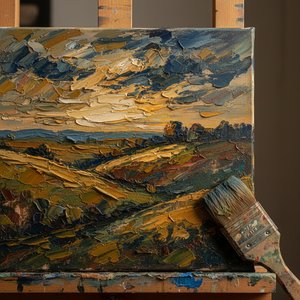
The Timeless Beauty of Oil on Canvas: A Masterclass in Texture, Impasto, and Artistic Mastery
Discover the profound allure of oil on canvas. Explore the mastery of impasto textures, the science of pigment longevity, and expert guides to selecting museum-quality reproductions that elevate your collection with timeless elegance and tactile depth.
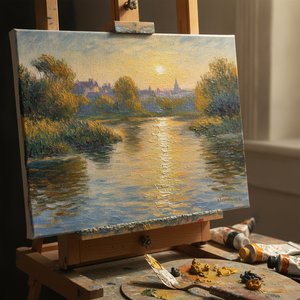
The Soul of Impressionism: Why Oil on Canvas Captures Eternal Light and Timeless Emotion
Discover the enchanting alchemy of Impressionism. Explore how the mastery of oil on canvas, through glazing and impasto, captures eternal light and emotion. Perfect for lovers of Monet and Van Gogh seeking the profound depth of hand-painted fine art.

Oil on Canvas: A Historical & Technical Exploration of a Timeless Artistic Medium
Explore the rich history & enduring techniques of oil painting on canvas. Discover the science behind its longevity, conservation practices, and contemporary relevance. Expert insights for art enthusiasts.

The Enduring Power of Painting: A Historical & Contemporary Exploration of Form and Emotion
Explore the rich history & enduring techniques of oil painting with OriginalUniqueArt. Discover masterpieces, learn about art collecting, and find authentic handmade reproductions crafted by skilled artists.

The Enduring Legacy of Oil on Canvas: Technique, History & Aesthetic Impact
Explore the rich history & techniques of oil painting – from Renaissance masters to Impressionism. Discover pigments, layering methods, and why this timeless medium endures. Expert insights for artists & art enthusiasts.

