Expressionism · 1909
Homeric Laughter, First Version (Lovis Corinth, 1909)
Lovis Corinth (1858–1925) a realizat Homeric Laughter, First Version. Data sa este din 1909. Face parte din mișcarea Expressionism. Este realizată în Oil On Canvas. Este păstrat la Bayerische Staatsgemaldesammlungen în Munchen, Germania. Dimensiunile sunt 98 × 120 cm.
- 1909
- Oil On Canvas
- 98 × 120 cm
- Bayerische Staatsgemaldesammlungen, Munchen

 Previzualizare

 Tablou în ulei pictat manual
 Trimite prin felicitare
 Distribuie
 Fișă informativă


 Descarcă imaginea
 Produse similare
 Radiografie
 Galerie foto
 Întrebări și răspunsuri

 Statistici
Homeric Laughter, First Version, pe scurt
- Titlu
- Homeric Laughter, First Version
- Artist
- Lovis Corinth (1858–1925)
- Artist născut în
- Tauwade, Rusia
- Date
- 1909
- Medium
- Oil On Canvas
- Dimensiuni
- 98 × 120 cm
- Unde poate fi vizualizată
- Bayerische Staatsgemaldesammlungen, Munchen, Germania
- Mișcare
- Expressionism
- Perioadă
- 19th Century
- Subiect
- nude figure, social gathering, conversation, greek mythology, laughter, domestic scene
Ce reprezintă Homeric Laughter, First Version?
A Moment of Shared Revelry: Unpacking “Homeric Laughter”
Lovis Corinth’s “Homeric Laughter,” painted in 1909, isn't merely a depiction of a gathering; it’s an invitation into a vibrant tableau of human connection and the intoxicating pleasure of shared experience. The painting immediately draws the eye with its scale – a generous 98 x 120 cm canvas – allowing for a complete immersion in the scene. Corinth masterfully captures a group of individuals, numbering at least thirteen, engaged in what appears to be an animated conversation or perhaps a lighthearted celebration. The central figure, a woman reclining on a bed, is undeniably the focal point, her exposed form not presented with overt sexuality but rather as a symbol of vulnerability and openness within this intimate setting. The surrounding figures – men and women alike, some standing, others seated or kneeling – contribute to a sense of communal warmth and relaxed conviviality.

The Expressionist Palette and Corinth’s Unique Style
Painted during a pivotal period in Corinth's artistic evolution, “Homeric Laughter” exemplifies his distinctive style – a potent blend of Impressionism and burgeoning Expressionism. He abandons the meticulous detail favored by earlier academic training, opting instead for bold brushstrokes, vibrant colors, and a deliberately loose application of paint. Notice how he uses color not to represent reality but to evoke feeling; the reds and oranges dominate, radiating warmth and suggesting an atmosphere of joyous abandon. Corinth’s technique is characterized by a dynamic layering of pigments, creating a sense of movement and immediacy. The figures aren't sharply defined; they are rendered with a slightly blurred quality, contributing to the painting’s overall dreamlike atmosphere. This approach was influenced by his travels through Paris and Antwerp, where he encountered artists like Rubens and Impressionists who challenged traditional artistic conventions.
Echoes of Homer and the Celebration of Human Connection
The title itself, “Homeric Laughter,” immediately connects the painting to the works of ancient Greek poet Homer. Homer’s epics are filled with scenes of feasting, drinking, and boisterous gatherings – celebrations of life, friendship, and human connection. Corinth's painting captures this spirit, suggesting a modern-day reimagining of these timeless themes. The objects scattered around the group—a bowl and a cup—further reinforce the idea of shared indulgence and communal enjoyment. The woman on the bed isn’t simply exposed; she embodies a state of relaxed vulnerability, inviting the viewer to contemplate the dynamics of intimacy and social interaction within this circle.
A Window into Corinth's Life and Artistic Journey
Lovis Corinth’s life was marked by both artistic triumph and personal hardship. Following a debilitating stroke in 1911, he adapted his technique, favoring his right hand and exploring themes of domesticity and family. “Homeric Laughter” can be viewed as a reflection of this evolving perspective – a celebration of the simple pleasures of life and the importance of human relationships. Corinth’s work is deeply personal, imbued with emotion and a profound understanding of the human condition. Reproductions of “Homeric Laughter” offer a captivating glimpse into his world, inviting viewers to share in his vision of joy, connection, and the enduring power of art.
În ce muzeu se află Homeric Laughter, First Version?
Bayerische Staatsgemaldesammlungen
Munchen, Germania
Istoria Bayerische Staatsgemaldesammlungen Originea Bayerische Staatsgemaldesammlungen se regăsește în anul 1799, odată cu înființarea Centralgemäldegaleriedirektion. Situată în München, Germania, instituția a început viața ca un spațiu curat, dedicat colecțiilor regale. Această vocație primordială reflectă o epocă în care arta era păstrată în cercul privat al nobilii, înainte de a trece prin transformarea necesară către resursa publică ce reprezintă astăzi.


Imagini la înaltă rezoluție ale lui Homeric Laughter, First Version

Domeniu public: artistul a decedat în 1925.
Alte dimensiuni, cadrări și citări →Lovis Corinth, Homeric Laughter, First Version (1909), Bayerische Staatsgemaldesammlungen. Domeniu public
Întrebări despre Homeric Laughter, First Version, răspunsuri
Unde poate fi vizualizată astăzi opera "Homeric Laughter, First Version" de Lovis Corinth?
Originalul "Homeric Laughter, First Version" de Lovis Corinth este păstrat la Bayerische Staatsgemaldesammlungen, Munchen, Germania. O reproducere permite expunerea operei în propria locuință.
În ce an a fost creată "Homeric Laughter, First Version" de Lovis Corinth?
"Homeric Laughter, First Version" de Lovis Corinth a fost creat(ă) în 1909.
Din ce materiale este realizată „Homeric Laughter, First Version”?
Tehnica utilizată pentru "Homeric Laughter, First Version" de Lovis Corinth este Oil On Canvas, iar reproducerile urmăresc să reducă aspectul acestei tehnici.
Care sunt dimensiunile originalului "Homeric Laughter, First Version" de Lovis Corinth?
Lucrarea originală "Homeric Laughter, First Version" de Lovis Corinth are dimensiunile de 98 x 120 cm.
Ce reprezintă "Homeric Laughter, First Version" de Lovis Corinth?
"Homeric Laughter, First Version" de Lovis Corinth surprinde: nude figure, social gathering, conversation, greek mythology, laughter, domestic scene, 19th century.
"Homeric Laughter, First Version" de Lovis Corinth face parte din domeniul public?
În ceea ce privește drepturile de autor, "Homeric Laughter, First Version" este în domeniul public – drepturile de autor au expirat.
La ce artist este atribuită opera „Homeric Laughter, First Version”?
Artistul din spatele operei „Homeric Laughter, First Version” este Lovis Corinth. Lucrarea este catalogată sub numele lui Lovis Corinth.
Din ce curent artistic face parte "Homeric Laughter, First Version" de Lovis Corinth?
Mișcarea asociată cu "Homeric Laughter, First Version" de Lovis Corinth este Expressionism. Această clasificare plasează lucrarea printre artiști și opere de artă conexe.
În ce etapă a evoluției lui Lovis Corinth se încadrează „Homeric Laughter, First Version”?
„Homeric Laughter, First Version” aparține perioadei Mature Period din cariera lui Lovis Corinth. Această clasificare corelează opera cu evoluția artistului.
Despre artistul Lovis Corinth

1858–1925, Rusia
Lovis Corinth
A Life Forged in Paint: The World of Lovis Corinth Lovis Corinth, născut Franz Heinrich Louis pe 21 iulie 1858, în provincia prusiană a Estului Prussia, era o figură care întruchipea tranziția tumultoasă de la lumea artei din secolul al XIX-lea la cea timpurie a secolului XX. Călătoria sa nu a fost una a recunoașterii imediate, ci mai degrabă una a unei evoluții graduale, alimentată de studiu perseverent, influențe diverse și, în cele din urmă, de tragedia personală. Începuturile lui Corinth erau înrădăcinate în peisajele rurale ale locului său de naștere, Tapiau, unde tatăl său lucra ca tosător. Această expunere timpurie la fizicitatea muncii și la frumusețea brută a naturii ar permea subtil mai târziu opera sa, chiar și în mijlocul explorărilor stilistice mai sofisticate.
Despre Lovis Corinth Lucrări remarcabile ale lui Lovis Corinth
Alte lucrări ale lui Lovis Corinth
 În Șură1893
 Wilhelmine cu balonul1915
 Portrait of the Painter Paul Eugène Gorge1908
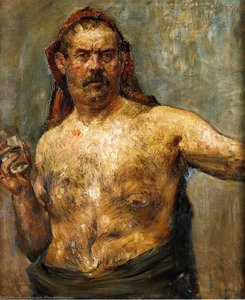 Self Portrait with a Glass1907

Eseuri despre Homeric Laughter, First Version
 Capodopere ale Secolului al XIX-lea: 10 Lucrări de Artă Esențiale pentru Decorul TăuDescoperă 10 capodopere ale secolului al XIX-lea! Explorează romantismul lui Delacroix, impresionismul lui Monet și realismul lui Courbet. …
 Romantic Realism's Finest: 10 Masterpieces for Your Home | OriginalUniqueArtExplore 10 defining masterpieces of Romantic Realism! Discover Courbet, Millet & Daumier's powerful paintings—capturing emotion and social …
 Lovis Corinth: Bridging Impressionism & Expressionism – A Study of Artistic EvolutionExplore the fascinating artistic journey of Lovis Corinth, a pivotal figure bridging Impressionism & Expressionism. Discover his evolution,…