

 Vezi în context
 Trimite
 Distribuie
 Detalii

 Descarcă
 Produse similare
 Radiografie
 Diaporama
 Statistici
The comte d'Espagnac
 Oil On Canvas
- WallArt
- Rococo
 1786
1786- 19th Century
 65.0 x 54.0 cm
 Colecția Wallace
 Citește mai mult
Giclée / Imprimare artistică
Printuri giclée sau pe canvas de calitate muzeală, cu proces de producție rapid și opțiuni flexibile de finisare. ( Comandă pictură realizată manual Treci la imagine digitală)




P118B $10

P118H $10

P118W $10

P438Z $10

P508JH $12

P508YH $12

P805H $10

P805Z $10

P919BZ $10

P919G $10

P919XJ $10

P959ZH $10

P968JZ $12

W106C $8

W218G $10

W218JH $8

W218Y $10

W307PJ $10

W316G $10

W316PJ $8

W316Y $10

W398PJ $8

W4111J $10

W500HY $15

W500JH $15

W692G $12

W849H $8

W940BG $15

W953PJ $8




Alegeți dintre dimensiunile noastre prestabilite, care respectă proporțiile originale ale operei de artă.

Puteți introduce propriile dimensiuni pentru a se potrivi unui anumit cadru sau spațiu. Dacă dimensiunea selectată nu corespunde proporțiilor imaginii originale, vom decupa lucrarea de artă sau vom extinde imaginea cu margini oglindite sau cu o culoare uniformă. Un mockup digital va fi trimis pentru aprobarea dumneavoastră înainte de începerea producției.
Vă rugăm să rețineți că previzualizarea de pe ecran nu reflectă decuparea sau extinderea reală. Doar mockup-ul va arăta cu exactitate compoziția finală.
Deși dimensiunile personalizate sunt disponibile, vă recomandăm să selectați o dimensiune din lista predefinită pentru a păstra proporțiile originale.
Livrare în întreaga lume () în 2 săptămâni, în loc de cele 4/5 săptămâni standard. (18 Septembrie)

Livrare expres gratuită la nivel mondial

Pânză de in premium

Asigurare completă pentru transport

Garanție de rambursare a taxelor vamale

Garanția fidelității culorilor

Politica de retur în 100 de zile (doar pentru defecte)

Garanție de rambursare 100%

Reducere pentru comenzi multiple
 Opțiunea cu sticlă este disponibilă doar pentru dimensiuni de sub 110 cm

The comte d'Espagnac
Giclée / Imprimare artistică
Dimensiune reproducere
-


Preț total
$ 80
Biografie artist
Louise Élisabeth Vigée Le Brun: A Life Painted in Elegance
Louise Élisabeth Vigée Le Brun, a name that echoes through the halls of 18th-century French art, was far more than just a painter; she was a chronicler of an era, a master of capturing not merely likeness but also the very essence of those who graced her studio. Born in Paris in 1755, her artistic journey began within a family already deeply rooted in the world of art – her father, Louis Vigée, a respected pastel portraitist, recognized and nurtured her innate talent from an early age, providing her with invaluable instruction that would shape her extraordinary career. This familial encouragement proved crucial, particularly after his untimely death when she was just twelve years old, prompting her mother to seek further training for Louise with established artists like Blaise Bocquet, Pierre Davesne, and Gabriel Briard. These formative years instilled in her not only technical skill but also a profound appreciation for the subtleties of light, color, and composition – elements that would become hallmarks of her distinctive style. Even as a young woman, Vigée Le Brun demonstrated remarkable artistic acumen, quickly establishing herself as a professional artist capable of earning a living through her craft, showcasing a precocious talent and unwavering dedication to her art.Royal Favor and Artistic Flourishing
The pivotal moment in Vigée Le Brun’s career arrived with her commission to paint Marie Antoinette in 1778. This wasn't simply an artistic endeavor; it was a gateway into the heart of French society, a world brimming with opulent courts and discerning patrons. The Queen, initially hesitant about posing for a portrait, quickly recognized Vigée Le Brun’s unique ability to capture her personality – a delicate balance between dignity and approachability that few artists could achieve. This commission ignited a cascade of further royal portraits, firmly establishing Vigée Le Brun as the official portraitist to Marie Antoinette and solidifying her position within the French aristocracy. Her studio transformed into a vibrant hub for the elite, attracting members of high society eager to have their likeness immortalized on canvas. She possessed an extraordinary gift for not only replicating physical appearances but also conveying the personality and social standing of her subjects – a talent that proved invaluable in navigating the complex dynamics of courtly patronage with remarkable success. Her artistic style during this period skillfully blended elements of Rococo’s playful elegance with the emerging sophistication of Neoclassicism, resulting in portraits that were both fashionable and timeless.A Style Defined by Grace and Naturalism
Vigée Le Brun's artistic approach was characterized by a remarkable ability to infuse her portraits with life and emotion. She deliberately moved away from the rigid formality prevalent in earlier portraiture, opting instead for more natural poses and expressions that revealed genuine character. Her brushwork flowed with an exquisite grace, creating a sense of softness and luminosity within her paintings – a testament to her meticulous attention to detail, particularly in rendering fabrics, jewelry, and hairstyles, each element carefully chosen to convey status and refinement. While influenced by Rococo’s emphasis on pastel shades and decorative flourishes, she also embraced Neoclassical principles of clarity and balance, resulting in a unique style that was both elegant and sophisticated. Works such as *Self-Portrait with Her Daughter, Julie*, powerfully demonstrate her mastery of capturing intimate moments and conveying profound maternal affection – revealing a depth beyond mere likeness. The numerous portraits of Marie Antoinette, including the iconic depiction of the Queen holding a rose, showcased her exceptional ability to portray royalty with both grandeur and humanity, capturing not just appearances but also the essence of her subject’s spirit.Exile, Resilience, and Lasting Legacy
The French Revolution dramatically altered the course of Vigée Le Brun's life. As a close associate of the royal family, she faced increasing scrutiny and ultimately fled France in 1789 to avoid persecution. This marked the beginning of a challenging period of exile that spanned across Europe – from Russia and Italy to England, Switzerland, and beyond. Despite the upheaval and uncertainty, Vigée Le Brun remained steadfast in her dedication to her art, continuing to paint and securing patronage among European aristocrats, thereby establishing herself as an internationally renowned artist. Her travels broadened her artistic horizons, exposing her to diverse styles and techniques that further enriched her creative vision. Upon returning to France in 1809, she resumed her career with renewed vigor, though the political landscape had undergone a profound transformation. She published her memoirs, *Souvenirs*, offering a captivating glimpse into the art world of her time and providing invaluable insights into her personal experiences and artistic journey. Vigée Le Brun’s legacy extends far beyond her technical skill; she stands as a pioneering figure for women in the arts, achieving remarkable success in a field traditionally dominated by men – a testament to her talent, determination, and unwavering spirit. Her paintings continue to be celebrated for their beauty, elegance, and historical significance, offering a captivating window into the world of 18th-century France and solidifying her place as one of history’s most accomplished portraitists.Notable Works
Among Vigée Le Brun's extensive body of work, several paintings stand out as particularly significant examples of her artistic skill and enduring appeal:- Self-Portrait with Her Daughter, Julie (1786): This intimate portrait captures a tender moment between mother and daughter, showcasing Vigée Le Brun’s ability to convey emotion and familial affection.
- Marie Antoinette Holding a Rose (1783): Perhaps her most famous work, this iconic image embodies the Queen's grace and beauty while subtly hinting at the impending turmoil of the French Revolution.
- Portrait of Madame Grand (1783): This portrait exemplifies Vigée Le Brun’s skill in capturing the personality and social standing of her subjects, portraying a woman with an intriguing blend of sensuality and sophistication.

Louise Élisabeth Vigée Le Brun
1755 - 1842 , Franța
Informații rapide
- Artistic Movement Or Style: Rococo & Neoclasicism
- Artists Or Movements Influenced By This Artist: ['Neoclasicism']
- Artists Who Influenced This Artist:
- Rubens
- Van Dyke
- Date Of Birth: 16 aprilie 1755
- Date Of Death: 30 martie 1842
- Full Name: Louise Élisabeth Vigée Le Brun
- Nationality: Franceză
- Notable Artworks:
- Portrete Marie Antoinette
- Self-portret cu Julie
- Place Of Birth: Paris, Franța
Articole conexe
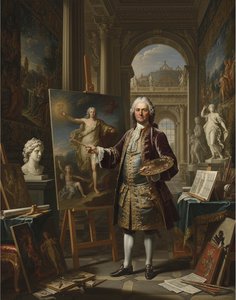
Charles Le Brun: Master of French Baroque Classicism & His Enduring Legacy
Explore the life & art of Charles Le Brun, master of French Baroque Classicism. Discover his royal commissions, influence on Versailles, and enduring legacy through detailed analysis & stunning artworks.

Crimson Threads of Narrative: Exploring Symbolism & Representation in Artworks Featuring the Red Dress
Explore the rich symbolism of the red dress in art history! From ancient power displays to iconic portraits like Cézanne’s 'Madame Cezanne', discover the cultural and artistic significance behind this captivating color. Expert analysis & insights.

The Rococo Aesthetic: Opulence, Rebellion & the Pursuit of Pleasure in 18th-Century Art
Explore the opulent world of Rococo art! Discover its origins, key artists like Watteau & Boucher, and lasting influence on design. Expert insights for collectors & enthusiasts.
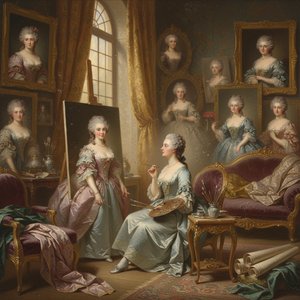
Vigée Le Brun: Portraiture, Patronage & Feminine Identity in 18th-Century France
Explore the life & art of Louise Élisabeth Vigée Le Brun, Marie Antoinette’s renowned portraitist. Discover her Rococo style, self-portraits, and influence on 18th-century French painting. A deep dive into patronage & feminine identity.

Top 10 Capodopere Rococo: Arta, Istorie și Decor Excepțional | OriginalUniqueArt.ro
Descoperă top 10 capodopere Rococo de la Fragonard, Boucher și Watteau! Explorează istoria artei, tehnicile și culorile vibrante ale stilului Rococo. Reproduceri de artă excepționale pentru decorul perfect pe OriginalUniqueArt.ro.


