

 Previzualizare
 Trimite prin felicitare
 Distribuie
 Detalii despre lucrare
 Ghid
Ghid

 Descarcă imaginea
 Produse similare
 Radiografie
 Galerie foto
 Statistici
Processional Cross
 Tempera On Panel
- WallArt
- Late Medieval Art
 1392
1392- Late Medieval
 57.0 x 28.0 cm
 Institutul de Artă din Chicago
 Vezi mai mult
Reproducere pictată manual în ulei
Pictură în ulei pe pânză, pictată manual de artiștii noștri la dimensiunea și ramele dorite de dumneavoastră, pe comandă. ( Comută pe versiunea Print Comută pe Imagine Digitală)




P118B lei10

P118H lei10

P118W lei10

P438Z lei10

P508JH lei12

P508YH lei12

P805H lei10

P805Z lei10

P919BZ lei10

P919G lei10

P919XJ lei10

P959ZH lei10

P968JZ lei12

W106C lei8

W218G lei10

W218JH lei8

W218Y lei10

W307PJ lei10

W316G lei10

W316PJ lei8

W316Y lei10

W398PJ lei8

W4111J lei10

W500HY lei15

W500JH lei15

W692G lei12

W849H lei8

W940BG lei15

W953PJ lei8




Alegeți dintre dimensiunile noastre prestabilite, care respectă proporțiile originale ale operei de artă.

Introduceți lățimea și înălțimea necesare pentru a se potrivi ramei sau peretelui dumneavoastră. Această lucrare este pictată manual, așa că, pentru o dimensiune cu o formă diferită, artistul poate picta puțin mai mult în jurul imaginii sau poate tăia puțin din margini — dumneavoastră decideți. Vă vom trimite o simulare digitală pentru aprobare înainte de a începe pictarea. Imaginea afișată pe această pagină nu reprezintă rezultatul real — doar simularea este reprezentativă.
După plasarea comenzii, echipa OriginalUniqueArt.com va contacta clientul prin e-mail pentru instrucțiuni și îi va furniza o previzualizare a machetei
Livrare în întreaga lume () în 3-4 săptămâni, în loc de cele 5 săptămâni standard. (28 Octombrie). Fără compromisuri în ceea ce privește calitatea.

Livrare expres gratuită la nivel mondial

Pânză de in de înaltă calitate

Asigurare completă pentru transport

Garanție de rambursare a taxelor vamale

Garanția fidelității culorilor

Politica de retur în 100 de zile (doar pentru defecte de fabricație)

Garanție de rambursare 100%

Ofertă pentru comenzi multiple
 Opțiunea cu sticlă este disponibilă doar pentru dimensiuni de sub 110 cm

Processional Cross
Tehnică de reproducere
Dimensiune reproducere
-


Preț total calculat
lei 1627
A Divine Radiance: The Spiritual Majesty of Lorenzo Monaco
In the quiet transition between the late Middle Ages and the dawn of the Renaissance, few works capture the ethereal tension of faith as poignantly as Lorenzo Monaco’s Processional Cross. Created in 1392, this exquisite tempera panel is far more than a mere religious artifact; it is a window into a world where the boundaries between the earthly and the divine were intentionally blurred through light and gold. As one gazes upon the central figure of Christ, the viewer is immediately enveloped by a shimmering, celestial atmosphere. The painting serves as a profound emblem of late medieval Italian devotion, acting as a bridge between the structured narrative traditions of Giotto and the burgeoning emotional complexity that would soon define the Quattrocento.
The composition is a masterclass in sacred geometry, where the verticality of the cross directs the soul upward. Monaco utilizes a sophisticated interplay of rectangles, triangles, and soft curves to guide the eye through a landscape of profound sorrow and divine hope. Below the crucified Christ, figures of mourning—including a woman draped in a rich, crimson robe—anchor the scene in human empathy, while an ascending angel offers a heavenly benediction from above. This careful arrangement ensures that the viewer does not merely observe the Crucifixion but participates in its liturgical rhythm, much like the faithful who would have once carried this very panel through the hallowed aisles of a cathedral during solemn processions.
The Alchemy of Gold and Tempera
To behold this masterpiece is to witness the pinnacle of fresco secco and gilding techniques. Monaco’s use of gold leaf is nothing short of transformative; it does not merely decorate the background but creates a luminous, infinite space that defies the flatness of the wooden panel. This heavy application of gold catches the light with every movement, simulating a divine presence that fluctuates between shadow and brilliance. The technique of tempera allows for an incredible precision in detail, seen in the delicate drapery folds and the meticulous rendering of facial expressions that convey a spectrum of grief and grace.
For the discerning collector or interior designer, the texture of this work offers unparalleled tactile richness. The layering of pigments over gold creates a sense of depth and sculptural weight, making the artwork feel alive within its frame. The interplay of light on the gilded surfaces provides a sophisticated focal point that can anchor a room with an air of historical grandeur and contemplative stillness. It is a piece that demands attention not through loud colors, but through a quiet, commanding elegance that speaks to the enduring power of classical craftsmanship.
A Legacy of Devotion and Design
Beyond its aesthetic brilliance, the Processional Cross carries a heavy symbolic weight. Every element—from the rocky outcrops of the stylized landscape to the symbolic presence of the angel—is a verse in a visual hymn of redemption. The cross itself stands as the ultimate symbol of sacrifice, yet the surrounding ornamentation and the radiant background suggest that death is not an end, but a transition into light. This duality makes the piece an incredibly versatile inspiration for those looking to infuse their spaces with themes of resilience, peace, and timelessness.
Owning a high-quality reproduction of such a significant work allows one to bring this piece of Florentine history into a modern context. Whether placed in a curated gallery setting or as a centerpiece in a thoughtfully designed study, the Processional Cross offers a sense of continuity with the masters of the past. It remains a testament to Lorenzo Monaco’s unique ability to marry the monastic discipline of his life as a Camaldolese monk with an unparalleled artistic vision, creating a work that continues to inspire awe and reverence centuries after its creation.
Întrebări și răspunsuri
Există o prezentare de diapozitive pentru "Processional Cross" de Lorenzo Monaco?
Diaporama pentru "Processional Cross" poate fi vizualizată pe pagina Galerie foto a operei de artă.
Care sunt proporțiile lui "Processional Cross" de Lorenzo Monaco și ce dimensiuni are?
"Processional Cross" de Lorenzo Monaco este o compoziție de tip Tall, cu dimensiunile de 57 x 28 cm în formatul original.
Ce paletă de culori este utilizată în "Processional Cross" de Lorenzo Monaco?
Paleta lui "Processional Cross" de Lorenzo Monaco este descrisă ca fiind Earthy, oferind o descriere concisă a culorilor lucrării.
Biografie artist
A Florentine Monk’s Vision: The World of Lorenzo Monaco
Lorenzo Monaco, born Piero di Giovanni around 1370 in Siena, occupies a fascinating and pivotal position in the transition from the Gothic grace of the Trecento to the burgeoning Renaissance ideals of the Quattrocento. Though biographical details remain scarce, his artistic journey reveals a compelling story of adaptation, innovation, and deeply felt spirituality. Apprenticed in Florence, he absorbed the lessons of masters like Giotto, Spinello Aretino, and Agnolo Gaddi – artists who established a foundation of narrative clarity and emotional resonance. However, it was his embrace of monastic life in 1390, joining the Camaldolese order at Santa Maria degli Angeli, that truly shaped both his artistic identity and earned him the name by which he is best known: Lorenzo Monaco, or “Lawrence the Monk.” This commitment to a contemplative existence profoundly influenced the character of his work, imbuing it with an introspective quality and a focus on devotional themes.Early Influences and Gothic Elegance
Lorenzo Monaco’s formative years were steeped in the artistic traditions of Siena and Florence—a crucible where Gothic sensibilities mingled with nascent Renaissance impulses. His training under Giotto, Spinello Aretino, and Agnolo Gaddi instilled within him a profound understanding of narrative storytelling and emotional expression – techniques that would characterize his entire oeuvre. These masters championed clarity of form and psychological depth, prioritizing the conveyance of spiritual truth over mere visual spectacle. Monaco’s early paintings demonstrate this influence vividly; they are marked by refined elegance, delicate linearism, and a palette initially restrained in its chromatic range. The International Gothic style prevailed throughout Europe during this period, shaping Monaco's aesthetic sensibilities and informing his compositional choices. He skillfully incorporated elements of Ghiberti’s sculptural innovations and Starnina’s meticulous attention to detail, absorbing the stylistic refinements that signaled the waning days of the Trecento.The Camaldolese Order and Artistic Transformation
Joining the Camaldolese order in 1390 proved to be a transformative experience for Monaco—a decision that irrevocably altered his artistic trajectory and cemented his reputation as “Lawrence the Monk.” This monastic vocation instilled within him a deep reverence for faith and contemplation, shaping not only his spiritual life but also the very essence of his art. Unlike many artists of his time who pursued worldly ambitions, Monaco dedicated himself to prayer and scholarship, prioritizing intellectual pursuits alongside artistic creation. The contemplative atmosphere of Santa Maria degli Angeli fostered an inner harmony that permeated his paintings—a subtle yet unmistakable resonance of monastic spirituality. This influence is particularly evident in his later works, where he eschewed flamboyant ornamentation for understated elegance and prioritized symbolic representation over literal depiction.Stylistic Evolution: From Gothic to Quattrocento
Over time, Monaco’s artistic style underwent a gradual metamorphosis—reflecting the broader shifts occurring within Florentine art during the Quattrocento. While retaining the foundational principles of Gothic elegance—namely, elongated figures draped in sinuous garments and delicate linearism—he subtly incorporated elements that foreshadowed the Renaissance aesthetic. He embraced sharper edges and brilliant colors – particularly the luxurious hues of gold and lapis lazuli – a stylistic hallmark of the burgeoning Renaissance movement. Furthermore, Monaco’s use of light became increasingly sophisticated, capturing ethereal effects that conveyed spiritual illumination rather than merely illuminating form. His gestures are often understated, hinting at inner emotion rather than overtly displaying it—a characteristic that distinguishes him from many of his contemporaries who sought to impress viewers with grand spectacle. This stylistic evolution represents a crucial step in the artistic continuum, bridging the gap between Gothic tradition and Renaissance innovation.Legacy: A Singular Voice Amidst Change
Lorenzo Monaco stands apart as one of the last significant exponents of Giotto’s style—preserving its legacy while simultaneously integrating elements that anticipate the transformative innovations championed by Masaccio and Filippo Brunelleschi in perspective and naturalism. He demonstrated that artistic excellence could flourish within established conventions, enriching them with individual expression and spiritual depth. Unlike many artists of his time who prioritized technical virtuosity above all else, Monaco consistently sought to convey profound theological narratives with clarity and grace—a testament to his unwavering commitment to faith and artistry. Giorgio Vasari recognized Monaco’s talent while acknowledging his untimely death from an unidentified infection around 1425—leaving behind a legacy that continues to inspire admiration for its refined elegance and spiritual resonance. His paintings remain invaluable windows into a pivotal moment in art history—a time of transition, experimentation, and the enduring power of faith expressed through artistic vision.
Lorenzo Monaco
1370 - 1425 , Italia
Detalii rapide
- Artistic Movement Or Style: Gótico internacional
- Artists Or Movements Influenced By This Artist: ['Fra Angelico']
- Artists Who Influenced This Artist:
- Giotto
- Spinello Aretino
- Agnolo Gaddi
- Date Of Birth: c. 1370
- Date Of Death: c. 1425
- Full Name: Lorenzo Monaco
- Nationality: Italiano
- Notable Artworks:
- Pietà
- Coronación de la Virgen
- Adoración de los Magos
- Place Of Birth: Siena, Italia
Articole similare
Illuminating History: A Comprehensive Exploration of Tempera Painting Techniques & Artistic Legacy
Explore the rich history & techniques of tempera painting! Discover Renaissance masters like Botticelli & Fra Angelico, conservation insights, and the enduring legacy of this captivating art form.
Late Gothic Art: The Divine Transition from Medieval Symbolism to Renaissance Naturalism
Explore the profound transition of Late Gothic art from medieval symbolism to Renaissance naturalism. Discover the elegance of International Gothic, the legacy of Master Theodoric, and the evolution of European courtly masterpieces through an expert art-historical lens.
High Medieval Art: 10 Masterpieces That Shaped an Era | OriginalUniqueArt
Journey through High Medieval Art! Explore 10 iconic masterpieces – from Giotto's frescoes to stunning Gothic cathedrals. Discover the stories behind these timeless paintings, sculptures & illuminated manuscripts. Find museum-quality art reproductions at OriginalUniqueArt.com.
Illuminating Surfaces: A Comprehensive Exploration of Tempera on Panel Painting Techniques & Historical Significance
Explore the rich history & techniques of tempera painting! Discover Renaissance masters like Botticelli & Fra Angelico, conservation insights, and the enduring legacy of this captivating art form. Learn more now!
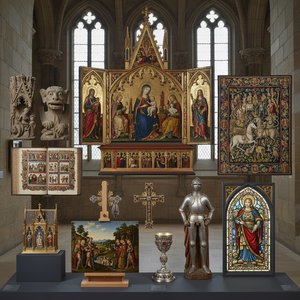
Late Medieval Masterpieces: 10 Artworks That Defined an Era | OriginalUniqueArt
Journey through 10 defining Late Medieval masterpieces – from Giotto's frescoes to Jan van Eyck’s realism. Explore the stories, techniques & vibrant colors of Gothic art. Find museum-quality reproductions and elevate your home decor with OriginalUniqueArt.com! Discover all masterpieces on OriginalUniqueArt.com


