- Acasă

- Imprimare pe pânză
- Lionello Spada
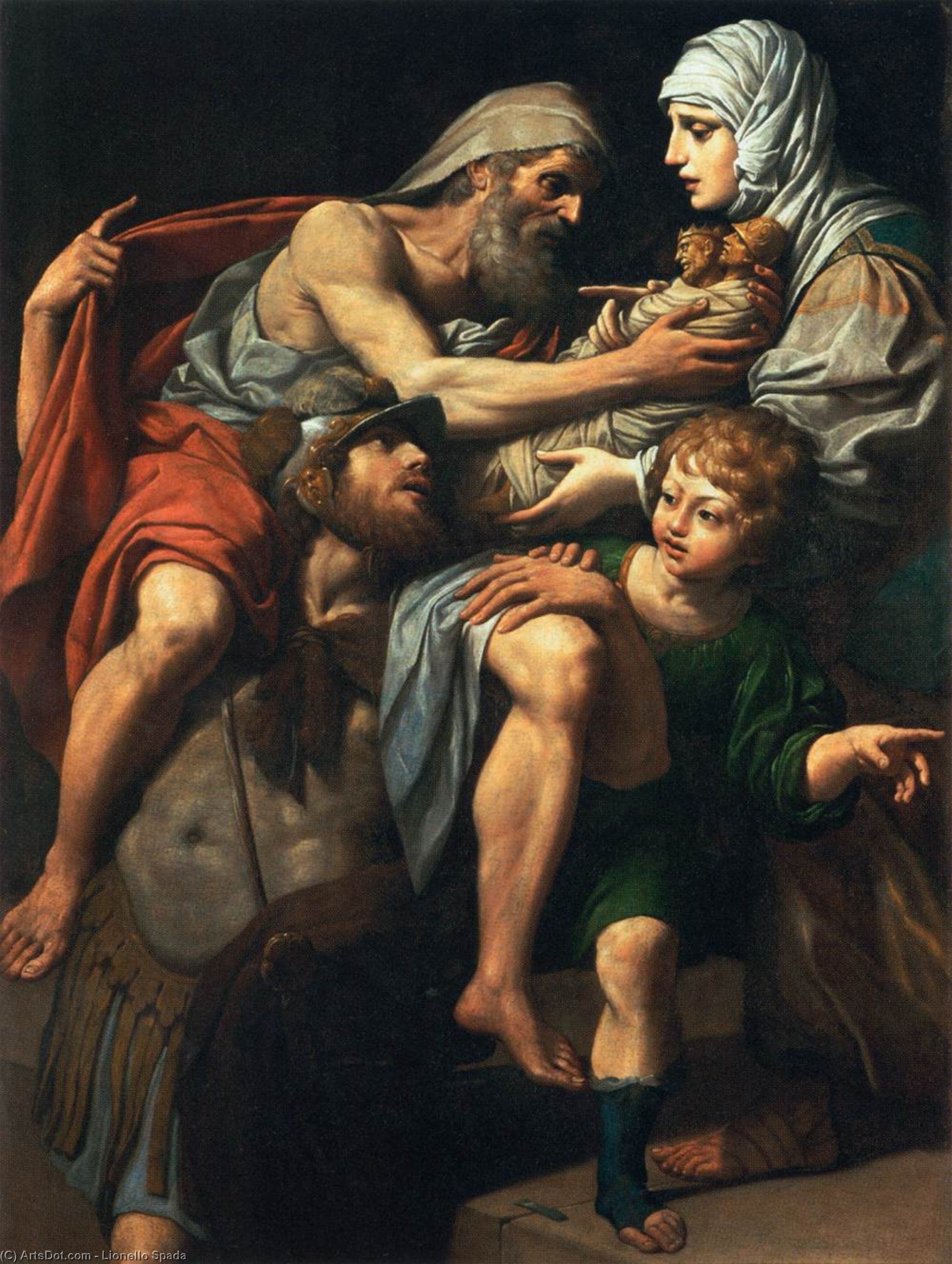
- Aeneas and Anchises
 Comandă reproducere pictată Cumpără imaginea
 Trimite
 Distribuie
 Detalii despre lucrare
 Adaugă la favorite

 Descarcă
 Similare
 Radiografie
 Diaporama
Aeneas and Anchises
 Oil On Canvas
- WallArt
- Baroque
 1615
1615 195.0 x 132.0 cm
 Muzeul Luvru
 Vezi mai mult
Giclée / Imprimare artistică
Print giclée sau pe canvas de calitate muzeală, cu producție rapidă și opțiuni flexibile de finisare.




P118B $10

P118H $10

P118W $10

P438Z $10

P508JH $12

P508YH $12

P805H $10

P805Z $10

P919BZ $10

P919G $10

P919XJ $10

P959ZH $10

P968JZ $12

W106C $8

W218G $10

W218JH $8

W218Y $10

W307PJ $10

W316G $10

W316PJ $8

W316Y $10

W398PJ $8

W4111J $10

W500HY $15

W500JH $15

W692G $12

W849H $8

W940BG $15

W953PJ $8




Alegeți dintre dimensiunile noastre prestabilite, care respectă proporțiile originale ale operei de artă.

Puteți introduce propriile dimensiuni pentru a se potrivi unui anumit cadru sau spațiu. Dacă dimensiunea selectată nu corespunde proporțiilor imaginii originale, vom decupa lucrarea de artă sau vom extinde imaginea cu margini oglindite sau cu o culoare uniformă. Un mockup digital va fi trimis pentru aprobarea dumneavoastră înainte de începerea producției.
Vă rugăm să rețineți că previzualizarea de pe ecran nu reflectă decuparea sau extinderea reală. Doar mockup-ul va arăta cu exactitate compoziția finală.
Deși dimensiunile personalizate sunt disponibile, vă recomandăm să selectați o dimensiune din lista predefinită pentru a păstra proporțiile originale.
Livrare în întreaga lume () în 2 săptămâni, în loc de cele 4/5 săptămâni standard. (23 Iulie)

Livrare expres gratuită la nivel mondial

Pânză de in de înaltă calitate

Asigurare completă pentru transport

Garanție de rambursare a taxelor vamale

Garanția fidelității culorilor

Politica de retur de 60 de zile (doar pentru defecte)

Garanție 100% de rambursare

Reducere la comenzi multiple
 Opțiunea cu sticlă este disponibilă doar pentru dimensiuni de sub 110 cm

Aeneas and Anchises
Giclée / Imprimare artistică
Dimensiune reproducere
-


Preț total calculat
-
Descriere obiect de colecție
The Dramatic Echoes of Troy: Lionello Spada’s “Aeneas and Anchises”
Lionello Spada's "Aeneas and Anchises," painted around 1615, is not merely a depiction of a pivotal moment in Virgil’s *Aeneid*; it’s a visceral embodiment of the anxieties and aspirations that defined the early Baroque era. Housed within the hallowed halls of the Louvre Museum, this oil on canvas transcends its simple subject matter to become a profound meditation on lineage, destiny, and the fraught relationship between past and future. Spada, deeply influenced by the revolutionary realism of Caravaggio yet firmly rooted in the Bolognese tradition championed by the Carracci, masterfully synthesizes these influences into a work that pulsates with dramatic intensity.
The scene unfolds with arresting immediacy. We witness Aeneas, already established as a Trojan hero and destined to found Rome, engaged in a weighty conversation with his paternal ancestor, Anchises. The figures are not idealized; they possess a palpable physicality, their faces etched with the burdens of history and the uncertainties of the journey ahead. Anchises, depicted as an aged patriarch, leans heavily on a staff, his gaze fixed upon his grandson, radiating both wisdom and a poignant sense of loss. A woman stands beside him, her expression one of quiet concern – likely Creusa, Aeneas’s wife who tragically perished during their escape from Troy, adding a layer of sorrow to the narrative.
A Baroque Masterclass: Composition and Technique
Spada's technical prowess is immediately evident in the painting’s masterful use of chiaroscuro – the dramatic interplay of light and shadow. This technique, borrowed directly from Caravaggio, serves not merely as a stylistic device but as a crucial element of storytelling. The strong contrasts heighten the emotional impact, drawing our attention to key figures and emphasizing the tension within the scene. Notice how the light illuminates Aeneas’s face, highlighting his determination, while simultaneously shrouding Anchises in shadow, suggesting the weight of generations past.
The composition itself is carefully constructed. The figures are arranged within a shallow space, creating a sense of intimacy and immediacy. Spada employs a dynamic diagonal line that guides our eye through the scene, from Anchises’s aged form to Aeneas’s youthful vigor. The inclusion of several dogs – some playfully nipping at the heels of the men, others scattered throughout the background – adds a touch of earthy realism and subtly underscores the primal nature of the narrative.
Symbolism and Historical Context
“Aeneas and Anchises” is rich in symbolic meaning. The story itself represents the cyclical nature of history—the passing down of legacy, the burden of responsibility, and the enduring quest for a new beginning. Anchises embodies the wisdom of the past, while Aeneas symbolizes the future, carrying the hopes and dreams of his ancestors upon his shoulders. The presence of Creusa’s ghost serves as a constant reminder of the sacrifices required to secure that future.
Painted during the tumultuous years following the Sack of Rome in 1527, “Aeneas and Anchises” reflects the broader anxieties of the era. The decline of the Roman Empire had instilled a deep sense of uncertainty about the future, prompting artists and intellectuals to grapple with themes of loss, redemption, and the search for new foundations. Spada’s work can be seen as an attempt to articulate these concerns through the lens of classical mythology, offering a narrative of resilience and continuity in the face of overwhelming adversity.
A Legacy of Dramatic Intensity
Lionello Spada's “Aeneas and Anchises” remains a compelling testament to the power of Baroque art. Its dramatic intensity, masterful technique, and profound symbolism continue to resonate with viewers centuries after its creation. The painting’s ability to evoke both sorrow and hope, past and future, solidifies its place as a cornerstone of Bolognese Baroque and a poignant reflection on the enduring human quest for meaning and legacy.
Biografie artist
The Dramatic Legacy of Lionello Spada
In the vibrant, shadow-drenched landscape of the early seventeenth century, few artists captured the visceral tension of the Baroque era as profoundly as Lionello Spada. Born in Bologna in 1576, Spada emerged as a pivotal figure within the Bolognese school, a movement that sought to balance classical grace with an unprecedented emotional intensity. His life, though tragically brief—concluding with his death in 17 May 1622 at only forty-six years of age—was defined by a relentless pursuit of realism and a mastery over the interplay of light and darkness. To look upon a Spada canvas is to witness the transition from the stylized elegance of Mannerism into the raw, theatrical power of the Caravaggesque revolution.
Spada’s artistic DNA was woven from the finest threads of his era's competing traditions. His early training under Cesare Bagliente provided him with a rigorous foundation in disegno, the disciplined art of drawing and anatomical precision that had been the hallmark of the Renaissance masters. However, it was the atmospheric influence of the Flemish painter Denis Calvaert that truly ignited Spada's creative spirit. Through this connection, the seeds of Caravaggio’s revolutionary naturalism began to take root in his work. This fusion allowed Spada to move beyond mere anatomical accuracy, embracing a style where light does not simply illuminate a scene but actively sculpts it, carving figures out of an encroaching, velvety gloom.
Mastery of Light and Illusion
As Spada’s career matured, he became a master of the theatrical, expanding his repertoire beyond traditional easel painting into the grand, immersive realms of quadratura. Alongside his collaborator Girolamo Curti, Spada specialized in decorative illusionistic painting, a technique designed to dissolve the physical boundaries of walls and ceilings. These works were not merely decorations but architectural transformations, creating vast, celestial vistas that seemed to open the very heavens above aristocratic halls. This ability to manipulate space and perspective demonstrated a technical versatility that few of his contemporaries could match.
His stylistic evolution is marked by several key artistic milestones:
- The Caravaggesque Influence: The adoption of chiaroscuro, using extreme contrasts between light and shadow to heighten the psychological drama of his subjects.
- Anatomical Rigor: A persistent commitment to the structural integrity of the human form, inherited from his early Bolognese training.
- Collaborative Grandeur: The successful execution of large-scale fresco cycles that integrated painting with architectural illusionism.
- Emotional Realism: A departure from idealized beauty in favor of capturing the grit, movement, and raw humanity of biblical and historical narratives.
Historical Significance and Enduring Impact
The significance of Lionello Spada lies in his role as a bridge between eras. He stood at the crossroads where the structured humanism of the Renaissance met the emotive, often turbulent energy of the Baroque. While much of his biographical history remains shrouded by the passage of time, his visual legacy is unmistakable. By synthesizing the meticulous draftsmanship of the Bolognese tradition with the dramatic naturalism of the Caravaggisti, he helped define a new visual language for Europe.
Today, Spada is remembered not merely as a follower of greater masters, but as a visionary in his own right. His works serve as profound windows into a period of intense religious and social transformation, where art was used to provoke awe, inspire piety, and command the senses. Through his mastery of shadow and his ability to breathe life into the painted figure, Spada ensured that the spirit of the Bolognese Baroque would endure long after his untimely passing.

Lionello Spada
1576 - 1622 , Italy
Detalii rapide
- Artistic Movement Or Style: Baroque
- Artists Or Movements Influenced By This Artist: ['Caravaggio']
- Artists Who Influenced This Artist:
- Ludovico Carracci
- Denis Calvaert
- Date Of Birth: 1576 Bologna Italy
- Date Of Death: 1622
- Full Name: Lionello Spada
- Nationality: Italian
- Notable Artworks:
- Saint Sebastian
- Joseph & Potiphar’s Wife
- Martyrdom of St Peter
- Place Of Birth: Bologna Italy
Articole conexe
Metropolitan Museum of Art: Top 25 de capodopere pentru o casă inspirată
Descoperă top 25 de capodopere din Metropolitan Museum of Art, New York! Explorează poveștile lui Monet, Van Gogh și Rembrandt. Găsește inspirație pentru decorul casei tale cu reproduceri artă de calitate muzeală pe OriginalUniqueArt.com.
Renașterea Timpurie: 10 Capodopere Esențiale pentru Decorul de Lux
Descoperă 10 capodopere renascentiste esențiale – Botticelli, Leonardo da Vinci și Rafael! Explorează istoria artei, tehnicile artistice și simbolismul picturilor. Reproduceri de lux pentru decor interior pe OriginalUniqueArt.com.
Sandro Botticelli: Cele Mai Frumoase 25 De Capodopere – Artă Renașcentistă pentru Decorul Casei Tale
Descoperă cele mai frumoase 25 de capodopere ale lui Sandro Botticelli! Explorează istoria, simbolismul și frumusețea picturilor renascentiste precum 'Nașterea lui Venus' și 'Primăvara'. Găsește reproducerea perfectă pentru decorul casei tale pe OriginalUniqueArt.com.
Renașterea Umanistă: 10 Capodopere Esențiale pentru Decorul Cult și Rafinat
Descoperă 10 capodopere ale Renașterii Umaniste – Leonardo da Vinci, Michelangelo și Rafael prind viață! Explorează istoria artei, tehnicile artistice și culorile vibrante. Reproduceri de tablouri de calitate muzeală pentru un decor rafinat pe OriginalUniqueArt.com.
Top 25 de Capodopere din Alte Pinakothek: Artă Clasică pentru Decorul Tău
Descoperă top 25 de capodopere din Alte Pinakothek, München! Rembrandt, Dürer și Rafael prind viață în articolele noastre. Istoria artei, tehnici unice & inspirație pentru decorul tău. Explorează colecția completă pe OriginalUniqueArt.com!

