

 Vezi în context
 Trimite
 Distribuie
 Detalii
 Ghidul

 Descarcă
 Produse similare
 Radiografie
 Diaporama
 Statistici
Untitled\n\nUntitled
 Ink
Ink- WallArt
- Constructivism
 1939
1939- Modern
 50.0 x 40.0 cm
 Muzeul de Artă Plastică din Boston
 Citește mai mult
Giclée / Imprimare artistică
Printuri giclée sau pe canvas de calitate muzeală, cu proces de producție rapid și opțiuni flexibile de finisare. ( Comandă pictură realizată manual Treci la imagine digitală)




P118B lei10

P118H lei10

P118W lei10

P438Z lei10

P508JH lei12

P508YH lei12

P805H lei10

P805Z lei10

P919BZ lei10

P919G lei10

P919XJ lei10

P959ZH lei10

P968JZ lei12

W106C lei8

W218G lei10

W218JH lei8

W218Y lei10

W307PJ lei10

W316G lei10

W316PJ lei8

W316Y lei10

W398PJ lei8

W4111J lei10

W500HY lei15

W500JH lei15

W692G lei12

W849H lei8

W940BG lei15

W953PJ lei8




Alegeți dintre dimensiunile noastre prestabilite, care respectă proporțiile originale ale operei de artă.

Introduceți lățimea și înălțimea de care aveți nevoie, pentru a se potrivi ramei sau peretelui dumneavoastră. O printare poate fi doar tăiată, niciodată extinsă dincolo de dimensiunea imaginii originale, astfel încât o dimensiune cu o formă diferită va pierde o parte din imagine. Vă trimitem o simulare digitală pentru aprobare înainte de a imprima orice. Imaginea afișată pe această pagină nu prezintă tăierea reală — doar simularea arată acest lucru.
Livrare în întreaga lume () în 2 săptămâni, în loc de cele 4/5 săptămâni standard. (21 Octombrie)

Livrare expres gratuită la nivel mondial

Pânză de in premium

Asigurare completă pentru transport

Garanție de rambursare a taxelor vamale

Garanția fidelității culorilor

Politica de retur în 100 de zile (doar pentru defecte)

Garanție de rambursare 100%

Reducere pentru comenzi multiple
 Opțiunea cu sticlă este disponibilă doar pentru dimensiuni de sub 110 cm

Untitled\n\nUntitled
Giclée / Imprimare artistică
Dimensiune reproducere
-


Preț total
lei 368
A Symphony of Geometry: The Visionary Abstraction of László Moholy-Nagy
In the quiet, monochromatic depths of László Moholy-Nagy’s 1939 masterpiece, “Untitled,” one finds a profound dialogue between order and energy. This work is not merely an arrangement of shapes; it is a rhythmic composition that captures the very heartbeat of the Constructivist movement. At its core, the painting presents a commanding central circle, a celestial focal point around which smaller, orbiting forms dance in a delicate, cosmic ballet. A bold diagonal line slices through the canvas, acting as a dynamic catalyst that disrupts any sense of static stillness, injecting a surge of kinetic vitality into the composition. This interplay of intersecting lines and concentric circles creates a sense of spatial ambiguity, inviting the viewer to lose themselves in a world where gravity is replaced by pure geometric logic.
The brilliance of this piece lies in its chromatic minimalism. By eschewing the distraction of vibrant color, Moholy-Nagy directs our gaze toward the subtle nuances of light, shadow, and texture. The palette is a sophisticated study in grayscale, where varying shades of black, white, and silver create a sense of depth and atmospheric weight. This monochromatic approach allows the structural elements—the sharp edges of the lines and the soft curves of the circles—to resonate with greater clarity. For the discerning collector or interior designer, this restraint offers an unparalleled versatility; the artwork possesses a timeless elegance that can anchor a modern minimalist gallery or provide a sophisticated, intellectual focal point within a contemporary living space.
The Bauhaus Legacy and the Spirit of Modernity
To understand “Untitled,” one must look to the radical spirit of the Bauhaus school, where Moholy-Nagy served as a pivotal figure. This artwork embodies the era's revolutionary pursuit of integrating fine art with industrial design and technological progress. The painting reflects a period when artists sought to strip away the ornamental excesses of the past to find truth in fundamental forms. Every line and shape feels intentional, echoing the precision of an architect or the clarity of a typographer. There is an inherent sense of industrial optimism within these shapes—a belief that through rational organization and geometric harmony, one could reflect the structured beauty of the modern, machine-driven age.
Beyond its historical significance, the emotional impact of the work is deeply evocative. While the subject matter is purely abstract, it stirs a sense of profound equilibrium and cosmic order. The repetition of circular motifs can be seen as a symbol of continuity and the cyclical nature of existence, while the intersecting lines suggest the complex connections that bind our world together. For those seeking to bring a piece of art history into their homes, this reproduction offers more than just decoration; it provides an invitation to contemplate the intersection of human intellect and mathematical beauty. It is a work that does not demand attention through noise, but commands it through a silent, powerful, and enduring grace.
Întrebări și răspunsuri
În ce etapă a carierei lui László Moholy-Nagy se încadrează „Untitled\n\nUntitled” (1939)?
"Untitled\n\nUntitled", creat în 1939, aparține perioadei Modern din cariera lui László Moholy-Nagy."
Ce atmosferă ar aduce într-o încăpere o reproducere a operei "Untitled\n\nUntitled" de László Moholy-Nagy?
Atmosfera Modern a operei "Untitled\n\nUntitled" de László Moholy-Nagy se potrivește perfect spațiului recomandat: un Living Room.
Care sunt proporțiile lui "Untitled\n\nUntitled" de László Moholy-Nagy și ce dimensiuni are?
Formatul lucrării „Untitled\n\nUntitled” este Portrait, iar dimensiunile originale sunt 50 x 40 cm. Ambele informații sunt utile atunci când planificați o reproducere.
Biografie artist
László Moholy-Nagy: Un pionier al artei moderne și al Bauhaus
László Moholy-Nagy, o figură excepțională a scenei artistice din secolul XX, a fost un pictor, fotograf, sculptor și designer maghiar de o influență profundă. Este renumit în special pentru contribuțiile sale semnificative la școala Bauhaus și pentru munca sa pionieristă în Constructivism, tipografie, fotografie și artă cinetică. Filosofia artistică a lui Moholy-Nagy se baza pe integrarea tehnologiei și industriei în arta, pledând pentru o nouă viziune asupra creativității care îmbrățișa lumea modernă.Tinerețe și influențe
László Weisz s-a născut în Bacsborsód, Ungaria, în 1895, într-o familie evreiască. Apoi a adoptat numele Moholy-Nagy. Strămoșul său, Guszti bácsi, a fost un avocat și a jucat un rol important în viața tânărului László. Unul dintre cei mai notabili influenți din tinerețea lui Moholy-Nagy a fost fiul său, care a fost conducătorul de oră guvernator Sir Georg Solti. După absolvirea liceului, Moholy-Nagy a studiat drept în Budapeste, dar a întrerupt studiile pentru a servi în armata Austro-Ungară în timpul Primului Război Mondial, suferind o ranire gravă. Această perioadă l-a expus la mișcări avantarde prin intermediul revistelor precum "Jelenkor" și cercul activist din jurul jurnalului "Ma" al lui Lajos Kassák. În perioada războiului, a fost implicat în mișcarea comunistă maghiară. În primii săi ani artistici, Moholy-Nagy a studiat cu Robert Berény, un pictor fauvist unguresc, demonstrând un interes precoce pentru tendințele artistice moderne. A susținut pe scurt Republica Sovietică Maghiară, reflectând idealismul său social și dorința de a contribui la o lume nouă. Influențe majore au fost Constructivismul și Suprematismul, mișcări care puneau accent pe abstractizarea geometrică și pe materiale industriale. Aceste influențe sunt evidente în operele sale ulterioare.Anii Bauhaus și "Noua Viziune"
În 1923, Moholy-Nagy s-a alăturat școlii Bauhaus din Weimar, Germania, unde a co-predat cursul preliminar cu Josef Albers și, în cele din urmă, a preluat conducerea atelierului de metal, înlocuind pe Johannes Itten. Venirea lui Moholy-Nagy a marcat o schimbare față de expresionism către un abordare mai constructivistă și orientată spre design, aliniindu-se cu scopurile originale ale școlii. "Noua Viziune" (Neues Sehen) este termenul cel mai bine cunoscut asociat cu Moholy-Nagy. A creat acest concept pentru a evidenția capacitatea camerei de a dezvălui aspecte ale realității invizibile pentru ochiul uman. Această idee stătea la baza experimentelor sale fotografice și artistice. El a fost un pionier în tehnica fotogramelor – crearea de imagini prin plasarea directă a obiectelor pe hârtie fotosensibilă, fără utilizarea unei camere – demonstrând abordări inovatoare în fotografia. Moholy-Nagy a explorat și alte tehnici, cum ar fi montajul fotografic și filmul experimental, combinând elemente din diferite medii artistice. A îmbrățișat materiale industriale precum metalul, plexiglasul și iluminatul electric în sculpturile sale și designuri, reflectând credința sa în integrarea artei și tehnologiei.Realizări majore și inovații
Una dintre realizările sale cele mai notabile este "Lichtrequisit einer elektrischen bühne" (Modulatorul de spațiu și lumină electrică), finalizat în 1930. Această sculptură cinetică utiliza piese mobile și proiecta lumina pentru a crea modele dinamice pe suprafețele din jur, fiind considerată un precursor al artei cinetice și a artei luminoase. De asemenea, Moholy-Nagy a fost un fotograf prolific, explorând abstractizarea, textura și mișcarea în lucrările sale. A utilizat tehnici neconvenționale precum montajul fotografic și iluminatul experimental pentru a crea imagini inovatoare. A intrat și în domeniul filmului, experimentând cu diferite forme de expresie vizuală.Importanță istorică
László Moholy-Nagy este recunoscut ca o figură centrală în arta modernă din secolul XX, conectând pictura, sculptura, fotografia și designul industrial. Contribuțiile sale la școala Bauhaus au avut un impact de durată asupra educației artistice, influențând generații de artiști și designeri. Accentul său pus pe integrarea tehnologiei în artă a anticipat multe dezvoltări ale practicilor artistice contemporane. Moștenirea lui Moholy-Nagy continuă să inspire artiștii și fotografiile să exploreze posibilitățile percepției și reprezentării prin tehnici inovatoare.
László Moholy-Nagy
1895 - 1946 , Ungaria
Informații rapide
- Artistic Movement Or Style: Constructivism, Bauhaus
- Artists Or Movements Influenced By This Artist: ['Marianne Brandt']
- Artists Who Influenced This Artist: ['Robert Berény']
- Date Of Birth: 1895
- Full Name: László Moholy-Nagy
- Nationality: Ungarian
- Notable Artworks:
- Small Composition
- Flower
- Mass Psychosis
- Place Of Birth: Bacs-Kajala, Ungaria
Articole conexe

Top 10 Capodopere ale Expresionismului Abstract: Artă, Artiști și Decorațiuni de Lux | OriginalUniqueArt.ro
Descoperă Top 10 capodopere ale Expresionismului Abstract! Explorează poveștile lui Pollock, Rothko și De Kooning. Reproduceri de artă de lux & inspirație decor pe OriginalUniqueArt.ro. Găsește pictura perfectă pentru spațiul tău!

Top 10 Tablouri Celebre Dominante de Negru: Artă, Istorie și Decor Rafinat
Descoperă Top 10 tablouri celebre dominate de negru! Explorează istoria, simbolismul și tehnicile artistice ale unor opere iconice de Rembrandt, Goya și alți maeștri. Reproduceri de artă de calitate muzeală pe OriginalUniqueArt.com – inspiră-ți decorul!

Wassily Kandinsky: Cele Mai Iconice 25 De Opere – Artă Abstractă pentru Decor Rafinat
Descoperă cele mai emblematice 25 de opere ale lui Wassily Kandinsky, pionierul artei abstracte! Explorează culorile vibrante, compozițiile unice și istoria fascinantă din spatele fiecărei picturi. Reproduceri de calitate muzeală pe OriginalUniqueArt.com – inspiră-ți decorul cu artă modernă!
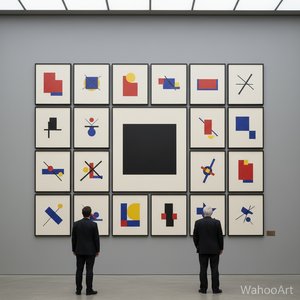
Kazimir Malevich: Cele Mai Iconice 25 De Opere – Artă Abstractă pentru Decor Rafinat
Descoperă cele mai importante 25 de opere ale lui Kazimir Malevich, pionierul Suprematismului! Explorează istoria picturilor abstracte iconice precum 'Black Square' și 'White on White'. Găsește reproduceri artă de calitate muzeală pentru un decor rafinat pe OriginalUniqueArt.com.

Top 10 Capodopere Alb-Negru: Frumusețe Atemporală în Artă | OriginalUniqueArt.ro
Descoperă top 10 picturi celebre dominate de alb, de la Monet la Kandinsky! Explorează istoria artei, tehnicile artistice și frumusețea atemporală a capodoperelor clasice. Reproduceri de calitate muzeală pe OriginalUniqueArt.com – inspiră-ți decorul!