

 Vezi în context
 Trimite
 Distribuie
 Detalii
 Ghidul

 Descarcă
 Produse similare
 Radiografie
 Diaporama
 Statistici
People
 Oil On Canvas
- WallArt
- Impressionism
 1923
1923- Modern
 91.0 x 121.0 cm
 Citește mai mult
Lucrarea de artă afișată pe această pagină este protejată de legile privind drepturile de autor, ceea ce înseamnă că nu putem crea sau vinde în mod legal o reproducere identică. Această protecție este garantată prin acorduri internaționale, precum Convenția de la Berna și de legile naționale, inclusiv cele prevăzute de Legea dreptului de autor din S.U.A. – Titlul 17. Toate drepturile rezervate. Orice reproducere neautorizată este interzisă.
Această metodă respectă pe deplin reglementările privind drepturile de autor, deoarece nu implică copierea sau duplicarea operei protejate. În schimb, este o reinterpretare creativă – o pictură nouă, influențată de original, dar care nu este identică cu acesta.
Giclée / Imprimare artistică
Printuri giclée sau pe canvas de calitate muzeală, cu proces de producție rapid și opțiuni flexibile de finisare. ( Comandă pictură realizată manual Treci la imagine digitală)




P118B lei10

P118H lei10

P118W lei10

P438Z lei10

P508JH lei12

P508YH lei12

P805H lei10

P805Z lei10

P919BZ lei10

P919G lei10

P919XJ lei10

P959ZH lei10

P968JZ lei12

W106C lei8

W218G lei10

W218JH lei8

W218Y lei10

W307PJ lei10

W316G lei10

W316PJ lei8

W316Y lei10

W398PJ lei8

W4111J lei10

W500HY lei15

W500JH lei15

W692G lei12

W849H lei8

W940BG lei15

W953PJ lei8




Alegeți dintre dimensiunile noastre prestabilite, care respectă proporțiile originale ale operei de artă.

Puteți introduce propriile dimensiuni pentru a se potrivi unui anumit cadru sau spațiu. Dacă dimensiunea selectată nu corespunde proporțiilor imaginii originale, vom decupa lucrarea de artă sau vom extinde imaginea cu margini oglindite sau cu o culoare uniformă. Un mockup digital va fi trimis pentru aprobarea dumneavoastră înainte de începerea producției.
Vă rugăm să rețineți că previzualizarea de pe ecran nu reflectă decuparea sau extinderea reală. Doar mockup-ul va arăta cu exactitate compoziția finală.
Deși dimensiunile personalizate sunt disponibile, vă recomandăm să selectați o dimensiune din lista predefinită pentru a păstra proporțiile originale.
Livrare în întreaga lume () în 2 săptămâni, în loc de cele 4/5 săptămâni standard. (13 Octombrie)

Livrare expres gratuită la nivel mondial

Pânză de in premium

Asigurare completă pentru transport

Garanție de rambursare a taxelor vamale

Garanția fidelității culorilor

Politica de retur în 100 de zile (doar pentru defecte)

Garanție de rambursare 100%

Reducere pentru comenzi multiple
 Opțiunea cu sticlă este disponibilă doar pentru dimensiuni de sub 110 cm

People
Giclée / Imprimare artistică
Dimensiune reproducere
-


Preț total
lei 362
A Midnight Encounter with the Extraordinary
In the quiet, shadowed hours of 1923, Konstantin Yuon captured a moment that defies the boundaries of traditional realism, inviting us into a world where the terrestrial and the celestial collide. His painting, People, presents a hauntingly beautiful nocturnal scene that begins with a group of figures gathered before a simple fence, yet quickly transcends the mundane. As the eye wanders through the composition, it discovers an unexpected narrative: an airplane cutting through the dark sky and, most strikingly, a massive spaceship looming above the horizon. This juxtaposition of human presence with advanced, otherworldly technology creates a profound sense of mystery, pulling the viewer into a dreamscape where the limits of science fiction and reality are indistively blurred.
The atmosphere of the piece is thick with intrigue, making it an ideal centerpiece for those looking to add a layer of intellectual depth and conversation to a sophisticated interior. The artist masterfully utilizes the darkness of the night to frame the subjects, using light not just to illuminate faces, but to evoke a sense of wonder. For collectors and designers, this work offers more than mere decoration; it provides a window into a moment of cosmic curiosity, where the stillness of a group of onlookers meets the silent, majestic movement of something far beyond our world.
The Mastery of Konstantin Yuon
To understand the technical brilliance behind People, one must look to the rich artistic lineage of Konstantin Yuon. Trained at the prestigious Moscow School of Painting, Sculpture and Architecture under masters like Konstantin Korovin, Yuon possessed a profound command over light and texture. His journey from the delicate nuances of Impressionism to the structured narratives of Soviet Realism allowed him to manipulate oil on canvas with exceptional fluidity. In this particular work, his technique serves the theme of mystery; the brushwork is deliberate yet atmospheric, allowing the edges of the figures to blend softly into the nocturnal landscape, much like a memory fading into the night.
The emotional impact of the painting lies in its ability to evoke both solitude and collective awe. There is a palpable tension between the grounded, earthly presence of the people and the soaring, technological marvels above them. This duality makes the artwork particularly compelling for modern spaces, where it can serve as a focal point that stimulates the imagination. Whether placed in a contemporary gallery setting or a classic study, Yuon’s ability to weave symbolism—the airplane representing human progress and the spaceship representing the infinite unknown—ensures that the painting remains a timeless exploration of the human condition in an ever-expanding universe.
Întrebări și răspunsuri
Cu ce sentiment este asociată opera „People”?
"People" este asociată cu un sentiment Mysterious. Tonul emoțional descrie impresia pe care o transmite lucrarea.
La ce artist este atribuită opera „People”?
„People” a fost creat de Konstantin Yuon. Informațiile de pe această pagină descriu opera originală a lui Konstantin Yuon.
Care sunt autorul și data creației pentru "People"?
„People” a fost creat de Konstantin Yuon în 1923.
Ce ton emoțional însoțește stilul Impressionism din "People"?
"People" transmite o Mysterious notă emoțională în cadrul mișcării Impressionism.
Unde pot cumpăra o reproducere pictată manual a operei "People" de Konstantin Yuon?
"People" este disponibil sub formă de o reproducere pictată manual în ulei pe pânză de in. Comanda poate fi plasată pe această pagină, având la dispoziție mai multe dimensiuni.
Există o prezentare de diapozitive pentru "People" de Konstantin Yuon?
Este disponibil un diaporama: pagina Diapozitive pentru "People" de Konstantin Yuon.
Din ce perioadă a carierei lui Konstantin Yuon face parte „People”?
"People" reprezintă perioada Mature Period a lui Konstantin Yuon.
Care este locul ocupat de "People" de Konstantin Yuon în istoria artei?
"People" de Konstantin Yuon aparține mișcării Impressionism, din perioada Modern. Împreună, acestea conferă operei locul său în istoria artei.
Biografie artist
Early Life and Artistic Foundations
Konstantin Fyodorovich Yuon, born in Moscow on October 24th, 1875, emerged from a family deeply intertwined with both Swiss-Russian heritage and a rich artistic tradition. His father, an employee of the insurance company, carried roots tracing back to Switzerland, while his mother’s lineage connected them to German families – a combination that profoundly shaped the cultural landscape of their upbringing. From a remarkably young age, Konstantin demonstrated a keen sensitivity to visual expression, nurtured within a home environment where artistic pursuits were not merely encouraged but actively fostered by his mother. This early exposure proved foundational, laying the groundwork for his formal education at the Moscow School of Painting, Sculpture and Architecture from 1892 to 1898. It was during these formative years that he came under the tutelage of distinguished masters – Konstantin Savitsky and Konstantin Korovin – absorbing their techniques, philosophies, and a deep appreciation for the traditions of Russian art. These early influences weren’t confined to the classroom; Yuon embarked on journeys throughout Europe, particularly immersing himself in Paris, where he encountered the vibrant world of Impressionism. While undeniably captivated by artists like Camille Pissarro, he didn't simply replicate their styles; instead, he skillfully synthesized these foreign influences with a uniquely Russian sensibility, forging his own distinctive artistic voice – one that retained a profound connection to his homeland while embracing innovation.From Symbolism to Soviet Realism
Yuon’s early oeuvre is characterized by an evocative blend of Impressionistic landscapes imbued with subtle touches of Symbolism. Paintings such as *To the Trinity* (1903) and *Tverskoy Boulevard* (1909) exemplify this period, capturing fleeting moments of light and atmosphere with a remarkable sensitivity to color and texture – yet simultaneously hinting at deeper emotional resonances and symbolic meanings. He wasn’t content to remain solely within the confines of Impressionism; Yuon began experimenting with lyrical landscapes that incorporated elements drawn from traditional Russian art forms—the delicate precision of Palekh miniature painting, reminiscent of intricate icon artistry, and a profound engagement with the spiritual depth found in religious iconography. This masterful fusion created a visual language entirely his own – one deeply rooted in national identity while remaining open to artistic exploration and evolution. However, the tumultuous political landscape of the early 20th century dramatically altered the trajectory of Yuon’s artistic development. As the Russian Empire crumbled and the Soviet era dawned, he found himself navigating a rapidly changing world shaped by new ideological imperatives. This shift inevitably impacted his style, leading him towards a more academic approach – one aligned with the tenets of Socialist Realism, a dominant artistic movement within the Soviet Union that prioritized accessibility, clarity, and service to the revolutionary cause. His monumental work *Parade on the Red Square on November 7, 1941*, a powerful depiction of Soviet strength during wartime, stands as a compelling example of this transformation – a testament to his ability to adapt while retaining his artistic integrity.A Multifaceted Career and Institutional Leadership
Konstantin Yuon’s contributions extended far beyond the realm of painting; he was a truly multifaceted figure who played a significant role in shaping the Russian art world. He wasn't merely an artist but also a dedicated educator, mentor, and administrator – a leader whose influence resonated throughout the artistic community. In 1900, he established his own private painting and drawing school in Moscow, providing aspiring artists with invaluable training and guidance. Among those who benefited from his instruction were many notable figures who would later become prominent within Russian art—a testament to his skill as an educator and his commitment to nurturing the next generation of talent. Later in his career, Yuon accepted a position at the Leningrad Academy of Arts and the Surikov Art Institute in Moscow, continuing to impart his knowledge and expertise to students. Beyond his teaching roles, he also served as the director of the Research Institute of the Academy of Arts (1948–1950), demonstrating his administrative acumen and his dedication to advancing the understanding and appreciation of Russian art. Perhaps most notably, Yuon held the position of First Secretary of the Union of Soviet Artists (1956–1958)—a role that afforded him considerable influence over artistic policy and education within the Soviet system. This leadership position allowed him to champion his vision for Russian art while navigating the complexities of a rapidly changing political landscape.Major Achievements and Artistic Style
Yuon’s artistic style evolved significantly throughout his career, reflecting both his personal influences and the prevailing trends of the time. His early works are characterized by their luminous color palettes, atmospheric perspective, and subtle Symbolist undertones – often depicting landscapes imbued with a sense of melancholy or spiritual longing. Paintings like *New Planet* (1912) and *Bean Vine* showcase this period perfectly, capturing fleeting moments of beauty while hinting at deeper emotional complexities. As the 20th century progressed, his style gradually shifted towards a more monumental and narrative approach, particularly evident in works such as *Parade on the Red Square on November 7, 1941*. This painting, executed during World War II, exemplifies Yuon’s ability to convey patriotic fervor and Soviet strength through dramatic composition and powerful imagery. Throughout his career, Yuon consistently demonstrated a remarkable command of technique—mastering both brushwork and color theory to create paintings that were not only visually stunning but also emotionally resonant. His work is characterized by a deep understanding of light and shadow, a keen eye for detail, and an ability to capture the essence of Russian landscapes and human experience.Legacy and Enduring Influence
Konstantin Yuon’s legacy remains a complex and compelling one—a testament to an artist who navigated turbulent times while remaining steadfast in his artistic convictions. He stands as a pivotal figure in 20th-century Russian art, bridging the gap between the aesthetic sensibilities of the late 19th century and the ideological demands of the Soviet era. His early Symbolist landscapes possess a haunting beauty that continues to captivate viewers, while his later Socialist Realist works offer valuable insights into the artistic strategies employed by the Soviet regime. Today, Yuon’s paintings are held in prominent museum collections across Russia—including the Tretyakov Gallery and the Taganrog Art Museum—ensuring their accessibility for generations of art enthusiasts. His work continues to be studied and celebrated for its technical mastery, emotional depth, and historical significance – a lasting tribute to a remarkable artist who indelibly shaped the cultural landscape of Russia.
Konstantin Yuon
1875 - 1958 , Rusia
Informații rapide
- Artistic Movement Or Style: Impressionism, Simbolism, Realism Socialist
- Artists Or Movements Influenced By This Artist: ['Savitsky']
- Artists Who Influenced This Artist:
- Korovin
- Serov
- Pissarro
- Date Of Birth: 24 Oct 1875
- Date Of Death: 11 Apr 1958
- Full Name: Konstantin Fyodorovich Yuon
- Nationality: Rusian
- Notable Artworks:
- Noua Planetă
- Vârf de munte
- Parada pe Piața Roșie
- Place Of Birth: Moscu, Rusia
Articole conexe

Top 10 Capodopere Post-Impresioniste care au Definit Arta Modernă | OriginalUniqueArt.ro
Descoperă Top 10 capodopere post-impresioniste de la Van Gogh, Monet, Cézanne și alții! Explorează istoria artei moderne, tehnicile unice și culorile vibrante. Reproduceri tablouri de calitate muzeală pe OriginalUniqueArt.com

Konstantin Korovin: A Master of Russian Impressionism & Evocative Light
Explore the captivating world of Konstantin Korovin, a leading Russian Impressionist painter renowned for his vibrant landscapes & innovative theater designs. Discover his life, legacy, and enduring artistic impact.

Konstantin Somov: A Master of Russian Aestheticism & Symbolist Elegance
Explore the captivating world of Konstantin Somov, a leading figure of Russian Symbolism & Aestheticism. Discover his exquisite portraits, ballet scenes, and Rococo-inspired masterpieces. Learn about his life, influences, and enduring legacy.
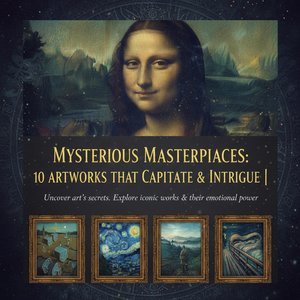
Top 10 Opere de Artă Misterioase: Emoții Profunde și Inspirație pentru Decor
Descoperă Top 10 opere de artă misterioase care inspiră emoții profunde! Explorează poveștile din spatele picturilor celebre, stilurile artistice și simbolismul lor. Reproduceri tablouri Vincent van Gogh, Munch & alți artiști pe OriginalUniqueArt.com. Inspiră-te pentru decor!

Konstantin Bogaevsky: A Legacy of Russian Symbolism & the Poetics of Nostalgia
Explore the captivating world of Konstantin Bogaevsky (1872-1943), a leading figure in Russian Symbolism. Discover his dreamlike Crimean landscapes, influences & lasting legacy with OriginalUniqueArt.