

 Vezi în context
 Trimite
 Distribuie
 Detalii
 Ghidul

 Descarcă
 Produse similare
 Radiografie
 Diaporama
 Statistici
Poster for Fromme's Calendar
 Lithograph
- Vienna Secession
 1899
1899- 19th Century
 94.0 x 62.0 cm
 Citește mai mult
Reproducere pictată manual în ulei
Pictură în ulei pe pânză, realizată manual de artiștii noștri la dimensiunea și ramele dorite de dumneavoastră, pe comandă. ( Comută pe versiunea Print Treci la imagine digitală)




P118B $10

P118H $10

P118W $10

P438Z $10

P508JH $12

P508YH $12

P805H $10

P805Z $10

P919BZ $10

P919G $10

P919XJ $10

P959ZH $10

P968JZ $12

W106C $8

W218G $10

W218JH $8

W218Y $10

W307PJ $10

W316G $10

W316PJ $8

W316Y $10

W398PJ $8

W4111J $10

W500HY $15

W500JH $15

W692G $12

W849H $8

W940BG $15

W953PJ $8




Alegeți dintre dimensiunile noastre prestabilite, care respectă proporțiile originale ale operei de artă.

Puteți introduce propriile dimensiuni pentru a se potrivi unui anumit cadru sau spațiu. Dacă dimensiunea selectată nu corespunde proporțiilor imaginii originale, vom decupa opera de artă sau vom extinde pictura cu elemente suplimentare pictate manual. O simulare digitală vă va fi trimisă pentru aprobare înainte de începerea producției.
Vă rugăm să rețineți că previzualizarea de pe ecran nu reflectă decuparea sau extinderea reală. Doar macheta va arăta cu exactitate compoziția finală.
Deși sunt disponibile dimensiuni personalizate, vă recomandăm să selectați o dimensiune din lista predefinită pentru a păstra proporțiile originale.
După plasarea comenzii, echipa OriginalUniqueArt.com va contacta clientul prin e-mail pentru instrucțiuni și îi va furniza o previzualizare a machetei
Livrare în întreaga lume () în 3-4 săptămâni, în loc de cele 5 săptămâni standard. (25 Septembrie). Fără compromisuri în ceea ce privește calitatea.

Livrare expres gratuită la nivel mondial

Pânză de in premium

Asigurare completă pentru transport

Garanție de rambursare a taxelor vamale

Garanția fidelității culorilor

Politica de retur în 100 de zile (doar pentru defecte)

Garanție de rambursare 100%

Reducere pentru comenzi multiple
 Opțiunea cu sticlă este disponibilă doar pentru dimensiuni de sub 110 cm

Poster for Fromme's Calendar
Tip de reproducere
Dimensiune reproducere
-


Preț total
$ 300
A Vision of Time: The Elegance of Koloman Moser’s Graphic Mastery
In the twilight of the nineteenth century, as the winds of modernity began to sweep through Europe, a new aesthetic language was being forged in the heart of Vienna. Koloman Moser, a visionary architect of the Vienna Secession, captured this transformative era in his breathtaking Poster for Fromme's Calendar. Created in 1899, this masterpiece serves as more than just an advertisement; it is a profound meditation on the passage of time and the beauty of structured design. The composition centers on a captivating female figure, adorned with a delicate flower crown that suggests a deep connection to nature and the cyclical rhythms of life. As she holds a clock within her grasp, the viewer is invited into a dreamlike space where the mechanical precision of time meets the organic grace of the human spirit.
The visual language of this work is a triumph of the Jugendstil style, characterized by its seamless integration of geometric clarity and flowing, ornamental motifs. Moser utilizes a striking palette, most notably the bold, luminous yellow circle that frames the central clock, acting as a sun-like focal point that anchors the entire composition. This use of color is not merely decorative but serves to direct the eye through a carefully choreographed dance of shapes. The presence of subtle elements—the delicate cups and the soft curve of a bowl—adds a layer of domestic intimacy to the piece, grounding the high-concept symbolism in a relatable, everyday reality. Every line and contour reflects Moser's training at the Wiener Akademie, showcasing a sophisticated command over balance and negative space.
For the discerning collector or interior designer, this reproduction offers an unparalleled opportunity to introduce a sense of historical prestige and avant-garde sophistication into a contemporary space. The artwork possesses a unique emotional duality: it is both intellectually stimulating through its complex graphic layers and deeply soothing through its harmonious arrangement. Whether placed as a centerpiece in a minimalist gallery setting or used to add a touch of Viennese elegance to a classic study, the Poster for Fromme's Calendar radiates an aura of timelessness. It remains a testament to a period when art and daily life were inextricably linked, offering a window into a world where every second was framed by beauty.
Biografie artist
Early Life and Artistic Roots
Koloman Moser, a name synonymous with Viennese Art Nouveau and the innovative spirit of the early 20th century, was born on March 30, 1868, in Vienna, Austria-Hungary – a city that would profoundly shape his artistic vision. His birthplace, nestled within the heart of the Habsburg Empire, provided him with an environment steeped in tradition yet simultaneously receptive to new ideas and influences. His family background played a crucial role in nurturing his nascent artistic sensibilities; his father, Josef Moser, was a respected administrator for the prestigious Theresianum, an aristocratic academy renowned for its diverse range of craft workshops – an exposure that undoubtedly ignited young Koloman’s fascination with materials, techniques, and the tangible beauty of creation. Secretly, he pursued drawing lessons, demonstrating a quiet determination to hone his skills outside the formal curriculum, foreshadowing the multifaceted nature of his future career. This early immersion in both academic rigor and hands-on craftsmanship would become a defining characteristic of his artistic approach.A Multifaceted Career: Graphic Art, Fashion, and Architecture
Moser’s artistic journey transcended simple categorization, manifesting as a remarkable convergence of disciplines. He wasn't merely a painter; he was a designer, an architect, a craftsman, and a visionary. His impact on graphic art is particularly noteworthy – he designed postage stamps with striking geometric patterns, created elegant vignettes for magazines, and masterfully employed typography to convey both information and aesthetic appeal. Beyond the printed page, Moser’s talent extended into the realm of fashion, where his designs incorporated flowing lines and intricate details, reflecting the elegance of the Art Nouveau movement. He also contributed significantly to applied arts, designing stained glass windows for the Kirche am Steinhof (1904), porcelains, ceramics, blown glass, tableware, silver, and jewelry – a testament to his commitment to integrating art into everyday life. His architectural designs, most notably the apse mosaic and glass windows of the same church, stand as masterpieces of Art Nouveau architecture, seamlessly blending artistic vision with functional design principles. These works demonstrate his ability to create spaces that are both visually stunning and inherently practical.The Wiener Werkstätte: A Collaborative Utopia
In 1903, Koloman Moser joined forces with Josef Hoffmann and Fritz Wärndorfer to establish the Wiener Werkstätte – a collaborative workshop dedicated to producing aesthetically pleasing household goods through the union of artists and craftsmen. This venture embodied the “Gesamtkunstwerk” (total work of art) philosophy, demanding that every element of an object—from its initial design to its final production—be meticulously considered. Moser’s involvement in the Wiener Werkstätte solidified his commitment to functional beauty and elevated the status of applied arts within Viennese society. The workshop became a crucible for innovation, pushing the boundaries of design and challenging conventional notions of craftsmanship.Influences and Artistic Evolution
Moser's artistic development was shaped by a confluence of influential movements. Art Nouveau, with its emphasis on organic forms and flowing lines, provided a foundational aesthetic framework. He also drew inspiration from Symbolism, embracing evocative imagery and exploring the emotional depths of his subjects. Crucially, he found resonance in Japanese woodblock prints, which informed his use of flat planes of color, simplified forms, and a deliberate sense of restraint. Over time, his style evolved, becoming increasingly abstract and geometric while retaining an underlying elegance and refinement. His work reflected a constant dialogue between tradition and innovation, resulting in a uniquely Viennese aesthetic that continues to captivate audiences today.Legacy and Enduring Influence
Koloman Moser’s legacy extends far beyond the confines of his lifetime. His designs were immortalized on the Austrian 100 Euro commemorative coin (2005), recognizing his enduring influence on art and design. He died in Vienna in 1918, leaving behind a substantial body of work that continues to inspire artists and designers worldwide. His contributions fundamentally shaped the course of modern art and design, emphasizing the importance of integrating beauty into everyday objects and spaces—a principle that remains profoundly relevant in our contemporary world.
Koloman Moser
1868 - 1918 , Croația
Informații rapide
- Artistic Movement Or Style: Secesiunea Viena
- Artists Or Movements Influenced By This Artist: ['Secesiunea Viena']
- Artists Who Influenced This Artist: ['Wiener Werkstätte']
- Date Of Birth: 30 martie 1868
- Date Of Death: 18 oct 1918
- Full Name: Koloman Moser
- Nationality: Austrian
- Notable Artworks:
- Decorarea fațadei
- Dansatoare
- Cele trei femei ghemuite
- Regele broasca
- Clashul titanilor
- Cele trei gracii
- Lumina
- Place Of Birth: Viena, Croația
Articole conexe
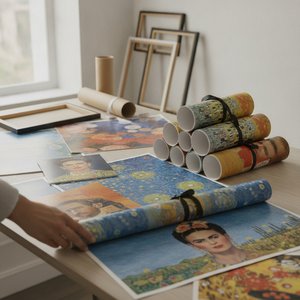
OriginalUniqueArt.com F.A.Q.: Premium Art Poster Prints – Vivid Colors & Versatile Sizing
Discover OriginalUniqueArt.com's premium art poster prints. Featuring 12-color archival pigments for vivid color fidelity and versatile sizing for bespoke decor. Expertly crafted museum-quality reproductions designed for discerning collectors and professional decorators.
