
 Previzualizare
 Trimite
 Distribuie
 Detalii despre lucrare

 Descarcă
 Produse similare
 Radiografie
 Diapozitive automate
Musical instrument


 Vezi mai mult
Achiziționați o imagine digitală de înaltă rezoluție, îmbunătățită, mult superioară previzualizării online.
Fiecare fișier este pregătit cu meticulozitate de specialiștii noștri interni, utilizând instrumente avansate și retușare manuală expertă. Ne asigurăm că fiecare imagine beneficiază de o claritate excepțională, o acuratețe precisă a culorilor și detalii fine.
Fișierul final este livrat prin e-mail în termen de 72 de ore, optimizat pentru utilizare imediată în medii profesionale, editoriale și de imprimare. Aceasta este aceeași calitate în care au încredere studiouri de design, edituri și galerii de top.
Imagine Digitală
Descărcați un fișier la rezoluție înaltă pentru afișare personală, imprimare și proiecte creative. ( Comandă printul Comandă pictură lucrată manual)
Inclus în fiecare comandă de imagini digitale
Livrare digitală de expertiză, garantată
Când alegeți OriginalUniqueArt.com, nu primiți doar o simplă imagine – primiți o operă de artă digitală îmbunătățită profesional, creată cu precizie și susținută de o garanție de satisfacție. Iată tot ceea ce primești odată cu comanda ta, în mod automat:

Livrare rapidă prin e-mail
Fișierul imaginii digitale la rezoluție înaltă vă va fi trimis prin e-mail în termen de 72 de ore de la finalizarea comenzii – gata pentru utilizare imediată.

Fișier digital optimizat prin IA
Opera ta de artă este optimizată profesional prin intermediul unor instrumente AI avansate și al editării manuale, asigurând un nivel maxim de detalii, claritate și acuratețe a culorilor.

Retransmitere gratuită pe viață
Ai șters sau ai pierdut din greșeală fișierul? Nu îți face griji – ți-l vom retrimite oricând, gratuit.

Fără taxe de import – Întotdeauna
Bucură-te instant de noua ta operă de artă, fără taxe vamale, taxe de import sau costuri de livrare – descărcările digitale sunt întotdeauna fără taxe.

Garanția acurateții culorilor
Asigurăm o reflectare cât mai fidelă a culorilor originale în imaginea ta digitală, prin utilizarea unor instrumente profesionale și a proceselor de gestionare a culorii.

Garanție de satisfacție de 60 de zile
Dacă nu sunteți mulțumit de imaginea digitală achiziționată, o vom revizui sau vă vom returna 100% în termen de 60 de zile – fără nicio explicație necesară.

Garanție de returnare 100% a banilor
Nu ești mulțumit? Obține o rambursare completă în termen de 60 de zile de la primirea fișierului tău digital – fără întrebări.

Reduceri pentru comenzi în volum
Cumpără 3 imagini, economisește 10% - Cumpără 5, economisește 15% - Cumpără 10+, economisește 20%. Ideal pentru proiecte creative, galerii și agenții.
Descriere obiect de colecție
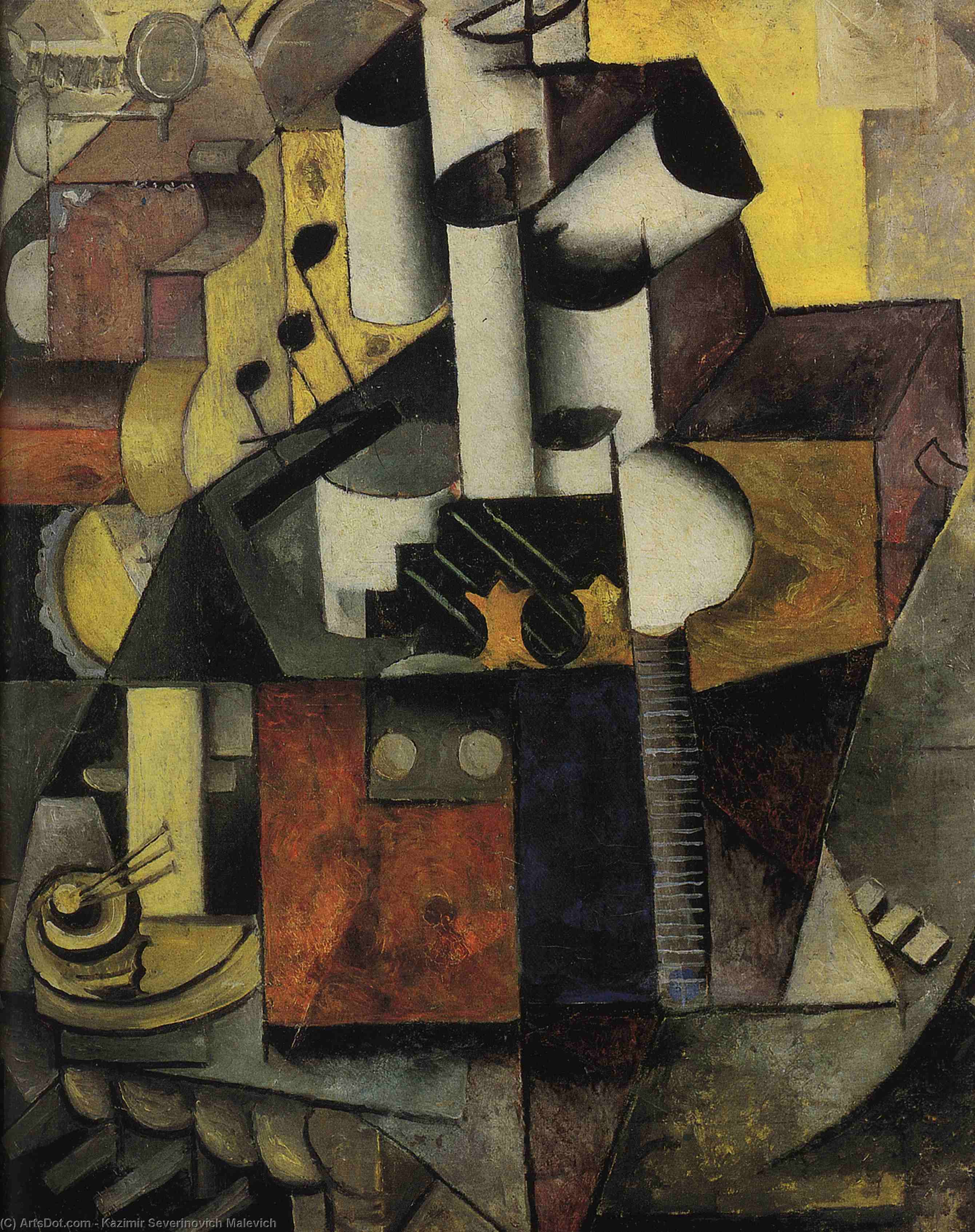
Kazimir Malevich’s Musical Instrument: A Cubist Exploration of Sound and Form
Kazimir Severinovich Malevich, a Russian artist whose legacy continues to inspire artists globally, created the captivating painting Musical Instrument in 1913. This work stands as a cornerstone of Cubism, an artistic movement that fundamentally reshaped European painting and sculpture during the early 20th century—a bold departure from traditional perspectives and representations.The Cubist Movement: Breaking Boundaries
Cubism, spearheaded by Pablo Picasso and Georges Braque, wasn’t merely about depicting objects realistically; it was a deliberate rebellion against established conventions. Artists like Malevich were profoundly influenced by this revolutionary approach, experimenting with new ways to capture the essence of reality. The very term “Cubism” encapsulates this ethos—associated with artworks produced primarily in Paris (Montmartre and Montparnasse) or near Paris (Puteaux)—representing a seismic shift in artistic thinking.Malevich’s Unique Vision: Simplifying Complexity
Malevich's distinctive style within Cubism involved merging disparate elements into harmonious combinations, challenging viewers to reconsider how they perceive visual information. Unlike contemporaries like Georgia O’Keeffe and Paul Klee who sought to translate sound into visual experiences—a fascinating ambition—Malevich adopted a more pared-down aesthetic. He prioritized clarity and geometric precision, focusing on conveying fundamental concepts rather than meticulous detail. This deliberate simplification allowed him to distill the complexities of musical instruments into powerful visual symbols.Composition and Color: Guiding the Eye
Musical Instrument is characterized by careful color orchestration—primarily shades of grey tones interwoven with assertive black lines. These elements serve as structural dividers, delineating distinct sections within the painting and directing the viewer’s gaze across the canvas. At its heart lies a guitar, meticulously rendered against a backdrop of other guitars and violins, creating a dynamic interplay between form and texture. Furthermore, two birds—positioned strategically on the left side and upper right corner—add depth and visual interest to the composition, enriching the overall narrative without distracting from Malevich’s core message.Beyond Cubism: Exploring Musical Symbolism
Malevich's artistic journey extended beyond the confines of Cubism, demonstrating his unwavering pursuit of innovative expression. His exploration of Suprematism—a subsequent style characterized by pure geometric forms—further solidified his reputation as a visionary artist who dared to challenge conventional notions of art and perception. Yet, Musical Instrument remains an invaluable testament to his initial foray into Cubism—a captivating piece that embodies both stylistic experimentation and profound artistic contemplation.Notable Related Works
Malevich’s prolific output included Painting by 'Kazimir Severinovich Malevich' | Kazimir Severinovich Malevich:Musical instrument (Cubism,), housed at the Stedelijk Museum in Amsterdam, Netherlands—a masterful demonstration of Cubist principles applied to a musical subject. This painting exemplifies Malevich’s ability to distill complex ideas into striking visual representations. Also noteworthy is Painting by 'Kazimir Severinovich Malevich' | Kazimir Severinovich Malevich:Musical instrument - Lamp (Cubism,Oil,), which showcases his exploration of musical instruments alongside symbolic imagery.Discover More About Kazimir Malevich
Painting by 'Pablo Picasso' | Pablo Picasso:Guitar on pedestal (119 x 76 cm,Synthetic Cubism,) exemplifies the broader influence of Cubism on European art—a movement that irrevocably altered artistic conventions. Explore Malevich’s groundbreaking achievements and immerse yourself in the legacy of Suprematism at OriginalUniqueArt.com.- Painting by 'Kazimir Severinovich Malevich' | Kazimir Severinovich Malevich:Musical instrument (Cubism,)
- Painting by 'Kazimir Severinovich Malevich' | Kazimir Severinovich Malevich:Musical instrument - Lamp (Cubism,Oil,)
- Painting by 'Pablo Picasso' | Pablo Picasso:Guitar on pedestal (119 x 76 cm,Synthetic Cubism,)
Biografie artist
Kazimir Malevich: A Pioneer of Abstract Art
Kazimir Severinovich Malevich (1878-1935) stands as a monumental figure in Russian art history, recognized globally for establishing Suprematism – an avant-garde movement that fundamentally reshaped the visual landscape of the 20th century. His unwavering conviction in the primacy of pure feeling and geometric abstraction continues to inspire artists today, cementing his legacy as one of the most influential innovators of modernism.Early Life and Influences
Born near Kyiv Oblast, Ukraine, Kazimir Malevich’s formative years were deeply rooted in the traditions of rural Ukrainian culture. His upbringing instilled within him a profound appreciation for folk art—particularly vibrant embroidered textiles and stylized depictions of peasant life—which would subtly permeate his artistic vision throughout his career. The stark contrast between the tranquil landscapes of his childhood and the burgeoning dynamism of urban centers fueled his desire to explore new expressive possibilities. Formal training commenced in Kyiv, where he honed his drawing skills before embarking on a journey toward broader artistic horizons, culminating in studies at Moscow’s prestigious Stroganov School of Art. This formative period exposed him to influential artists like Ivan Rerberg, who championed Impressionistic techniques and encouraged Malevich to embrace experimentation.Artistic Development & Key Movements
Malevich's artistic trajectory began with explorations of Impressionism and Symbolism, mirroring the prevailing stylistic currents of his time. However, a pivotal encounter with Fernand Léger’s Cubist innovations in Paris during 1912 irrevocably altered his artistic course. Léger’s embrace of geometric abstraction—particularly the simplification of forms into spheres, cylinders, and cones—provided Malevich with a crucial conceptual framework for dismantling traditional representational conventions. Recognizing the transformative potential of this approach, he swiftly transitioned toward Cubism, absorbing its principles while simultaneously forging his own distinctive style. This decisive shift culminated in the birth of Suprematism around 1915 – an audacious movement predicated on the assertion that art should transcend objective depiction and prioritize “the supremacy of pure feeling.” Malevich articulated this revolutionary philosophy in his seminal manifesto, “From Cubism to Suprematism,” declaring that painting’s true essence resided not in mirroring reality but in expressing fundamental geometric forms—squares, circles, and rectangles—stripped bare of any extraneous ornamentation.Major Achievements & Notable Works
Malevich's artistic output is characterized by a remarkable consistency in its core aesthetic principles – unwavering dedication to abstraction and the exploration of pure geometric forms. Among his most iconic creations are *Black Square* (1915) and *White on White* (1918), works that represent watershed moments in the history of art. *Black Square*, arguably Malevich’s most celebrated masterpiece, embodies Suprematism's radical rejection of illusionism and its insistence on confronting viewers with a stark visual experience devoid of recognizable imagery. Its monumental scale and uncompromising simplicity serve as a testament to Malevich’s conviction that art could achieve profound spiritual significance through the reduction of form to its purest essence. Similarly, *White on White* – consisting of a square canvas painted entirely white—represents an equally daring experiment in minimalist aesthetics. By eliminating color and texture altogether, Malevich sought to distill painting down to its fundamental components, challenging conventional notions of beauty and prompting viewers to contemplate the relationship between perception and representation. Furthermore, his involvement in the Vitebsk Practical Art School under Anatoly Lunacharsky’s patronage fostered a collaborative environment where he championed Suprematism alongside fellow artists like Vladimir Tatlin and Aleksandr Exter—establishing Vitebsk as a crucible for avant-garde innovation.Historical Significance & Legacy
Kazimir Malevich's artistic legacy extends far beyond the confines of his own lifetime, profoundly influencing subsequent generations of artists and shaping the trajectory of modern art movements. His uncompromising commitment to abstraction served as an inspiration for Minimalism and Constructivism—movements that championed simplicity and geometric rigor in response to the excesses of Expressionism and Surrealism. Malevich’s theoretical pronouncements on art – particularly his assertion that painting should liberate itself from representational constraints—continue to resonate with artists grappling with questions of artistic expression and cultural identity. Despite facing political persecution under Stalin's regime—a period marked by censorship and suppression—Malevich persevered in his artistic practice and teaching, safeguarding the enduring significance of Suprematism as a beacon of creative freedom. His unwavering belief in the transformative power of art cemented his place as one of the most influential figures in 20th-century visual culture, ensuring that Kazimir Malevich’s pioneering vision would endure for decades to come.
Kazimir Malevici
1878 - 1935 , Ucraina
Detalii rapide
- Artistic Movement Or Style: Suprematism, Art abstractă
- Artists Or Movements Influenced By This Artist:
- Minimalism
- Constructivism
- El Lissitzky
- Artists Who Influenced This Artist:
- Cubism
- Fauvizm
- Impresionism
- Date Of Birth: 1878
- Date Of Death: 1935
- Full Name: Kazimir Severinovich Malevich
- Nationality: Ucrainean/Rus
- Notable Artworks:
- Ciucea Neagră
- Alb pe Alb
- Casă în construcție
- Place Of Birth: Kiev, Ucraina

