 Comută pe versiunea Print
 Vezi mai mult







































 Pentru opere de artă sau reproduceri care depășesc 105 cm (aproximativ 41 de inch) pe oricare dintre laturi, cadrul va fi livrat demontat, sub formă de kit. Această metodă asigură o livrare sigură și previne deteriorarea în timpul transportului.


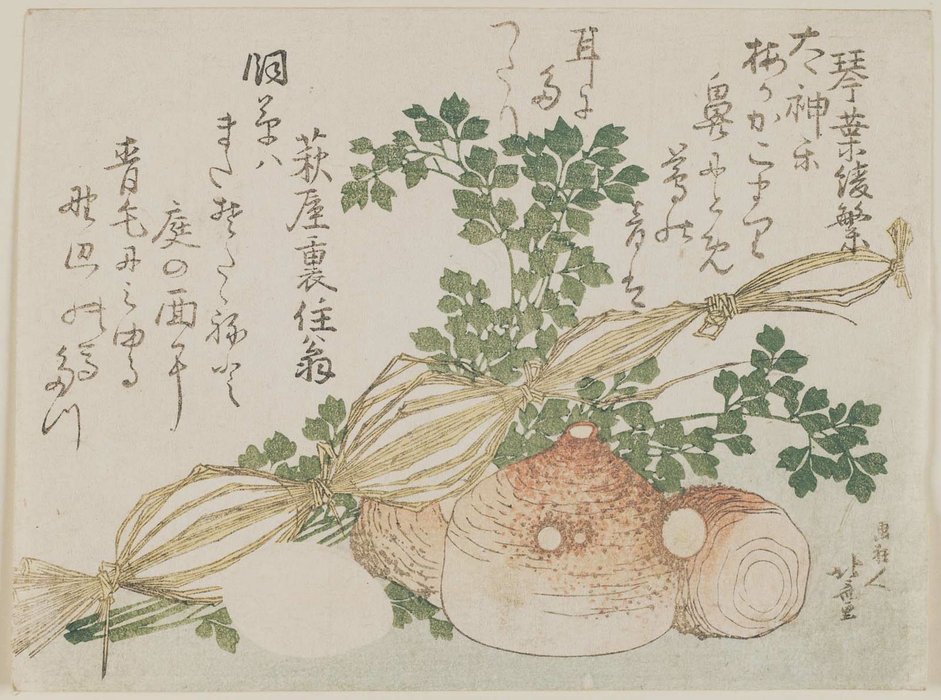
A Celebration of Bounty: Exploring Katsushika Hokusai’s “Eggs And Turnips”
The artwork "Eggs And Turnips," attributed to the legendary Edo-period artist Katsushika Hokusai, transcends mere depiction; it embodies a profound connection to Japanese agricultural tradition and offers a glimpse into the artistic sensibilities of its time. More than just a still life—though undeniably beautiful in its arrangement—this painting speaks volumes about Hokusai’s meticulous observation of nature and his masterful command of Prussian blue pigment, a color that would revolutionize printmaking and profoundly influence Western art history.The Artist's Vision: Contextualizing Hokusai’s Output
Katsushika Hokusai (1760-1849) stands as one of Japan’s most celebrated artists, largely due to his monumental series *Thirty Six Views of Mount Fuji*, which cemented his place in the canon of landscape painting. However, Hokusai's artistic output extended far beyond this iconic motif. He was a prolific printmaker, draftsman, and painter working across diverse mediums—watercolor, ink wash paintings (sumi-e), and woodblock prints—demonstrating an unparalleled versatility that distinguishes him from many of his contemporaries. His unwavering dedication to capturing the essence of the natural world wasn’t simply aesthetic; it reflected a broader cultural preoccupation with seasonality and the rhythms of rural life during Edo Japan, where agriculture underpinned the economic stability and social order.Technique and Color: Mastering Prussian Blue
Hokusai's technique is characterized by precise linework combined with subtle tonal variations achieved through layering ink washes. This approach—particularly evident in “Eggs And Turnips”—allowed him to convey texture and depth, capturing the delicate sheen of the vegetables and the earthy tones of the bowl. Crucially, Hokusai’s use of Prussian blue pigment represents a pivotal moment in artistic history. Imported from Europe during his lifetime, this vibrant ultramarine hue dramatically altered the palette available to Japanese printmakers; before its arrival, indigo dye was predominantly utilized for coloring prints; Prussian blue offered an unprecedented intensity and luminosity that profoundly impacted subsequent artists and designers. The artist’s careful selection of this pigment underscores not only his technical prowess but also his awareness of broader artistic trends shaping the visual landscape of his era.Symbolism Within Simplicity: Representing Prosperity and Harmony
The seemingly straightforward composition—a bowl brimming with eggs and turnips—holds deeper symbolic significance rooted in Japanese folklore and agricultural beliefs. Eggs represent fertility and renewal, mirroring the cyclical nature of planting and harvesting seasons. Turnips, similarly associated with sustenance and abundance, symbolize prosperity and harmony within the household. The careful placement of broccoli—particularly prominent in the center—further reinforces these themes, suggesting a balanced distribution of resources and highlighting the beauty inherent in everyday rural life. Hokusai’s artistic intention wasn’t merely to depict objects; he aimed to communicate values – respect for nature, gratitude for sustenance, and an appreciation for the harmonious relationship between humanity and the environment.Emotional Resonance: An Impression of Tranquility
Ultimately, “Eggs And Turnips” evokes a feeling of serene contemplation. The muted palette—dominated by earthy browns and greens—contrasts subtly with the brilliant Prussian blue, creating a visual equilibrium that invites viewers to pause and appreciate the understated elegance of the scene. Like many of Hokusai’s works, this painting speaks to a timeless aesthetic ideal – one rooted in observation, restraint, and an unwavering commitment to capturing the beauty of the natural world. It serves as a powerful reminder that art can transcend its historical context to communicate enduring emotions and values, continuing to inspire admiration centuries after its creation.Întrebări și răspunsuri
Care este artistul și care este stilul din spatele operei "Ouă și rădăcini"?
"Ouă și rădăcini" a fost creat de Hokusai, în stilul Japanese Ukiyo-e. Artistul și mișcarea definesc tradiția acestei opere.
Cum pot descoperi opere de artă similare cu "Ouă și rădăcini" de Hokusai?
Descoperă lucrări similare cu „Ouă și rădăcini” în pagina Lucrări similare a operei de artă.
Unde se încadrează "Ouă și rădăcini" în întreaga creație a lui Hokusai?
În creația lui Hokusai, „Ouă și rădăcini” se înscrie în stilul Japanese Ukiyo-e, alături de temele landscape painting influence, rural harmony themes, printmaking tradition role, edo aesthetic values, artistic observation focus.
Mai multe detalii despre această pictură
 Previzualizare
 Trimite prin felicitare
 Distribuie
 Detalii despre lucrare
 Ghid
Ghid

 Descarcă imaginea
 Produse similare
 Radiografie
 Galerie foto
 Întrebări și răspunsuri
 Statistici