

 Previzualizare
 Trimite prin felicitare
 Distribuie
 Detalii despre lucrare
 Ghid
Ghid

 Descarcă imaginea
 Produse similare
 Radiografie
 Galerie foto
 Statistici
Kohada Koheiji


 Vezi mai mult
Reproducere pictată manual în ulei
Pictură în ulei pe pânză, pictată manual de artiștii noștri la dimensiunea și ramele dorite de dumneavoastră, pe comandă. ( Comută pe versiunea Print Comută pe Imagine Digitală)




P118B lei10

P118H lei10

P118W lei10

P438Z lei10

P508JH lei12

P508YH lei12

P805H lei10

P805Z lei10

P919BZ lei10

P919G lei10

P919XJ lei10

P959ZH lei10

P968JZ lei12

W106C lei8

W218G lei10

W218JH lei8

W218Y lei10

W307PJ lei10

W316G lei10

W316PJ lei8

W316Y lei10

W398PJ lei8

W4111J lei10

W500HY lei15

W500JH lei15

W692G lei12

W849H lei8

W940BG lei15

W953PJ lei8




Alegeți dintre dimensiunile noastre prestabilite, care respectă proporțiile originale ale operei de artă.

Introduceți lățimea și înălțimea necesare pentru a se potrivi ramei sau peretelui dumneavoastră. Această lucrare este pictată manual, așa că, pentru o dimensiune cu o formă diferită, artistul poate picta puțin mai mult în jurul imaginii sau poate tăia puțin din margini — dumneavoastră decideți. Vă vom trimite o simulare digitală pentru aprobare înainte de a începe pictarea. Imaginea afișată pe această pagină nu reprezintă rezultatul real — doar simularea este reprezentativă.
După plasarea comenzii, echipa OriginalUniqueArt.com va contacta clientul prin e-mail pentru instrucțiuni și îi va furniza o previzualizare a machetei
Livrare în întreaga lume () în 3-4 săptămâni, în loc de cele 5 săptămâni standard. (27 Octombrie). Fără compromisuri în ceea ce privește calitatea.

Livrare expres gratuită la nivel mondial

Pânză de in de înaltă calitate

Asigurare completă pentru transport

Garanție de rambursare a taxelor vamale

Garanția fidelității culorilor

Politica de retur în 100 de zile (doar pentru defecte de fabricație)

Garanție de rambursare 100%

Ofertă pentru comenzi multiple
 Opțiunea cu sticlă este disponibilă doar pentru dimensiuni de sub 110 cm

Kohada Koheiji
Tehnică de reproducere
Dimensiune reproducere
-


Preț total calculat
lei 1392
A Vision of Terror and Transcendence: Decoding Kohada Koheiji
Katsushika Hokusai’s *Kohada Koheiji* transcends mere depiction; it embodies a profound exploration of fear, faith, and the sublime—themes central to Japanese artistic sensibilities during the Edo period. This striking woodblock print, created sometime between 1830 and 1832, captures a moment of unsettling drama against the backdrop of Mount Fuji’s majestic serenity.
Subject Matter: The image portrays a man—likely a demon or monstrous figure—gripping desperately onto the side of a boat. His grotesque appearance is accentuated by an unnaturally long tongue, conveying primal terror and highlighting anxieties surrounding supernatural forces prevalent in Japanese folklore. This unsettling juxtaposition serves as a cornerstone of Hokusai’s artistic vision, reflecting anxieties about confronting the unknown – symbolized powerfully by the demon – while simultaneously acknowledging the beauty and grandeur of nature.
Style & Technique: Hokusai’s masterful use of Prussian blue pigment—a revolutionary import from Europe at the time—distinguishes *Kohada Koheiji* from conventional ukiyo-e prints. This bold color choice wasn't merely aesthetic; it symbolized Western influence and reflected anxieties about Japan’s engagement with global trade. The print employs meticulous detail in rendering textures—the rough surface of the boat, the man’s robe—demonstrating Hokusai’s unwavering commitment to realism within a stylized framework. The dynamic composition utilizes bold linework to convey movement and turbulence, mirroring the tumultuous ocean depicted.
Historical Context: Produced during Hokusai’s later years, *Kohada Koheiji* speaks to a period marked by increasing Western contact and intellectual ferment. The print reflects anxieties about confronting the unknown—represented symbolically by the demon—while simultaneously acknowledging the beauty and grandeur of nature, embodied by Mount Fuji. It's considered part of Hokusai’s monumental *Thirty-Six Views of Mount Fuji*, a series designed to capture both the physical landscape and its spiritual significance – a deliberate effort to harmonize observation with contemplation.
Symbolism: The man’s posture—clinging desperately—represents humanity’s vulnerability before overwhelming forces, mirroring anxieties about mortality and divine judgment. Simultaneously, Mount Fuji serves as a symbol of stability and permanence amidst chaos, offering solace and reminding viewers of the enduring power of tradition. The inclusion of other figures in the background underscores the importance of communal experience and faith within Japanese culture – highlighting the human element against the backdrop of monumental natural beauty.
Emotional Impact: *Kohada Koheiji* evokes a visceral response—a blend of fear and awe—that continues to captivate audiences today. Hokusai’s ability to convey complex emotions through visual imagery is unparalleled, cementing his place as one of Japan's greatest artists. Its enduring appeal lies in its exploration of universal themes concerning human existence and the confrontation with forces beyond comprehension – a testament to the artist’s profound understanding of the human condition.
Întrebări și răspunsuri
Ce tehnică și stil caracterizează "Kohada Koheiji" de Hokusai?
"Kohada Koheiji" este realizată în Amprentă pe lemn, în stilul Japanese Landscape Printmaking.
Ce nivel de saturație și intensitate prezintă "Kohada Koheiji" de Hokusai?
Culorile din "Kohada Koheiji" de Hokusai prezintă o saturație de Culori discrete cu o intensitate de Echilibrat.
Ce paletă și ce culoare dominantă definesc "Kohada Koheiji"?
„Kohada Koheiji” este definit de o paletă Tonalități pământii, dominată de culoarea Brun rozovat (#ceb58d).
Biografie artist
A Life Etched in Ink: The World of Katsushika Hokusai
Katsushika Hokusai, a name that resonates deeply within the world of art and inextricably linked to the iconic image of *The Great Wave off Kanagawa*, was far more than simply a printmaker. Born in Edo (modern-day Tokyo) around 1760, his life unfolded as an extraordinary journey—a relentless pursuit of artistic mastery, characterized by constant evolution, shifting names, and an insatiable curiosity that propelled him through nearly nine decades. From humble beginnings as the son of a mirror maker, Hokusai’s initial inclination towards art wasn't immediately nurtured; however, he pursued his passion with unwavering dedication, reportedly beginning to draw at the tender age of six. This steadfast commitment would ultimately define a career of unparalleled scope and influence, leaving behind a legacy that continues to captivate and inspire audiences worldwide. His father, Nakajima Ise, while not an artist himself, recognized and perhaps subtly encouraged this nascent talent, providing the foundational support for a transformative artistic odyssey. Hokusai’s early life wasn't defined by privilege, but rather shaped by ambition and a profound desire to capture the essence of the world around him—a driving force that fueled his relentless creative exploration.From Apprenticeship to Innovation: The Blossoming of a Style
Hokusai’s formal artistic training commenced at twelve when he entered the prestigious studio of Katsukawa Shunshō, a leading master of *ukiyo-e* – “pictures of the floating world.” This vibrant genre, flourishing during the Edo period, served as a mirror reflecting the diverse facets of Japanese society—depicting scenes from everyday life: captivating actors performing in Kabuki theatre, elegant courtesans, breathtaking landscapes, and glimpses into the bustling urban culture. Under Shunshō’s tutelage, Hokusai meticulously absorbed the intricate techniques of woodblock printing – a demanding process requiring exceptional precision and artistic skill. Yet, he possessed an innate restlessness, a spirit that yearned to transcend mere replication; even in his early works, evidence of this rebellious streak emerged—a desire to push boundaries, experiment with new subjects, and forge a uniquely personal visual language. He began exploring diverse themes, venturing beyond the traditional confines of *ukiyo-e* by illustrating books and creating single-sheet prints, constantly refining his skills and developing a distinctive style that would soon set him apart. This period also marked the beginning of a series of name changes—a common practice among Japanese artists of the time, signifying periods of artistic evolution or affiliations with different schools.Mount Fuji and the Floating World: Defining Masterpieces
Hokusai’s artistic output was astonishingly prolific; tens of thousands of woodblock prints, paintings, and illustrated books bear his signature. While he embraced a wide range of subjects—from serene landscapes to dynamic scenes of daily life—it was his series *Thirty-Six Views of Mount Fuji* (circa 1831) that cemented his enduring fame. This monumental collection wasn’t simply a depiction of a majestic mountain; it was a profound exploration of perspective, composition, and the raw power of nature. The iconic *Great Wave off Kanagawa*, with its towering crests and perilous depths, embodies both the breathtaking beauty and the terrifying unpredictability of the sea—a testament to Hokusai’s masterful command of line and color. Beyond *Fuji*, works such as *Fireworks at Ryōgoku Bridge* (1790) demonstrated his remarkable ability to capture dynamic scenes with an extraordinary sense of energy and detail, showcasing a keen eye for capturing fleeting moments in time. His *Hokusai Manga* – a collection of sketches and studies encompassing people, animals, landscapes, and fantastical creatures—was groundbreaking in its scope and influence, foreshadowing the development of modern manga as an art form. These works weren’t isolated achievements; they were milestones in a continuous artistic journey, each building upon the last to create a body of work that is both deeply rooted in Japanese tradition and remarkably innovative.A Legacy Beyond Borders: Hokusai's Enduring Influence
Hokusai’s impact extended far beyond Japan’s borders. As Japan cautiously opened its doors to the West during the late 19th century, *ukiyo-e* prints flooded European markets, sparking a phenomenon known as *Japonisme*. Artists like Claude Monet, Edgar Degas, and Vincent van Gogh were profoundly influenced by Hokusai’s bold compositions, vibrant colors, and unconventional perspectives. Van Gogh, in particular, was deeply moved by *The Great Wave*, famously recreating it in his own paintings—a testament to its enduring power. Hokusai's influence wasn’t limited to Impressionism; it permeated various modern art movements, shaping the way artists approached composition, color, and subject matter. His emphasis on capturing fleeting moments, his dynamic use of line, and his ability to find beauty in everyday life resonated with a generation of artists seeking new forms of expression. Even today, Hokusai’s work continues to inspire and challenge artists around the world, solidifying his place as one of the most important figures in art history—a testament to his unwavering dedication and artistic genius. He continued painting until his death in 1849 at the age of 89, leaving behind a vast body of work that remains a powerful reminder of the transformative potential of art.- Major Influences: Ukiyo-e traditions, Chinese landscape painting, everyday life in Edo.
- Key Characteristics: Bold lines, vibrant colors, dynamic compositions, keen observation of nature.

Hokusai
1760 - 1849 , Japonia
Detalii rapide
- Artistic Movement Or Style: Ukiyo-e
- Artists Or Movements Influenced By This Artist:
- Impressionism
- Van Gogh
- Artists Who Influenced This Artist:
- Pictură chineză
- Viața de zi cu zi
- Date Of Birth: 31 Oct 1760
- Date Of Death: 10 Mai 1849
- Full Name: Katsushika Hokusai
- Nationality: Japonez
- Notable Artworks:
- Valul Mare
- Muntele Fuji
- Hokusai Manga
- Place Of Birth: Tokyo, Japonia
Articole similare

Katsushika Hokusai: Cele Mai Iubite 25 de Opere de Artă – Inspirație pentru Decorul Casei Tale
Descoperă cele mai frumoase 25 de opere de artă semnate de Katsushika Hokusai, maestru ukiyo-e. Explorează istoria valului Kanagawa și a picturilor japoneze iconice. Reproduceri de calitate muzeală pentru decorul casei tale pe OriginalUniqueArt.com!
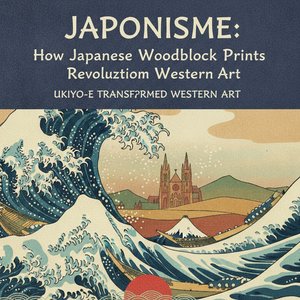
Japonisme: How Japanese Woodblock Prints Revolutionized Western Art
Explore the profound impact of Japonisme on Western art. Discover how Japanese ukiyo-e woodblock prints revolutionized perspective, color, and composition for masters like Monet and Van Gogh, forever changing the course of modern art history.
Beyond the Great Wave: The High-Impact Visual Revolution of Japanese Landscape Art
Go beyond Hokusai's Great Wave. Explore the high-impact, graphic world of Japanese Ukiyo-e landscapes and urban prints. Discover how these bold, vibrant woodblock masterpieces continue to shape modern pop culture and contemporary design aesthetics.
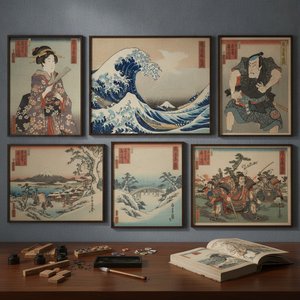
Ukiyo-e: The Art of the Floating World and the Legacy of Japanese Woodblock Masters
Explore the profound history of Ukiyo-e, from Hokusai's iconic waves to the vibrant culture of Edo Japan. Discover the intricate craft of woodblock printing and the enduring legacy of these Japanese masterpieces through our expert art history guide.
Katsushika Hokusai: A Comprehensive Exploration of the Master's Life, Art, and Enduring Legacy
Explore the life & art of Katsushika Hokusai, Japan's ukiyo-e master! Discover 'The Great Wave,' landscapes, manga & his profound influence on Western art. A comprehensive guide for enthusiasts.


