

 Previzualizare
 Trimite
 Distribuie
 Detalii despre lucrare

 Descarcă
 Produse similare
 Radiografie
 Diapozitive automate
 Statistici
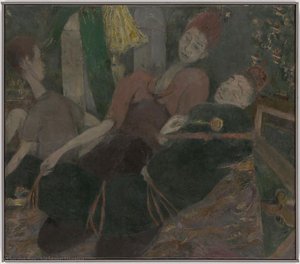
Untitled
 2010
2010 153.0 x 117.0 cm
 Vezi mai mult
Reproducere pictată manual în ulei
Pictură în ulei pe pânză, realizată manual de artiștii noștri la dimensiunea și ramele dorite de dumneavoastră, pe comandă. ( Comută pe Print Comută pe Imagine Digitală)




































Alegeți dintre dimensiunile noastre prestabilite, care respectă proporțiile originale ale operei de artă.

Puteți introduce propriile dimensiuni pentru a se potrivi unui anumit cadru sau spațiu. Dacă dimensiunea selectată nu corespunde proporțiilor imaginii originale, vom decupa opera de artă sau vom extinde pictura cu elemente suplimentare pictate manual. O simulare digitală vă va fi trimisă pentru aprobare înainte de începerea producției.
Vă rugăm să rețineți că previzualizarea de pe ecran nu reflectă decuparea sau extinderea reală. Doar macheta va arăta cu exactitate compoziția finală.
Deși sunt disponibile dimensiuni personalizate, vă recomandăm să selectați o dimensiune din lista predefinită pentru a păstra proporțiile originale.
După plasarea comenzii, echipa OriginalUniqueArt.com va contacta clientul prin e-mail pentru instrucțiuni și îi va furniza o previzualizare a machetei
Livrare în întreaga lume () în 3-4 săptămâni, în loc de cele 5 săptămâni standard. (10 Septembrie). Fără compromisuri în ceea ce privește calitatea.

Livrare expres gratuită la nivel mondial

Pânză de in de înaltă calitate

Asigurare completă pentru transport

Garanție de rambursare a taxelor vamale

Garanția fidelității culorilor

Politica de retur de 100 de zile (doar pentru defecte)

Garanție de rambursare 100%

Ofertă pentru comenzi multiple
 Opțiunea cu sticlă este disponibilă doar pentru dimensiuni de sub 110 cm

Untitled
Tehnică de reproducere
Dimensiune reproducere
-


Preț total calculat
$ 300
Biografie artist
A Cartography of the Imaginary: The World of Kai Althoff
Kai Althoff, born in Cologne, Germany, in February 1966, is an artist who resists easy categorization. He isn’t simply a painter, sculptor, or video artist; rather, he's a conjurer of worlds—complex, layered environments that feel simultaneously ancient and utterly contemporary. His work operates within a fascinating tension between historical reference and deeply personal expression, creating allegorical spaces brimming with symbolism and emotional resonance. Althoff doesn’t present narratives so much as fragments of them, echoes of stories half-remembered or never fully formed, inviting the viewer to participate in their reconstruction. This deliberate ambiguity is central to his practice, fostering a sense of unease and prompting introspection.Early Influences & Artistic Development
Althoff’s artistic journey wasn't linear. Emerging from a vibrant Cologne art scene, he initially explored music alongside visual arts, forming bands like Workshop with Christoph Rath, Stefan Mohr, and Stephan Abry, and later Subtle Tease with Justus Köhncke. This immersion in sound profoundly shaped his aesthetic sensibility—a rhythmic layering of elements, a fascination with dissonance, and an embrace of the ephemeral. His early paintings already hinted at the concerns that would define his mature work: a preoccupation with Germanic folklore, religious iconography (particularly medieval and Gothic imagery), and the expressive power of German Expressionism. However, it wasn’t merely imitation; Althoff began to *reconfigure* these sources, introducing collaged techniques and a deliberately naive figuration that disrupted traditional notions of skill and mastery. He wasn't interested in replicating the past but rather excavating its emotional core, stripping away polish to reveal raw vulnerability. The influence of artists like Max Beckmann and Ernst Ludwig Kirchner is palpable, yet Althoff’s work quickly developed a unique voice—one characterized by a haunting lyricism and a refusal to adhere to any single stylistic convention.Collaborative Visions & Site-Specific Installations
A defining aspect of Althoff's career has been his embrace of collaboration. He frequently works with other artists, creating projects that blur the boundaries between individual authorship. His 2004 installation *Kolten Flynn*, created with Lutz Braun for the 4th Berlin Biennale, exemplifies this approach. The work consisted of three vitrines draped in red foil, filled with a child’s paintings, drawings, and abandoned materials—a poignant tableau evoking memory, loss, and the fragmented nature of identity. This wasn't simply an exhibition *of* objects but rather the creation of a psychological space, a miniature world charged with unspoken narratives. Similarly, his collaboration with Yair Oelbaum on *There We Will Be Buried* (2010) took the form of a dramatic play, performed live and later adapted for various venues including the Whitney Museum of American Art. The play centered around two single mothers searching for a lost daughter, exploring themes of abandonment, grief, and the complexities of familial relationships. These collaborative projects demonstrate Althoff’s interest in performance, theater, and the power of collective storytelling. *Die kleine bushaltestelle (gerüstbau)* (Little Bus Stop , 2012), performed with Isa Genzken, further cemented his reputation for absurdist humor and unconventional artistic expression.Themes & Symbolism: Allegories of Human Experience
Althoff’s work is deeply symbolic, drawing on a vast reservoir of cultural references—from religious parables to popular culture ephemera. Recurring motifs include figures with elongated limbs and distorted features, architectural fragments suggesting decaying grandeur, and landscapes that feel both familiar and alien. His characters often inhabit imaginary worlds that serve as allegories for human experience and emotion. They are not portraits in the traditional sense but rather archetypes—representations of longing, despair, or spiritual yearning. The use of collage is particularly significant, allowing Althoff to juxtapose disparate images and create unexpected associations. This technique reflects his interest in fragmentation and the subjective nature of memory. He often incorporates found objects into his work, imbuing them with new meaning and challenging conventional notions of artistic value. The overall effect is one of dreamlike disorientation, inviting viewers to question their own perceptions and interpretations. His paintings are not meant to be deciphered but rather experienced—felt on an emotional level.Historical Significance & Contemporary Relevance
Kai Althoff’s work occupies a unique position within contemporary art. He resists categorization, blending historical reference with deeply personal expression in a way that is both intellectually stimulating and emotionally resonant. His influence can be seen in the work of younger artists who are similarly interested in exploring themes of memory, identity, and the fragmented nature of experience.- His embrace of collaboration challenges traditional notions of authorship.
- His use of collage and found objects expands the boundaries of painting and sculpture.
- His exploration of symbolism and allegory invites viewers to engage with art on a deeper level.
kai althoff
1966 -
Detalii rapide
- Artistic Movement Or Style: Expressionism, Multimedia
- Artists Who Influenced This Artist:
- Germanic folk traditions
- Medieval religious imagery
- Date Of Birth: February 1966
- Full Name: Kai Althoff
- Nationality: German
- Notable Artworks:
- Kolten Flynn
- There we will be buried
- Die kleine bushaltestelle
- Place Of Birth: Cologne, Germany