Baroque
St. Peter (José de Ribera)
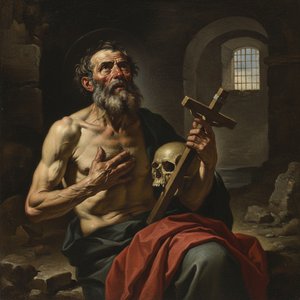
José de Ribera (1591–1652) a realizat St. Peter. Face parte din mișcarea Baroque. Este realizată în Oil On Canvas. Este păstrat la Muzeul Prado în Madrid, Spania.
- Oil On Canvas
- Muzeul Prado, Madrid

 Previzualizare

 Tablou în ulei pictat manual
 Trimite prin felicitare
 Distribuie
 Ghid


 Descarcă imaginea
 Produse similare
 Radiografie
 Galerie foto
 Întrebări și răspunsuri

 Statistici
St. Peter: esențialul
- Titlu
- St. Peter
- Artist
- José de Ribera (1591–1652)
- Artist născut în
- Játiva, Spania
- Medium
- Oil On Canvas
- Unde poate fi vizualizată
- Muzeul Prado, Madrid, Spania
- Mișcare
- Baroque
- Perioadă
- Early Modern
- Subiect
- man, beard, book, keys, cloak, brown
Ce reprezintă St. Peter?
The Portrait of St. Peter by Jusepe de Ribera
In this oil painting on canvas, Jusepe de Ribera presents us with a portrait of St. Peter. The subject, a central figure among the apostles of Jesus and recognized as the first Pope, is rendered with a profound sense of presence. Ribera focuses on the man himself, capturing the weight of his role and the character of his lived experience. There is a quiet intensity in the way the figure is presented, inviting a closer look at the weathered details of his countenance.
The work is a significant example of the Baroque style. Through this approach, the artist emphasizes the spiritual and human dimensions of the apostle. The depiction avoids idealization, opting instead for a directness that feels immediate. By focusing on the specific attributes of the saint, Ribera allows the subject to command the space, presenting a figure that is both a religious icon and a man of flesh and bone.
Composition and Visual Elements of the Portrait
The composition is built upon a stable pyramidal structure, with the head of St. Peter forming the apex of the form. He is presented from the waist up, his body turned slightly toward the viewer's left. In his right hand, he holds a book and a set of keys, objects that anchor the figure within the frame. This arrangement directs the eye upward toward his weathered features, creating a sense of quiet, grounded presence.
A strong light source enters from the left, illuminating his face and upper body while casting the rest of the figure into deep shadow. This light creates a sharp contrast against a background that is nearly black, pushing the subject forward into the viewer's space. The color palette is restrained, dominated by warm earth tones—ochre, brown, and gold—which emphasize the textures of his skin and the heavy folds of his clothing.
Technique and Artistic Style of the Work
The work is defined by a profound use of tenebrism, where the subject emerges from a nearly black background into a sharp, focused light. This dramatic chiaroscuro creates a sense of volume, pulling the figure forward and emphasizing the physical presence of the man. Such a heavy interplay of light and shadow reflects the influence of Caravaggio, grounding the religious subject in a palpable, earthly reality. The light source, positioned to the left, carves out the contours of the face and the weathered texture of the skin, casting deep shadows that heighten the emotional weight of the portrait.
Ribera’s approach to the medium is tactile and deliberate. He employs a technique of layering paint to build up depth, allowing the viewer to sense the physical weight of the drapery and the coarse nature of the beard. Visible brushstrokes are not hidden; instead, they contribute to the overall effect, lending a sense of immediacy to the rendering of the fabric and the aged features. Strong, defined lines delineate the eyes, nose, and mouth, providing a structural clarity that balances the more fluid, organic shapes of the figure. The result is a composition that feels both intensely personal and physically substantial.
Other Works by Jusepe de Ribera
The artist's exploration of this particular subject matter is reflected in several other significant pieces within our collection and major institutions. We hold St. Simeon 1 in our catalog, a work that speaks to the same profound human experience found in this portrait. Another notable piece in our collection is The Repentance of Saint Peter, which is currently housed in the Museum of Fine Arts, Lyon.
Beyond our own holdings, Ribera's preoccupation with the themes of remorse and spiritual weight is evident in other historical examples. The work known as Penitent St. Peter, dated about 1630, is held at the Kunsthistorisches Museum in Vienna. This piece shares a similar intensity in its depiction of the apostle's character. Additionally, The Tears of Saint Peter, which dates to 1612, is part of the collection at the Metropolitan Museum of Art in New York. These works collectively illustrate the artist's ability to capture the complexities of faith and the physical reality of the human condition through his characteristic use of light and shadow.
În ce muzeu se află St. Peter?
Muzeul Prado
Madrid, Spania
Istoria Muzeului Prado Originile Muzeului Prado sunt strâns legate de Colecția Regală a Spaniei, călătorind în timp până în secolul al XVIII-lea. Ceea ce a început ca o viziune pentru un Cabinet de Istorie Naturală sub domnia lui Ferdinand al VII-lea, s-a transformat în cele din urmă într-un sanctuar dedicat picturii și sculpturii. Această tranziție a metamorfozat un demers științific într-un depozit al celor mai semnificative comori ale Coroanei Spaniole.


St. Peter în înaltă rezoluție
Domeniu public: artistul a decedat în 1652.
José de Ribera, St. Peter, Muzeul Prado. Domeniu public
Un expert digital verifică culorile în raport cu pictura originală și retușează fișierul, respectând fidelitatea brushwork-ului artistului.
Cumpără imaginea la rezoluție înaltăÎntrebări despre St. Peter
Unde poate fi vizualizată astăzi opera "St. Peter" de José de Ribera?
Originalul "St. Peter" de José de Ribera este păstrat la Muzeul Prado, Madrid, Spania. O reproducere permite expunerea operei în propria locuință.
Din ce materiale este realizată „St. Peter”?
"St. Peter" este realizat în Oil On Canvas."
Ce subiecte sunt reprezentate în "St. Peter" de José de Ribera?
Temele prezente în "St. Peter" de José de Ribera includ man, beard, book, keys, cloak, brown, gold, skin. Împreună, acestea definesc subiectul întregii opere de artă.
"St. Peter" de José de Ribera face parte din domeniul public?
Statusul drepturilor de autor pentru "St. Peter" de José de Ribera: opera este în domeniul public – drepturile de autor au expirat. Acest lucru determină dacă reproducerile imaginii pot fi realizate liber.
Cine a creat "St. Peter"?
„St. Peter” a fost creat de José de Ribera. Informațiile de pe această pagină descriu opera originală a lui José de Ribera.
Din ce curent artistic face parte "St. Peter" de José de Ribera?
"St. Peter" de José de Ribera face parte din mișcarea Baroque. Acest curent oferă contextul stilistic al operei.
În ce etapă a evoluției lui José de Ribera se încadrează „St. Peter”?
În cariera lui José de Ribera, „St. Peter” aparține perioadei Mature Period. Această etapă facilitează compararea sa cu celelalte opere ale artistului.
Care este situația drepturilor de autor pentru "St. Peter" de José de Ribera?
Statutul drepturilor de autor pentru "St. Peter" - în domeniul public – drepturile de autor au expirat - este determinat de data decesului artistului, în anul 1652.
A rămas "St. Peter" în țara de origine a artistului său?
Da - opera de artă este păstrată în țara de origine a artistului. „St. Peter” face parte din colecția din Spania, în timp ce José de Ribera s-a născut în Spania.
Despre artistul José de Ribera

1591–1652, Spania
José de Ribera
A Life Forged in Shadow and Light Jusepe de Ribera, cunoscut pe scară largă ca Lo Spagnoletto – “Spaniolul Mic” – a fost o figură monumentală a epocii Barocului, un artist al cărui tablou pulsa cu intensitate dramatică și realism neînfricat. Născut în Xàtiva, Spania, în 1591, călătoria sa l-a dus departe de originea valenciană, stabilindu-l în cele din urmă ca unul dintre cei mai importanți pictori ai secolului al XVII-lea la Napoli, o oraș aflat sub dominație spaniolă. Viața lui Ribera nu a fost doar un jurnal al dezvoltării artistice; a fost o narațiune țesută cu dificultăți, ambiții și o angajare neclintită în a reprezenta condiția umană în toată complexitatea sa brută. Deși detaliile biografice timpurii rămân parțial învățate, știm că s-a stabilit în Italia în jurul anului 1607, inițial stabilindu-se la Roma înainte de a se îndrepta spre Napoli în 1616 – un oraș care avea să devină atât casa sa artistică, cât și cuibul pentru stilul său unic.
Despre José de Ribera Lucrări remarcabile ale lui José de Ribera
Alte lucrări ale lui José de Ribera
 Magdalena Ventura cu soțul și fiul ei1631
 Piciorul în club
 St. Onuphrius1637
 The Duel of Women (The Duel of Isabella de Carazzi and Diambra de Pettinella)1636
Eseuri despre St. Peter
 Mastering the Shadows: The Dramatic Power of Chiaroscuro and Tenebrism in Baroque Fine ArtExplore the profound drama of chiaroscuro and tenebrism. Discover how masters like Caravaggio used light and shadow to sculpt emotion and v…
 Masterpieces of Light: The Top 25 Artworks by Duccio di BuoninsegnaJourney through the divine elegance of Duccio di Buoninsegna. Explore 25 iconic Sienese masterpieces, from the Maestà to the Rucellai Madon…
 Jusepe de Ribera: Dramatic Realism & Spiritual Intensity in the Spanish Golden AgeExplore the powerful Baroque paintings of Jusepe de Ribera, master of tenebrism and dramatic realism. Discover his spiritual intensity, inf…