
 Vezi în context
 Trimite
 Distribuie
 Detalii
 Ghidul

 Descarcă
 Produse similare
 Radiografie
 Diaporama
 Statistici
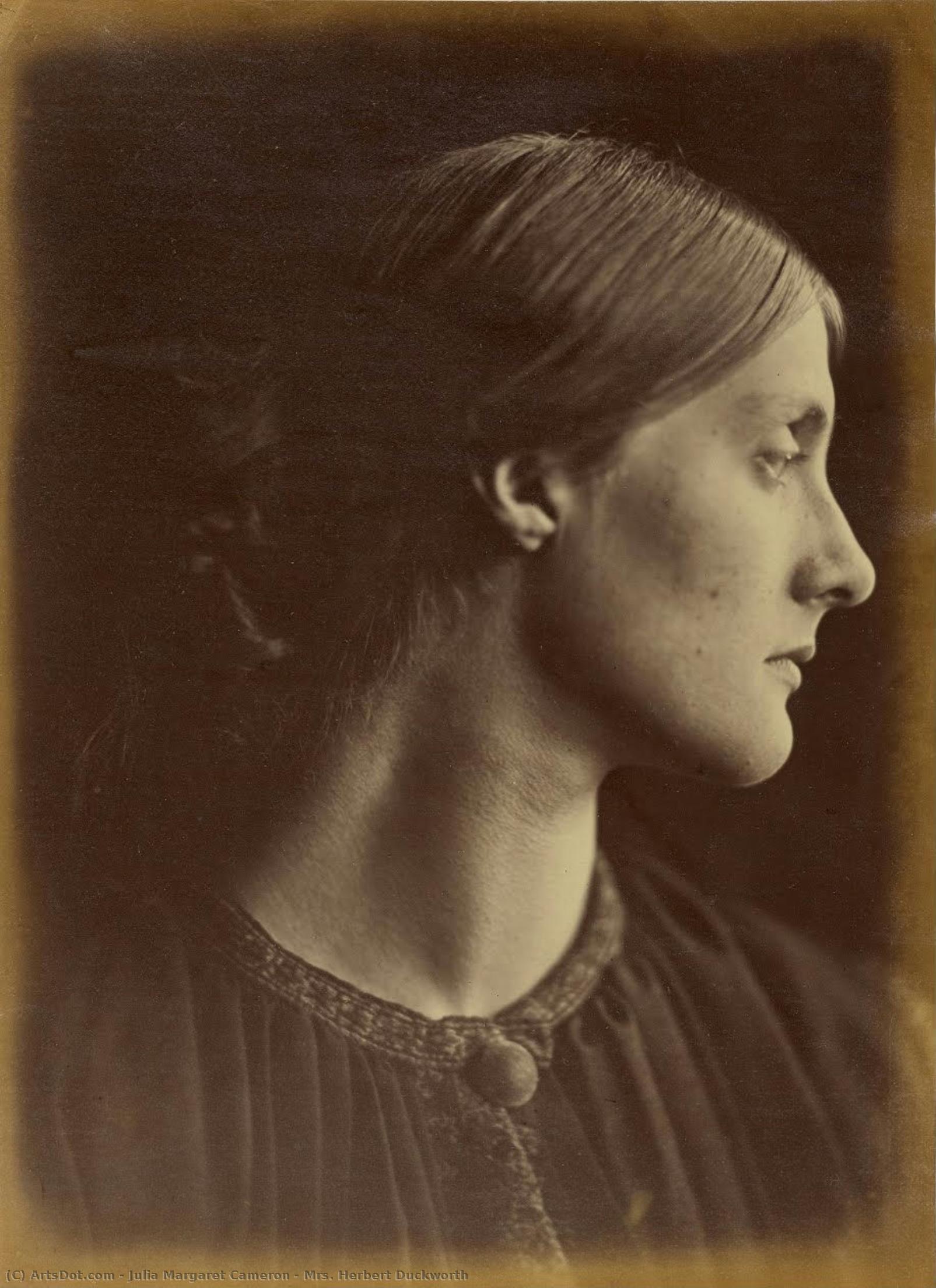
Mrs. Herbert Duckworth
 Acrylic On Canvas
- WallArt
- Pre-Raphaelite Romanticism
 1867
1867 34.0 x 24.0 cm
 Muzeul J. Paul Getty
 Citește mai mult
Giclée / Imprimare artistică
Printuri giclée sau pe canvas de calitate muzeală, cu proces de producție rapid și opțiuni flexibile de finisare. ( Comandă pictură realizată manual Treci la imagine digitală)




P118B $10

P118H $10

P118W $10

P438Z $10

P508JH $12

P508YH $12

P805H $10

P805Z $10

P919BZ $10

P919G $10

P919XJ $10

P959ZH $10

P968JZ $12

W106C $8

W218G $10

W218JH $8

W218Y $10

W307PJ $10

W316G $10

W316PJ $8

W316Y $10

W398PJ $8

W4111J $10

W500HY $15

W500JH $15

W692G $12

W849H $8

W940BG $15

W953PJ $8




Alegeți dintre dimensiunile noastre prestabilite, care respectă proporțiile originale ale operei de artă.

Puteți introduce propriile dimensiuni pentru a se potrivi unui anumit cadru sau spațiu. Dacă dimensiunea selectată nu corespunde proporțiilor imaginii originale, vom decupa lucrarea de artă sau vom extinde imaginea cu margini oglindite sau cu o culoare uniformă. Un mockup digital va fi trimis pentru aprobarea dumneavoastră înainte de începerea producției.
Vă rugăm să rețineți că previzualizarea de pe ecran nu reflectă decuparea sau extinderea reală. Doar mockup-ul va arăta cu exactitate compoziția finală.
Deși dimensiunile personalizate sunt disponibile, vă recomandăm să selectați o dimensiune din lista predefinită pentru a păstra proporțiile originale.
Livrare în întreaga lume () în 2 săptămâni, în loc de cele 4/5 săptămâni standard. (26 Septembrie)

Livrare expres gratuită la nivel mondial

Pânză de in premium

Asigurare completă pentru transport

Garanție de rambursare a taxelor vamale

Garanția fidelității culorilor

Politica de retur în 100 de zile (doar pentru defecte)

Garanție de rambursare 100%

Reducere pentru comenzi multiple
 Opțiunea cu sticlă este disponibilă doar pentru dimensiuni de sub 110 cm

Mrs. Herbert Duckworth
Giclée / Imprimare artistică
Dimensiune reproducere
-


Preț total
$ 80
The Enigmatic Beauty of Julia Jackson
Julia Margaret Cameron’s 1867 portrait of Mrs. Herbert Duckworth, a young woman poised with an almost unnerving composure, is far more than a simple likeness; it's a carefully constructed embodiment of Victorian ideals – strength, beauty, and a subtle hint of melancholy. The subject, Julia Jackson, was the daughter of Mia, Julia Margaret Cameron’s youngest sister, and John Jackson, a physician who had practiced in Calcutta. Her striking appearance immediately drew attention, prompting numerous marriage proposals, most notably from the renowned Pre-Raphaelite painter William Holman Hunt and sculptor Thomas Woolner. This particular portrait, one of several commissioned during her brief engagement with Hunt, captures a pivotal moment – a poised young woman on the cusp of a new life, radiating an aura of quiet dignity.

Image: Mrs. Herbert Duckworth by Julia Margaret Cameron
The Alchemy of Soft Focus and Light
Cameron’s mastery lies not in photographic realism, but in her manipulation of light and shadow to evoke mood and character. Employing the wet collodion process – a notoriously demanding technique requiring immediate development – she created images characterized by their soft focus, almost dreamlike quality. This deliberate blurring wasn't a flaw; it was a conscious choice designed to capture the essence of her subjects rather than their precise details. Notice how the light falls across Mrs. Duckworth’s face, highlighting the delicate curve of her cheekbone and the subtle shadows that deepen the expression in her eyes. The background is deliberately dark, drawing all attention to the sitter's head and shoulders – a technique reminiscent of ancient portraiture, particularly Roman busts, lending an air of timelessness and gravitas.
The composition itself is strikingly symmetrical, mirroring the Victorian emphasis on order and balance. The careful framing, with the bust presented in perfect proportion, speaks to Cameron’s meticulous approach and her desire to elevate her subjects to a level of heroic beauty. This deliberate arrangement elevates Mrs. Duckworth beyond a mere portrait; she becomes an emblem of refined womanhood.
A Victorian Ideal: Grace, Strength, and Quiet Resolve
Mrs. Herbert Duckworth embodies the complex ideals of Victorian femininity – strength tempered with grace, intellect alongside beauty, and a quiet resolve beneath a composed exterior. The portrait isn’t overtly romantic; there's no overt display of emotion. Instead, it conveys a sense of inner resilience, a subtle suggestion of sadness perhaps, or simply the weight of expectation placed upon women of her era. Cameron skillfully captures this duality, presenting a woman who is both vulnerable and formidable.
Her gaze, directed slightly off-camera, creates an intimate connection with the viewer, inviting us to contemplate her thoughts and feelings. The carefully chosen attire – a dark dress that emphasizes her figure while remaining understated – further reinforces this sense of quiet dignity. The portrait is not merely a representation of appearance; it’s a psychological study, revealing the inner life of a woman poised on the threshold of marriage and motherhood.
Legacy and Influence
Julia Margaret Cameron's work profoundly influenced subsequent generations of photographers and artists. Her pioneering use of soft focus and her ability to capture the emotional depth of her subjects paved the way for modern portraiture. Her influence extends beyond photography, inspiring painters like Edward Burne-Jones, who famously used her likeness as a model for the Virgin in his Annunciation painting. The image’s enduring appeal lies not only in its aesthetic beauty but also in its ability to evoke a sense of nostalgia for a bygone era – a time when portraiture was considered an art form capable of capturing not just appearances but also the very soul of its subject.
Biografie artist
A Pioneering Vision: The Life and Art of Julia Margaret Cameron
Julia Margaret Cameron, a name synonymous with the evocative power of 19th-century photography, emerged as a significant artistic voice remarkably late in life. Born Julia Pattle on June 11, 1815, in Kolkata, India, her early years were steeped in the vibrant cultural tapestry of Anglo-Indian society and shaped by a lineage that connected her to both British colonial administration and French aristocracy. This unique heritage instilled within her a cosmopolitan sensibility and an appreciation for beauty that would later permeate her artistic endeavors. Her upbringing was further enriched by extended periods spent in France, fostering a deep engagement with art, literature, and the intellectual currents of the time. The Pattle sisters were known for their unconventional spirit and embrace of Indian aesthetics, setting Julia apart from conventional Victorian expectations even before she picked up a camera.It wasn’t until 1863, at the age of 48, that Cameron discovered her passion for photography. A gift from her daughter and son-in-law—a wet collodion camera—ignited a creative fire within her. This was not merely a hobby; it became an all-consuming pursuit that would define the next eleven years of her life. She quickly established herself within a circle of prominent Victorian intellectuals and artists, drawn to the artistic possibilities of this relatively new medium. Her home on the Isle of Wight transformed into a haven for creativity, attracting luminaries such as Alfred Lord Tennyson, Charles Darwin, and George Frederic Watts—all of whom would become subjects of her iconic portraits.
Early Life and Family
Julia Margaret Cameron was born in Kolkata, India, to Adeline de l’Etang and James Pattle, an East India Company officer whose riotous life earned him the nicknames “Jim Blazes” and “the biggest liar in India.” Perhaps from him she inherited a strong will and a disregard for convention. As a child, she shuttled between India and Europe and received the bulk of her education in Versailles, where she spent much of her early life with her maternal grandmother before residing more permanently in India from the age of 18.
Her marriage to Charles Hay Cameron in 1838 brought her into contact with a wealthy Scottish jurist who shared her intellectual curiosity and artistic inclinations. Together they had six children, fostering a family life that was both unconventional and deeply influential on Cameron’s artistic vision. The Cameron household became a focal point for Victorian social life, attracting artists, writers, and thinkers—a testament to Julia Margaret's charisma and her ability to cultivate relationships with prominent figures of the era.
The Discovery of Photography
Despite societal expectations for women of her time, Cameron possessed an unwavering determination to pursue her passions. The arrival of a wet collodion camera as a Christmas gift from her daughter and son-in-law—a momentous occasion that occurred in 1863—marked the beginning of a transformative journey. Recognizing the potential for artistic expression within this nascent medium, Cameron abandoned conventional photographic techniques and embraced a radically different approach.
Rejecting the prevailing emphasis on sharp focus and meticulous detail favored by many of her contemporaries, she deliberately opted for a soft-focus aesthetic—a stylistic choice that would become synonymous with her oeuvre. This wasn’t driven solely by technical considerations; rather, it reflected Cameron's profound belief that softening the image allowed her to capture not merely the likeness of her subjects but their inner essence—their character, emotions, and spiritual depth. She treated photography as an art form akin to painting—a means of conveying feeling and imagination.
Artistic Style and Technique
Cameron’s mastery extended beyond aesthetic preferences; she was also a skilled manipulator of the wet collodion process itself. This complex technique demanded immediate development after exposure, requiring meticulous attention to detail and careful experimentation with lighting conditions. Cameron skillfully utilized props—often theatrical costumes and elaborate sets—to create tableaux vivants—living pictures—that evoked mythological narratives and literary themes.
Inspired by the Pre-Raphaelite movement’s fascination with medieval romance and Arthurian legends, she staged meticulously crafted scenes from Tennyson's *Idylls of the King* and other literary sources. These images were imbued with a palpable sense of emotion and spiritual yearning—a hallmark of Cameron’s artistic style.
Her photographic portraits distinguished themselves by their psychological depth and emotional resonance. She eschewed conventional poses and expressions, prioritizing intimacy and spontaneity—capturing her subjects in moments of unguarded vulnerability. Cameron's unwavering commitment to capturing the human spirit—to revealing the beauty and complexity of individual personalities—established her as a pioneer in portraiture and profoundly influenced subsequent generations of artists.
Legacy and Influence
Despite facing criticism during her lifetime for her unorthodox style, Julia Margaret Cameron’s work has endured as a testament to her artistic vision and technical skill. Her pioneering use of soft focus, close-up compositions, and allegorical themes challenged prevailing conventions and paved the way for future explorations into expressive photography.
Today, Cameron's photographs are held in prestigious collections worldwide—a lasting legacy that underscores her significance as a female artist who defied societal expectations and championed artistic innovation. Her influence continues to resonate within contemporary art practice, inspiring photographers to embrace experimentation and prioritize emotional depth over technical precision.

Julia Margaret Cameron
1815 - 1879 , România
Informații rapide
- Artistic Movement Or Style: Pictorialism, Portraitură
- Artists Or Movements Influenced By This Artist: ['Pre-Raphaelitiți']
- Artists Who Influenced This Artist: ['George Frederick Watts']
- Date Of Birth: 11 iunie 1815
- Full Name: Julia Margaret Cameron
- Nationality: Britanică
- Notable Artworks:
- Alfred, Lord Tennyson (1865)
- Annie, My First Success
- Place Of Birth: Calcutta, India
Articole conexe
The Lens of Truth: A Comprehensive History and Legacy of Documentary Photography
Explore the profound history of documentary photography. From early daguerreotypes to social reform movements, discover how the lens captures truth, preserves vanishing cultures, and shapes our global visual narrative through an expert art-historical lens.

Beyond the Lens: Photography's Enduring Influence on Modern & Contemporary Art
Explore photography's pivotal role in shaping modern & contemporary art. Discover key movements, influential artists like Stieglitz, and expert collecting advice from OriginalUniqueArt.
Pictorialism: A Search for Artistic Photography's Soul – Aesthetics, Techniques & Legacy
Explore the captivating world of Pictorialism – a pivotal movement that transformed photography into fine art. Discover key artists like Stieglitz & Käsebier, techniques, and collecting tips from experts.
Witnessing History Through Lens & Light: Documentary Photography's Enduring Legacy
Explore the powerful history of documentary photography – from its origins to contemporary masters like Gordon Parks & W. Eugene Smith. Discover how this art form shapes our understanding of society and witness pivotal moments in time.

Monochrome Visions: Exploring the Aesthetic & Historical Significance of Black & White Photography
Explore the rich history & artistic power of black and white photography. From early techniques to iconic masters like Ansel Adams, discover why monochrome continues to captivate art lovers today. Expert insights for collectors.