- Acasă

- Imprimare pe pânză
- Juan Gris
- Harlequin

 Comandă reproducere pictată Cumpără imaginea
 Trimite
 Distribuie
 Detalii despre lucrare
 Adaugă la favorite

 Descarcă
 Similare
 Radiografie
 Diaporama
Harlequin


 Vezi mai mult
Giclée / Imprimare artistică
Print giclée sau pe canvas de calitate muzeală, cu producție rapidă și opțiuni flexibile de finisare.




































Alegeți dintre dimensiunile noastre prestabilite, care respectă proporțiile originale ale operei de artă.

Puteți introduce propriile dimensiuni pentru a se potrivi unui anumit cadru sau spațiu. Dacă dimensiunea selectată nu corespunde proporțiilor imaginii originale, vom decupa lucrarea de artă sau vom extinde imaginea cu margini oglindite sau cu o culoare uniformă. Un mockup digital va fi trimis pentru aprobarea dumneavoastră înainte de începerea producției.
Vă rugăm să rețineți că previzualizarea de pe ecran nu reflectă decuparea sau extinderea reală. Doar mockup-ul va arăta cu exactitate compoziția finală.
Deși dimensiunile personalizate sunt disponibile, vă recomandăm să selectați o dimensiune din lista predefinită pentru a păstra proporțiile originale.
Livrare în întreaga lume () în 2 săptămâni, în loc de cele 4/5 săptămâni standard. (18 Iulie)

Livrare expres gratuită la nivel mondial

Pânză de in de înaltă calitate

Asigurare completă pentru transport

Garanție de rambursare a taxelor vamale

Garanția fidelității culorilor

Politica de retur de 60 de zile (doar pentru defecte)

Garanție 100% de rambursare

Reducere la comenzi multiple
 Opțiunea cu sticlă este disponibilă doar pentru dimensiuni de sub 110 cm

Harlequin
Giclée / Imprimare artistică
Dimensiune reproducere
-


Preț total calculat
-
Descriere obiect de colecție
Juan Gris’ “Harlequin”: A Fragmented Portrait of Modern Anxiety
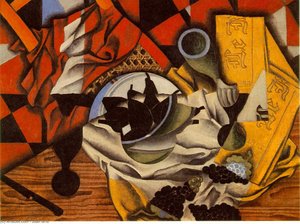
Juan Gris’ “Harlequin,” completed in 1918, stands as a cornerstone of Cubist art and embodies the anxieties inherent within the burgeoning modernist movement. More than just a depiction of a theatrical character—a nod to the enduring traditions of Commedia dell’arte—the sculpture delves into profound questions about perception, representation, and the disintegration of traditional artistic conventions.
The Visual Language of Fragmentation
Gris’ masterful manipulation of geometric forms is immediately striking. The figure isn't rendered in a conventional manner; instead, it’s constructed from interlocking planes—primarily rectangular blocks—that overlap and intersect to suggest volume without resorting to realistic shading. This technique, pioneered by Picasso and Cézanne before him, deliberately rejects illusionistic depth, prioritizing intellectual analysis over visual accuracy. Lines are crisp and angular, defining the edges of these planes with unwavering precision – a characteristic that reflects the Cubist preoccupation with dissecting objects into their constituent parts.
Color Palette and Texture: Earthy Restraint
The color palette is deliberately muted, dominated by shades of grey, brown, and green. These earthy tones contribute to an atmosphere of solemn contemplation and subtly convey a sense of isolation. Hints of blue and gold appear sparingly, adding visual interest without disrupting the overall tonal harmony. The surface texture appears smooth due to photographic reproduction; however, Gris’ original bronze sculpture would have possessed a matte finish—a deliberate choice that reinforces the artwork's textural ambiguity.
Historical Context: Embracing Uncertainty
"Harlequin with a Guitar" emerged during a period of intense intellectual ferment in Europe. The aftermath of World War I instilled a pervasive feeling of disillusionment and uncertainty, prompting artists to question established norms and explore new modes of expression. Cubism responded directly to this zeitgeist by rejecting academic idealism and embracing the fragmented perspective—a visual metaphor for the fractured realities experienced during the postwar era. As noted in Wikipedia, “Like many European artists before them, Cubists often depicted Harlequin, a stock character in the Italian commedia dell’arte…”
Symbolic Resonance: Beyond Representation
The sculpture's symbolism transcends mere visual depiction. The figure embodies the Cubist ethos of dismantling preconceived notions and challenging viewers to reconsider their understanding of form and space. It evokes a feeling of alienation—a characteristic theme within modernist art—and invites contemplation on the complexities of human experience. Gris’ deliberate abstraction serves as a powerful reminder that art can communicate emotion and intellect without relying solely on visual realism.
Recommended Reproduction
A high-quality reproduction of “Harlequin” captures the essence of Gris’ groundbreaking vision. Offered by The Metropolitan Museum of Art and National Gallery of Art, this artwork exemplifies the enduring appeal of Cubist art—its intellectual rigor combined with its evocative aesthetic qualities. Explore the beauty and depth of this iconic piece.
Biografie artist
A Spanish Visionary of Cubism: The Life and Art of Juan Gris
Born José Victoriano González-Pérez in Madrid in 1887, the artist who would become known as Juan Gris embarked on a journey that would place him among the most significant figures of early 20th-century art. His initial path wasn’t one immediately leading to canvas and brush; he pursued engineering at the School of Arts and Sciences, demonstrating an analytical mind that would later profoundly influence his artistic approach. Even during these formative years, a creative spark flickered – contributing drawings to local periodicals hinted at a burgeoning visual talent. It was in 1905 that he adopted the pseudonym Juan Gris, a name resonating with a newfound sense of identity and purpose as he began formal painting studies under José Moreno Carbonero. This marked a pivotal shift, setting him on a course toward artistic innovation.Parisian Awakening and the Embrace of Cubism
The year 1906 witnessed a transformative relocation to Paris, a city then pulsating with artistic energy. Gris immersed himself in this vibrant milieu, forging friendships with luminaries like Henri Matisse, Georges Braque, and Fernand Léger. He initially engaged in satirical illustration for publications such as *L'Assiette au Beurre*, honing his observational skills and developing a keen sense of visual wit. However, the magnetic pull of Pablo Picasso proved particularly influential. Around 1910, Gris began to seriously dedicate himself to painting, moving away from caricature towards the burgeoning language of Cubism. This wasn’t mere imitation; he embarked on a quest to distill the essence of form and space, seeking a new visual order. His early explorations were marked by a deliberate departure from traditional representation, embracing abstraction as a means of capturing reality's underlying structure. Picasso’s influence was undeniable, yet Gris quickly developed his own distinct style, characterized by a remarkable clarity and intellectual rigor.The Geometry of Perception: Style and Key Works
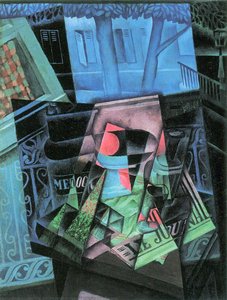
Juan Gris’s artistic output is characterized by an exceptional clarity and intellectual rigor. He didn’t simply deconstruct objects; he reconstructed them with deliberate precision, emphasizing geometric forms and a carefully considered palette. This approach led to what became known as his “crystal period,” exemplified in masterpieces like *Still Life Before an Open Window* and *Place Ravignan* (1915). These works showcase a remarkable interplay of planes and angles, creating a sense of depth and solidity while simultaneously challenging conventional notions of perspective. The influence of Cézanne is evident in Gris’s use of flattened forms and simplified spatial relationships. After 1913, Gris wholeheartedly embraced Synthetic Cubism, pioneering the use of *papier collé* – collage – incorporating real-world materials like newspaper clippings and textured papers into his compositions. This technique added another layer of complexity and tactility to his work, blurring the boundaries between painting and sculpture. Notable examples include *Guitar in front of the sea* (1925), a testament to his simplified forms and adherence to cubist principles, and *Homage à Pablo Picasso* (1912), which signaled his growing recognition within the avant-garde art world.The Development of His Style: From Analytic to Synthetic Cubism
Gris’s artistic journey wasn't a sudden shift but a gradual evolution. Initially exploring the analytical phase of Cubism, characterized by fragmented forms and overlapping planes—a technique heavily influenced by Picasso—he moved towards the more constructive and colorful approach of synthetic cubism. This transition involved a deliberate simplification of shapes, an increased use of color, and the incorporation of collage elements. He sought to represent objects not as they appear in reality but as they are perceived – broken down into their essential geometric components. The introduction of *papier collé* was a crucial step, allowing him to integrate textures and patterns into his paintings, creating a richer and more dynamic visual experience. His work during this period reflects a growing confidence and experimentation, pushing the boundaries of Cubism while retaining its core principles.Legacy and Lasting Influence
Juan Gris’s contribution to Cubism extends beyond mere stylistic innovation; he brought a unique intellectual depth and structural clarity to the movement. He moved past the analytical phase, towards a more organized and synthetic approach, emphasizing order and precision. His work profoundly influenced the Purist style championed by Amédée Ozenfant and Charles Edouard Jeanneret (Le Corbusier), advocating for a return to classical principles of form and composition. Gris’s emphasis on geometric forms, harmonious color palettes, and the integration of everyday objects into his art established him as a pivotal figure in 20th-century art. His legacy continues to inspire artists today, demonstrating the enduring power of Cubism and the visionary genius of Juan Gris – a Spanish master who reshaped our understanding of perception and representation.
Juan Gris
1887 - 1927 , Spania
Detalii rapide
- Artistic Movement Or Style: Cubism, Sintetic Cubism
- Artists Or Movements Influenced By This Artist:
- Purism
- Ozenfant
- Le Corbusier
- Artists Who Influenced This Artist:
- Picasso
- Matisse
- Braque
- Date Of Birth: 23 martie 1887
- Date Of Death: 11 mai 1927
- Full Name: José Victoriano González-Pérez
- Nationality: Spaniol
- Notable Artworks:
- Guitar în fața mării
- Homaj către Pablo Picasso
- Place Of Birth: Madrid, Spania
Articole conexe
Cubism: 10 Capodopere Esențiale care au Schimbat Arta | OriginalUniqueArt.ro
Descoperă cele mai importante 10 capodopere cubiste de la Picasso, Braque și alți maeștri. Explorează istoria artei moderne, tehnicile inovatoare și culorile vibrante ale mișcării cubiste pe OriginalUniqueArt.ro! Reproduceri tablouri de calitate muzeală pentru decorul perfect.

Perspective Fragmentate, Spații Unificate: Integrarea Artei Inspirate de Cubism în Designul Vililor Moderne – Ghid pentru Inovație Estetică și Considerații Legale
Descoperiți ghidul complet pentru integrarea artei cubiste în designul vililor moderne! Sfaturi de la experți, considerații legale și inspirație pentru spații unificate și sofisticate. OriginalUniqueArt – partenerul dvs. pentru estetică rafinată.
Cubismul Expresionist: 10 Capodopere Definitorii pentru Decoruri de Artă Rafinate
Descoperă cele mai importante 10 capodopere ale cubismului expresionist! Explorează istoria artei moderne, stilul unic al lui Picasso, Braque și Legér. Reproduceri de tablouri de calitate muzeală pentru un decor interior sofisticat. Descoperă toate operele pe OriginalUniqueArt.com
Top 10 Capodopere Pop Art: Artiști Iconici și Decorațiuni Luxoase | OriginalUniqueArt.ro
Descoperă Top 10 capodopere Pop Art de la Warhol și Lichtenstein! Explorează istoria, tehnicile și impactul artei contemporane. Reproduceri de artă luxoase pentru decor interior pe OriginalUniqueArt.com.
Portrete Cubiste Iconice: Top 10 Opere de Artă care au Definit Mișcarea
Descoperă top 10 portrete cubiste iconice de la Picasso, Braque și alți maeștri! Explorează istoria mișcării cubiste, tehnicile inovatoare și culorile vibrante. Găsește reproducerea perfectă pentru decorul tău pe OriginalUniqueArt.com