

 Vezi în context
 Trimite
 Distribuie
 Detalii
 Ghidul

 Descarcă
 Produse similare
 Radiografie
 Diaporama
 Statistici
Vita somnium breve
 Acrilic pe pânză întinsă
- Artă de perete
- Art Nouveau Modern
 1906
1906 163.0 x 143.0 cm
 Muzeul Național din Cracovia
 Citește mai mult
Giclée / Imprimare artistică
Printuri giclée sau pe canvas de calitate muzeală, cu proces de producție rapid și opțiuni flexibile de finisare. ( Comandă pictură realizată manual Treci la imagine digitală)




P118B lei10

P118H lei10

P118W lei10

P438Z lei10

P508JH lei12

P508YH lei12

P805H lei10

P805Z lei10

P919BZ lei10

P919G lei10

P919XJ lei10

P959ZH lei10

P968JZ lei12

W106C lei8

W218G lei10

W218JH lei8

W218Y lei10

W307PJ lei10

W316G lei10

W316PJ lei8

W316Y lei10

W398PJ lei8

W4111J lei10

W500HY lei15

W500JH lei15

W692G lei12

W849H lei8

W940BG lei15

W953PJ lei8




Alegeți dintre dimensiunile noastre prestabilite, care respectă proporțiile originale ale operei de artă.

Introduceți lățimea și înălțimea de care aveți nevoie, pentru a se potrivi ramei sau peretelui dumneavoastră. O printare poate fi doar tăiată, niciodată extinsă dincolo de dimensiunea imaginii originale, astfel încât o dimensiune cu o formă diferită va pierde o parte din imagine. Vă trimitem o simulare digitală pentru aprobare înainte de a imprima orice. Imaginea afișată pe această pagină nu prezintă tăierea reală — doar simularea arată acest lucru.
Livrare în întreaga lume () în 2 săptămâni, în loc de cele 4/5 săptămâni standard. (25 Octombrie)

Livrare expres gratuită la nivel mondial

Pânză de in premium

Asigurare completă pentru transport

Garanție de rambursare a taxelor vamale

Garanția fidelității culorilor

Politica de retur în 100 de zile (doar pentru defecte)

Garanție de rambursare 100%

Reducere pentru comenzi multiple
 Opțiunea cu sticlă este disponibilă doar pentru dimensiuni de sub 110 cm

Vita somnium breve
Giclée / Imprimare artistică
Dimensiune reproducere
-


Preț total
lei 370
Vita Somnium Breve: A Window Into Polish Symbolism
Józef Mehoffer’s “Vita Somnium Breve” (Life is a Short Dream), completed in 1906, stands as a cornerstone of Art Nouveau stained glass artistry and embodies the spirit of Young Poland – a movement dedicated to reviving Polish national identity after centuries of partitions. Created by Krakowski Zakład Witrażów i Mozaiki S.G. Żeleński, this monumental window is housed in the National Museum of Kraków and offers a mesmerizing glimpse into the artistic sensibilities of its time. ### Artistic Style and Technique: The Fluid Elegance of Art Nouveau Mehoffer’s approach to stained glass aligns perfectly with the tenets of Art Nouveau – a style characterized by organic forms inspired by nature, flowing lines, and intricate ornamentation. Unlike the rigid geometric patterns prevalent in earlier styles, “Vita Somnium Breve” eschews harsh angles for graceful curves that mimic branches and foliage. The artist skillfully employs a technique known as *pointillé*, where tiny dots of color are meticulously applied to create textured surfaces and luminous effects—a hallmark of Mehoffer’s oeuvre. This method maximizes light diffusion, transforming the window into an ethereal space filled with shimmering hues. ### Symbolism: Dreams, Hope, and Polish Identity The imagery depicted within the stained glass is rich in symbolism reflecting the anxieties and aspirations of Young Poland. Dominating the composition are figures representing women and children—symbols of purity, fertility, and the future of Poland. Their serene postures convey a sense of tranquility amidst turbulent times, suggesting resilience and unwavering faith in national revival. The forest setting itself symbolizes Poland’s enduring spirit – rooted in tradition yet constantly striving for progress. Furthermore, the stylized depiction of trees and flowers speaks to the movement's preoccupation with reviving Polish folklore and artistic heritage. ### Historical Context: Young Poland and Artistic Renewal “Vita Somnium Breve” emerged during a period of fervent cultural revival following the Russo-Polish War of 1893-94. Young Poland sought to recapture Poland’s glory days through literature, music, and visual arts—a conscious effort to forge a new national identity distinct from Russian influence. Mehoffer's work exemplifies this ambition, demonstrating a commitment to elevating Polish art to international standards while simultaneously grounding it in deeply rooted traditions. The window served as a powerful emblem of hope for the nation’s future, reflecting the optimism and idealism that characterized Young Poland’s artistic endeavors. ### Emotional Impact: A Window Into Tranquility and Remembrance Looking upon “Vita Somnium Breve” evokes a profound sense of serenity—a visual antidote to the anxieties of its era. The vibrant colors – predominantly greens and blues – bathe the interior space in soft luminescence, creating an atmosphere conducive to contemplation. More than just decoration, this stained glass window is a testament to artistic skill and a poignant reminder of Poland’s cultural heritage. It invites viewers to pause and appreciate the beauty of nature alongside the enduring spirit of national resilience—a timeless message conveyed through the masterful execution of Art Nouveau technique.Întrebări și răspunsuri
Unde pot găsi un ghid pentru "Vita somnium breve"?
Pagina Ghid pentru "Vita somnium breve" de Józef Mehoffer oferă o fișă informativă imprimabilă în două pagini: opera de artă însoțită de tabelul său de identificare, o bandă decenală care o plasează în intervalul de viață al artistului, alte lucrări ale acestuia, paleta de culori măsurată și citări gata de copiat în patru stiluri diferite.
Cum este construită compoziția cromatică a operei "Vita somnium breve" de Józef Mehoffer?
În "Vita somnium breve", un Contrast maxim contrast este împletuit cu o Paletă de culori discordante armonie.
Cât de intense sunt culorile din "Vita somnium breve"?
"Vita somnium breve" de Józef Mehoffer este înregistrată cu o saturație de Culori discrete și o intensitate de Echilibrat.
Biografie artist
A Life of Color and Glass
Józef Mehoffer arrived in the world in Ropczyce, Poland, in 1869, though his path to the easel was not immediate. Before he embraced the brush, he pursued legal studies, a direction that only shifted after a gift of paints revealed a different vocation. He sought formal training at the Academy of Fine Arts in Kraków under Władysław Łuszczkiewicz, later expanding his horizons through studies in Vienna and Paris at the Académie Colarossi. This period of wandering through Europe’s great art centers allowed him to absorb the diverse currents of his era.
His work became a bridge between the academic traditions of his teachers, such as Jan Matejko, and the emerging avant-garde. He moved with ease between easel painting and the monumental demands of decorative arts. Whether working on portraits, landscapes, or intricate book illustrations, Mehoffer sought a fusion of form and color. His style grew to include elements of Post- Impressionism and the Secession movement, often utilizing bold palettes and fluid lines that mirrored the organic spirit of Art Nouveau.
The Light of Fribourg
While his presence was felt throughout Poland, Mehoffer achieved significant recognition through his work in Switzerland. Between 1895 and 1936, he dedicated decades to a cycle of thirteen stained-glass compositions for the Cathedral of St. Nicholas in Fribourg. This undertaking required immense technical precision, as he treated the lead came not merely as a structural necessity but as an autonomous graphic line. He selected glass of varying thicknesses and textures, using silver stain and vitreous black to manipulate how light moved through the windows.
The success of these windows brought him international attention. At the 1900 Paris World's Fair, his window titled The Martyrs earned a gold medal. This period of his life saw him blending Polish folk motifs with the sophisticated aesthetics of European Art Nouveau. His ability to translate complex religious and symbolic themes into luminous glass remains a central part of his professional identity.
A Decorative Legacy
Mehoffer’s creative output was remarkably broad, refusing to be confined to a single medium. He was as much a designer of furniture, textiles, and posters as he was a painter of canvases. His hand could be found in the mosaics of the Armenian Cathedral in Lviv and the frescoes of Wawel Cathedral. In 1897, he helped found the society Sztuka, an organization that sought to assert the independence of Polish art from the influence of occupying powers.
In his later years, Mehoffer established a home and studio on Krupnicza Street in Kraków. This house, which he purchased in 1932, became a center for musical and literary gatherings, reflecting his role as a figure of the Polish intelligentsia. He lived through the profound shifts of the early twentieth century, continuing to work even during the hardships of the Second World War. When he passed away in Wadowice in 1946, he left behind a body of work that spanned the transition from nineteenth-century tradition to the modern decorative era.

Józef Mehoffer
1869 - 1946
Informații rapide
- Artistic Movement Or Style:
- Young Poland
- Post-Impressionism
- Secession
- Art Nouveau
- Symbolism
- Artists Who Influenced This Artist:
- Jan Matejko
- Władysław Łuszczkiewicz
- Henri Matisse
- Full Name: Józef Mehoffer
- Nationality: Polish
- Notable Artworks:
- Vita somnium breve
- Three Kings
- The Farewell
- The Muse
- Medusa
- Place Pigalle in Paris
- Place Of Birth: Ropczyce, Poland
- Date Of Birth: 1869
- Date Of Death: 1946
Articole conexe
Jan Matejko: Historical Narrative & National Identity in 19th-Century Polish Painting
Explore the powerful historical paintings of Jan Matejko, Poland's national artist. Discover his iconic works & learn how he shaped Polish identity in the 19th century. High-quality reproductions available.
Top 10 Capodopere Art Nouveau: Frumusețe, Inspirație și Decor Excepțional
Descoperă Top 10 capodopere Art Nouveau! Alphonse Mucha, Gustav Klimt și alți maeștri îți dezvăluie frumusețea stilului floral și a liniilor sinuoase. Reproduceri de artă excepționale pentru un decor rafinat pe OriginalUniqueArt.com
Stanisław Wyspiański: Symbolism, National Identity & the Polish Secession
Explore the life & work of Stanisław Wyspiański, a pivotal figure in Polish Symbolism and the Young Poland movement. Discover his iconic paintings, dramas, and stained glass designs reflecting national identity & artistic innovation.
Luminous Masterpieces: The Captivating Beauty and Timeless Elegance of Stained Glass Artworks
Embark on a visual journey through the luminous world of stained glass art. Discover the exquisite craftsmanship, historical significance, and captivating beauty of masterworks from Art Nouveau to the Gothic era, curated for the discerning fine art enthusiast.
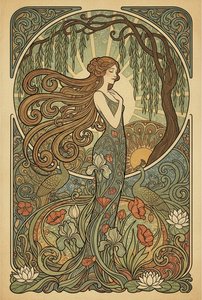
The Flowing Line & Flourishing Form: Exploring Art Nouveau's Aesthetic Legacy
Explore the captivating world of Art Nouveau! Discover its origins, key artists like Horta & Mucha, regional styles, innovative techniques, and lasting influence on architecture & design. A comprehensive guide for art enthusiasts.
