
 Previzualizare
 Trimite prin felicitare
 Distribuie
 Detalii despre lucrare
 Ghid
Ghid

 Descarcă imaginea
 Produse similare
 Radiografie
 Galerie foto
 Q&A
Q&A Statistici
Self-portrait

- 69.0 x 58.0 cm


 Vezi mai mult
Giclée / Imprimare artistică
Printuri giclée sau pe canvas de calitate muzeală, cu proces de producție rapid și opțiuni flexibile de finisare. ( Comandă pictură realizată manual Comută pe Imagine Digitală)




P118B lei10

P118H lei10

P118W lei10

P438Z lei10

P508JH lei12

P508YH lei12

P805H lei10

P805Z lei10

P919BZ lei10

P919G lei10

P919XJ lei10

P959ZH lei10

P968JZ lei12

W106C lei8

W218G lei10

W218JH lei8

W218Y lei10

W307PJ lei10

W316G lei10

W316PJ lei8

W316Y lei10

W398PJ lei8

W4111J lei10

W500HY lei15

W500JH lei15

W692G lei12

W849H lei8

W940BG lei15

W953PJ lei8




Alegeți dintre dimensiunile noastre prestabilite, care respectă proporțiile originale ale operei de artă.

Introduceți lățimea și înălțimea necesare pentru a se potrivi ramei sau peretelui dumneavoastră. O printare poate fi doar tăiată, niciodată extinsă dincolo de dimensiunea imaginii originale, astfel încât o dimensiune cu o formă diferită va pierde o parte din imagine. Vă trimitem o simulare digitală pentru aprobare înainte de a imprima orice. Imaginea afișată pe această pagină nu prezintă tăierea reală — doar simularea arată acest lucru.
Livrare în întreaga lume () în 2 săptămâni, în loc de cele 4/5 săptămâni standard. (2 Noiembrie)

Livrare expres gratuită la nivel mondial

Pânză de in de înaltă calitate

Asigurare completă pentru transport

Garanție de rambursare a taxelor vamale

Garanția fidelității culorilor

Politica de retur în 100 de zile (doar pentru defecte de fabricație)

Garanție de rambursare 100%

Ofertă pentru comenzi multiple
 Opțiunea cu sticlă este disponibilă doar pentru dimensiuni de sub 110 cm

Self-portrait
Giclée / Imprimare artistică
Dimensiune reproducere
-


Preț total calculat
lei 379
A Portrait of an Era: Unveiling Joseph Wright's Self-Portrait
In late 2009, the National Gallery of Victoria received a remarkable gift – two paintings by the pivotal 18th-century British artist, Joseph Wright of Derby. Among these treasures is his “Self-Portrait,” a work that transcends mere likeness and offers an intimate glimpse into the mind of a revolutionary artist grappling with a rapidly changing world. More than just a depiction of a man in fur, this painting is a carefully constructed meditation on identity, artistic ambition, and the burgeoning fascination with light and shadow that defined Wright’s career – and indeed, the dawn of the Industrial Age.

The Language of Light and Shadow: Technique and Style
Wright’s mastery lies in his manipulation of chiaroscuro, a technique borrowed from Caravaggio but profoundly adapted to his own unique vision. The painting is dominated by a deep, enveloping darkness – a deliberate choice that serves not as an absence of light, but as the very canvas upon which Wright sculpts his subject's form. The soft, warm illumination that washes over Wright’s face, clothing, and hands isn’t harsh or dramatic; it’s subtle, almost diffused, creating a sense of intimacy and inviting the viewer into his private world. Notice the meticulous modelling of the fur collar, rendered with an astonishing level of detail – each strand appears to shimmer with reflected light. The rich green of his house-coat, Wright's signature color, is applied in smooth, layered glazes, adding depth and texture. The loose, expressive brushwork throughout contributes to a sense of immediacy, as if we are witnessing a fleeting moment captured on canvas.
A Symbol of Ambition: Context and Interpretation
This self-portrait isn’t simply a record of Wright's appearance; it’s a carefully considered statement about his artistic identity. The scarf wrapped around his head, a fashionable detail inspired by Rembrandt’s elaborate self-portraits, speaks to Wright’s awareness of artistic precedent and his desire to be recognized as a sophisticated artist within the European art world. The exotic headwear was already something of a cliché among Wright’s profession, but he elevates it with a confident bearing, suggesting an embrace of this trend as a symbol of his elevated status. The gesture of his chin resting on his hand – a pose of thoughtful contemplation – is remarkably endearing, devoid of the confrontational intensity often found in portraits of the era. Wright's gaze, rivetingly hypnotic, draws us into his psychological space, inviting us to share in his quiet introspection.
A Window into Derby’s Industrial Awakening
Created around 1768, this painting reflects Wright’s growing fascination with the scientific and technological advancements transforming England. Wright was a keen observer of the burgeoning industrial revolution, documenting its impact on society through his paintings – from scenes of scientific experimentation to depictions of factory life. This self-portrait can be seen as a microcosm of that larger movement: a man grappling with his own identity within a world undergoing profound change. It’s a testament to Wright's ability to capture not just the outward appearance of his subjects, but also their inner lives and aspirations. The painting stands as a poignant reminder of a pivotal moment in human history – a time when art began to reflect the complexities and contradictions of an era defined by innovation and transformation.
Întrebări și răspunsuri
Cum este construită compoziția cromatică a operei "Self-portrait" de Joseph Wright of Derby?
În "Self-portrait", un Gentle contrast se împletește cu o Strong Color Unity armonie.
Cât de saturată este paleta culorilor din "Self-portrait"?
Paleta lucrării "Self-portrait" are o saturație de Muted.
Cine este autorul operei "Self-portrait" și din ce curent artistic face parte?
Joseph Wright of Derby a creat "Self-portrait", parte a mișcării Neoclassicism.
Biografie artist
The Luminary of Derby: Joseph Wright and the Dawn of the Industrial Age
Joseph Wright, known to history as “Wright of Derby,” transcended the role of a mere painter; he was a visual philosopher who masterfully captured a pivotal moment in human existence. Born in 1734 amidst the burgeoning industrial heartland of England, Wright didn’t simply depict his time—he *illuminated* it, both literally and figuratively. His canvases weren't filled with grand historical narratives or aristocratic portraits alone; they pulsed with the energy of scientific discovery, the drama of enlightenment thought, and the stark beauty of a landscape irrevocably altered by human innovation. He stands as the first major artist to truly grapple with, and celebrate, the spirit of the Industrial Revolution, an era destined to redefine civilization itself. His early life in Derby, steeped in the practical world of his father’s legal profession, provided a grounding that perhaps subtly informed his later fascination with precision and observation. Though initially destined for law, young Joseph's innate artistic inclination proved irresistible, leading him to London at seventeen to study under Thomas Hudson, a prominent portrait painter of the day. This formal training laid a foundation, but it was Wright’s inherent curiosity and independent spirit that ultimately forged his unique artistic path.Chiaroscuro and the Language of Light
Wright's technical mastery is immediately apparent in his dramatic use of chiaroscuro – a technique borrowed from Baroque masters like Caravaggio, yet employed with a distinctly modern sensibility. He wasn’t merely interested in creating visual drama; he strategically utilized light and shadow to symbolize the unveiling of knowledge, the struggle between darkness and understanding. Consider masterpieces such as *An Experiment on a Bird in the Air Pump* (1768), where candlelight casts sharp relief upon the faces of onlookers witnessing a scientific demonstration—a scene brimming with both wonder and a subtle undercurrent of apprehension. The painting isn’t simply about the experiment itself; it's an exploration of humanity’s burgeoning curiosity, its willingness to probe the mysteries of nature, and the ethical considerations inherent in such endeavors. Similarly, *A Philosopher Lecturing on the Orrery* (1766) presents a captivating scene where a miniature solar system is unveiled, illuminating not only the faces of the captivated audience but also the expanding universe of scientific thought. These weren’t isolated incidents; Wright consistently sought subjects that allowed him to explore the intersection of science, philosophy, and human emotion. His style was subtly influenced by Alexander Cozens, particularly in his compositional approaches, yet he remained fiercely independent, forging a visual language uniquely his own. The use of light wasn't arbitrary; it served as a powerful metaphor for revelation and insight – a key element that defined Wright’s artistic vision.The Lunar Society and the Spirit of Inquiry
Wright’s paintings are inextricably linked to the intellectual ferment brewing in Birmingham, specifically through the activities of the *Lunar Society*. This group of scientists, industrialists, and philosophers—including figures like Erasmus Darwin, James Watt, and Joseph Priestley—gathered monthly on the full moon to discuss scientific advancements, philosophical ideas, and the burgeoning industrial revolution. Wright’s paintings often depicted scenes inspired by these gatherings, capturing the atmosphere of intellectual exchange and the excitement surrounding new discoveries. *A Philosopher Lecturing on the Orrery* is a prime example, directly referencing the Lunar Society's fascination with mechanics and astronomy. Wright wasn’t simply documenting events; he was visually embodying the spirit of inquiry that characterized this influential group. His work served as a visual record of their debates and experiments, offering a unique glimpse into a pivotal moment in British intellectual history.Beyond Portraits: Landscapes Reflecting a Changing World
While Wright is celebrated for his “candlelight pictures,” to limit him solely to those works would be a significant oversight. He was also a gifted landscape painter, capturing the rugged beauty of Derbyshire and beyond with an increasingly Romantic sensibility. Works like *Dovedale by Moonlight* showcase his ability to evoke atmosphere and emotion through subtle gradations of light and shadow, transforming familiar scenes into evocative visions. These landscapes weren’t merely topographical representations; they were imbued with a sense of awe and reverence for the natural world—a sentiment that resonated deeply with the growing Romantic movement. Even in these seemingly tranquil scenes, however, there's often an undercurrent of melancholy or mystery, hinting at the fragility of nature and the inevitability of change. *Rydal Waterfall* (1795), exemplifies this skill, showcasing his mastery of capturing both power and serenity within a single composition. His landscapes reflected not just the beauty of the natural world but also the anxieties and transformations associated with industrialization – a duality that characterized much of his work.A Legacy Illuminated: Wright’s Enduring Influence
Wright's impact on British art was profound, though perhaps not immediately recognized during his lifetime. He faced some resistance from the established artistic circles, notably declining full membership to the Royal Academy after feeling slighted—a testament to his independent spirit. However, his influence extended far beyond formal institutions. Artists like William Pether and John Downman were directly inspired by his techniques, particularly his dramatic use of light and shadow. More broadly, Wright’s work paved the way for a new generation of artists who sought to capture the dynamism and complexity of the modern world. He didn't just paint what he saw; he painted what he *felt*—the excitement, the anxiety, the wonder—of an era on the cusp of transformation. His paintings remain powerful reminders of a time when humanity dared to question everything, to explore the unknown, and to embrace the possibilities of a new age. Today, his works are held in major museums across the globe, ensuring that the luminary of Derby continues to illuminate our understanding of art, science, and the human spirit.- Notable Works: *An Experiment on a Bird in the Air Pump*, *A Philosopher Lecturing on the Orrery*, *Dovedale by Moonlight*.
- Influences: Thomas Hudson, Alexander Cozens, Baroque masters like Caravaggio.
- Key Characteristics: Dramatic chiaroscuro, exploration of scientific themes, Romantic landscapes.

Joseph Wright of Derby
1734 - 1797 , Regatul Unit
Detalii rapide
- Artistic Movement Or Style: Chiaroscuro, Romanticism
- Artists Or Movements Influenced By This Artist:
- Pether
- Downman
- Artists Who Influenced This Artist:
- Hudson
- Cozens
- Date Of Birth: 3 Septembrie 1734
- Date Of Death: 29 August 1797
- Full Name: Joseph Wright of Derby
- Nationality: Britanic
- Notable Artworks:
- Experiment pe o Pasăre
- Filosof predând...
- Luna deasupra Dovedale
- Place Of Birth: Derby, Marea Britanie
Articole similare

Illuminating Enlightenment: Joseph Wright of Derby's Scientific Vision
Explore the captivating world of Joseph Wright of Derby, a pioneer of Enlightenment art. Discover his masterful chiaroscuro, scientific themes & investment potential. Expert analysis for collectors.

The Enduring Power of Painting: A Historical & Contemporary Exploration of Form and Emotion
Explore the rich history & enduring techniques of oil painting with OriginalUniqueArt. Discover masterpieces, learn about art collecting, and find authentic handmade reproductions crafted by skilled artists.

The Enduring Legacy of Oil on Canvas: Technique, History & Aesthetic Impact
Explore the rich history & techniques of oil painting – from Renaissance masters to Impressionism. Discover pigments, layering methods, and why this timeless medium endures. Expert insights for artists & art enthusiasts.
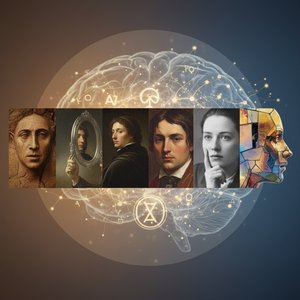
Reflecting the Self: A History of Portraiture & Psychological Insight
Explore the fascinating history of self-portraiture from Renaissance masters like Dürer & Rembrandt to modern interpretations. Discover the psychological insights and artistic techniques behind these iconic works. Expert analysis for art enthusiasts.

Oil on Canvas: A Historical & Technical Exploration of a Timeless Artistic Medium
Explore the rich history & enduring techniques of oil painting on canvas. Discover the science behind its longevity, conservation practices, and contemporary relevance. Expert insights for art enthusiasts.
