
 Previzualizare
 Trimite
 Distribuie
 Detalii despre lucrare

 Descarcă
 Produse similare
 Radiografie
 Diapozitive automate
Corn Husking


 Vezi mai mult
Reproducere pictată manual în ulei
Pictură în ulei pe pânză, realizată manual de artiștii noștri la dimensiunea și ramele dorite de dumneavoastră, pe comandă. ( Comandă versiunea tipărită Comută la imagine)




































Alegeți dintre dimensiunile noastre prestabilite, care respectă proporțiile originale ale operei de artă.

Puteți introduce propriile dimensiuni pentru a se potrivi unui anumit cadru sau spațiu. Dacă dimensiunea selectată nu corespunde proporțiilor imaginii originale, vom decupa opera de artă sau vom extinde pictura cu elemente suplimentare pictate manual. O simulare digitală vă va fi trimisă pentru aprobare înainte de începerea producției.
Vă rugăm să rețineți că previzualizarea de pe ecran nu reflectă decuparea sau extinderea reală. Doar macheta va arăta cu exactitate compoziția finală.
Deși sunt disponibile dimensiuni personalizate, vă recomandăm să selectați o dimensiune din lista predefinită pentru a păstra proporțiile originale.
După plasarea comenzii, echipa OriginalUniqueArt.com va contacta clientul prin e-mail pentru instrucțiuni și îi va furniza o previzualizare a machetei
Livrare în întreaga lume () în 3-4 săptămâni, în loc de cele 5 săptămâni standard. (11 August). Fără compromisuri în ceea ce privește calitatea.

Livrare expres gratuită la nivel mondial

Pânză de in de înaltă calitate

Asigurare completă pentru transport

Garanție de rambursare a taxelor vamale

Garanția fidelității culorilor

Politica de retur în 60 de zile (doar pentru defecte)

Garanție de rambursare 100%

Ofertă pentru comenzi multiple
 Opțiunea cu sticlă este disponibilă doar pentru dimensiuni de sub 110 cm

Corn Husking
Tehnică de reproducere
Dimensiune reproducere
-


Preț total calculat
$ 300
Descriere operă de artă
A Glimpse into the Heart of American Agrarian Life
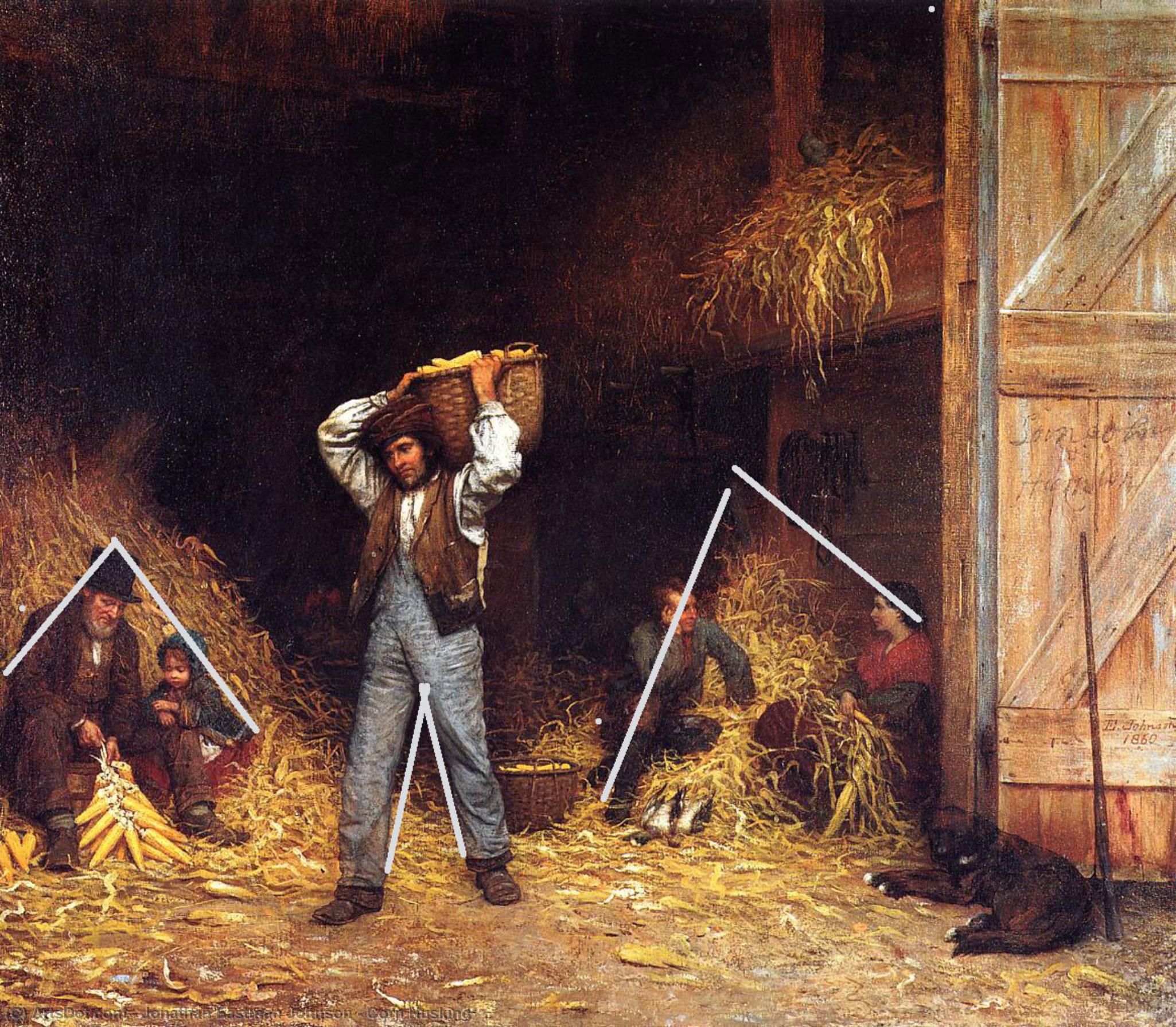
In the quiet, rhythmic pulse of 19th-century America, there existed a profound connection between the laborer and the land, a bond captured with breathtaking intimacy in Jonathan Eastman Johnson’s Corn Husking. Painted in 1860, this evocative oil on canvas serves as more than just a depiction of agricultural toil; it is a window into a vanished era of communal strength and seasonal ritual. The scene unfolds with a sense of shared purpose, as figures gather to load hay onto a wagon, their movements synchronized by the demands of the harvest. A man in rugged overalls stands at the center of this narrative, cradling a heavy basket brimming with straw, his posture embodying the physical weight and the quiet dignity of rural existence. The presence of a loyal dog and a steady horse adds layers of life to the composition, grounding the human drama within the natural, breathing ecosystem of the farmstead.
Johnson’s mastery lies in his ability to transform a mundane moment of labor into a warm, inviting tableau through a sophisticated use of color and light. The artist employs a palette of rich, earthy tones—deep ochres, soft ambers, and muted browns—to wrap the viewer in a sense of nostalgic coziness. There is a palpable warmth radiating from the canvas, as if the late afternoon sun is catching the dust motes dancing above the hay. This careful manipulation of light does not merely illuminate the subjects; it imbues them with a soulful glow, turning the sweat of labor into something sacred and timeless. The technique demonstrates a remarkable attention to detail, where the texture of the straw and the heavy fabric of the workers' clothing feel almost tactile, inviting the observer to reach out and touch the history preserved within the paint.
A Timeless Legacy for the Discerning Collector
For the art enthusiast or the interior designer, Corn Husking offers a profound emotional resonance that transcends its historical period. It is a piece that speaks of stability, community, and the enduring beauty of the natural cycle. The painting’s composition, which balances the central figures with the peripheral presence of animals and distant workers, creates a sense of depth and movement that draws the eye through the landscape of the canvas. This makes it an exceptional choice for creating a focal point in a room that seeks to evoke feelings of heritage, warmth, and groundedness. Whether placed in a sun-drenched library or a sophisticated contemporary living space, the work provides a soulful anchor.
Owning a high-quality reproduction of such a masterpiece allows one to bring the spirit of American Realism into the modern home. As part of the esteemed collection at the Everson Museum of Art, this work carries the weight of historical significance, yet its aesthetic appeal remains strikingly contemporary. The interplay of light and shadow, combined with the nostalgic charm of the 1860s landscape, ensures that the painting remains a conversation piece—a testament to the beauty found in the simplest of human endeavors. For those looking to curate a space filled with stories, Johnson’s work offers an unparalleled opportunity to celebrate the enduring legacy of the American spirit.
Biografie artist
A Life Etched in American Realism
Jonathan Eastman Johnson, a name that resonates with the quiet dignity of 19th-century American life, was far more than simply a painter; he was a visual chronicler of his era. His journey to artistic prominence wasn’t one of immediate acclaim, but rather a gradual unfolding shaped by familial connections, rigorous training, and an unwavering dedication to portraying the world as he perceived it – with honesty, nuance, and a touch of melancholic beauty. Born in Lovell, Maine, in 1824, Johnson's early life was deeply rooted in the traditions of New England, experiences that would profoundly inform his artistic vision. His father, Philip Carrigan Johnson, held positions in business and fraternal organizations, instilling in young Eastman a strong sense of community engagement – a value that would later find expression through Johnson’s subjects and his commitment to documenting American life. The family's relocation to Washington D.C., due to his father’s naval appointment, broadened Johnson’s horizons considerably, exposing him to the diverse tapestry of American society and offering opportunities for observation beyond the familiar landscapes of Maine.From Dutch Masters to American Scenes
Johnson’s artistic development was a fascinating synthesis of influences. Initially drawn to portraiture, he quickly expanded his repertoire to encompass genre painting – scenes depicting everyday life with remarkable detail and sensitivity. This wasn't merely about representation; it was about capturing the essence of American society, offering glimpses into the lives of ordinary people often overlooked by more grandiose historical narratives. A pivotal moment arrived during the 1850s when Johnson embarked on a transformative journey to The Hague, immersing himself in the works of 17th-century Dutch masters. This encounter proved profoundly influential. He absorbed their mastery of composition, lighting, and realism – techniques that would become hallmarks of his mature style. The subtle palette, dramatic chiaroscuro (the use of strong contrasts between light and dark), and almost photographic attention to detail in his paintings are all testaments to this profound influence. However, Johnson didn’t simply imitate; he synthesized these European techniques with his uniquely American sensibility, creating works that were both technically brilliant and deeply rooted in the social fabric of his time. He aligned himself firmly with the burgeoning Realist movement, rejecting idealized representations in favor of accurate depictions of everyday life – a commitment that would define his artistic legacy for decades to come.Bearing Witness to an Era
Johnson’s oeuvre is remarkably diverse, encompassing portraits of prominent figures like Abraham Lincoln, Nathaniel Hawthorne, Ralph Waldo Emerson, and Henry Wadsworth Longfellow alongside intimate scenes of domesticity and rural life. Yet, certain works stand out as particularly significant for their social commentary and artistic innovation. *Negro Life at the South* (1859), perhaps his most controversial and celebrated painting, remains a powerful testament to his commitment to portraying the realities of American society. Depicting African Americans enjoying leisure time in a carefully constructed tableau vivant – a staged scene meant to evoke a particular mood or narrative – it sparked intense debate regarding race relations and the complexities of slavery in the antebellum South. The ambiguity inherent in the scene—was it a romanticized portrayal, a subtle critique, or perhaps both?—fueled discussions that resonated far beyond the art world. His response to the Civil War was equally poignant. Rather than focusing on battlefield heroics – a common theme in many war paintings of the era – Johnson turned his attention to the impact of conflict on civilian life, creating haunting images of anxious families and scenes away from the front lines. *Ride For Liberty* (1862), depicting an enslaved family escaping to freedom, is a powerful testament to his commitment to social justice, capturing a moment of desperate hope amidst chaos and uncertainty. Furthermore, Johnson’s depictions of New England rural life – maple sugar harvesting, cranberry picking, the quiet rhythms of farm work – celebrated traditional American values and craftsmanship with a gentle reverence, offering a nostalgic glimpse into a disappearing way of life.A Legacy Beyond the Canvas
Beyond his artistic achievements, Jonathan Eastman Johnson played a crucial role in shaping the American art landscape. His dedication to genre painting elevated it as a respected form of artistic expression, challenging prevailing notions of what constituted “high art.” He wasn’t merely an artist; he was a cultural advocate, actively involved in promoting and supporting the arts within his community. His commitment extended beyond his own practice, culminating in his co-founding of the Metropolitan Museum of Art in New York City – a testament to his belief in the power of art to educate and inspire. His name is inscribed at its entrance, a permanent recognition of his significant contribution to the nation’s artistic heritage. Johnson's influence on American Realism is undeniable; his dedication to depicting everyday life with honesty and detail paved the way for future generations of artists who sought to capture the complexities of the human experience. He died in New York City in 1906, leaving behind a body of work that continues to captivate and inspire, ensuring his enduring recognition as a significant figure in American art history.Enduring Significance
Johnson’s legacy extends far beyond specific paintings or institutional contributions. He was a pioneer in bridging the gap between European artistic traditions and uniquely American subject matter. His ability to imbue ordinary scenes with profound meaning, his willingness to engage with complex social issues, and his unwavering commitment to realism cemented his place as a pivotal figure in 19th-century American art. He wasn’t simply recording life; he was interpreting it, prompting viewers to reflect on their own values and beliefs. His work serves as a powerful reminder that true artistry lies not just in technical skill but also in the ability to connect with the human spirit and illuminate the world around us.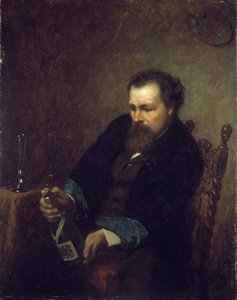
Jonathan Eastman Johnson
1824 - 1906 , Regatul Unit al Marii Britanii și Irlandei
Detalii rapide
- Artistic Movement Or Style: Realism, Pictură de gen
- Artists Or Movements Influenced By This Artist: ['Realism american']
- Artists Who Influenced This Artist:
- Maestrii olandezi
- Jean-François Millet
- Date Of Birth: 29 iul 1824
- Date Of Death: 5 apr 1906
- Full Name: Jonathan Eastman Johnson
- Nationality: American
- Notable Artworks:
- Viața neagră în sud
- Călătoria pentru libertate
- Place Of Birth: Lovell, Marea Britanie
Articole similare
Cele Mai Frumoase Picturi în Tonuri de Ciupercă: Artă Clasică pentru Decorul Tău
Descoperă cele mai frumoase picturi în tonuri de ciupercă! Explorează operele clasice ale lui Van Gogh, Monet și alți maeștri. Reproduceri tablouri de calitate muzeală pentru un decor interior elegant. Inspiră-te acum pe OriginalUniqueArt.com!

Top 10 Picturi Celebre în Nuanțe de Nisip: Artă, Istorie și Decor Rafinat
Descoperă top 10 picturi celebre în nuanțe de nisip, de la Van Gogh la Monet! Explorează istoria artei, tehnicile și culorile calde ce definesc aceste capodopere. Reproduceri de artă de calitate muzeală pe OriginalUniqueArt.com.
Cele Mai Frumoase Picturi în Tonuri de Argilă: O Călătorie Artistică
Descoperă cele mai frumoase picturi în tonuri de argilă! Explorează operele maestrilor precum Van Gogh, Monet și Rembrandt. Reproduceri de artă clasică pentru un decor sofisticat. Găsește inspirație și tablouri perfecte pe OriginalUniqueArt.com
Top 10 Capodopere Picturale Dominante de Tonuri Lemnoase – Artă și Decor Excepționale
Descoperă top 10 tablouri celebre dominate de tonuri lemnoase calde și profunde! Explorează poveștile din spatele capodoperelor semnate de Van Gogh, Monet și alți artiști renumiți. Găsește inspirație pentru decorul casei tale și reproduceri artă de calitate pe OriginalUniqueArt.com
Earthy Tones & Emotional Resonance: Exploring the Vibe of Grounded Artworks
Explore the emotional power of earthy tones in art history! Discover how artists use color to evoke feelings & create grounded spaces. Expert advice on selecting artwork for your home – plus custom reproductions at OriginalUniqueArt.

