 Previzualizare
 Trimite
 Distribuie
 Detalii despre lucrare

 Descarcă
 Produse similare
 Radiografie
 Diapozitive automate
Pandora
 Oil On Canvas
- WallArt
- Pre-Raphaelite Brotherhood
 1898
1898- 19th Century
 91.0 x 152.0 cm
 Vezi mai mult
Reproducere pictată manual în ulei
Pictură în ulei pe pânză, realizată manual de artiștii noștri la dimensiunea și ramele dorite de dumneavoastră, pe comandă. ( Comandă printul Cumpără imaginea)




P118B $10

P118H $10

P118W $10

P438Z $10

P508JH $12

P508YH $12

P805H $10

P805Z $10

P919BZ $10

P919G $10

P919XJ $10

P959ZH $10

P968JZ $12

W106C $8

W218G $10

W218JH $8

W218Y $10

W307PJ $10

W316G $10

W316PJ $8

W316Y $10

W398PJ $8

W4111J $10

W500HY $15

W500JH $15

W692G $12

W849H $8

W940BG $15

W953PJ $8




Alegeți dintre dimensiunile noastre prestabilite, care respectă proporțiile originale ale operei de artă.

Puteți introduce propriile dimensiuni pentru a se potrivi unui anumit cadru sau spațiu. Dacă dimensiunea selectată nu corespunde proporțiilor imaginii originale, vom decupa opera de artă sau vom extinde pictura cu elemente suplimentare pictate manual. O simulare digitală vă va fi trimisă pentru aprobare înainte de începerea producției.
Vă rugăm să rețineți că previzualizarea de pe ecran nu reflectă decuparea sau extinderea reală. Doar macheta va arăta cu exactitate compoziția finală.
Deși sunt disponibile dimensiuni personalizate, vă recomandăm să selectați o dimensiune din lista predefinită pentru a păstra proporțiile originale.
După plasarea comenzii, echipa OriginalUniqueArt.com va contacta clientul prin e-mail pentru instrucțiuni și îi va furniza o previzualizare a machetei
Livrare în întreaga lume () în 3-4 săptămâni, în loc de cele 5 săptămâni standard. (19 August). Fără compromisuri în ceea ce privește calitatea.

Livrare expres gratuită la nivel mondial

Pânză de in de înaltă calitate

Asigurare completă pentru transport

Garanție de rambursare a taxelor vamale

Garanția fidelității culorilor

Politica de retur în 60 de zile (doar pentru defecte)

Garanție de rambursare 100%

Ofertă pentru comenzi multiple
 Opțiunea cu sticlă este disponibilă doar pentru dimensiuni de sub 110 cm

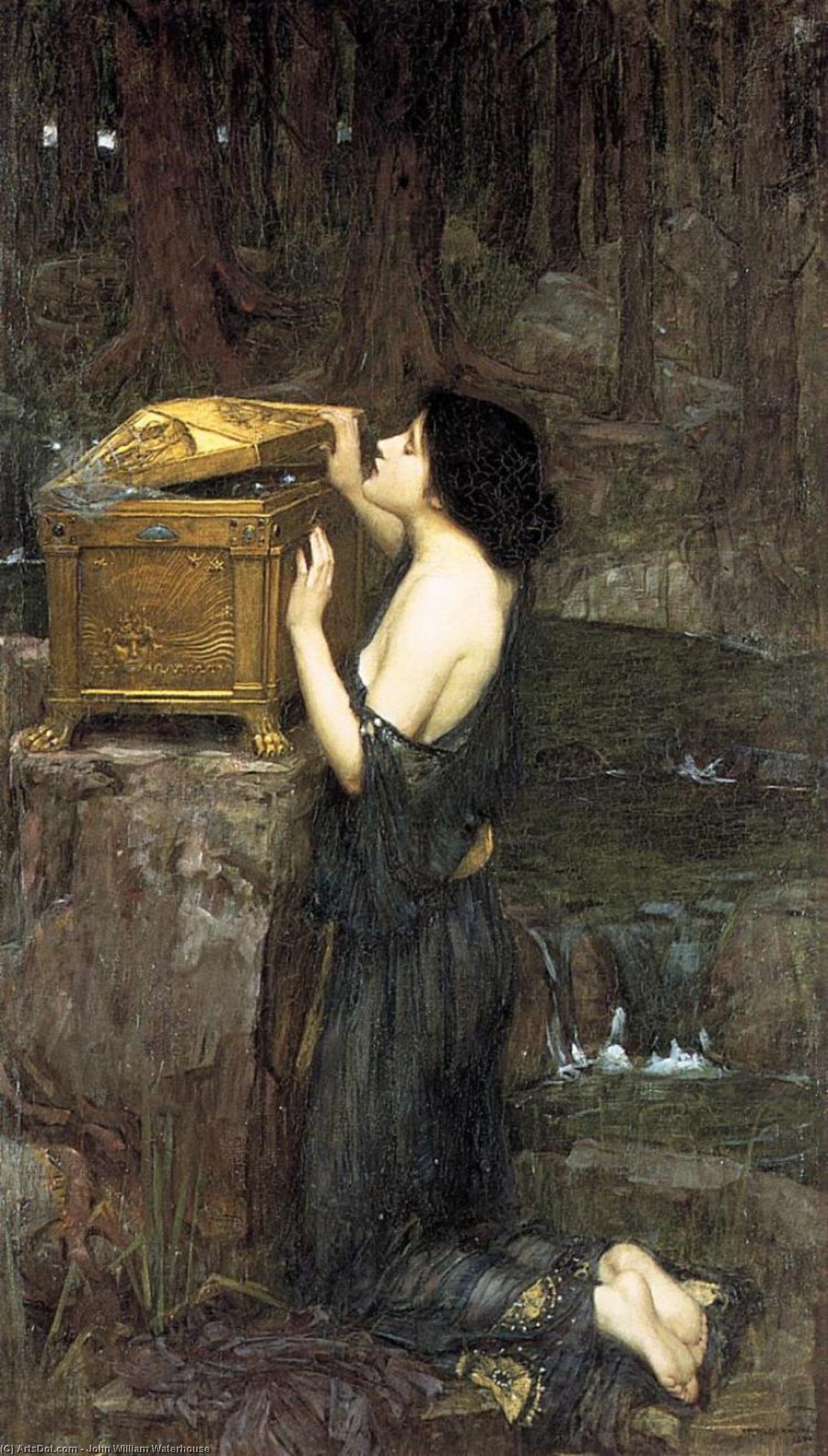
Pandora
Tehnică de reproducere
Dimensiune reproducere
-


Preț total calculat
$ 300
Descriere operă de artă
A Moment of Forbidden Curiosity: John William Waterhouse's "Pandora"
John William Waterhouse’s “Pandora,” completed in 1896, is more than just a depiction of a Greek myth; it’s an exquisitely rendered exploration of human nature – specifically, the irresistible allure of curiosity and the devastating consequences that can arise from unchecked desire. This oil on canvas, measuring 91 x 152 cm, exemplifies the Pre-Raphaelite Brotherhood's commitment to detailed realism and evocative storytelling, a style deeply rooted in Waterhouse’s Roman upbringing and his fascination with classical antiquity.
- The Myth Unveiled: The painting centers on Pandora, the first woman created by Zeus, burdened with a box containing all the evils of the world. Though forbidden to open it, her inherent human tendency towards inquiry leads her to break the divine decree, unleashing chaos upon humanity.
- Romantic Composition: Waterhouse masterfully employs the Pre-Raphaelite technique of dramatic lighting and rich color palettes. The muted tones of the background – a hazy landscape hinting at both beauty and foreboding – serve to heighten the intensity of Pandora’s moment.
- Technical Brilliance: Notice the meticulous detail in Pandora's rendering – the delicate folds of her gown, the subtle expression of apprehension on her face, and the almost tangible texture of the box itself. Waterhouse’s brushwork is remarkably smooth, contributing to a sense of serene contemplation juxtaposed with impending doom.
A Window into the Pre-Raphaelite Aesthetic
Waterhouse's “Pandora” firmly places itself within the broader context of the Pre-Raphaelite movement, which rejected the idealized forms and artificiality of academic art in favor of a return to the perceived sincerity and naturalism of early Italian Renaissance painters. This influence is evident in the painting’s emphasis on narrative detail, its exploration of complex psychological themes, and its use of vibrant color – though tempered with a melancholic sensibility. The Plymouth City Museum and Art Gallery holds several other works by Waterhouse, including "Undine" and "Circe Offering the Cup to Ulysses," offering further insight into his artistic evolution.
- Symbolism of Light and Shadow: The strategic use of light – a soft, diffused glow illuminating Pandora’s face and the box – creates a powerful sense of drama. This technique is not merely decorative; it symbolizes the unveiling of truth and the potential for both beauty and destruction.
- The Unseen Figure: The presence of the partially visible figure on the left side adds another layer to the painting's complexity, perhaps representing fate or the consequences of Pandora’s actions. It invites viewers to contemplate the wider implications of her transgression.
Emotional Resonance and Lasting Appeal
“Pandora” transcends a simple retelling of a myth; it taps into fundamental human emotions – curiosity, guilt, regret, and the awareness of our own fallibility. Waterhouse’s ability to capture this emotional depth is what continues to resonate with audiences today. The painting's enduring appeal lies in its exploration of timeless themes: the tension between knowledge and innocence, the dangers of disobedience, and the inescapable nature of consequence. The scene captures a poignant moment of vulnerability and contemplation, inviting viewers to reflect on their own desires and the potential repercussions of pursuing them.
Bringing "Pandora" Home
OriginalUniqueArt.com offers meticulously crafted hand-painted reproductions of Waterhouse’s “Pandora,” allowing you to bring this iconic artwork into your home or office. Each reproduction is created using traditional oil painting techniques, ensuring exceptional color accuracy and detail. Whether you are an art collector, interior designer seeking a touch of Pre-Raphaelite elegance, or simply someone captivated by the beauty and drama of Waterhouse’s vision, a “Pandora” reproduction offers a timeless piece of art that will undoubtedly become a treasured addition to your collection.
Biografie artist
A Roman Beginning: The Early Life and Influences of John William Waterhouse
John William Waterhouse, a name synonymous with the romantic allure of Pre-Raphaelite painting, began his artistic journey far from the fog-laden landscapes often associated with the movement. Born in Rome in 1849 to English parents, his earliest years were steeped in the classical beauty of Italy – an environment that would profoundly shape his aesthetic sensibilities. This formative period instilled within him a deep appreciation for ancient Roman art and mythology, themes that would recur throughout his prolific career. The Waterhouse family returned to England in 1854, settling in South Kensington, London, a location strategically chosen for its proximity to the burgeoning Victoria and Albert Museum. Here, young John was exposed to an unparalleled collection of classical sculpture and decorative arts, further nurturing his fascination with antiquity. His initial training was conventional, encompassing studies at the Royal Academy Schools, where he honed his technical skills in drawing and painting, but it was the atmosphere of intellectual curiosity and artistic innovation that truly ignited his passion. Even early works reveal a meticulous attention to detail and a commitment to historical accuracy, qualities that would become hallmarks of his style.Embracing the Pre-Raphaelite Brotherhood
While Waterhouse’s initial work displayed classical leanings reminiscent of artists like Alma-Tadema and Frederic Leighton, he gradually gravitated towards the ideals of the Pre-Raphaelite Brotherhood. This artistic collective, founded in 1848, championed a return to the detailed observation of nature and the vibrant colors found in early Italian Renaissance art – before what they perceived as the stylistic decline initiated by Raphael. Waterhouse didn’t join the brotherhood itself, but he wholeheartedly embraced its principles, infusing his paintings with a lyrical beauty and emotional depth that resonated deeply with audiences. His 1874 painting, *Sleep and His Half-Brother Death*, exhibited at the Royal Academy, marked a turning point, demonstrating his growing mastery of symbolic narrative and atmospheric effects. This success paved the way for consistent inclusion in the annual exhibitions, establishing him as a rising star within the London art scene. He wasn’t merely replicating Pre-Raphaelite techniques; he was interpreting them through his own unique lens, blending classical precision with romantic sensibility.Mythological Visions and Arthurian Echoes
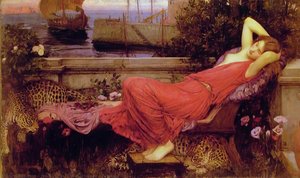
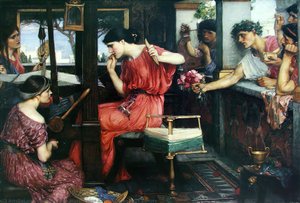
Waterhouse's most celebrated works are those that draw inspiration from mythology and Arthurian legend. He possessed a remarkable ability to breathe life into ancient stories, portraying goddesses, nymphs, and tragic heroines with an exquisite blend of beauty and pathos. *The Lady of Shalott*, perhaps his most iconic painting, exists in three versions (1888, 1894, and 1916), each a testament to his enduring fascination with Tennyson’s poem. The image of the doomed lady, adrift on her river barge, became emblematic of Victorian romanticism and the plight of artistic isolation. Similarly, his depictions of Ophelia, capturing the moment before her tragic demise, are imbued with a haunting melancholy. He didn't simply illustrate these tales; he explored their psychological depths, focusing on the emotional states of his subjects. *Hylas and the Nymphs*, *Ariadne*, and *Penelope and the Suitors* are further examples of his ability to transform classical narratives into visually stunning and emotionally resonant works of art. His paintings weren’t just beautiful; they were imbued with a sense of narrative power, inviting viewers to contemplate the complexities of human experience.Technique and Style
Waterhouse's style evolved significantly throughout his career. Initially influenced by the academic traditions of the Royal Academy, he gradually developed a more fluid and expressive technique, incorporating elements of Impressionism and Symbolism. His use of color was particularly noteworthy – he favored rich, luminous hues, often employing glazing techniques to create depth and atmosphere. He meticulously rendered details, from the folds of fabric to the textures of skin, demonstrating an extraordinary level of technical skill. However, it was his ability to imbue these details with emotional resonance that truly distinguished his work. Waterhouse’s paintings are characterized by a sense of stillness and contemplation, inviting viewers to linger over their intricate compositions. His figures often possess a dreamlike quality, suspended in timeless moments of beauty or sorrow.Legacy and Lasting Influence
John William Waterhouse continued to paint prolifically until his death in 1917, achieving widespread recognition and acclaim during his lifetime. He was elected a full Academician in 1895 and dedicated time to teaching at the St. John’s Wood Art School, nurturing the next generation of artists. While his popularity waned somewhat after World War I, there has been a significant resurgence of interest in his work in recent decades. Today, Waterhouse is celebrated as one of the most important figures of the Pre-Raphaelite movement and a master of Victorian painting. His paintings continue to captivate audiences with their exquisite beauty, emotional depth, and timeless appeal. He left behind a legacy of romantic visions, mythological interpretations, and tragic heroines that continue to inspire artists and art lovers alike. The enduring power of his work lies in its ability to transport viewers to another world – a realm of myth, legend, and profound human emotion.
John William Waterhouse
1849 - 1917 , Italia
Detalii rapide
- Artistic Movement Or Style: Pre-Raphaelita, Victoriană
- Artists Or Movements Influenced By This Artist: ['Impressionism']
- Artists Who Influenced This Artist:
- Alma-Tadema
- Leighton
- Date Of Birth: 1849
- Date Of Death: 1917
- Full Name: John William Waterhouse
- Nationality: Englez
- Notable Artworks:
- Lady Shalott
- Ophelia
- Hylas
- Place Of Birth: Roma, Italia
Articole similare

Dante Gabriel Rossetti: Cele Mai Frumoase 25 de Capodopere – Artă, Decorațiuni și Inspirație
Descoperă cele mai frumoase 25 de picturi ale lui Dante Gabriel Rossetti! Explorează arta prerafaelită, simbolismul romantic și portretele feminine iconice. Reproduceri artă de calitate muzeală & inspirație decorativă pe OriginalUniqueArt.com.

John William Waterhouse: Pre-Raphaelite Mythmaker & Poetic Depictions of Female Identity
Explore the captivating world of John William Waterhouse, a master of Pre-Raphaelite painting. Discover his iconic depictions of mythology and female identity in this expert guide.

Pre-Raphaelite Romanticism: A Guide to Vivid Detail and Medieval Beauty in Victorian Art
Explore the vivid detail and medieval beauty of Pre-Raphaelite Romanticism. Discover the history of masters like Rossetti and Millais through our expert guide to Victorian art, perfect for collectors and professionals seeking authentic, museum-quality reproductions.

Giclée Prints: Archival Quality & Aesthetic Nuances for the Discerning Collector
Explore the world of giclée prints with OriginalUniqueArt. Learn about archival quality, aesthetic nuances & investment potential. Expert guidance for discerning art collectors seeking museum-quality reproductions and lasting value.

The Pre-Raphaelite Brotherhood: Reclaiming Beauty, Nature, and Truth in Victorian Art History
Explore the revolutionary Pre-Raphaelite Brotherhood. Discover how these visionary artists rejected academic tradition to reclaim beauty, nature, and truth through luminous detail and literary depth in Victorian art history.