
 Previzualizare
 Trimite
 Distribuie
 Detalii despre lucrare

 Descarcă
 Produse similare
 Radiografie
 Diapozitive automate
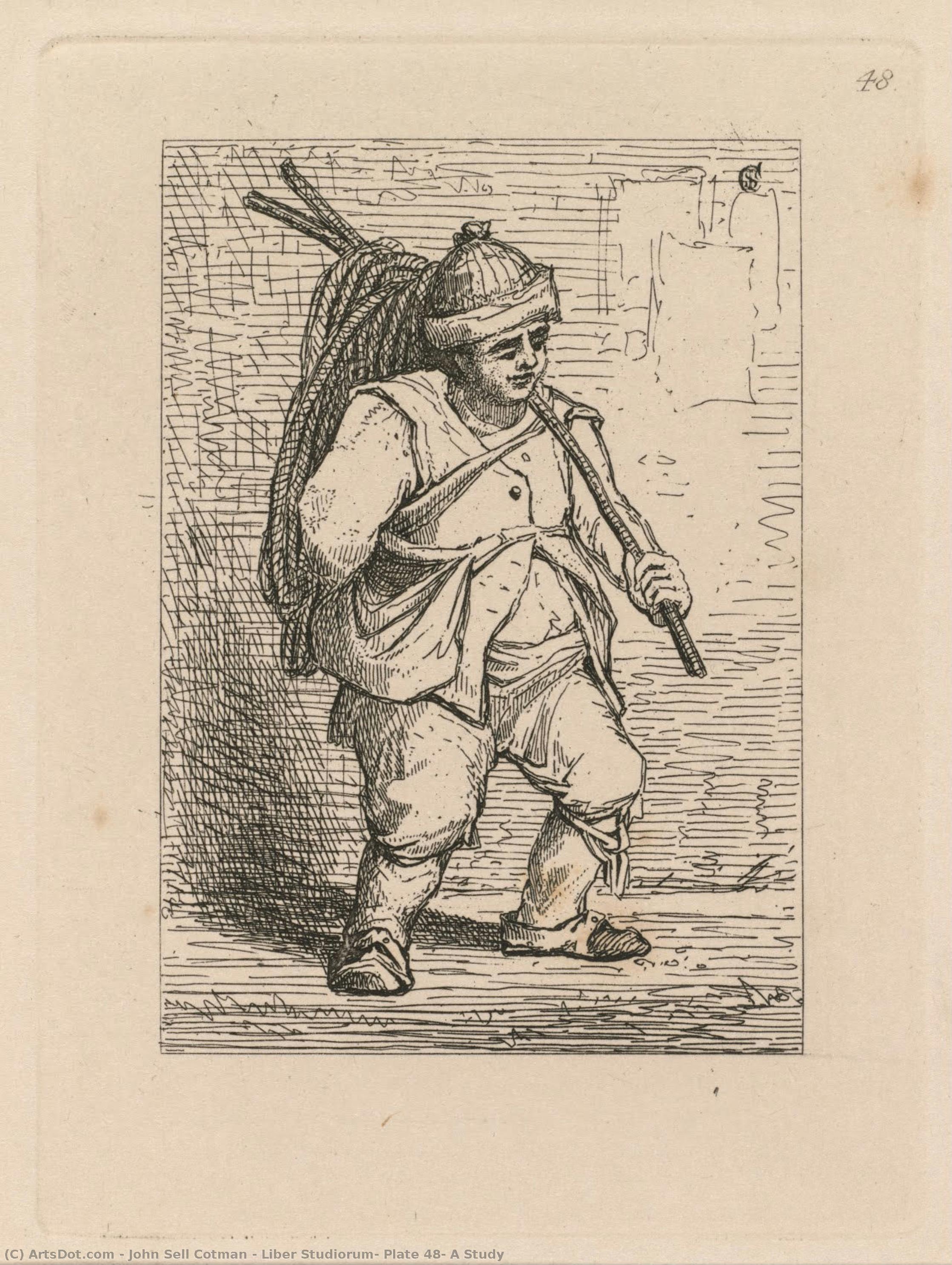
Liber Studiorum: Plate 48, A Study
 Etching
- Romanticism
 1838
1838 49.0 x 32.0 cm
 Muzeul de Artă din Cleveland
 Vezi mai mult
Giclée / Imprimare artistică
Printuri giclée sau pe canvas de calitate muzeală, cu proces de producție rapid și opțiuni flexibile de finisare. ( Comandă pictură realizată manual Comută la imagine)




P118B $10

P118H $10

P118W $10

P438Z $10

P508JH $12

P508YH $12

P805H $10

P805Z $10

P919BZ $10

P919G $10

P919XJ $10

P959ZH $10

P968JZ $12

W106C $8

W218G $10

W218JH $8

W218Y $10

W307PJ $10

W316G $10

W316PJ $8

W316Y $10

W398PJ $8

W4111J $10

W500HY $15

W500JH $15

W692G $12

W849H $8

W940BG $15

W953PJ $8




Alegeți dintre dimensiunile noastre prestabilite, care respectă proporțiile originale ale operei de artă.

Puteți introduce propriile dimensiuni pentru a se potrivi unui anumit cadru sau spațiu. Dacă dimensiunea selectată nu corespunde proporțiilor imaginii originale, vom decupa lucrarea de artă sau vom extinde imaginea cu margini oglindite sau cu o culoare uniformă. Un mockup digital va fi trimis pentru aprobarea dumneavoastră înainte de începerea producției.
Vă rugăm să rețineți că previzualizarea de pe ecran nu reflectă decuparea sau extinderea reală. Doar mockup-ul va arăta cu exactitate compoziția finală.
Deși dimensiunile personalizate sunt disponibile, vă recomandăm să selectați o dimensiune din lista predefinită pentru a păstra proporțiile originale.
Livrare în întreaga lume () în 2 săptămâni, în loc de cele 4/5 săptămâni standard. (11 August)

Livrare expres gratuită la nivel mondial

Pânză de in de înaltă calitate

Asigurare completă pentru transport

Garanție de rambursare a taxelor vamale

Garanția fidelității culorilor

Politica de retur în 60 de zile (doar pentru defecte)

Garanție de rambursare 100%

Ofertă pentru comenzi multiple
 Opțiunea cu sticlă este disponibilă doar pentru dimensiuni de sub 110 cm

Liber Studiorum: Plate 48, A Study
Giclée / Imprimare artistică
Dimensiune reproducere
-


Preț total calculat
$ 80
Descriere obiect de colecție
A Study in Weariness: John Sell Cotman's "Liber Studiorum" Plate 48
John Sell Cotman’s “Liber Studiorum” series, a remarkable collection of etchings produced between 1835 and 1849, offers a poignant glimpse into the lives and landscapes of early Victorian England. Plate 48, titled "A Study," is not merely a depiction of a man burdened with a heavy load; it’s a carefully constructed meditation on labor, resilience, and perhaps even the quiet despair inherent in everyday existence. Executed in stark black and white, the image possesses an immediate power, drawing the viewer into its somber narrative.
- Subject Matter: The central figure – a man with a long beard and wearing a hat – embodies the archetype of the working man. His posture suggests exhaustion, his gait is slow and deliberate, and the immense weight he carries speaks volumes about the demands placed upon him.
- Technique: Cotman’s mastery of etching is immediately apparent. The delicate lines create a remarkable sense of texture – the rough fabric of the man's clothing, the weathered surface of the street, and the subtle contours of his face. The use of cross-hatching builds depth and volume, adding to the overall dramatic effect.
- Historical Context: Created in 1838, this plate reflects a period of significant social change in Britain. The Industrial Revolution was transforming the nation’s landscape and its people, leading to increased urbanization and often grueling working conditions. Cotman's work serves as a subtle commentary on these realities.
The Romantic Spirit and Urban Observation
Cotman was a key figure in the British Romantic movement, prioritizing emotional response and subjective experience over strict academic realism. “A Study” exemplifies this approach. Rather than presenting a heroic or idealized image of labor, Cotman chooses to focus on a single, anonymous individual, inviting viewers to contemplate his plight. The scene is not grand or theatrical; it’s intensely intimate, capturing a fleeting moment of quiet suffering.
His connection to Norwich, his birthplace and lifelong home, profoundly shaped his artistic vision. The city's burgeoning industrial activity and the lives of its working-class population undoubtedly influenced his subject matter. He was particularly adept at portraying scenes of urban life with a keen eye for detail and an understanding of human psychology.
Symbolism and Emotional Resonance
The symbolism within “A Study” is deliberately understated, yet powerfully evocative. The heavy load the man carries can be interpreted as representing not just physical labor but also the burdens of poverty, social inequality, and perhaps even existential weariness. The presence of other figures in the background – carrying their own loads – reinforces this sense of collective struggle.
Cotman’s ability to convey emotion through purely visual means is remarkable. The composition, the figure's posture, and the stark contrast between light and shadow combine to create a deeply affecting image that resonates with viewers long after they have first encountered it.
Dimensions & Reproduction Details
This hand-painted reproduction of John Sell Cotman’s “Liber Studiorum: Plate 48, A Study” is meticulously crafted to faithfully capture the nuances and emotional depth of the original etching. Printed on high-quality archival paper, this artwork offers exceptional detail and color fidelity.
Size: 49 x 32 cm (19.25 x 12.6 inches)
Date: 1838
Artist: John Sell Cotman
Code: ART00004872
Biografie artist
A Norfolk Son: The Life and Art of John Sell Cotman
John Sell Cotman, a name inextricably linked to the serene beauty and evocative atmosphere of early 19th-century England, emerged from the vibrant artistic community of Norwich to become a cornerstone figure in British Romanticism. Born on May 16, 1782, into a family deeply rooted in the prosperous trades of silk merchantry and lace dealing, Cotman’s journey wasn't initially envisioned as one dedicated solely to art. However, an innate sensitivity to the natural world—a profound connection with light, color, and texture—quickly steered him away from commerce and toward a life passionately devoted to capturing these elements on canvas and paper. His early education at Norwich Grammar School provided a foundational base, yet it was his relocation to London in 1798 that truly ignited his artistic spirit. There, he encountered the luminaries of the era – J.M.W. Turner, Peter de Wint, and Thomas Girtin – joining Girtin’s sketching club and embarking on formative excursions to Wales and Surrey. These experiences proved transformative, instilling within him a fervent commitment to *plein air* observation—painting directly from nature—and a dedication to translating fleeting impressions into enduring works of art. His debut at the Royal Academy in 1800, showcasing scenes of Surrey and Harlech Castle, marked his arrival as a significant voice within the burgeoning British art scene.The Norwich School and Artistic Development
Cotman’s artistic identity became inextricably linked to the Norwich School, a distinctive movement of painters who celebrated the unique character of the Norfolk countryside with remarkable realism and sensitivity. Unlike many of their contemporaries, preoccupied primarily with grand historical narratives or idealized classical forms, the Norwich School artists focused intently on depicting the local landscape—its rolling hills, shimmering rivers, and dramatic skies—with an unparalleled attention to detail. Cotman swiftly ascended as a leading figure within this group, developing a distinctive style characterized by masterful watercolor technique, meticulous observation of light and shadow, and a uniquely Romantic sensibility. He possessed an exceptional ability to utilize washes and dry brushstrokes to create atmospheric effects—evoking the subtle shifts in mood and weather that defined the Norfolk landscape. His work wasn’t merely a representation of scenery; it was an emotional response to it, imbued with a sense of tranquility, melancholy, or quiet contemplation. This approach distinguished him from many of his contemporaries who favored more formal or idealized depictions. The Norwich School's emphasis on capturing the essence of place and its inherent beauty resonated deeply with Cotman’s artistic vision.A Master of Mediums: Watercolor, Etching, and Beyond
Cotman’s artistic output spanned a diverse range of mediums, demonstrating his versatility and technical mastery. While he is perhaps most renowned for his watercolor paintings—a medium he elevated to new heights—he was also a prolific etcher, producing hundreds of meticulously detailed plates that showcased his skill in line and tone. These etchings often served as preparatory studies for his paintings, but many stand alone as compelling works of art, capturing the same atmospheric qualities and emotional depth as his watercolors. Beyond these two primary mediums, Cotman engaged in illustration, contributing to various publications with accurate and evocative depictions of architectural subjects and landscapes. This commitment to exploring diverse artistic avenues underscores his dedication to both technical proficiency and a comprehensive understanding of the visual world. His paintings frequently featured dramatic lighting effects, capturing the fleeting beauty of dawn and dusk, or the subtle nuances of light filtering through trees. Notable examples include “Jesus Chapel, Norwich Cathedral with the tomb of Sir Thomas Windham,” a quintessential example of the Norwich School’s style—characterized by its precise detail and atmospheric perspective—and "View From Yarmouth Bridge, Norfolk, Looking Towards Breydon, Just After Sunset," which beautifully captures the charm of maritime life.Legacy and Influence
John Sell Cotman's influence extended far beyond his own prolific output. He played a crucial role in shaping the development of British art, particularly within the context of the Norwich School movement. His emphasis on direct observation, atmospheric effects, and emotional resonance resonated with subsequent generations of artists. Furthermore, his dedication to teaching ensured that his artistic principles were passed down to a new cohort of painters. Both of his sons, Miles Edmund Cotman and John Joseph Cotman, followed in their father’s footsteps, contributing to the family's enduring legacy within the art world. Today, Cotman’s works are held in prestigious collections worldwide—including the Tate Gallery, the British Museum, the Victoria and Albert Museum, and the Yale Center for British Art—and continue to captivate viewers with their beauty, sensitivity, and profound connection to the natural world. He remains a celebrated figure, not only as a master of watercolor and etching but also as a key representative of the Romantic spirit in English art. His dedication to capturing the essence of place and emotion ensures his enduring relevance for generations to come.Further Exploration
- To delve deeper into Cotman’s life and work, visit OriginalUniqueArt.com or consult his Wikipedia page: https://en.wikipedia.org/wiki/John_Sell_Cotman
- Explore the extensive collection of Cotman’s works at the Castle Museum and Art Gallery in Norwich, boasting over 2000 pieces.
- Discover more about the Norwich School of painters and their contribution to British art history.

John Sell Cotman
1782 - 1842 , Regatul Unit al Marii Britanii și Irlandei
Detalii rapide
- Artistic Movement Or Style: Școala Norwich, Romanticism
- Artists Or Movements Influenced By This Artist:
- Școala Norwich
- Miles Cotman
- John Joseph Cotman
- Artists Who Influenced This Artist:
- Turner
- de Wint
- Girtin
- Date Of Birth: 16 Mai 1782
- Date Of Death: 24 Iul 1842
- Full Name: John Sell Cotman
- Nationality: Britanic
- Notable Artworks:
- Jesus Chapel
- Yarmouth Bridge
- Tăria de la Compostela
- Place Of Birth: Norwich, UK
Articole similare

Etching: A Historical Survey of Technique, Aesthetic Qualities & Enduring Artistic Significance
Explore the rich history of etching, from its origins to Rembrandt's masterful innovations. Discover the technique, aesthetic qualities & enduring legacy of this captivating art form. Expert insights for collectors and enthusiasts.
Top 10 Gravuri Legendare: Capodopere Artistice Care Au Schimbat Istoria Artei
Descoperă top 10 gravuri legendare care au revoluționat arta! Explorează poveștile lui Rembrandt, Goya și alți maeștri. Reproduceri de artă de calitate muzeală pentru un decor inspirat. Vezi colecția completă pe OriginalUniqueArt.com

The Intricate World of Etching: A Historical Survey of Technique, Aesthetic Evolution, and Enduring Artistic Impact
Explore the rich history of etching, from its origins to modern practice. Discover techniques, key artists like Rembrandt, and insights for collectors. A comprehensive guide by OriginalUniqueArt.
Giclée Prints: Archival Quality & Aesthetic Nuances for the Discerning Collector
Explore the world of giclée prints with OriginalUniqueArt. Learn about archival quality, aesthetic nuances & investment potential. Expert guidance for discerning art collectors seeking museum-quality reproductions and lasting value.

Top 10 Tablouri Celebre Dominante de Negru: Artă, Istorie și Decor Rafinat
Descoperă Top 10 tablouri celebre dominate de negru! Explorează istoria, simbolismul și tehnicile artistice ale unor opere iconice de Rembrandt, Goya și alți maeștri. Reproduceri de artă de calitate muzeală pe OriginalUniqueArt.com – inspiră-ți decorul!

