Romanticism · 1845
Ca d (John Ruskin, 1845)
John Ruskin (1819–1900) a realizat Ca d. Data sa este din 1845. Face parte din mișcarea Romanticism. Este realizată în Painting. Dimensiunile sunt 33 × 47 cm.
- 1845
- Painting
- 33 × 47 cm

 Previzualizare

 Tablou în ulei pictat manual
 Trimite prin felicitare
 Distribuie
 Fișă informativă


 Descarcă imaginea
 Produse similare
 Radiografie
 Galerie foto
 Întrebări și răspunsuri

 Statistici
Ca d, pe scurt
- Titlu
- Ca d
- Artist
- John Ruskin (1819–1900)
- Artist născut în
- Londra, Regatul Unit al Marii Britanii și Irlandei
- Date
- 1845
- Medium
- Painting
- Dimensiuni
- 33 × 47 cm
- Mișcare
- Romanticism
- Perioadă
- 19th Century
- Subiect
- architecture, clock tower, windows, people, building facade, ornate details
Ce reprezintă Ca d?
The Architecture of Devotion
In this 1845 work, the eye is immediately drawn to the verticality of a structure that commands the space. It is a building defined by its many windows, a facade that suggests the quiet gravity of a church or a significant civic monument. A large clock tower rises prominently, anchoring the composition and providing a sense of scale against the surrounding atmosphere. Small figures are scattered throughout the scene, some gathered near the base of the structure, others appearing as mere accents within the larger architectural landscape. The scale of the windows creates a rhythmic pattern across the surface, suggesting a space designed for light and communal gathering.
Details of the Facade
The artist focuses heavily on the intricate details that adorn the building's exterior. There is a clear interest in the way light interacts with the ornate decorations and the complex geometry of the masonry. The composition relies on several key visual elements:
- The prominent verticality of the clock tower.
- The repetitive, rhythmic placement of large windows.
- The presence of human figures that provide a sense of scale.
- The detailed ornamentation across the building's facade.
A Study in Form and Light
The painting captures a specific moment of architectural splendor, focusing on the grandeur of the structure through a careful application of detail. There is a sense of permanence in the heavy, decorated walls, contrasted by the lightness suggested by the numerous openings. The work reflects a deep interest in the relationship between human construction and the space it occupies. It is a quiet observation of how stone and light combine to create a sense of importance and permanence in a changing landscape.
Imagini la înaltă rezoluție ale lui Ca d

Domeniu public: artistul a decedat în 1900.
Alte dimensiuni, cadrări și citări →John Ruskin, Ca d (1845). Domeniu public
Întrebări despre Ca d, răspunsuri
În ce an a fost creat "Ca d" de John Ruskin?
"Ca d" de John Ruskin a fost creat(ă) în 1845.
În ce tehnică este realizată lucrarea "Ca d" de John Ruskin?
Tehnica utilizată pentru "Ca d" de John Ruskin este Painting, iar reproducerile urmăresc să reducă aspectul acestei tehnici.
Ce dimensiuni are "Ca d" de John Ruskin în realitate?
Lucrarea originală "Ca d" de John Ruskin are dimensiunile de 33 x 47 cm.
Ce reprezintă "Ca d"?
Temele prezente în "Ca d" de John Ruskin includ architecture, clock tower, windows, people, building facade, ornate details. Împreună, acestea definesc subiectul întregii opere de artă.
Imaginea pentru "Ca d" de John Ruskin poate fi reprodusă liber?
"Ca d" de John Ruskin este în domeniul public (în domeniul public – drepturile de autor au expirat). Acest statut reglementează modul în care imaginea lucrării poate fi reprodusă.
Cine este artistul din spatele "Ca d"?
„Ca d” a fost creat de John Ruskin. Informațiile de pe această pagină descriu opera originală a lui John Ruskin.
Din ce curent artistic face parte "Ca d" de John Ruskin?
"Ca d" de John Ruskin face parte din mișcarea Romanticism. Acest curent oferă contextul stilistic al operei.
În ce perioadă a carierei lui John Ruskin se încadrează "Ca d"?
În cariera lui John Ruskin, „Ca d” aparține perioadei Early Period. Această etapă facilitează compararea sa cu celelalte opere ale artistului.
Ce vârstă avea John Ruskin când a creat "Ca d" în 1845?
John Ruskin a creat "Ca d" la vârsta de 26. Artistul s-a născut în 1819, iar lucrarea datează din 1845.
Despre artistul John Ruskin
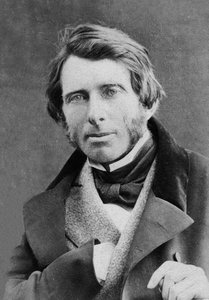
1819–1900, Regatul Unit al Marii Britanii și Irlandei
John Ruskin
A Polymath of Vision: The Life and Legacy of John Ruskin John Ruskin, born in London on February 8, 1819, was far more than simply an art critic; he was a Victorian polymath whose influence permeated the realms of aesthetics, social reform, political economy, and environmentalism. His life was shaped by a fascinating duality – the pragmatic commercial world of his father, John James Ruskin, a successful sherry merchant, and the fervent evangelical piety of his mother, Margaret Cock. This contrasting upbringing instilled in him both a keen observational eye for detail and a deeply moral sensibility that would define his entire oeuvre. From an early age, Ruskin’s education was meticulously curated at home, steeped in biblical study and exposure to Romantic literature, particularly the works of Byron and Walter Scott.
Alte lucrări ale lui John Ruskin
 Trevi Fountain1841
 Ravine at Maglans, Valley of Cluse1849
 Aiguille Charmoz, Chamounix1849
 The Casa Loredan, Venice1850

Eseuri despre Ca d
 Light and Scale: Distinguishing Venetian and French RococoMaster the differences between Venetian and French Rococo art. Learn to identify these iconic styles now.
 Vedute and Capriccio: Distinguishing Topographical Views from Architectural FantasyMaster the difference between veduta and capriccio through expert art history analysis. Explore the masters of Italian landscape art today.