
 Previzualizare
 Trimite prin felicitare
 Distribuie
 Detalii despre lucrare
 Ghid
Ghid

 Descarcă imaginea
 Produse similare
 Radiografie
 Galerie foto
 Întrebări și răspunsuri
 Statistici
Lady Hamilton as a Bacchante

- 38.0 x 28.0 cm


 Vezi mai mult
Giclée / Imprimare artistică
Printuri giclée sau pe canvas de calitate muzeală, cu proces de producție rapid și opțiuni flexibile de finisare. ( Comandă pictură realizată manual Comută pe Imagine Digitală)




P118B lei10

P118H lei10

P118W lei10

P438Z lei10

P508JH lei12

P508YH lei12

P805H lei10

P805Z lei10

P919BZ lei10

P919G lei10

P919XJ lei10

P959ZH lei10

P968JZ lei12

W106C lei8

W218G lei10

W218JH lei8

W218Y lei10

W307PJ lei10

W316G lei10

W316PJ lei8

W316Y lei10

W398PJ lei8

W4111J lei10

W500HY lei15

W500JH lei15

W692G lei12

W849H lei8

W940BG lei15

W953PJ lei8




Alegeți dintre dimensiunile noastre prestabilite, care respectă proporțiile originale ale operei de artă.

Introduceți lățimea și înălțimea necesare pentru a se potrivi ramei sau peretelui dumneavoastră. O printare poate fi doar tăiată, niciodată extinsă dincolo de dimensiunea imaginii originale, astfel încât o dimensiune cu o formă diferită va pierde o parte din imagine. Vă trimitem o simulare digitală pentru aprobare înainte de a imprima orice. Imaginea afișată pe această pagină nu prezintă tăierea reală — doar simularea arată acest lucru.
Livrare în întreaga lume () în 2 săptămâni, în loc de cele 4/5 săptămâni standard. (10 Noiembrie)

Livrare expres gratuită la nivel mondial

Pânză de in de înaltă calitate

Asigurare completă pentru transport

Garanție de rambursare a taxelor vamale

Garanția fidelității culorilor

Politica de retur în 100 de zile (doar pentru defecte de fabricație)

Garanție de rambursare 100%

Ofertă pentru comenzi multiple
 Opțiunea cu sticlă este disponibilă doar pentru dimensiuni de sub 110 cm

Lady Hamilton as a Bacchante
Giclée / Imprimare artistică
Dimensiune reproducere
-


Preț total calculat
lei 387
Lady Hamilton as a Bacchante: A Dance of Desire and Roman Echoes
Élisabeth Louise Vigée Le Brun’s “Lady Hamilton as a Bacchante,” painted in 1792, is more than just a portrait; it's a carefully constructed tableau vivant, brimming with theatricality, historical allusion, and the simmering intensity of a forbidden love. The painting captures Emma Hart Hamilton – later Lady Hamilton – not merely as a beautiful woman, but as a figure drawn from ancient mythology, embodying both earthly allure and ethereal grace. Le Brun, a prominent artist in the French court, skillfully employs the conventions of Neoclassicism while subtly injecting elements of Romanticism, creating an image that is simultaneously formal and deeply emotive.
The subject herself, Emma Hamilton, was a captivating figure. A former dancer and actress, she possessed a remarkable beauty and charm, which quickly caught the eye of Sir William Hamilton, the British Ambassador to Naples. Their affair became legendary, fueled by mutual admiration and a shared passion for art and culture. Le Brun’s choice to depict her as a Bacchante – a follower of Dionysus, the god of wine, revelry, and ecstasy – is profoundly symbolic. It speaks to the intoxicating nature of their relationship, suggesting a world of unrestrained pleasure and passionate abandon. The pose itself—hand raised to her chin, eyes gazing directly at the viewer—commands attention, inviting us into this private, almost illicit, scene.
The Techniques of Illusion: Mezzotint and Dramatic Lighting
“Lady Hamilton as a Bacchante” is executed in mezzotint, a printmaking technique that lends itself beautifully to capturing both subtle tonal variations and dramatic contrasts. This process, perfected by John Raphael Smith (a key figure in the painting’s creation), involved meticulously roughening a metal plate with ink, creating areas of deep blackness that would then be selectively wiped away to reveal the white paper beneath. The result is an image rich in texture and shadow, reminiscent of Rembrandt's masterful use of chiaroscuro. Smith’s engraving, which served as the basis for Le Brun’s painting, further amplified this effect, adding layers of detail and emphasizing the theatricality of the scene.
Le Brun masterfully utilizes lighting to heighten the drama. The figure is bathed in a soft, diffused light that highlights her flowing white dress and the delicate folds of her hair. This luminosity contrasts sharply with the darker background, creating a sense of depth and drawing our attention to Hamilton’s face—a study in composure and vulnerability. The careful manipulation of light and shadow not only enhances the visual impact but also contributes to the painting's overall mood of restrained passion.
Historical Context and Mythic Resonance
To fully appreciate “Lady Hamilton as a Bacchante,” it’s crucial to understand its historical context. The painting was created during the tumultuous years following the French Revolution, a period marked by political upheaval and social change. The Neoclassical style, of which Le Brun was a prominent proponent, sought to revive the ideals of ancient Greece and Rome—a deliberate reaction against the excesses of the Baroque era. By depicting Hamilton as a Bacchante, Le Brun subtly references Roman mythology, specifically the Bacchanalia – frenzied religious rites dedicated to Dionysus that were outlawed by Roman authorities.
The choice of the Bacchantes motif also reflects the broader cultural anxieties of the time. The bacchantic frenzy represented both liberation and chaos—a potent symbol for a society grappling with uncertainty and moral decay. Hamilton’s embrace of this mythological role can be interpreted as an assertion of her own agency, a defiant rejection of societal constraints.
A Legacy of Beauty and Intrigue
“Lady Hamilton as a Bacchante” remains one of the most captivating portraits of the late 18th century. It’s a testament to Le Brun's artistic skill, Smith’s masterful printmaking, and the enduring power of myth and romance. The painting continues to fascinate viewers with its blend of beauty, drama, and historical significance. Reproductions offer a remarkable opportunity to experience this iconic image firsthand, bringing its timeless allure into any setting—from grand galleries to intimate interiors.
Întrebări și răspunsuri
Ce atmosferă ar aduce într-o încăpere o reproducere a operei "Lady Hamilton as a Bacchante" de John Raphael Smith?
Atmosfera Romantic a operei "Lady Hamilton as a Bacchante" de John Raphael Smith se potrivește perfect spațiului recomandat: un Living Room.
Unde pot găsi un ghid pentru "Lady Hamilton as a Bacchante"?
Ghidul pentru "Lady Hamilton as a Bacchante" reprezintă pagina de Fișă informativă a operei de artă – o fișă informativă imprimabilă care prezintă lucrarea împreună cu legenda sa, mențiunea de credit și tabelul de identificare (artist, date, tehnică, dimensiunea originală, colecție).
În ce cameră este recomandată lucrarea "Lady Hamilton as a Bacchante" de John Raphael Smith?
O reproducere a „Lady Hamilton as a Bacchante” se potrivește de minune într-un Living Room.
Biografie artist
A Life Etched in Light: The World of John Raphael Smith
John Raphael Smith, born in Derby in 1751, wasn’t simply a painter; he was a pivotal figure who breathed life into the vibrant artistic landscape of late Georgian Britain. His story is one woven with remarkable versatility – a painter, a master of mezzotint engraving, a shrewd print dealer, and, crucially, a mentor to a generation of artists. While perhaps not as universally celebrated as some of his contemporaries, Smith’s influence was profound, shaping both the technical mastery and the aesthetic sensibilities that defined an era. His early years, steeped in the atmosphere of his father Thomas Smith's studio – a respected landscape artist – provided the fertile ground for his burgeoning talent. Initially apprenticed to a linen draper, a practical grounding that offered a stark contrast to the artistic calling he ultimately embraced, Smith’s passion quickly superseded any other ambition. A move to London in 1767 marked the true beginning of his career, supplementing income from delicate miniature portraits with an enthusiastic plunge into the world of printmaking.Master of Mezzotint and Portraiture
Smith swiftly established himself as a virtuoso of mezzotint engraving – a technique demanding not just technical skill but also a profound artistic vision. This intricate process, involving the careful scraping and burnishing of a copper plate to create tonal variations, allowed for an astonishing level of detail and atmospheric depth. His early successes, notably reproductions of works by Henry Benbridge, quickly garnered recognition within London’s art circles. However, it was his deep engagement with the work of Sir Joshua Reynolds that truly cemented his reputation. Over forty meticulously crafted reproductions of Reynolds' paintings flowed from Smith’s hand, demonstrating an extraordinary ability to capture not only likeness but also the subtle nuances of color and texture inherent in the original masterpieces. This dedication to faithfully interpreting Reynolds’ style showcased Smith’s technical brilliance and established him as a leading engraver of his day – a true interpreter of light and shadow. Beyond portraiture, Smith explored genre scenes and satirical pieces, revealing a keen observational eye and a playful wit. His output spanned over 400 works, including 120 dedicated to capturing the everyday lives of ordinary people, offering intimate glimpses into the social fabric of Georgian England.Royal Patronage and Artistic Collaboration
Smith’s talent didn't go unnoticed by the influential figures of his time. In 1784, he received a prestigious appointment as Mezzotint Engraver to the Prince of Wales – a position that significantly elevated his status within the artistic establishment. This royal patronage opened doors to commissions from prominent individuals, resulting in striking portraits of figures such as Charles James Fox, Benjamin Thompson, Lieutenant William Collingwood, and Mrs. Carnac. These works stand as testaments to Smith’s ability to capture both physical resemblance and psychological depth – a rare feat for any artist. His involvement extended beyond mere reproduction; he was also a shrewd print dealer and publisher, notably collaborating with the radical writer and artist William Blake. This association highlights Smith's willingness to engage with diverse artistic voices and his role in fostering a vibrant intellectual climate within London’s art world – a period of significant social and political change. A particularly noteworthy commission came from John Milnes, who tasked Smith with reproducing Joseph Wright of Derby’s haunting masterpiece, *The Captive*. The resulting engraving was limited to just twenty impressions before the plate was deliberately destroyed, adding an aura of exclusivity and rarity to this exceptional work.A Legacy Forged in Mentorship
Perhaps one of Smith's most enduring legacies lies not solely in his own artistic output but also in his dedication to nurturing the next generation of talent. He served as a prolific mentor, training numerous apprentices who would go on to become celebrated artists in their own right.- Among his pupils were giants such as J.M.W. Turner,
- Charles H. Hodges,
- William Ward,
- and Thomas Girtin.
Notable Works
Smith’s oeuvre is remarkably diverse, encompassing a wide range of subjects and styles. Some of his most celebrated works include:- Master Crewe as Henry VIII – A meticulously rendered portrait capturing the regal bearing of the subject.
- Thomas King Jr Smith - A striking depiction of a young man, showcasing Smith’s skill in capturing youthful features.
- Lt. Collingwood – A dynamic portrayal of a naval officer, demonstrating Smith's ability to convey movement and character.
- The Captive – A haunting reproduction of Joseph Wright’s masterpiece, highlighting the artist’s mastery of tonal shading.

John Raphael Smith
1752 - 1812 , Regatul Unit al Marii Britanii și Irlandei
Detalii rapide
- Artistic Movement Or Style: Mezzotint, Portraitură
- Artists Or Movements Influenced By This Artist: ['J.M.W. Turner']
- Artists Who Influenced This Artist:
- Henry Benbridge
- Joshua Reynolds
- Date Of Birth: 1752
- Date Of Death: 1812
- Full Name: John Raphael Smith
- Nationality: British
- Notable Artworks:
- The Captive
- Lt. Collingwood
- Place Of Birth: Derby, UK
Articole similare

John Singer Sargent: Cele Mai Iconice Capodopere – Artă, Portrete și Decorațiuni de Lux
Descoperă cele mai frumoase 25 de picturi ale lui John Singer Sargent! Portrete elegante, acuarele rafinate și capodopere impresioniste. Află povestea fiecărei opere și găsește inspirație pentru decorul casei tale pe OriginalUniqueArt.com.

John Constable: Cele Mai Frumoase 25 de Capodopere – Artă Clasică pentru Decorul Casei Tale
Descoperă cele mai frumoase 25 de picturi ale lui John Constable, maestru al peisajului englezesc! Explorează stilul romantic, Dedham Vale și capodopere precum The Hay Wain. Reproduceri artă clasică pentru decorul casei tale – OriginalUniqueArt.com.

Thomas Stuart Smith: A Study in British Impressionism & the Poetic Landscape
Explore the captivating world of Thomas Stuart Smith (1815-1869), a Scottish painter bridging Romantic realism and British Impressionism. Discover his genre scenes, philanthropic legacy & stunning interiors.

Raphael: Cele Mai Remarcabile 25 de Capodopere – Artă Clasică pentru Decorul Casei Tale
Descoperă cele mai frumoase 25 de picturi ale lui Raphael, maestru al Renașterii italiene! Explorează Școala din Atena, Madonnele și alte capodopere clasice. Găsește inspirație pentru decorul casei tale cu artă renascentistă de calitate muzeală pe OriginalUniqueArt.com.
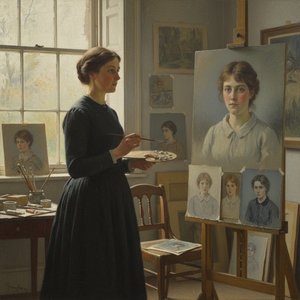
Gwen John: Intimacy, Modernity & the Quiet Power of Welsh Portraiture
Explore the captivating world of Gwen John, a pioneering Welsh artist renowned for her intimate portraits & subtle style. Discover her life, legacy, and how to bring her timeless beauty into your home with OriginalUniqueArt.