

 Previzualizare
 Trimite prin felicitare
 Distribuie
 Detalii despre lucrare
 Ghid
Ghid

 Descarcă imaginea
 Produse similare
 Radiografie
 Galerie foto
 Statistici
Girl Guide 2
 Acrylic On Canvas
- WallArt
- Welsh Landscape Painting
 2006
2006 77.0 x 77.0 cm
 Llyfrgell Genedlaethol Cymru / The National Library of Wales
 Vezi mai mult
Lucrarea de artă afișată pe această pagină este protejată de legile privind drepturile de autor, ceea ce înseamnă că nu putem crea sau vinde în mod legal o reproducere identică. Această protecție este garantată prin acorduri internaționale, precum Convenția de la Berna și de legile naționale, inclusiv cele prevăzute de Legea dreptului de autor din S.U.A. – Titlul 17. Toate drepturile rezervate. Orice reproducere neautorizată este interzisă.
Ca alternativă respectuoasă și legală, oferim tablouri pictate manual, personalizate, inspirate de original. Artistii noștri experimentați și profesioniști studiază cu atenție stilul, starea de spirit și esența artistică a originalului pentru a crea o piesă nouă și unică, care evocă aceeași emoție – rămânând, în același timp, o creație originală în sine.
Această metodă respectă pe deplin reglementările privind drepturile de autor, deoarece nu implică copierea sau duplicarea operei protejate. În schimb, este o reinterpretare creativă – o pictură nouă, influențată de original, dar care nu este identică cu acesta.
Reproducere pictată manual în ulei
Pictură în ulei pe pânză, pictată manual de artiștii noștri la dimensiunea și ramele dorite de dumneavoastră, pe comandă. ( Comută pe versiunea Print Comută pe Imagine Digitală)




P118B lei10

P118H lei10

P118W lei10

P438Z lei10

P508JH lei12

P508YH lei12

P805H lei10

P805Z lei10

P919BZ lei10

P919G lei10

P919XJ lei10

P959ZH lei10

P968JZ lei12

W106C lei8

W218G lei10

W218JH lei8

W218Y lei10

W307PJ lei10

W316G lei10

W316PJ lei8

W316Y lei10

W398PJ lei8

W4111J lei10

W500HY lei15

W500JH lei15

W692G lei12

W849H lei8

W940BG lei15

W953PJ lei8




Alegeți dintre dimensiunile noastre prestabilite, care respectă proporțiile originale ale operei de artă.

Introduceți lățimea și înălțimea necesare pentru a se potrivi ramei sau peretelui dumneavoastră. Această lucrare este pictată manual, așa că, pentru o dimensiune cu o formă diferită, artistul poate picta puțin mai mult în jurul imaginii sau poate tăia puțin din margini — dumneavoastră decideți. Vă vom trimite o simulare digitală pentru aprobare înainte de a începe pictarea. Imaginea afișată pe această pagină nu reprezintă rezultatul real — doar simularea este reprezentativă.
După plasarea comenzii, echipa OriginalUniqueArt.com va contacta clientul prin e-mail pentru instrucțiuni și îi va furniza o previzualizare a machetei
Livrare în întreaga lume () în 3-4 săptămâni, în loc de cele 5 săptămâni standard. (27 Octombrie). Fără compromisuri în ceea ce privește calitatea.

Livrare expres gratuită la nivel mondial

Pânză de in de înaltă calitate

Asigurare completă pentru transport

Garanție de rambursare a taxelor vamale

Garanția fidelității culorilor

Politica de retur în 100 de zile (doar pentru defecte de fabricație)

Garanție de rambursare 100%

Ofertă pentru comenzi multiple
 Opțiunea cu sticlă este disponibilă doar pentru dimensiuni de sub 110 cm

Girl Guide 2
Tehnică de reproducere
Dimensiune reproducere
-


Preț total calculat
lei 1392
A Portrait of Quiet Strength: Kyffin Williams’s “Girl Guide II”
John Kyffin Williams's "Girl Guide II," painted in 2006, isn’t merely a depiction of a young girl; it’s a profound meditation on childhood innocence, vulnerability, and the enduring spirit of Wales. This captivating portrait, rendered in thick, textured impasto, immediately draws the viewer into a world of subtle emotion and quiet contemplation. The painting captures a moment suspended in time – a young girl seated thoughtfully, her hands clasped together, an expression hinting at both serenity and perhaps a touch of wistful reflection. It’s a scene that resonates with a timeless quality, inviting us to consider the complexities of youth and the enduring power of memory.
The Artist's Vision: Kyffin Williams and Welsh Identity
Sir John Kyffin Williams (1918-2006) was more than just a painter; he was arguably Wales’s most significant 20th-century artist. Born in Llangefni, Anglesey, his life was inextricably linked to the rugged beauty and emotional landscape of his homeland. Williams's work is deeply rooted in the Welsh countryside – its rolling hills, dramatic coastlines, and small, isolated communities. However, his art wasn’t simply a celebration of scenery; it was an exploration of Welsh identity, grappling with themes of isolation, tradition, and the enduring connection to the land. His early life, marked by a somewhat strained relationship with his mother who actively discouraged engagement with Welsh culture and language, undoubtedly fueled a lifelong dedication to visually capturing and honoring this heritage. “Girl Guide II” exemplifies this – it’s not just a portrait of a girl; it's an embodiment of the spirit of Wales itself.
Technique and Style: Impasto and Emotional Resonance
Williams’s distinctive style is immediately recognizable through his masterful use of impasto—a technique involving applying thick layers of paint directly to the canvas. This creates a tactile, three-dimensional surface that seems to pulse with energy. In “Girl Guide II,” this technique is particularly evident in the girl's dress and hands, adding depth and texture while simultaneously conveying a sense of vulnerability and fragility. The palette is restrained – predominantly earthy tones of browns, greens, and blues—reflecting the muted colors of the Welsh landscape. Yet, within these seemingly simple hues, Williams skillfully employs subtle shifts in value and color to create a remarkable range of emotional expression. The brushstrokes themselves are visible, adding to the painting’s sense of immediacy and authenticity.
Symbolism and Interpretation: A Moment of Reflection
Beyond its technical brilliance, “Girl Guide II” is rich in symbolic meaning. The girl's posture – hands clasped together – immediately evokes a sense of prayer or quiet contemplation. The background, subtly suggested rather than fully defined, hints at a domestic setting—perhaps a home within a rural village. The inclusion of the other figure in the distance adds an element of mystery and suggests the presence of family or community. Some art historians have interpreted the painting as a reflection on childhood innocence lost, while others see it as a celebration of Welsh resilience and tradition. Regardless of the specific interpretation, “Girl Guide II” invites viewers to engage with their own memories and emotions, prompting them to consider the enduring power of youth and the beauty of the Welsh landscape.
This reproduction captures the essence of Williams’s original work, offering a stunning addition to any collection or interior space. Its textured surface and evocative imagery will undoubtedly spark conversation and inspire contemplation for years to come.
Întrebări și răspunsuri
Unde pot achiziționa o imagine digitală a "Girl Guide 2" de John Kyffin Williams?
O imagine digitală a operei "Girl Guide 2" de John Kyffin Williams poate fi achiziționată pe pagina sa de Imagine digitală de înaltă rezoluție: descărcare imagine digitală de înaltă rezoluție.
Unde pot găsi statistici despre "Girl Guide 2" de John Kyffin Williams?
Pagina Statistici pentru "Girl Guide 2" de John Kyffin Williams prezintă statistici privind vizitele publice: numărul de vizite lunare ale acestei opere, o comparație cu cele mai vizionate lucrări ale artistului și proveniența vizitatorilor.
Există o prezentare de diapozitive pentru "Girl Guide 2" de John Kyffin Williams?
Diaporama pentru "Girl Guide 2" poate fi vizualizată pe pagina Galerie foto a operei de artă.
Biografie artist
A Defining Voice of Welsh Landscape
Sir John “Kyffin” Williams, a name inextricably linked to the very essence of Wales, stands as one of the most significant figures in 20th-century British art. More than just a painter, he was a cultural chronicler, an interpreter of the rugged beauty and profound emotional depth of his homeland—a storyteller who translated its landscapes onto canvas with unparalleled skill and sensitivity. Born in Llangefni, on the Isle of Anglesey, in 1918, Williams’s life journey mirrored the textured complexity of the Welsh terrain itself: a blend of quiet resilience, unexpected challenges, and an unwavering dedication to capturing the spirit of his birthplace. His connection to Wales wasn't merely geographical; it was deeply ingrained within his being—a heritage nurtured by family history and shaped by early experiences that would ultimately fuel his artistic vision.Early Life and Unexpected Challenges
Williams’s path to becoming Wales’s foremost artist wasn’t paved with ease or certainty. Educated initially at Moreton Hall School near Chirk and later at Shrewsbury, a period marked by feelings of isolation and dissatisfaction, his life took an unexpected turn following a bout of polio encephalitis in 1924. This illness left him with epilepsy, a condition that would profoundly impact his life and, paradoxically, become a catalyst for artistic exploration. Doctors advised him to pursue art as a form of therapy—a suggestion that proved transformative. It was during this period that he encountered the works of Piero della Francesca, an encounter that ignited within him a lifelong passion for capturing light, atmosphere, and emotion on canvas. A brief but formative stint in the 6th Battalion Royal Welch Fusiliers was cut short due to his medical condition, yet it wasn’t a detour; rather, it provided a temporary respite before he enrolled at London's Slade School of Fine Art during its wartime relocation to Oxford. At the Slade, under the guidance of influential figures like Randolph Schwabe and Allan Gwynne-Jones, Williams honed his technical skills and developed his distinctive style—a style characterized by bold brushstrokes, rich colors, and a masterful use of impasto. He won the prestigious Slade Portrait Prize in 1944, a remarkable achievement that established him as a promising young artist. The war years brought further challenges, including the loss of friends and colleagues, but also deepened his commitment to art as a means of understanding and expressing the human condition.Teaching, Travel, and Artistic Evolution
Following his time at the Slade, Williams dedicated many years to teaching art at Highgate School in London from 1944 until 1973—a role that not only sustained him financially but also allowed him to nurture the artistic talents of countless young students. However, it was a Winston Churchill Fellowship awarded in 1968 that dramatically shifted the trajectory of his artistic life. This opportunity enabled him to travel to Y Wladfa, the Welsh settlement in Patagonia—a remote and windswept region in Argentina—an experience that profoundly shaped his palette, subject matter, and overall artistic vision. The vast, dramatic landscapes of Patagonia, so strikingly different yet echoing the spirit of Wales, infused his work with a new sense of scale, light, and emotional intensity. He meticulously documented this journey through paintings, sketches, and a compellingly anecdotal book titled “Across the Straits.”Technique, Themes, and Recognition
Kyffin Williams’s artistic technique was instantly recognizable—a bold departure from traditional landscape painting. He employed thick oil paint applied with a palette knife, creating textured surfaces that seemed to shimmer with light and movement. This wasn't merely a stylistic choice; it was a deliberate attempt to capture the ruggedness of the Welsh mountains, the weight of its history, and the emotional resonance of its landscapes. His subjects ranged from intimate portraits of rural life to sweeping vistas of Snowdonia National Park, capturing both the grandeur and the quiet beauty of Wales. He also explored the evocative atmosphere of Venice, Italy, translating the city’s light, color, and architectural details onto canvas with remarkable sensitivity. Throughout his career, Williams received numerous accolades—an OBE in 1982 and a KBE in 1999 for his contributions to the arts in Wales—testaments to his enduring influence and artistic merit.A Lasting Legacy
Sir John Kyffin Williams’s legacy extends far beyond the canvases he created. He was a cultural ambassador, a chronicler of Welsh identity, and an inspiration to generations of artists. His paintings continue to resonate with viewers today, evoking a sense of place, history, and emotional depth—a testament to his extraordinary talent and unwavering dedication to capturing the soul of Wales. The Oriel Ynys Môn on Anglesey houses a permanent exhibition dedicated to his work, ensuring that his artistic vision will be cherished and celebrated for years to come. Kyffin Williams wasn’t simply a painter; he was a poet of the landscape—a master who transformed the beauty of Wales into enduring works of art.
John Kyffin Williams
1918 - 2006 , Marea Britanie
Detalii rapide
- Artistic Movement Or Style: Pictură de peisaj
- Artists Or Movements Influenced By This Artist: ['Artă modernă']
- Artists Who Influenced This Artist: ['Piero della Francesca']
- Date Of Birth: 1918
- Date Of Death: 2006
- Full Name: John Kyffin Williams
- Nationality: Welsh
- Notable Artworks:
- Storm Approaching
- View from Pwllfanogl
- Place Of Birth: Llangefni, UK
Articole similare

Evocations of Place: A Historical Journey Through Landscape Art
Explore the rich history of landscape art with OriginalUniqueArt. Discover renowned artists, movements like Impressionism & Romanticism, and expert guidance for collecting timeless pieces. Find your perfect serene escape today!

Peisaje Romantice Iconice: 10 Capodopere Artistice pentru Decorul de Lux
Descoperă 10 capodopere romantice iconice de Caspar David Friedrich, Turner și alți maeștri. Explorează istoria artei, emoțiile din peisaje și găsește tablouri canvas perfecte pentru decorul tău pe OriginalUniqueArt.com!

John Constable: Cele Mai Frumoase 25 de Capodopere – Artă Clasică pentru Decorul Casei Tale
Descoperă cele mai frumoase 25 de picturi ale lui John Constable, maestru al peisajului englezesc! Explorează stilul romantic, Dedham Vale și capodopere precum The Hay Wain. Reproduceri artă clasică pentru decorul casei tale – OriginalUniqueArt.com.
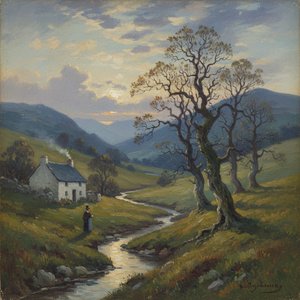
Penry Williams: Evoking Welsh Nostalgia Through Impressionistic Landscapes
Explore the captivating world of Penry Williams (1802-1885), a Welsh artist renowned for his evocative Impressionistic landscapes and scenes of Italy. Discover his life, style & legacy with OriginalUniqueArt.

Evocations of Place: A Historical Journey Through Landscape Art
Explore the rich history of landscape art with OriginalUniqueArt. Discover renowned artists, movements like Impressionism & tonalism, and expert guidance for collecting timeless pieces. Find your perfect serene escape today!


