

 Vezi în context
 Trimite
 Distribuie
 Detalii
 Ghidul

 Descarcă
 Produse similare
 Radiografie
 Diaporama
 Statistici
The Three Tomboys


 Citește mai mult
Reproducere pictată manual în ulei
Pictură în ulei pe pânză, realizată manual de artiștii noștri la dimensiunea și ramele dorite de dumneavoastră, pe comandă. ( Comută pe versiunea Print Treci la imagine digitală)




P118B $10

P118H $10

P118W $10

P438Z $10

P508JH $12

P508YH $12

P805H $10

P805Z $10

P919BZ $10

P919G $10

P919XJ $10

P959ZH $10

P968JZ $12

W106C $8

W218G $10

W218JH $8

W218Y $10

W307PJ $10

W316G $10

W316PJ $8

W316Y $10

W398PJ $8

W4111J $10

W500HY $15

W500JH $15

W692G $12

W849H $8

W940BG $15

W953PJ $8




Alegeți dintre dimensiunile noastre prestabilite, care respectă proporțiile originale ale operei de artă.

Puteți introduce propriile dimensiuni pentru a se potrivi unui anumit cadru sau spațiu. Dacă dimensiunea selectată nu corespunde proporțiilor imaginii originale, vom decupa opera de artă sau vom extinde pictura cu elemente suplimentare pictate manual. O simulare digitală vă va fi trimisă pentru aprobare înainte de începerea producției.
Vă rugăm să rețineți că previzualizarea de pe ecran nu reflectă decuparea sau extinderea reală. Doar macheta va arăta cu exactitate compoziția finală.
Deși sunt disponibile dimensiuni personalizate, vă recomandăm să selectați o dimensiune din lista predefinită pentru a păstra proporțiile originale.
După plasarea comenzii, echipa OriginalUniqueArt.com va contacta clientul prin e-mail pentru instrucțiuni și îi va furniza o previzualizare a machetei
Livrare în întreaga lume () în 3-4 săptămâni, în loc de cele 5 săptămâni standard. (25 Septembrie). Fără compromisuri în ceea ce privește calitatea.

Livrare expres gratuită la nivel mondial

Pânză de in premium

Asigurare completă pentru transport

Garanție de rambursare a taxelor vamale

Garanția fidelității culorilor

Politica de retur în 100 de zile (doar pentru defecte)

Garanție de rambursare 100%

Reducere pentru comenzi multiple
 Opțiunea cu sticlă este disponibilă doar pentru dimensiuni de sub 110 cm

The Three Tomboys
Tip de reproducere
Dimensiune reproducere
-


Preț total
$ 300
The Golden Glow of Childhood Innocence
To gaze upon John George Brown's "The Three Tomboys" is to be instantly transported to a sun-dappled afternoon in the heart of nature. This oil on canvas painting, executed in 1868, is far more than a mere depiction of play; it is a luminous meditation on the ephemeral beauty of youth. The scene centers around three young girls suspended in joyful abandon upon a swing set within a verdant wood. One can almost hear the creak of the chains and the bright peals of their laughter echoing through the surrounding foliage. Brown masterfully captures that perfect, fleeting moment when pure joy has no boundaries.
A Masterclass in High Realism
Brown’s adherence to High Realism is evident in every meticulously rendered leaf and every playful gesture. His technique, characterized by gentle yet confident brushstrokes, allows the oil paint to breathe life into the canvas. The attention paid to detail—from the texture of their simple dresses to the varied greens of the surrounding trees—speaks to an artist deeply observant of the everyday world. This realism does not feel cold or academic; rather, it is imbued with a palpable warmth, achieved through his expert use of warm color palettes that bathe the entire composition in a comforting, nostalgic glow.
Symbolism and the Passage of Time
The very subject matter—childhood play—carries profound symbolic weight. The three tomboys represent an idealized vision of innocence, a state untainted by adult complexity. The swing itself acts as a subtle metaphor for life's cyclical nature; moments of soaring height followed by gentle descent. Brown invites the viewer to pause and reflect on the passage of time, finding solace in this captured moment of unburdened delight. It is an emotional anchor, a visual reminder to cherish the simple pleasures.
Bringing the Woods Home: For the Modern Collector
For those who wish to incorporate such a piece of enduring sentiment into their own living spaces, acquiring a high-quality reproduction of "The Three Tomboys" offers a tangible connection to 19th-century American artistry. The ability of oil on canvas to retain depth and richness means that even a reproduction carries the weight of Brown's original vision. Whether adorning a formal drawing-room or lending a touch of pastoral grace to a sunlit nook, this artwork promises not just decoration, but a continuous source of gentle inspiration and warmth for any admirer of genre painting.
Biografie artist
A Life Etched in Childhood: The World of John George Brown
John George Brown, a name perhaps less immediately recognizable than some of his contemporaries, nevertheless occupies a significant and deeply affecting niche within the landscape of 19th-century American art. Born in Durham, England, in 1831, his journey was one of determined self-improvement and astute observation, culminating in a career that captured the poignant realities – and often idealized sentiments – surrounding childhood during a period of rapid social change. Brown’s story isn't simply about artistic talent; it’s about an immigrant’s ambition, a keen eye for detail, and a shrewd understanding of the burgeoning American art market. His early life was marked by necessity rather than privilege. Apprenticed to a glass factory at just fourteen years old, he labored to support his family, yet even amidst the demanding work, a passion for drawing persisted. This dedication led him to evening classes at the School of Design in Newcastle, and later, further study at the Trustees Academy in Edinburgh – formative experiences that laid the groundwork for his future artistic endeavors. In 1853, Brown bravely crossed the Atlantic, settling in Brooklyn, New York, a city poised to become both his home and his muse. He continued his education at the Graham Art School and the National Academy of Design, honing his skills under the guidance of instructors like Thomas Seir Cummings, preparing himself for a life dedicated to capturing the essence of American experience.From Portraiture to the Streets: Finding His Voice
Initially establishing himself as a portrait painter, Brown quickly discovered that his true calling lay elsewhere – in the vibrant, often overlooked world of everyday life. He began to focus on genre scenes, and it was through his depictions of street children that he truly found his voice. The 1860s witnessed the rise of Brown’s “street urchin” paintings, images that resonated deeply with a public fascinated by – and perhaps simultaneously troubled by – the realities of urban poverty. These weren't merely sentimental portrayals; they were carefully observed studies of character, capturing the resilience, resourcefulness, and quiet dignity of children navigating difficult circumstances. Bootblacks diligently polishing shoes, newsboys hawking papers on bustling street corners, flower sellers offering their wares – these scenes became Brown’s signature, imbued with a remarkable level of detail and emotional sensitivity. His work wasn't born in isolation; it was influenced by the Barbizon school, particularly its emphasis on realism and depictions of everyday life, as well as the dramatic use of light and color championed by artists like J.M.W. Turner. However, Brown synthesized these influences into a uniquely American style, one that spoke to the specific social conditions and cultural anxieties of his adopted homeland.A Master of Sentiment and Commerce
Brown was not only an artist but also a remarkably astute businessman. Recognizing the appeal of his work, he strategically copyrighted many of his most popular paintings, allowing for widespread reproduction as chromolithographs and photographic prints. This savvy move dramatically increased his fame and financial success, making him one of the wealthiest genre painters in the United States during his lifetime. He understood that the public was drawn to stories of hardship and resilience, and he skillfully exploited this sentiment through his art. However, this commercial success didn’t diminish the artistic merit of his work. Paintings like “The Net Mender” and “The First Point” exemplify his ability to capture moments of quiet beauty and emotional depth. "Claiming the Shot - A Group of Portraits after the Hunt in the Adirondacks" demonstrates a broader range, showcasing his skill in depicting group scenes with remarkable realism. His paintings offered more than just aesthetic pleasure; they provided valuable insights into 19th-century American society, particularly the lives of working children and the changing urban landscape. Often imbued with subtle moral undertones, Brown’s work reflected his belief in the importance of hard work, honesty, and resilience – values that resonated deeply with Victorian audiences.Shifting Focus: From Youth to Age
As Brown matured as an artist, so too did his subject matter evolve. In his later years, he shifted his focus from depicting the energy and vitality of childhood to portraying the quiet dignity and solitude of old age. These paintings often featured elderly individuals in rural settings, evoking a sense of nostalgia for a simpler past. He continued to be an active member of various art institutions, serving as vice-president of the National Academy of Design from 1899 to 1904, demonstrating his ongoing commitment to the artistic community. His later works, though different in subject matter, retained the meticulous attention to detail and emotional sensitivity that characterized his earlier paintings.A Lasting Legacy: Echoes of Childhood
John George Brown passed away in New York City in 1913, leaving behind a substantial body of work that continues to captivate and move audiences today. His paintings are held in prestigious collections around the world, including the National Gallery in London and the Detroit Institute of Arts, testament to his enduring artistic significance. He is remembered not only for his technical skill but also for his ability to capture the essence of a particular time and place – Victorian America – with honesty, empathy, and a touch of romanticism. His work serves as a poignant reminder of the challenges faced by children in the 19th century, while simultaneously celebrating their resilience and spirit. Brown’s legacy extends beyond his paintings; he represents a fascinating intersection of artistic talent, entrepreneurial acumen, and social commentary – a true chronicler of American life. His ability to transform everyday scenes into enduring works of art ensures that his vision will continue to resonate with generations to come.
John George Brown
1831 - 1913 , Regatul Unit al Marii Britanii și Irlandei
Informații rapide
- Artistic Movement Or Style: Realism, Barbizon
- Artists Or Movements Influenced By This Artist: ['Barbizon school']
- Artists Who Influenced This Artist:
- Turner
- Barbizon school
- Date Of Birth: 1831
- Date Of Death: 1913
- Full Name: John George Brown
- Nationality: Britanic-American
- Notable Artworks:
- The Net Mender
- First Point
- Place Of Birth: Durham, UK
Articole conexe

John Constable: Cele Mai Frumoase 25 de Capodopere – Artă Clasică pentru Decorul Casei Tale
Descoperă cele mai frumoase 25 de picturi ale lui John Constable, maestru al peisajului englezesc! Explorează stilul romantic, Dedham Vale și capodopere precum The Hay Wain. Reproduceri artă clasică pentru decorul casei tale – OriginalUniqueArt.com.

Georges Seurat: Cele Mai Remarcabile 25 de Opere – Artă, Decorațiuni și Inspirație
Descoperă cele mai frumoase 25 de picturi ale lui Georges Seurat! Explorează arta Pointillismului, culorile vibrante și stilul unic al acestui maestru impresionist. Reproduceri de calitate superioară pentru decor interior rafinat pe OriginalUniqueArt.com.
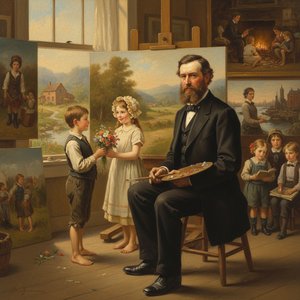
John George Brown: Capturing American Life & Sentiment in 19th-Century Genre Painting
Explore the captivating genre paintings of John George Brown, celebrated for his realistic depictions of 19th-century American life. Discover his legacy & find museum-quality reproductions at OriginalUniqueArt.

John Singer Sargent: Cele Mai Iconice Capodopere – Artă, Portrete și Decorațiuni de Lux
Descoperă cele mai frumoase 25 de picturi ale lui John Singer Sargent! Portrete elegante, acuarele rafinate și capodopere impresioniste. Află povestea fiecărei opere și găsește inspirație pentru decorul casei tale pe OriginalUniqueArt.com.

Georges Braque: Cele Mai Iconice 25 De Opere – Artă Modernă pentru Decorul Tău
Descoperă cele mai importante 25 de opere ale lui Georges Braque, pionier al cubismului! Explorează istoria, tehnicile și semnificația fiecărei picturi. Reproduceri artă de calitate muzeală pentru decorul tău pe OriginalUniqueArt.com.