

 Vezi în context
 Trimite
 Distribuie
 Detalii
 Ghidul

 Descarcă
 Produse similare
 Radiografie
 Diaporama
 Statistici
On the Scent

 Citește mai mult
Giclée / Imprimare artistică
Printuri giclée sau pe canvas de calitate muzeală, cu proces de producție rapid și opțiuni flexibile de finisare. ( Comandă pictură realizată manual Treci la imagine digitală)




































Alegeți dintre dimensiunile noastre prestabilite, care respectă proporțiile originale ale operei de artă.

Introduceți lățimea și înălțimea de care aveți nevoie, pentru a se potrivi ramei sau peretelui dumneavoastră. O printare poate fi doar tăiată, niciodată extinsă dincolo de dimensiunea imaginii originale, astfel încât o dimensiune cu o formă diferită va pierde o parte din imagine. Vă trimitem o simulare digitală pentru aprobare înainte de a imprima orice. Imaginea afișată pe această pagină nu prezintă tăierea reală — doar simularea arată acest lucru.
Livrare în întreaga lume () în 2 săptămâni, în loc de cele 4/5 săptămâni standard. (24 Octombrie)

Livrare expres gratuită la nivel mondial

Pânză de in premium

Asigurare completă pentru transport

Garanție de rambursare a taxelor vamale

Garanția fidelității culorilor

Politica de retur în 100 de zile (doar pentru defecte)

Garanție de rambursare 100%

Reducere pentru comenzi multiple
 Opțiunea cu sticlă este disponibilă doar pentru dimensiuni de sub 110 cm

On the Scent
Giclée / Imprimare artistică
Dimensiune reproducere
-


Preț total
lei 370
On the Scent: A Dynamic Hunting Scene by John Frederick Herring Senior
- Artist: John Frederick Herring Senior
- Date: Unknown
- Medium: Oil on Canvas
A Lively Depiction of 19th-Century Sporting Life
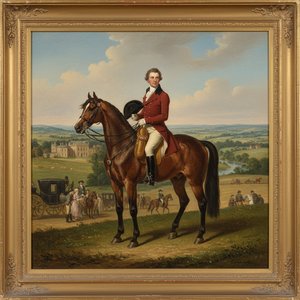
“On the Scent” by John Frederick Herring Senior captures a vibrant moment during a fox hunt, a popular pastime in 19th-century England. The artwork pulsates with energy as a mounted huntsman, distinguished by his striking red coat, leads a pack of hounds across an open field. The composition is skillfully arranged to draw the viewer's eye directly to the rider and his horse, while the surrounding landscape provides a naturalistic backdrop. Two additional figures on horseback are visible in the distance, hinting at the larger group participating in the chase. Herring’s keen observation of animal anatomy and movement brings this scene to life with remarkable realism.
Style and Technique: British Sporting Art at its Finest
Herring Senior was a leading figure in British sporting art, known for his realistic depictions of animals and landscapes. This painting exemplifies the style of the era, characterized by meticulous detail and an emphasis on capturing the excitement of outdoor pursuits. The artist’s technique involves visible brushstrokes that contribute to a textured appearance, adding depth and dynamism to the scene. The use of oil paints allows for rich color saturation and subtle gradations in tone, enhancing the overall visual impact. Notice how Herring uses strong vertical lines in the trees to contrast with the diagonal movement of the horse and hounds, creating a sense of forward momentum.
Symbolism and Emotional Impact
Beyond its depiction of a sporting event, "On the Scent" carries symbolic weight. The bright red coat worn by the huntsman signifies authority and leadership within the hunting party – he is the one guiding the chase. The hounds themselves represent loyalty and determination in pursuit of their quarry. The painting evokes feelings of energy, movement, and the thrill of the hunt—a reflection of the Victorian era’s fascination with outdoor activities and displays of skill. The natural lighting, with highlights on the horse and rider, further enhances the sense of immediacy and excitement.
Historical Context and the Herring Family Legacy
John Frederick Herring Senior (1795-1865) was born in London and later moved to Doncaster, where he established himself as a prominent artist. He is particularly celebrated for his depictions of horses and hunting scenes, often capturing the essence of rural life in 19th-century England. Remarkably, Herring Senior’s sons – John Frederick Herring Jr., Charles Herring, and Benjamin Herring – also became artists, contributing to a family legacy within the art world. His daughter Ann married Harrison Weir, further cementing the family's connection to artistic circles. This painting offers a glimpse into a period of significant social and cultural change in England, where sporting events like fox hunting were both a recreational pursuit and a symbol of status.
Întrebări și răspunsuri
Cum pot obține o versiune digitală a lucrării "On the Scent" de John Frederick Herring Sr.?
„On the Scent” este disponibil ca descărcare imagine digitală de înaltă rezoluție, achiziționat direct pe pagina sa de Imagine Digitală.
Cum se raportează subiectul operei „On the Scent” la temele obișnuite ale lui John Frederick Herring Sr.?
Temele recurente ale lui John Frederick Herring Sr. includ british sporting art traditions, realistic animal depiction focus, typical of herring's animal paintings, demonstrates skill in capturing movement, represents a key subject for the artist, popular 19th-century english pastime, celebration of rural life & sport, reflects aristocratic pursuits; „On the Scent” se concentrează pe hunting, horses, fox hunt, british art, animal painting, landscape, equestrian, red coat.
Cum pot descoperi opere de artă similare cu "On the Scent" de John Frederick Herring Sr.?
Opere de artă similare cu "On the Scent" de John Frederick Herring Sr. sunt grupate în pagina Lucrări similare a lucrării.
Biografie artist
John Frederick Herring Sr.: A Life in Art and Sport
Born September 12, 1795, London, United Kingdom, John Frederick Herring Sr., was a British painter, sign maker, and coachman whose legacy endures as one of the most celebrated equine artists of the Victorian era. From an early age, he possessed a profound aversion to urban life and an unwavering fascination with horses—a passion that would define his artistic trajectory and shape his entire life’s work. His father, a London merchant of Dutch heritage, instilled in him a love for meticulous observation and skillful representation, laying the groundwork for Herring's remarkable talent.Early Life and Career
Herring’s formative years were spent amidst the bustling streets of London, yet his spirit yearned for the tranquility of rural landscapes and the exhilaration of equestrian pursuits. Recognizing this innate inclination, he swiftly abandoned city life in favor of Doncaster, England, where he commenced his artistic journey at eighteen. Initially employed as a night coachman—a profession that afforded him unparalleled access to horses—Herring honed his observational skills and developed an acute understanding of animal anatomy and movement. Simultaneously, he practiced sign painting, mastering the craft of capturing visual narratives with precision and artistry. This dual occupation proved invaluable, fostering connections within Doncaster’s gentry who soon commissioned portraits of hunters and racehorses – commissions that would catapult Herring into artistic prominence. Around 1818, Herring embarked on a pivotal endeavor: he began documenting the winners of the St. Leger Cup and subsequently the Derby—events steeped in tradition and celebrated throughout England. These undertakings demanded meticulous detail and an ability to convey dynamism, cementing Herring’s reputation as “the artist coachman” and securing him considerable acclaim through the widespread dissemination of engravings of his paintings.Development as an Artist
Herring's artistic development benefited from a brief mentorship under Abraham Cooper—a renowned animal painter whose techniques profoundly influenced Herring’s approach to portraying horses with realism and sensitivity. In 1836, he formally adopted “Sr.” to his signature, distinguishing himself from his son, John Frederick Herring Jr., who was also establishing himself as an artist – a distinction that underscored the importance of familial artistic heritage. Throughout his career, Herring's work gained royal patronage, notably from the Duchess of Kent and Queen Victoria—figures whose admiration fueled his creative endeavors and ensured the enduring recognition of his artistic achievements. He traveled to Paris in 1840-1841 at the invitation of the Duc d’Orleans, where he produced several canvases reflecting the influence of Japanese aesthetics and demonstrating his versatility as an artist. Herring's subjects expanded beyond equine depictions to encompass agricultural scenes and narrative paintings—genres that allowed him to explore diverse themes and capture the essence of British rural life.Major Achievements and Style
Herring’s artistic legacy rests upon several pillars: unwavering dedication to meticulous observation, masterful execution of detail, and a distinctive style characterized by warmth, vibrancy, and an evocative portrayal of movement. He exhibited extensively at the Royal Academy (1818–1865), British Institution (1830–1865), and Society of British Artists (1836-1852)—institutions that championed artistic excellence and ensured the preservation of Herring’s oeuvre for posterity. His paintings were reproduced extensively through engravings, elevating his popularity among the public and establishing him as a cornerstone of Victorian art—a testament to his enduring influence on subsequent generations of artists. Herring's style combined realism with expressive brushwork, capturing not merely the appearance of horses but also their spirit and energy—a hallmark that distinguishes his work from contemporaries and secures its place within the annals of equestrian art history. ## Historical Significance John Frederick Herring Sr.’s contribution to British art transcends mere aesthetic beauty; he served as a chronicler of Victorian sporting culture, documenting pivotal moments in horse racing and hunting with unparalleled accuracy and artistry. His paintings offer invaluable insights into the social customs and values of his era—a period marked by aristocratic patronage and a fervent appreciation for rural pursuits. Herring’s influence extended beyond his own lifetime, inspiring artists who followed him—most notably his son, John Frederick Herring Jr.—to embrace similar stylistic conventions and explore comparable subjects. Today, Herring's masterpieces reside in prominent collections worldwide—a testament to the enduring power of his artistic vision and its lasting impact on the history of British art.
John Frederick Herring Sr.
1795 - 1865 , Regatul Unit
Informații rapide
- Artistic Movement Or Style: Victorian art
- Artists Who Influenced This Artist: ['Abraham Cooper']
- Date Of Birth: September 12, 1795
- Full Name: John Frederick Herring Sr.
- Nationality: British
- Notable Artworks:
- Mazeppa Pursued by Wolves
- The Start of the Goodwood Gold Cup
- Sir Mark Wood with his filly Vespa
- Place Of Birth: London, United Kingdom
Articole conexe
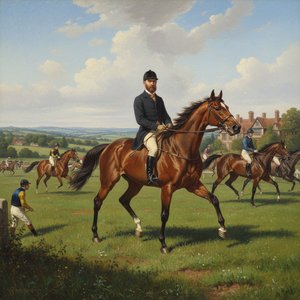
John Frederick Herring Sr.: Equestrian Mastery & the Rise of Sporting Art in Victorian England
Explore the life & work of John Frederick Herring Sr., a leading Victorian equestrian artist. Discover his masterpieces, patronage, techniques & investment potential. Expert insights for collectors.
The Noble Steed on Canvas: A Historical & Artistic Exploration of Horse Painting Across Cultures
Explore the rich history of horse painting! Discover masterpieces from Stubbs to Munnings & learn about symbolism, techniques & artists. Find museum-quality reproductions at OriginalUniqueArt.
Animalia: Prezența Durabilă a Animalelor în Artă și Design Interior
Explorați prezența fascinantă a animalelor în artă și design interior de-a lungul istoriei. Descoperiți simbolismul, influențele culturale și inspirația oferită de lumea animală.
Beastly Brushstrokes: A Historical Journey Through Animal Painting & Aesthetic Movements
Explore the rich history of animal painting across cultures & movements. Discover iconic artists, symbolism, collecting trends & expert art consultation at OriginalUniqueArt.com.
Sr. John E. Ferneley: Equestrian Portraiture & England's Social Fabric
Explore the captivating world of Sr. John E. Ferneley, a master of British sporting art. Discover his exquisite equestrian paintings & insights into 19th-century society. Invest in timeless masterpieces with OriginalUniqueArt.