Meniu

() ·

A painting made for you, by hand

Reproducere pictată manual în ulei

Pictură în ulei pe pânză, pictată manual de artiștii noștri la dimensiunea și ramele dorite de dumneavoastră, pe comandă. ( Comută pe versiunea Print Comută pe Imagine Digitală)

Descriere obiect de colecție

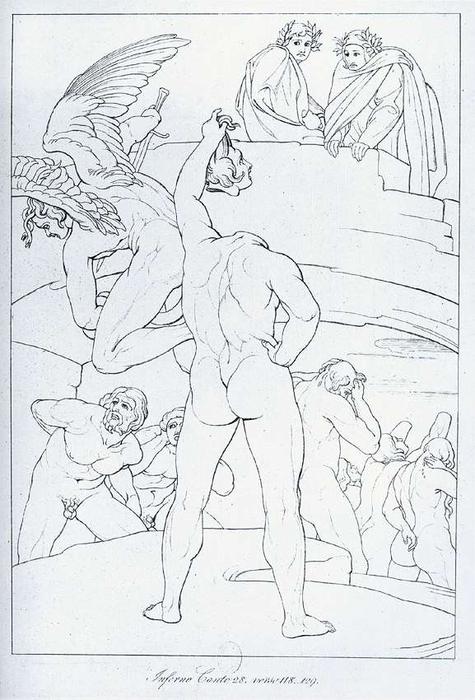
John Flaxman’s "Inferno" engraving captures the dramatic intensity of Dante’s descent into hell with neoclassical precision and masterful line work, offering a timeless exploration of morality and divine judgment.

Biografie artist

John Flaxman (1755-1826): Pioneering British Neoclassical sculptor & illustrator of Homer, Dante, and Aeschylus. Explore his elegant designs for Wedgwood pottery and impactful funerary monuments.

from ·

Chapter 1

How large should it be?

Slide to change the size; the wall on the left shows it at its real scale. The proportions of the original are kept.

Standard
personalizat
CM
INCH

Alegeți dintre dimensiunile noastre prestabilite, care respectă proporțiile originale ale operei de artă.

lățime
înălțime

Introduceți lățimea și înălțimea necesare pentru a se potrivi ramei sau peretelui dumneavoastră. Această lucrare este pictată manual, așa că, pentru o dimensiune cu o formă diferită, artistul poate picta puțin mai mult în jurul imaginii sau poate tăia puțin din margini — dumneavoastră decideți. Vă vom trimite o simulare digitală pentru aprobare înainte de a începe pictarea. Imaginea afișată pe această pagină nu reprezintă rezultatul real — doar simularea este reprezentativă.

Chapter 2

How should it arrive?

Choose the edges of the stretched canvas

Choose your frame

Corner sample of the WhiteWrap canvas edge finish, stretched on lemn masiv bars
White lei1
Corner sample of the BlurSideWrap canvas edge finish, stretched on lemn masiv bars
Blurside lei1
Corner sample of the ExtendedWrap canvas edge finish, stretched on lemn masiv bars
Extended lei1
Corner sample of the P118B picture frame: polistiren turnat, 5 cm wide and 3 cm thick
P118B lei10
Corner sample of the P118H picture frame: polistiren turnat, 5 cm wide and 3 cm thick
P118H lei10
Corner sample of the P118W picture frame: polistiren turnat, 5 cm wide and 3 cm thick
P118W lei10
Corner sample of the P438Z picture frame: polistiren turnat, 5.5 cm wide and 3.5 cm thick
P438Z lei10
Corner sample of the P508JH picture frame: polistiren turnat, 7 cm wide and 3.5 cm thick
P508JH lei12
Corner sample of the P508YH picture frame: polistiren turnat, 7 cm wide and 3.5 cm thick
P508YH lei12
Corner sample of the P805H picture frame: polistiren turnat, 5 cm wide and 3.5 cm thick
P805H lei10
Corner sample of the P805Z picture frame: polistiren turnat, 5 cm wide and 3.5 cm thick
P805Z lei10
Corner sample of the P919BZ picture frame: polistiren turnat, 7 cm wide and 3.5 cm thick
P919BZ lei10
Corner sample of the P919G picture frame: polistiren turnat, 7 cm wide and 3.5 cm thick
P919G lei10
Corner sample of the P919XJ picture frame: polistiren turnat, 7 cm wide and 3.5 cm thick
P919XJ lei10
Corner sample of the P959ZH picture frame: polistiren turnat, 5 cm wide and 3 cm thick
P959ZH lei10
Corner sample of the P968JZ picture frame: polistiren turnat, 6 cm wide and 4 cm thick
P968JZ lei12
Corner sample of the W106C picture frame: lemn masiv, 5 cm wide and 3 cm thick
W106C lei8
Corner sample of the W218G picture frame: lemn masiv, 5 cm wide and 3 cm thick
W218G lei10
Corner sample of the W218JH picture frame: lemn masiv, 5 cm wide and 3 cm thick
W218JH lei8
Corner sample of the W218Y picture frame: lemn masiv, 5 cm wide and 3 cm thick
W218Y lei10
Corner sample of the W307PJ picture frame: lemn masiv, 6 cm wide and 3 cm thick
W307PJ lei10
Corner sample of the W316G picture frame: lemn masiv, 6 cm wide and 3 cm thick
W316G lei10
Corner sample of the W316PJ picture frame: lemn masiv, 6 cm wide and 3 cm thick
W316PJ lei8
Corner sample of the W316Y picture frame: lemn masiv, 6 cm wide and 3 cm thick
W316Y lei10
Corner sample of the W398PJ picture frame: lemn masiv, 5 cm wide and 3 cm thick
W398PJ lei8
Corner sample of the W4111J picture frame: lemn masiv, 6.5 cm wide and 3.5 cm thick
W4111J lei10
Corner sample of the W500HY picture frame: lemn masiv, 7 cm wide and 5 cm thick
W500HY lei15
Corner sample of the W500JH picture frame: lemn masiv, 7 cm wide and 5 cm thick
W500JH lei15
Corner sample of the W692G picture frame: lemn masiv, 8 cm wide and 4 cm thick
W692G lei12
Corner sample of the W849H picture frame: lemn masiv, 5 cm wide and 3 cm thick
W849H lei8
Corner sample of the W940BG picture frame: lemn masiv, 7.5 cm wide and 4.5 cm thick
W940BG lei15
Corner sample of the W953PJ picture frame: lemn masiv, 6 cm wide and 3.5 cm thick
W953PJ lei8
Corner sample of the H24-GOLD picture frame: lemn sculptat cu gesso, 10 cm wide and 6 cm thick
H24-GOLD lei30
Corner sample of the H24-SILVER picture frame: lemn sculptat cu gesso, 10 cm wide and 6 cm thick
H24-SILVER lei30
Corner sample of the H36-GOLD picture frame: lemn sculptat cu gesso, 15 cm wide and 6.5 cm thick
H36-GOLD lei45
Corner sample of the H36-SILVER picture frame: lemn sculptat cu gesso, 15 cm wide and 6.5 cm thick
H36-SILVER lei45

Moulding: . Overall size with the frame: .

Chapter 3

Who paints it, and should anything change?

Examples of what can be changed: Replace face with customer photo; Add pet (e.g., replace cat with dog); Include hidden message in background; Change background landscape or elements.
After order, OriginalUniqueArt.com team will email client for instructions and provide a mockup preview

Livrare în întreaga lume () în 3-4 săptămâni, în loc de cele 5 săptămâni standard. (29 Octombrie). Fără compromisuri în ceea ce privește calitatea.

Chapter 4

The finishing touches

A nameplate, as in a museum?

Detalii plăcuță din bronz gravat

This elegant plaque features the artist's name and the title of the artwork, finely engraved for a timeless presentation.

It is made from bronze with a refined, elegant finish. The text is precisely laser-engraved for a sharp and permanent result. Measuring 9x2 cm, the plaque is compact yet easy to read. It's built to be durable and scratch-resistant, offering a professional, museum-quality look. Mounting is simple thanks to the included adhesive backing.

Detalii plăcuță din acril transparent

The plaque includes essential engraved details such as the artist's name, the title of the artwork, the date it was created, the type of media used-like oil on canvas or watercolor-a brief description of the piece, and a QR code that links to the complete artwork information.

It is crafted from clear acrylic, offering a sleek, modern appearance. The text is UV-engraved in black to ensure strong visual contrast. With a size of 10x15 cm, it ensures optimal readability. It comes equipped with two metal hooks for secure wall mounting. The plaque is designed to be weather-resistant, making it suitable for various environments, and it includes interactive features that work seamlessly with smartphone scanning.

Detalii placă din acril negru

This elegant plaque includes engraved information such as the artist's name, the title of the artwork, the date it was created, the type of media used (like oil on canvas or watercolor), a short description of the artwork, and a QR code for quick access to more information.

The plaque itself is made from refined black acrylic with a premium finish. The text is laser-engraved in white for high contrast and readability. Its size is 10x15 cm, designed to be easy to read. It comes with two metal hooks for professional mounting. The design is sleek and fits any interior style. It is also weather-resistant and durable, with built-in digital integration for mobile compatibility.

A protective varnish?

When do you need it?

Chapter 5

Your painting, as you ordered it

Inferno

Tehnică de reproducere

Dimensiune reproducere

-

Selecție de artiști de elită

Mai multe detalii, rafinament și timp suplimentar de execuție

-

Ramă pentru reproducere artistică

-

-

Pentru opere de artă sau reproduceri care depășesc 105 cm (aproximativ 41 de inch) pe oricare dintre laturi, cadrul va fi livrat demontat, sub formă de kit. Această metodă asigură o livrare sigură și previne deteriorarea în timpul transportului.

Este necesară asamblarea profesională – acest produs nu este de tip DIY (de făcut singur).
Kitul trebuie asamblat, iar pânza întinsă, de către un legător de cadre experimentat, utilizând adeziv pentru lemn (neinclus în colet), o cheie pentru întinderea pânzei și cleme pentru a menține barele la unghi drept în timp ce adezivul se usucă. Asamblarea incorectă sau tensiunea neuniformă a pânzei pot deteriora permanent opera de artă și nu sunt acoperite de garanția noastră.

  • Toate barele din lemn masiv sunt incluse, tăiate cu precizie la dimensiunea necesară.

  • Asamblat cu șuruburile incluse, plus adeziv pentru lemn pentru îmbinările de colț, care nu este furnizat și trebuie achiziționat de către tâmplarul dumneavoastră.

  • Sunt necesare unelte profesionale care nu sunt incluse: o șipte de întindere a pânzei (tensionator) și cleme pentru a menține barele la unghi drept în timp ce adezivul se usucă.

Important:
Îmbinările de colț necesită adeziv pentru lemn, barele trebuie fixate cu clești de strângere până când adezivul este complet uscat, iar întinderea pânzei pe cadrul asamblat necesită un clește pentru întins pânza. Niciunul dintre aceste elemente nu este inclus în kit. Vă rugăm să consultați un încadrator profesionist cu experiență înainte de a comanda această dimensiune.

Etichetă de prezentare

-

-

Lac de protecție

Lac lucios (intensifică nuanțele și oferă protecție împotriva luminii și a umidității)

-

Personalizează opera mea de artă

Exemple de elemente ce pot fi personalizate: Înlocuirea feței cu fotografia clientului; Adăugarea unui animal de companie (de exemplu, înlocuirea unei pisici cu un câine); Includerea unui mesaj ascuns în fundal; Modificarea peisajului sau a elementelor din fundal.

-

Livrare rapidă

Livrare la nivel mondial () în 3-4 săptămâni, în loc de cele 5 săptămâni standard. (29 Octombrie). Fără compromisuri când vine vorba de calitate.

-

Livrare rapidă

Livrare la nivel mondial () în 5 săptămâni. (5 Noiembrie).

Inclus

Preț total calculat

lei 2092

Preț total lei 2092

Opțiunea cu sticlă este disponibilă doar pentru dimensiuni de sub 110 cm

Included with every order

  • Livrare expres gratuită la nivel mondial
  • Pânză de in de înaltă calitate
  • Asigurare completă pentru transport
  • Garanție de rambursare a taxelor vamale
  • Garanția fidelității culorilor
  • Politica de retur în 100 de zile (doar pentru defecte de fabricație)
  • Garanție de rambursare 100%
  • Ofertă pentru comenzi multiple

A Descent Into Darkness: Exploring John Flaxman’s Inferno

John Flaxman's engraving of Dante Alighieri’s *Inferno*, completed in 1793, stands as a monumental achievement of neoclassical illustration—a testament to both artistic skill and intellectual fervor. More than just a depiction of Dante’s harrowing journey through Hell, it embodies the spirit of Enlightenment thought, grappling with themes of morality, judgment, and divine retribution within a meticulously crafted visual language. Flaxman's work transcends mere representation; it strives to convey the profound psychological drama inherent in Dante’s poetic vision.
  • Composition & Perspective: Flaxman employs a complex pyramidal arrangement, guiding the viewer’s eye upwards towards a radiant angelic figure—a beacon of hope amidst the pervasive gloom. The flattened perspective characteristic of engraving techniques reinforces the sense of timelessness and universality, emphasizing the enduring relevance of Dante's narrative.
  • Line Technique & Texture: Flaxman’s mastery lies in his masterful use of line engraving. Delicate lines delineate musculature and facial expressions with astonishing precision, capturing the agony etched upon the tormented souls depicted. Simultaneously, bolder lines define architectural elements and create a palpable textural illusion—the rough surface of Hell contrasted against the smooth contours of angelic forms.
  • Color Palette & Lighting: The absence of color is deliberate; Flaxman eschews pigment to focus on tonal variation—a technique favored by neoclassical artists who sought clarity and restraint. Dramatic lighting casts long shadows, intensifying the emotional impact of the scene and highlighting the psychological torment experienced by the figures.

Symbolism & Narrative Depth

The winged creature dominating the upper portion of the engraving serves as a potent symbol—representing divine grace attempting to penetrate the impenetrable darkness of Hell. Its outstretched wings suggest aspiration, redemption, and the promise of salvation for those who persevere through suffering. The anguished expressions on the faces of Dante’s companions convey the visceral horror of their predicament, mirroring the psychological exploration central to Dante's poem. Flaxman doesn’t merely illustrate Dante; he embodies its philosophical core—a confrontation with inescapable moral responsibility.

Historical Context & Influence

Flaxman’s engraving emerged during a period of significant artistic and intellectual upheaval in Britain, coinciding with the rise of Neoclassicism as a reaction against Rococo excess. Inspired by classical sculpture and literature, Flaxman sought to recapture the grandeur and moral seriousness of antiquity—values championed by thinkers like Rousseau and Voltaire. His work profoundly impacted subsequent generations of illustrators and artists, establishing a precedent for conveying complex narratives through stylized visual representations. Flaxman’s *Inferno* remains an iconic image of Enlightenment idealism—a timeless depiction of human suffering illuminated by divine compassion.

Conclusion: An Enduring Legacy

John Flaxman's *Inferno* endures not merely as a beautiful engraving but as a powerful distillation of Dante’s poetic genius and the intellectual currents of its time. Its meticulous craftsmanship, symbolic richness, and emotive impact continue to inspire admiration and provoke contemplation—a testament to Flaxman’s enduring contribution to British art history and his ability to transform literature into unforgettable visual experience.

Întrebări și răspunsuri

Opera "Inferno" se află în țara creatorului său?

Nu – opera de artă este păstrată în străinătate. „Inferno” face parte din colecția din Franța, în timp ce John Flaxman s-a născut în United States of America.

În ce cameră este recomandată lucrarea "Inferno" de John Flaxman?

Spațiul recomandat pentru "Inferno" de John Flaxman este o Living Room. Sugestia poate fi, desigur, adaptată interiorului dumneavoastră.

Cine este artistul din spatele "Inferno"?

„Inferno” a fost creat de John Flaxman. Informațiile de pe această pagină descriu opera originală a lui John Flaxman.

In numbers

  • 1793the year it was painted
  • 29frames to choose from
  • standard sizes, in its own proportions
  • 5weeks to paint and deliver it
John Flaxman

John Flaxman

1755 - 1826, United States of America

Detalii rapide

  • Full Name: John Flaxman
  • Nationality: British
  • Date Of Birth: 1755
  • Date Of Death: 1826
  • Place Of Birth: York, United States of America
  • Notable Artworks:
    • Saint Michael Overcoming Satan
    • The Fight for Body of Patroclus
    • Apotheosis of Homer
    • Dante's Divine Comedy
  • Artistic Movement Or Style: Neoclassicism
  • Artists Who Influenced This Artist:
    • George Romney
    • William Blake
  • Artists Or Movements Influenced By This Artist:
    • Goya
    • Ingres

Biografie artist

A Life Etched in Stone and Line

John Flaxman, born in York in 1755, emerged as a pivotal figure bridging the gap between the waning Rococo era and the ascendant Neoclassical movement in Britain. His story is one of remarkable artistic evolution, fueled by both innate talent and diligent study. From humble beginnings assisting his father, a moulder of plaster casts, young John absorbed an early appreciation for form and texture. This practical grounding, coupled with a voracious appetite for classical literature – pursued largely through self-education – laid the foundation for a career that would redefine British sculpture and illustration. His childhood was marked by illness and loss; his mother’s death when he was nine years old profoundly shaped his introspective nature. Yet, even in these early years, his artistic promise shone brightly, winning him accolades from the Society of Arts at just twelve years old. This initial success propelled him into the orbit of London's burgeoning art scene, where friendships with William Blake and Thomas Stothard would prove formative, fostering a lifelong exchange of ideas and creative energy.

Wedgwood and the Classical Ideal

Flaxman’s artistic trajectory took a significant turn with his employment by Josiah Wedgwood in 1775. This association wasn't merely a source of income; it was an immersive apprenticeship in translating classical motifs into commercially viable art forms. Modeling reliefs for Wedgwood’s renowned jasperware and basaltware demanded precision, economy of line, and a deep understanding of antique design. The influence of d’Hancarville’s engravings of Greek vases proved particularly potent, shaping Flaxman's aesthetic sensibility towards streamlined elegance and narrative clarity. Designs like the *Apotheosis of Homer* and the *Dancing Hours* weren’t simply decorative elements; they were distillations of classical mythology and allegory, rendered with a newfound emphasis on linear grace. This period honed his skills in relief sculpture, a medium he would masterfully employ throughout his career, particularly in his funerary monuments. It was during this time that Flaxman began to cultivate the style for which he became celebrated – a delicate balance between classical purity and emotional resonance.

Roman Reveries and Illustrative Triumph

A transformative journey to Rome in 1787 marked a turning point in Flaxman’s artistic development. Funded partly by Wedgwood, this extended sojourn allowed him to immerse himself directly in the heart of antiquity. He studied not only classical sculpture but also medieval and Renaissance art, broadening his understanding of artistic traditions. More importantly, it was in Rome that he began producing the book illustrations that would secure his lasting fame. Commissions followed for editions of Homer’s *Iliad* and *Odyssey*, Dante’s *Divine Comedy*, and Aeschylus' tragedies. These weren’t mere accompaniments to the text; they were independent works of art, characterized by their stark simplicity, dynamic compositions, and masterful use of line. The illustrations, engraved by figures like Tommaso Piroli, resonated deeply with European audiences, earning Flaxman widespread acclaim – Goethe famously hailed him as “the idol of all dilettanti.” His designs for Dante’s *Divine Comedy*, in particular, proved profoundly influential, inspiring artists such as Goya and Ingres and serving as a crucial resource for art students throughout the 19th century.

Monuments to Memory and Lasting Legacy

Upon his return to England, Flaxman established himself as a leading sculptor of funerary monuments. He approached these commissions with a unique sensitivity, eschewing ostentation in favor of restrained elegance and heartfelt emotion. His memorials – found in churches across England, including those dedicated to Thomas Chatterton, Mrs. Morley, and the Rev. Thomas Ball – are characterized by their simplicity, pathos, and rhythmic design. The monument to George Stevens, now housed in the Fitzwilliam Museum, exemplifies his ability to convey profound grief and enduring remembrance through subtle yet powerful forms. While he achieved recognition as a professor of sculpture at the Royal Academy in 1810, it is perhaps his illustrations that cemented his place in art history. John Flaxman’s work represents a synthesis of classical ideals, technical mastery, and emotional depth. He left an indelible mark on British art, influencing generations of artists with his elegant style and unwavering commitment to the power of line. His legacy continues to inspire, reminding us of the enduring beauty and profound meaning that can be found in both stone and ink. He remains a testament to the transformative power of artistic vision.

Informații rapide

  • Dimensions: 160 x 270 cm
  • Medium: Engraving
  • Influences: Classical Art
  • Subject or theme: Dante's Inferno; Hellscape
  • Artistic style: Idealized forms; Precise lines
  • Notable elements or techniques: Line engraving; Dynamic composition

Test de cunoștințe despre artă

Fiecare întrebare are un singur răspuns corect.

Întrebare 1:
What is the primary subject matter depicted in John Flaxman’s engraving ‘Inferno’?
Întrebare 2:
Flaxman employed which artistic technique to create the engraving’s detailed imagery?
Întrebare 3:
The engraving utilizes a flattened perspective, characteristic of what art movement?
Întrebare 4:
What is the dominant color palette used in ‘Inferno’?
Întrebare 5:
The winged creature featured prominently in the engraving symbolizes what concept?

More about this painting

Previzualizare Previzualizare AR Comută pe versiunea Print Comută pe Imagine Digitală Trimite prin felicitare
Detalii despre lucrare Ghid Adaugă la favorite Descarcă imaginea Produse similare Radiografie Galerie foto Q&A Statistici
Explorați opere de artă organizate pe teme, stiluri și caracteristici.





































