Romantic Landscape Painting · 1837
Cottage, Rainbow, Mill (John Constable, 1837)
John Constable (1776–1837) a realizat Cottage, Rainbow, Mill. Data sa este din 1837. Face parte din mișcarea Romantic Landscape Painting. Este realizată în Oil. Dimensiunile sunt 87 × 111 cm.
- 1837
- Oil
- 87 × 111 cm

 Previzualizare

 Tablou în ulei pictat manual
 Trimite prin felicitare
 Distribuie
 Fișă informativă


 Descarcă imaginea
 Produse similare
 Radiografie
 Galerie foto
 Întrebări și răspunsuri

 Statistici
Cottage, Rainbow, Mill, pe scurt
- Titlu
- Cottage, Rainbow, Mill
- Artist
- John Constable (1776–1837)
- Artist născut în
- East Bergholt, Regatul Unit
- Date
- 1837
- Medium
- Oil
- Dimensiuni
- 87 × 111 cm
- Mișcare
- Romantic Landscape Painting
- Perioadă
- 19th Century
- Subiect
- rural scene, landscape painting, rainbow, farmhouse, english countryside, constable
Ce reprezintă Cottage, Rainbow, Mill?
Identification of Cottage, Rainbow, Mill
In Cottage, Rainbow, Mill, John Constable presents a view of the English countryside that captures a specific, fleeting moment in the Suffolk landscape. Completed in 1837, this work reflects the artist's deep connection to the rural environment of the Dedham Vale. It is a quintessential embodiment of Romantic landscape art, focusing on the emotional resonance of the natural world rather than mere topographical accuracy.
The scene depicts a humble farmhouse nestled among rolling hills, barns, and mature trees. Above this pastoral setting, a rainbow arches across a dramatic sky filled with billowing clouds. Sunlight breaks through the atmosphere, illuminating the land and the figures scattered throughout the fields. This composition seeks to find the sublime within the everyday rhythms of agricultural life.
The Composition and Visual Elements
The scene unfolds across a landscape of rolling hills, where a humble farmhouse is nestled among mature trees and sturdy barns. The arrangement of these elements creates a sense of quiet domesticity within the vastness of the Suffolk countryside. Sunlight filters through a dramatic sky filled with billowing clouds, casting light that defines the contours of the land. A rainbow arches across the heavens, providing a focal point that connects the earth to the sky. Below, the river Stour carries the light, with reflections shimmering upon its surface.
Human presence is woven into this pastoral setting through several scattered figures. Farmers can be seen tending to their fields, their movements integrated into the rhythm of the land. Other individuals have paused their work to observe the spectacle in the sky. These figures ground the scene, offering a sense of scale and life to the tranquil environment. The interplay between the heavy clouds, the light on the water, and the movement of the people creates a balanced, lived-in atmosphere.
Technique and Artistic Style
There is a certain immediacy in how the light is handled here. Constable’s approach moves beyond mere representation, showing subtle influences of what would later be recognized as Impressionism. He achieves this through a deliberate use of loose brushstrokes and dappled light effects that suggest the movement of air and the shifting of sunbeams across the landscape. Rather than relying on smooth, invisible transitions, the paint carries a physical presence. He utilized thick impasto to build up texture, giving the surfaces of the clouds and the earth a tangible, tactile quality that catches the light in a way that feels remarkably alive.
This finished work is the result of a disciplined, methodical process. Before arriving at this final composition, the artist relied on a foundation of oil sketches, graphite drawings, and watercolour studies to work out the complexities of the scene. This preparation allowed him to capture the fleeting qualities of the atmosphere with a precision that feels both spontaneous and deeply considered. The way the sunlight interacts with the various textures of the foliage and the water is not a matter of chance, but the result of this careful, layered observation.
The Artist and His Context
John Constable was born in 1776 in the village of East Bergholt, United Kingdom. As the second son of Golding and Ann (Watts) Constable, his early life was shaped by his father's position as a prosperous corn and coal merchant. This connection to the local trade and the rhythms of the water meant that the movement of goods and the river were fundamental to his upbringing. He eventually moved from the family business to the formal study of art, beginning his training at the Royal Academy Schools in 1799.
His professional ascent within the British art establishment was steady and marked by significant recognition. He was elected an Associate of the Royal Academy in 1819, a position that reflected his growing standing among his peers. By 1829, he had reached the rank of Royal Academician. His work remained deeply rooted in the landscapes of his youth, often returning to the specific contours of the Stour Valley and the Suffolk region to find his subject matter.
Related Works by John Constable
To understand the breadth of this artist's vision, one might look toward his other significant compositions from the early nineteenth century. His 1821 work, The Hay Wain, remains a central point of reference for his ability to capture the movement of the River Stour. Similarly, his 1824 painting, The Lock, demonstrates a focused interest in the water and the structures that define the river's edge. These works share a certain preoccupation with the light and atmosphere of the English landscape.
The artist's exploration of the countryside continued through the mid-1820s. In 1826, he produced The Cornfield, a piece that reflects his ongoing study of rural life and the textures of the land. Later, in 1831, he turned his attention to more architectural subjects with Salisbury Cathedral from the Meadows. Each of these paintings reveals a different facet of his method, from the intimate details of a field to the broader presence of a cathedral within its natural setting.
Imagini la înaltă rezoluție ale lui Cottage, Rainbow, Mill

Domeniu public: artistul a decedat în 1837.
Alte dimensiuni, cadrări și citări →John Constable, Cottage, Rainbow, Mill (1837).
John Constable (1776–1837), Cottage, Rainbow, Mill, 1837, oil. Domeniu public Imagine: OriginalUniqueArt.com.
Întrebări despre Cottage, Rainbow, Mill, răspunsuri
În ce an a fost creat "Cottage, Rainbow, Mill" de John Constable?
"Cottage, Rainbow, Mill" de John Constable a fost creat(ă) în 1837.
Ce tehnică a fost utilizată pentru "Cottage, Rainbow, Mill" de John Constable?
"Cottage, Rainbow, Mill" este realizat în Oil."
Ce dimensiuni are originalul "Cottage, Rainbow, Mill"?
Dimensiunile înregistrate pentru "Cottage, Rainbow, Mill" de John Constable sunt 87 x 111 cm. Reproducerile pot fi comandate în alte dimensiuni, păstrând aceleași proporții.
Ce reprezintă "Cottage, Rainbow, Mill"?
Temele prezente în "Cottage, Rainbow, Mill" de John Constable includ rural scene, landscape painting, rainbow, farmhouse, english countryside, constable, atmospheric light. Împreună, acestea definesc subiectul întregii opere de artă.
Este "Cottage, Rainbow, Mill" în domeniul public?
"Cottage, Rainbow, Mill" de John Constable este în domeniul public (în domeniul public – drepturile de autor au expirat). Acest statut reglementează modul în care imaginea lucrării poate fi reprodusă.
La ce artist este atribuită opera „Cottage, Rainbow, Mill”?
Artistul din spatele operei „Cottage, Rainbow, Mill” este John Constable. Lucrarea este catalogată sub numele lui John Constable.
Din ce stil face parte "Cottage, Rainbow, Mill"?
"Cottage, Rainbow, Mill" de John Constable face parte din mișcarea Romantic Landscape Painting. Acest curent oferă contextul stilistic al operei.
În ce etapă a evoluției lui John Constable se încadrează „Cottage, Rainbow, Mill”?
"Cottage, Rainbow, Mill" reprezintă perioada Mature Landscape a lui John Constable.
La ce vârstă a creat John Constable opera „Cottage, Rainbow, Mill”?
John Constable avea 61 ani când a creat "Cottage, Rainbow, Mill" în 1837. Vârsta este calculată pe baza anului nașterii artistului, 1776.
Despre artistul John Constable
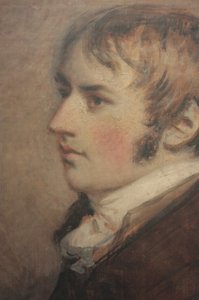
1776–1837, Regatul Unit
John Constable
Tinerețe, Familie și Formare John Constable s-a născut în anul 1776 în satul East Bergholt, din Suffolk. Fiul al doilea al lui Golding și Ann (Watts) Constable, el a crescut într-un mediu definit de activitatea economică a familiei sale. Tatăl său, un comerciant prosper de cereale și cărbune, deținea Flatford Mill. Această legătură strânsă cu râul și cu comerțul local însemna că ritmurile apei și mișcarea mărfurilor erau parte integrantă din viața cotidiană a căminului său.
Despre John Constable Lucrări remarcabile ale lui John Constable
Alte lucrări ale lui John Constable
 Carul cu fân1821
 Vederea Catedralei Salisbury de pe domeniile Episcopului1823
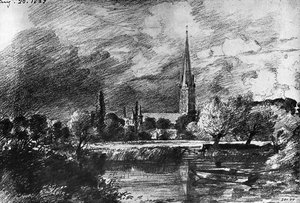 Salisbury cathedral
 Moara Flatford (Scenă de pe un râu navigabil)1817

Eseuri despre Cottage, Rainbow, Mill
 British Romantic paintersIn 1821, John Constable captured the shifting light of the Dedham Vale. See how his brushwork redefined the English countryside.
 Mastering the English Landscape: The Top 25 Artworks by John ConstableBorn in 1776 in East Bergholt, Constable rejected classical ideals to capture the atmospheric truth of the Suffolk sky. Compare his top 25 …
 The Soul of the Stour: Bringing the Timeless Beauty of John Constable’s English Landscapes into Your HomeTransform your home with the serene beauty of John Constable’s English landscapes. Discover exquisite, hand-painted oil reproductions and b…