
 Previzualizare
 Trimite prin felicitare
 Distribuie
 Detalii despre lucrare
 Ghid
Ghid

 Descarcă imaginea
 Produse similare
 Radiografie
 Galerie foto
 Q&A
Q&A Statistici
Cattle-driver. Seville

- 105.0 x 75.0 cm


 Vezi mai mult
Giclée / Imprimare artistică
Printuri giclée sau pe canvas de calitate muzeală, cu proces de producție rapid și opțiuni flexibile de finisare. ( Comandă pictură realizată manual Comută pe Imagine Digitală)




P118B lei10

P118H lei10

P118W lei10

P438Z lei10

P508JH lei12

P508YH lei12

P805H lei10

P805Z lei10

P919BZ lei10

P919G lei10

P919XJ lei10

P959ZH lei10

P968JZ lei12

W106C lei8

W218G lei10

W218JH lei8

W218Y lei10

W307PJ lei10

W316G lei10

W316PJ lei8

W316Y lei10

W398PJ lei8

W4111J lei10

W500HY lei15

W500JH lei15

W692G lei12

W849H lei8

W940BG lei15

W953PJ lei8




Alegeți dintre dimensiunile noastre prestabilite, care respectă proporțiile originale ale operei de artă.

Introduceți lățimea și înălțimea necesare pentru a se potrivi ramei sau peretelui dumneavoastră. O printare poate fi doar tăiată, niciodată extinsă dincolo de dimensiunea imaginii originale, astfel încât o dimensiune cu o formă diferită va pierde o parte din imagine. Vă trimitem o simulare digitală pentru aprobare înainte de a imprima orice. Imaginea afișată pe această pagină nu prezintă tăierea reală — doar simularea arată acest lucru.
Livrare în întreaga lume () în 2 săptămâni, în loc de cele 4/5 săptămâni standard. (2 Noiembrie)

Livrare expres gratuită la nivel mondial

Pânză de in de înaltă calitate

Asigurare completă pentru transport

Garanție de rambursare a taxelor vamale

Garanția fidelității culorilor

Politica de retur în 100 de zile (doar pentru defecte de fabricație)

Garanție de rambursare 100%

Ofertă pentru comenzi multiple
 Opțiunea cu sticlă este disponibilă doar pentru dimensiuni de sub 110 cm

Cattle-driver. Seville
Giclée / Imprimare artistică
Dimensiune reproducere
-


Preț total calculat
lei 380
A Moment Captured: The Essence of Andalusian Pastoral
Joaquin Sorolla’s “Cattle-driver. Seville,” painted in 1914, isn't merely a depiction of a rural scene; it’s an immersion into the very soul of Andalusia. Sorolla, a master of capturing light and movement, transforms a simple landscape – a cattle driver leading his charges through sun-drenched fields – into a vibrant testament to Spanish life. The painting immediately draws the eye with its luminous quality, a hallmark of Sorolla’s signature style. He eschewed dark, brooding tones in favor of an explosion of color, utilizing broken brushstrokes and layering glazes to create an almost palpable sense of warmth and vitality. It's as if he’s bottled the very essence of the Andalusian sun.
The Painter’s Process: From Sketch to Masterpiece
Sorolla's meticulous preparation is evident in the numerous preparatory sketches that accompanied “Cattle-driver. Seville.” He spent weeks studying the landscapes around Seville, from the vineyards of El Cuco to the bustling streets of Jerez and the coastal views of Cadiz, seeking the perfect light and composition. These studies weren’t simply exercises; they were crucial to understanding the interplay between man and nature, a theme central to Sorolla's work. The final painting reflects this deep engagement with its subject matter – the figures are integrated seamlessly into the landscape, almost dissolving into the golden hues of the afternoon sun.
- Technique: Sorolla employed an *alla prima* technique, working directly onto the canvas without extensive underpainting. This allowed him to capture the fleeting effects of light and shadow with remarkable immediacy.
- Color Palette: The painting is dominated by warm earth tones – ochres, siennas, and yellows – punctuated by vibrant blues and greens that evoke the Andalusian sky and vegetation.
- Brushwork: His brushstrokes are loose and expressive, creating a sense of movement and energy. Notice how he uses short, broken strokes to depict the texture of the cattle’s coats and the swaying grasses.
Symbolism and Context: A Portrait of Rural Spain
“Cattle-driver. Seville” is more than just a picturesque landscape; it's a poignant reflection on rural life in early 20th century Spain. The cattle driver, a figure deeply rooted in Spanish tradition, embodies the enduring spirit of the land and its people. The scene speaks to the rhythms of agricultural labor, the close relationship between man and animal, and the timeless beauty of the Andalusian countryside. Painted during a period of significant social and political change in Spain, Sorolla’s work offers a glimpse into a world largely untouched by modernity – a world where life was governed by the seasons and the cycles of nature.
A Legacy of Light: Sorolla's Enduring Appeal
Joaquin Sorolla’s “Cattle-driver. Seville” remains one of his most celebrated works, admired for its luminous beauty, dynamic composition, and profound sense of place. It exemplifies his ability to capture the essence of Spanish light and life with unparalleled skill and sensitivity. Reproductions of this iconic painting bring a touch of Andalusian sunshine into any space, evoking memories of warmth, vitality, and the timeless allure of the Spanish countryside. Consider commissioning a high-quality reproduction – a beautiful way to celebrate Sorolla’s enduring legacy.
Întrebări și răspunsuri
Care este dimensiunea de imprimare recomandată pentru "Cattle-driver. Seville" de Joaquín Sorolla?
Pentru "Cattle-driver. Seville", se recomandă o dimensiune de imprimare de Medium. Sunt disponibile și alte dimensiuni, păstrând aceleași proporții.
Pot vedea "Cattle-driver. Seville" de Joaquín Sorolla pe propriul meu perete înainte de achiziție?
„Cattle-driver. Seville” are o previzualizare în realitate augmentată: pagina Previzualizare în AR operei artistice o prezintă în propriul tău spațiu, pe un dispozitiv compatibil.
Pot vedea o imagine cu raze X a lucrării "Cattle-driver. Seville" de Joaquín Sorolla?
Vizualizarea X-Ray a operei "Cattle-driver. Seville" de Joaquín Sorolla este disponibilă pe pagina Raze X a lucrării: o examinare interactivă a imaginii prin unsprezece straturi optice.
Biografie artist
A Life Bathed in Light: The World of Joaquín Sorolla
Joaquín Sorolla y Bastida, a name synonymous with the radiant light and vibrant energy of Spain, was more than just a painter; he was a chronicler of his nation’s soul. Born in Valencia in 1863, Sorolla's early life was marked by tragedy. Orphaned at the tender age of two following a cholera epidemic that claimed both parents, young Joaquín and his sister were raised by their maternal aunt and uncle. This early experience with loss perhaps instilled within him a profound appreciation for the fleeting beauty of life – a sentiment that would permeate his art. Though hardship shadowed his beginnings, it did not dim the spark of artistic talent that quickly became apparent. He received initial instruction in Valencia, demonstrating an aptitude that led to studies under established artists like Cayetano Capuz and José Benlliure, eventually culminating in a four-year grant to study in Rome. It was there, amidst the classical grandeur of Italy, that Sorolla began to forge his unique artistic path, absorbing influences while simultaneously developing a style distinctly his own.From Historical Narratives to Sun-Drenched Realism
Sorolla’s early work reflected the prevailing academic trends of the time – large-scale historical and mythological scenes. He was initially trained in the traditional styles favored by the Spanish Academy, producing works that adhered to established conventions. However, a pivotal shift occurred as he returned to Spain and began to truly observe the world around him. He found himself captivated by the everyday lives of his countrymen, particularly those along the Valencian coast. The intense Mediterranean sunlight, the shimmering sea, and the vibrant energy of the people became his primary subjects. This transition wasn’t immediate; Sorolla continued to explore social realism with works like Sad Inheritance (1899), a powerful depiction of children afflicted by polio bathing in the sea – a painting that garnered significant acclaim but also revealed a darker, more compassionate side to his artistic vision. This work, exhibited at the Universal Exhibition in Paris, brought him widespread recognition and cemented his position as a leading figure in Spanish art. Yet, it was his increasingly focused exploration of light and color, inspired by Impressionism though never fully embracing its tenets, that would define his legacy. He wasn’t merely *depicting* light; he was attempting to *capture* its very essence, the way it danced on water, illuminated skin, and transformed ordinary moments into scenes of extraordinary beauty.Master of Luminism: A Unique Artistic Voice
Sorolla's technique became instantly recognizable – a bravura display of brushwork, characterized by loose, energetic strokes that conveyed movement and atmosphere. He worked *en plein air* whenever possible, directly confronting the challenges of capturing fleeting light conditions. This dedication to painting outdoors resulted in canvases brimming with life and immediacy. His beach scenes, perhaps his most iconic works, are not simply picturesque representations of leisure; they are studies in luminosity, reflections, and the joyful interaction between people and their environment. Paintings like Children on the Seashore and Sewing the Sail exemplify this mastery – figures bathed in golden light, rendered with a remarkable sense of spontaneity and vitality. He wasn’t interested in meticulous detail; rather, he sought to convey the *impression* of reality, prioritizing atmosphere and emotion over precise representation. This approach earned him comparisons to Impressionists like Monet and Renoir, but Sorolla's work possessed a unique Spanish character – a warmth, intensity, and emotional depth that set it apart. The use of broken color and rapid brushstrokes created an effect of shimmering light, as if the sun itself were captured on canvas.Key Achievements & Recognition
- 1892: Gold medal at the National Exhibition in Madrid for Another Marguerite.
- 1894: Acclaimed for The Return from Fishing: Hauling the Boat, acquired by the Musée du Luxembourg.
- 1899: Grand Prix and medal of honor at the Universal Exhibition in Paris for Sad Inheritance.
- 1900-1923: Extensive exhibitions throughout Europe and the United States, establishing international recognition.
- 1912-1928: Commissioned to create Vision of Spain for the Hispanic Society of America (completed posthumously).
- Present Day: Works held in major museums worldwide, including the Museo Sorolla in Madrid.
Legacy and Enduring Influence
By the early 20th century, Joaquín Sorolla was internationally renowned. He exhibited widely throughout Europe and the United States, receiving numerous accolades and commissions. His most ambitious undertaking, Vision of Spain, a series of fourteen monumental murals commissioned by the Hispanic Society of America, remains a testament to his artistic vision and technical skill. Though he suffered a stroke in 1920 that curtailed his painting activity, Sorolla’s influence continued to grow after his death in 1923. His work inspired generations of artists, not only in Spain but around the world. Today, his paintings are held in major museums globally, including the Museo Sorolla in Madrid – a former home transformed into a dedicated space for showcasing his art. Sorolla’s legacy extends beyond his technical brilliance; he captured a specific moment in Spanish history and culture, immortalizing the beauty of its landscapes and the spirit of its people. He remains a master of light, color, and emotion—a painter whose work continues to resonate with audiences today, reminding us of the power of art to illuminate our world.
Joaquín Sorolla
1863 - 1923 , Spania
Detalii rapide
- Artistic Movement Or Style: Luminism, Impressionism
- Artists Or Movements Influenced By This Artist: ['Sorolla a influențat']
- Artists Who Influenced This Artist:
- Pradilla
- Bastien-Lepage
- Menzel
- Date Of Birth: 27 februarie 1863
- Date Of Death: 10 august 1923
- Full Name: Joaquín Sorolla y Bastida
- Nationality: Spaniol
- Notable Artworks:
- Another Marguerite
- Return de la pêche
- Héritage triste
- Place Of Birth: Valencia, Spania
Articole similare

Capturing Sunlight: The Radiant Magic and Impressionist Brilliance of Joaquín Sorolla's Masterpieces
Embark on a visual journey through the radiant sunlight of Joaquín Sorolla's masterpieces. Discover the brilliance of Spanish Impressionism and learn how to bring this luminous legacy into your home with museum-quality, hand-painted oil reproductions from OriginalUniqueArt.

Peisaje Romantice Iconice: 10 Capodopere Artistice pentru Decorul de Lux
Descoperă 10 capodopere romantice iconice de Caspar David Friedrich, Turner și alți maeștri. Explorează istoria artei, emoțiile din peisaje și găsește tablouri canvas perfecte pentru decorul tău pe OriginalUniqueArt.com!

John Constable: Cele Mai Frumoase 25 de Capodopere – Artă Clasică pentru Decorul Casei Tale
Descoperă cele mai frumoase 25 de picturi ale lui John Constable, maestru al peisajului englezesc! Explorează stilul romantic, Dedham Vale și capodopere precum The Hay Wain. Reproduceri artă clasică pentru decorul casei tale – OriginalUniqueArt.com.
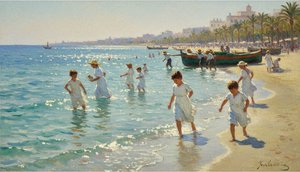
Joaquín Sorolla: Capturing Spanish Light & Life – A Legacy of Impressionism
Explore the luminous world of Joaquín Sorolla, Spanish master of Impressionism. Discover his life, techniques & legacy – a guide for art collectors and enthusiasts. Invest in timeless beauty.

Evocations of Place: A Historical Journey Through Landscape Art
Explore the rich history of landscape art with OriginalUniqueArt. Discover renowned artists, movements like Impressionism & Romanticism, and expert guidance for collecting timeless pieces. Find your perfect serene escape today!


