
 Previzualizare
 Trimite prin felicitare
 Distribuie
 Detalii despre lucrare
 Ghid
Ghid

 Descarcă imaginea
 Produse similare
 Radiografie
 Galerie foto
 Statistici
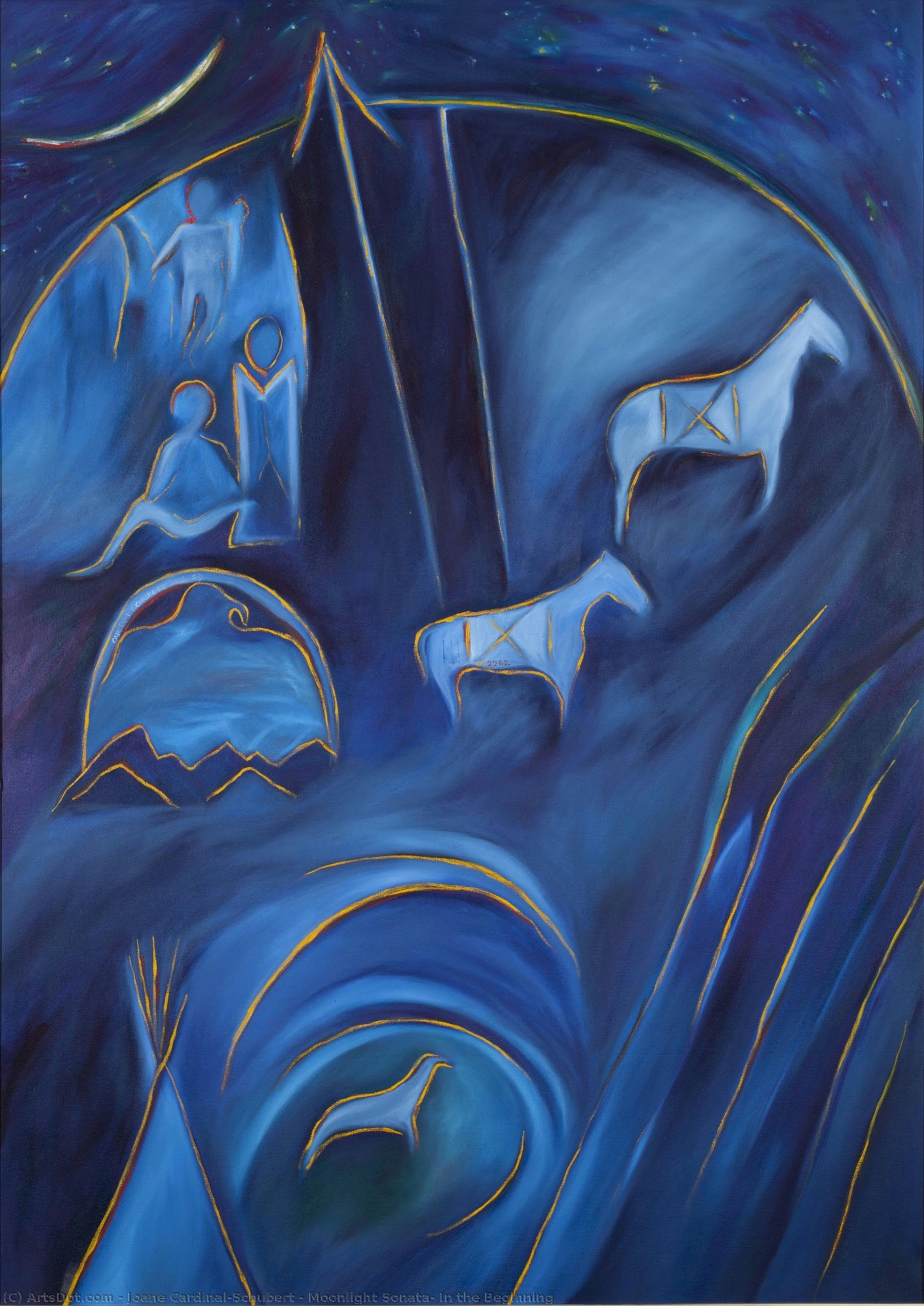
Moonlight Sonata: In the Beginning
 1989
1989 171.0 x 122.0 cm
 Alberta Foundation for the Arts
 Vezi mai mult
Lucrarea de artă afișată pe această pagină este protejată de legile privind drepturile de autor, ceea ce înseamnă că nu putem crea sau vinde în mod legal o reproducere identică. Această protecție este garantată prin acorduri internaționale, precum Convenția de la Berna și de legile naționale, inclusiv cele prevăzute de Legea dreptului de autor din S.U.A. – Titlul 17. Toate drepturile rezervate. Orice reproducere neautorizată este interzisă.
Această metodă respectă pe deplin reglementările privind drepturile de autor, deoarece nu implică copierea sau duplicarea operei protejate. În schimb, este o reinterpretare creativă – o pictură nouă, influențată de original, dar care nu este identică cu acesta.
Giclée / Imprimare artistică
Printuri giclée sau pe canvas de calitate muzeală, cu proces de producție rapid și opțiuni flexibile de finisare. ( Comandă pictură realizată manual Comută pe Imagine Digitală)




































Alegeți dintre dimensiunile noastre prestabilite, care respectă proporțiile originale ale operei de artă.

Introduceți lățimea și înălțimea necesare pentru a se potrivi ramei sau peretelui dumneavoastră. O printare poate fi doar tăiată, niciodată extinsă dincolo de dimensiunea imaginii originale, astfel încât o dimensiune cu o formă diferită va pierde o parte din imagine. Vă trimitem o simulare digitală pentru aprobare înainte de a imprima orice. Imaginea afișată pe această pagină nu prezintă tăierea reală — doar simularea arată acest lucru.
Livrare în întreaga lume () în 2 săptămâni, în loc de cele 4/5 săptămâni standard. (26 Octombrie)

Livrare expres gratuită la nivel mondial

Pânză de in de înaltă calitate

Asigurare completă pentru transport

Garanție de rambursare a taxelor vamale

Garanția fidelității culorilor

Politica de retur în 100 de zile (doar pentru defecte de fabricație)

Garanție de rambursare 100%

Ofertă pentru comenzi multiple
 Opțiunea cu sticlă este disponibilă doar pentru dimensiuni de sub 110 cm

Moonlight Sonata: In the Beginning
Giclée / Imprimare artistică
Dimensiune reproducere
-


Preț total calculat
lei 370
Biografie artist
A Legacy of Resilience: The Art of Joane Cardinal-Schubert
Joane Cardinal-Schubert (1942–2009) was far more than a painter; she was a profound visual storyteller and a fierce advocate for the Kainai Nation. Born in Canoe Lake, Alberta, her life’s work emerged as a powerful response to the systemic erasures of Indigenous history within the Canadian landscape. Growing up amidst the quiet strength of her heritage, she recognized early on how colonial education systems sought to omit the vibrant traditions, languages, and histories of her people. This void became the catalyst for her artistic mission. Rather than accepting the silence imposed by mainstream narratives, Cardinal-Schubert utilized her canvas as a site of reclamation, transforming personal and collective memory into a monumental act of cultural preservation. Her formal training at the Alberta College of Art + Design provided her with a sophisticated technical foundation in painting, printmaking, and multimedia, yet her true education was rooted in the oral histories and spiritual landscapes of the Kainaiwa people. As her career progressed, her work evolved from traditional representations into complex, multi-layered installations that challenged the viewer to confront the uncomfortable realities of colonialism. She mastered the ability to weave together disparate elements—textiles, sculptural components, and photographic prints—to create immersive environments that breathed life into ancestral spirits and historical truths.Symbolism, Narrative, and the Spirit of the Land
The aesthetic language of Cardinal-Schultbert is deeply evocative, characterized by a rich tapestry of symbolism that bridges the gap between the physical and spiritual realms. Her compositions often feature figures that serve as vessels for resilience, embodying the enduring spirit of her ancestors. These figures do not exist in isolation; they are inextricably linked to landscapes that are imbued with profound spiritual significance. In her work, the land is never merely a backdrop but a living participant in the narrative, reflecting the deep-seated connection between Indigenous identity and the natural world. Through her use of mixed media, she achieved a tactile depth that invited viewers into a sensory experience of history. Her paintings often possess a rhythmic quality, where color and form dance to the cadence of mythic storytelling. By integrating sculptural elements and textiles, she broke the boundaries of the two-dimensional plane, mirroring the way Indigenous culture is lived through movement, craft, and ceremony. This approach allowed her to address themes of sovereignty and identity with a complexity that transcended simple protest, offering instead a nuanced celebration of survival and continuity.Historical Significance and Artistic Achievement
The impact of Joane Cardinal-Schubert extends well beyond the borders of the gallery space. As an artist-activist, she utilized her platform to spark essential dialogues regarding Indigenous sovereignty and the lasting scars of colonial policy. Her work served as a vital bridge, bringing the struggles and triumphs of the Kainai Nation to a global audience and demanding recognition for the truths often suppressed by history books. Her contributions were formally recognized through her induction into the Royal Canadian Academy of Arts, a testament to her standing within the highest echelons of the Canadian art community. Her enduring legacy can be summarized through several key pillars of her contribution to contemporary art:- Cultural Reclamation: She successfully re-centered Kainaiwa history and mythology within the contemporary art discourse, countering colonial erasure.
- Interdisciplinary Innovation: Her mastery of mixed media and installation art expanded the boundaries of Indigenous expression in Canada.
- Artistic Activism: She pioneered a way for fine art to function as a tool for political and social change, addressing themes of sovereignty and justice.
- Spiritual Connection: Her ability to translate the sacred relationship between people and the environment into visual form remains a cornerstone of her oeuvre.

Joane Cardinal-Schubert
1942 - 2009 , Canada
Detalii rapide
- Full Name: Joane Cardinal-Schubert
- Nationality: Canadian
- Date Of Birth: 1942
- Date Of Death: 2009
- Place Of Birth: Canoe Lake, Canada
- Notable Artworks:
- Moonlight Sonata: In the Beginning
- I Dream of Horse / Counterpane
- Looking for the Silver Bullet
- Artistic Movement Or Style: Contemporary Indigenous Art