 Previzualizare
 Trimite
 Distribuie
 Detalii despre lucrare

 Descarcă
 Produse similare
 Radiografie
 Diapozitive automate
 Statistici
Mujer sentada

 Vezi mai mult
Reproducere pictată manual în ulei
Pictură în ulei pe pânză, realizată manual de artiștii noștri la dimensiunea și ramele dorite de dumneavoastră, pe comandă. ( Comută pe Print Comută pe Imagine Digitală)




P118B $10

P118H $10

P118W $10

P438Z $10

P508JH $12

P508YH $12

P805H $10

P805Z $10

P919BZ $10

P919G $10

P919XJ $10

P959ZH $10

P968JZ $12

W106C $8

W218G $10

W218JH $8

W218Y $10

W307PJ $10

W316G $10

W316PJ $8

W316Y $10

W398PJ $8

W4111J $10

W500HY $15

W500JH $15

W692G $12

W849H $8

W940BG $15

W953PJ $8




Alegeți dintre dimensiunile noastre prestabilite, care respectă proporțiile originale ale operei de artă.

Puteți introduce propriile dimensiuni pentru a se potrivi unui anumit cadru sau spațiu. Dacă dimensiunea selectată nu corespunde proporțiilor imaginii originale, vom decupa opera de artă sau vom extinde pictura cu elemente suplimentare pictate manual. O simulare digitală vă va fi trimisă pentru aprobare înainte de începerea producției.
Vă rugăm să rețineți că previzualizarea de pe ecran nu reflectă decuparea sau extinderea reală. Doar macheta va arăta cu exactitate compoziția finală.
Deși sunt disponibile dimensiuni personalizate, vă recomandăm să selectați o dimensiune din lista predefinită pentru a păstra proporțiile originale.
După plasarea comenzii, echipa OriginalUniqueArt.com va contacta clientul prin e-mail pentru instrucțiuni și îi va furniza o previzualizare a machetei
Livrare în întreaga lume () în 3-4 săptămâni, în loc de cele 5 săptămâni standard. (12 Septembrie). Fără compromisuri în ceea ce privește calitatea.

Livrare expres gratuită la nivel mondial

Pânză de in de înaltă calitate

Asigurare completă pentru transport

Garanție de rambursare a taxelor vamale

Garanția fidelității culorilor

Politica de retur de 100 de zile (doar pentru defecte)

Garanție de rambursare 100%

Ofertă pentru comenzi multiple
 Opțiunea cu sticlă este disponibilă doar pentru dimensiuni de sub 110 cm

Mujer sentada
Tehnică de reproducere
Dimensiune reproducere
-


Preț total calculat
$ 300
Joan Miró: Decoding Catalan Dreams
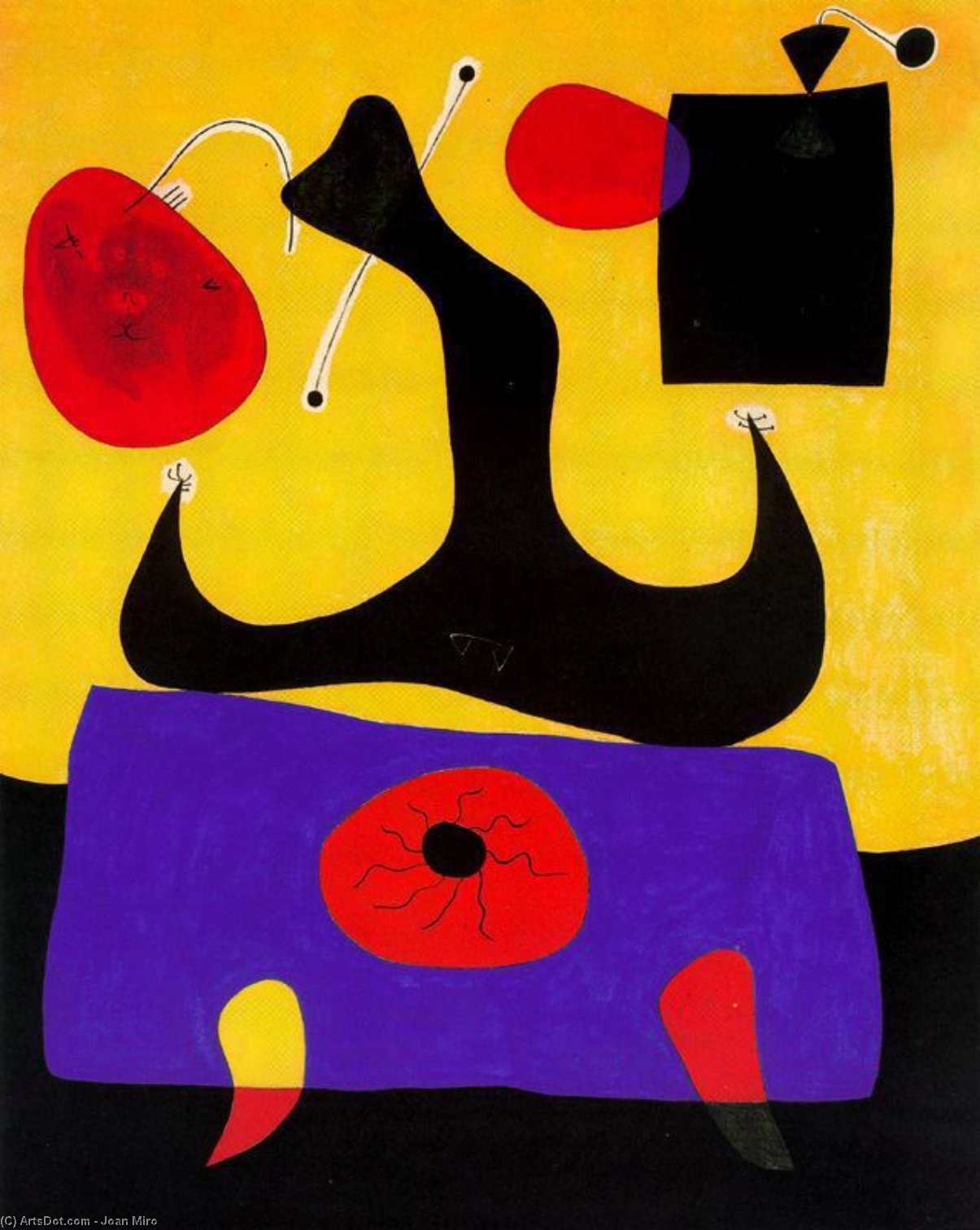
The painting depicts Joan Miró’s iconic “Woman Sitting,” executed in 1948 during his prolific period in Mallorca, Spain. This artwork exemplifies Miró's signature Surrealist style—a deliberate rejection of rational thought and an embrace of the subconscious mind as a conduit for artistic expression. The canvas is dominated by bold swathes of yellow and black, colors that resonate with both the Mediterranean sun and the darkness of Catalan folklore. These hues aren’t merely decorative; they serve as foundational elements in Miró's visual vocabulary, reflecting his preoccupation with primal forces and symbolic representations.- Style: Surrealism – Miró sought to liberate art from the constraints of realism, prioritizing emotion and imagination over accurate depiction.
- Technique: Acrylic paint on canvas—Miró favored acrylics for their vibrancy and durability, allowing him to achieve luminous colors and textured surfaces that convey a sense of spontaneity.
Historical Context: Catalonia Under Franco
Miró’s artistic output flourished during the repressive regime of Francisco Franco (1939-1975), a period marked by censorship and political persecution. Despite facing restrictions on his freedom of expression, Miró continued to produce groundbreaking artwork that defied ideological dogma. “Woman Sitting” embodies this spirit of defiance—a refusal to conform to societal expectations and an unwavering commitment to artistic integrity. The painting’s imagery draws upon Catalan cultural heritage, reflecting a desire to preserve traditions threatened by Francoist authoritarianism.Symbolism: Exploring Inner Landscapes
Beyond its formal elements, “Woman Sitting” operates on multiple levels of symbolic interpretation. The woman herself represents the feminine archetype—a figure associated with nurturing, intuition, and emotional depth. Her posture conveys a sense of quiet contemplation, inviting viewers to engage in their own internal dialogues. The surrounding figures amplify this symbolism, representing aspects of the human psyche—the conscious mind, the subconscious realm, and the spiritual dimension. Miró’s meticulous attention to detail—particularly in rendering the textures of the chair and the bird—underscores his belief that art should strive for a profound connection with the viewer's emotions.Emotional Impact: A Meditation on Resilience
Ultimately, “Woman Sitting” transcends mere visual representation; it communicates an enduring message of resilience and inner peace. Despite facing adversity—both personal illness and political oppression—Miró maintained his artistic vision, producing works that affirm the power of imagination and the importance of confronting one's fears. The painting’s luminous colors and textured surfaces evoke a sense of warmth and tranquility, inviting contemplation and fostering empathy for the human condition. It stands as a testament to Miró’s unwavering belief in the transformative potential of art—a reminder that beauty can emerge from darkness and that dreams can illuminate our path forward.Biografie artist
Un vizionar catalan: Viața și artă lui Joan Miró
Joan Miró i Ferrà, născut în Barcelona în 1893, se impune ca una dintre cele mai semnificative figuri ale artei secolului XX. Călătoria sa nu a fost doar o progresie prin stiluri, ci o explorare a lumilor interioare, traducând vise, amintiri și identitatea catalană pe pânză printr-un limbaj vizual unic, profund poetic. Pornind de la începuturi modeste, marcate de boală și de inițialele rezerve ale părinților sale cu privire la pasiunea sa artistică, Miró a perseverat, condus de nevoia înnăscută de a exprima intangibilul — emoțiile, senzațiile și curentul subconștient care zac sub suprafața realității. Primele sale ani de viață au fost îmbibați în tradițiile Barcelonei, un oraș plin de minuni arhitecturale datorită lui Antoni Gaudí, ale cărui forme organice vor influența subtil abstractizările ulterioare ale lui Miró. Profesia de aurar a tatălui său i-a insuflat aprecierea pentru măiestria meticuloasă, în timp ce peisajul aspru catalan a devenit un motiv recurent și o sursă de inspirație pe tot parcursul carierei sale.Influențe timpurii și drumul către Surrealism
Formarea artistică formală a lui Miró a început la La Llotja din Barcelona, unde și-a perfecționat abilitățile în tehnici tradiționale. Totuși, contactul cu mișcările de avangardă care străbateau Parisul a fost cel care i-a aprins cu adevărat evoluția creativă. Culorile vibrante ale Fauvismului și formele fragmentate ale Cubismului au rezonat profund în sufletul său, determinându-l să se mute la Paris în াহত 1920. Această perioadă s-a dovedit a fi crucială, deoarece a întâlnit artiști precum Pablo Picasso și a început să experimenteze compoziții tot mai abstracte. Cu toate acestea, Miró nu a adoptat pur și simplu aceste stiluri; el le-a sintetizat, făurind o cale către propria sa estetică distinctivă. El a căutat să destileze formele până la esența lor, eliminând detaliile reprezentative în favoarea formelor simbolice și a culorilor evovatoare. Această explorare l-a condus către grupul Surrealist în 1924, aliniindu-l cu artiști precum Max Ernst și Salvador Dalí. Deși a îmbrățișat interesul surrealist pentru subconștient, Miró și-a păstrat o sensibilitate unică — opera sa nu era mai degrabă despre imagini șocante sau simbolism freudian, ci despre crearea unei lumi a formelor jucăușe și a sugestiei poetice.Limbajul simbolurilor: Opere cheie și inovații artistice
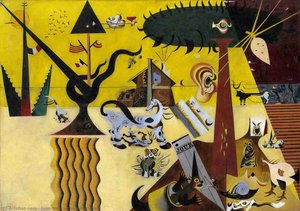
Pe parcursul anilor 1920 și 1930, Miró și-a dezvoltat vocabularul vizual semnătură — un univers populat de forme biomorfice, forme plutitoare și culori vibrante. Fermă (1922), adesea considerată o piatră de temelie a operei sale, exemplifică această tranziție. Nu este doar o reprezentare a vieții rurale, ci o evocare a identității catalane și o reprezentare simbolică a lumii naturale. Spiritul său colaborativ a dus la tehnici inovatoare precum *grattage*, pionierat împreună cu Max Ernst în 1926 pentru designuri destinate baletului lui Sergei Diaghilev, unde texturile erau descoperite prin zgârierea vopselei pe pânză. Seria Interioare Olandeze (1928) a demonstrat capacitatea sa de a reinterpreta maeștrii vechi printr-o lentilă distinct modernă, transformând scene domestice în abstractizări onirice. Pictură (1933), cu culorile sale îndrăznețe și formele simplificate, întipărește explorarea lui Miró asupra subconștientului și respingerea limitelor artistice convenționale. Dincolo de pictură, Miró a experimentat fără teamă cu sculptura, ceramica și gravura, extinzându-și orizonturile creative și demonstrând o versatilitate remarcabilă.Moștenire și influență durabilă
Impactul lui Joan Miró asupra artei secolului XX este incontestabil. El nu a fost pur și simplu un pictor; a fost un vizionar care a provocat însăși definiția expresiei artistice. Opera sa a deschis calea către expresionismul abstract și continuă să inspire artiști din diverse discipline. El a înființat două fundații — Fundació Joan Miró în Barcelona (1975) și Fundació Pilar i Joan Miró în Palma de Mallorca (1981) — asigurându-se astfel că moștenirea sa va dăinui, oferind spații pentru explorare artistică și educație. Pe parcursul lungii sale cariere, a rămas dedicat sfidării limitelor, cuestionării convențiilor și explorării adâncimilor imaginației umane. Arta lui Miró este o mărturie a puterii abstractizării, a simbolismului și a expresiei poetice — o celebrare vibrantă a vieții, a viselor și a spiritului nemuritor al culturii catalane. Opera sa continuă să rezoneze cu publicul din întreaga lume, invitându-ne să intrăm într-o lume în care orice este posibil, iar granițele dintre realitate și fantezie se estompează într-un dans captivant de culoare și formă.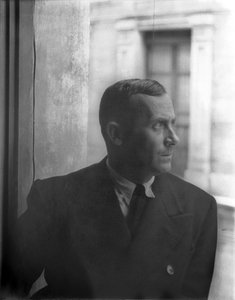
Joan Miró
1893 - 1983 , Spania
Detalii rapide
- Artistic Movement Or Style: Surrealism, Abstract Art
- Artists Or Movements Influenced By This Artist: ['Fauvism']
- Artists Who Influenced This Artist: ['Pablo Picasso']
- Date Of Birth: 1893
- Date Of Death: 1983
- Full Name: Joan Miró i Ferrà
- Nationality: Spaniol
- Notable Artworks:
- The Farm
- Dutch Interiors
- Painting
- Place Of Birth: Barcelona, Spania
Articole similare

Cele mai importante 10 capodopere ale abstracției geometrice | Artă & Decor de lux pe OriginalUniqueArt.com
Descoperă cele mai importante 10 capodopere ale abstracției geometrice! Explorează istoria, artiștii (Mondrian, Kandinsky) și culorile vibrante care au definit arta modernă. Reproduceri de tablouri de lux pe OriginalUniqueArt.com pentru un decor interior rafinat. Explorează colecția online!
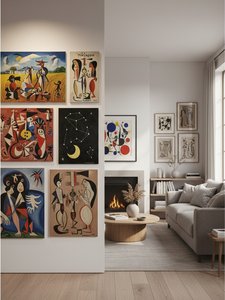
Joan Miró: Cele Mai Iconice 25 De Opere – Artă Modernă pentru Decorul Tău
Descoperă cele mai iconice 25 de opere Joan Miró! Explorează biografiile, tehnicile și simbolismul din spatele picturilor abstracte, suprarealiste și catalane. Găsește inspirație pentru decorul tău cu reproduceri artă de calitate superioară pe OriginalUniqueArt.com.

Surrealism: Cele Mai Importante 10 Capodopere Artistice – OriginalUniqueArt.ro
Descoperă cele mai importante 10 capodopere ale suprarealismului! Explorează poveștile din spatele picturilor lui Dali, Magritte și Miró. Reproduceri de artă de calitate muzeală pentru un decor interior unic pe OriginalUniqueArt.ro.
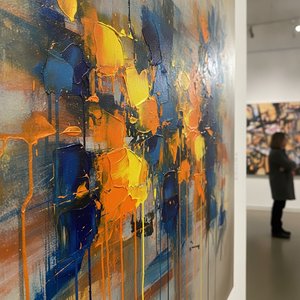
Beyond the Lines: Mastering the High-Impact World of Contemporary Abstraction
Master the high-impact world of contemporary abstraction. Discover how bold colors, textures, and modern movements like Abstract Expressionism can transform your space with premium, high-energy art curated for the design-conscious professional.

Top 10 Capodopere ale Expresionismului Abstract: Artă, Artiști și Decorațiuni de Lux | OriginalUniqueArt.ro
Descoperă Top 10 capodopere ale Expresionismului Abstract! Explorează poveștile lui Pollock, Rothko și De Kooning. Reproduceri de artă de lux & inspirație decor pe OriginalUniqueArt.ro. Găsește pictura perfectă pentru spațiul tău!