

 Previzualizare
 Trimite
 Distribuie
 Detalii despre lucrare

 Descarcă
 Produse similare
 Radiografie
 Diapozitive automate
 Statistici
Untitled (789)
 Vezi mai mult
Achiziționați o imagine digitală de înaltă rezoluție, îmbunătățită, mult superioară previzualizării online.
Fiecare fișier este pregătit cu meticulozitate de specialiștii noștri interni, utilizând instrumente avansate și retușare manuală expertă. Ne asigurăm că fiecare imagine beneficiază de o claritate excepțională, o acuratețe precisă a culorilor și detalii fine.
Fișierul final este livrat prin e-mail în termen de 72 de ore, optimizat pentru utilizare imediată în medii profesionale, editoriale și de imprimare. Aceasta este aceeași calitate în care au încredere studiouri de design, edituri și galerii de top.
Imagine Digitală
Descărcați un fișier la rezoluție înaltă pentru afișare personală, imprimare și proiecte creative. ( Comută pe Print Comandă pictură lucrată manual)
Inclus în fiecare comandă de imagini digitale
Livrare digitală de expertiză, garantată
Când alegeți OriginalUniqueArt.com, nu primiți doar o simplă imagine – primiți o operă de artă digitală îmbunătățită profesional, creată cu precizie și susținută de o garanție de satisfacție. Iată tot ceea ce primești odată cu comanda ta, în mod automat:

Livrare rapidă prin e-mail
Fișierul imaginii digitale la rezoluție înaltă vă va fi trimis prin e-mail în termen de 72 de ore de la finalizarea comenzii – gata pentru utilizare imediată.

Fișier digital optimizat prin IA
Opera ta de artă este optimizată profesional prin intermediul unor instrumente AI avansate și al editării manuale, asigurând un nivel maxim de detalii, claritate și acuratețe a culorilor.

Retransmitere gratuită pe viață
Ai șters sau ai pierdut din greșeală fișierul? Nu îți face griji – ți-l vom retrimite oricând, gratuit.

Fără taxe de import – Întotdeauna
Bucură-te instant de noua ta operă de artă, fără taxe vamale, taxe de import sau costuri de livrare – descărcările digitale sunt întotdeauna fără taxe.

Garanția acurateții culorilor
Asigurăm o reflectare cât mai fidelă a culorilor originale în imaginea ta digitală, prin utilizarea unor instrumente profesionale și a proceselor de gestionare a culorii.

Garanție de satisfacție de 100 de zile
Dacă nu sunteți mulțumit de imaginea digitală achiziționată, o vom revizui sau vă vom returna 100% în termen de 100 de zile - fără nicio întrebare.

Garanție de returnare 100% a banilor
Nu ești mulțumit? Primești rambursarea integrală în termen de 100 de zile de la primirea fișierului digital – fără nicio întrebare.

Reduceri pentru comenzi în volum
Cumpără 3 imagini, economisește 10% - Cumpără 5, economisește 15% - Cumpără 10+, economisește 20%. Ideal pentru proiecte creative, galerii și agenții.
Biografie artist
Early Life and Artistic Foundations
Frank Jeffrey Edson Smart, known universally as Jeffrey Smart, emerged onto the Australian art scene from a childhood steeped in both encouragement and constraint. Born in Adelaide in 1921, his early inclination towards drawing was nurtured by supportive parents who provided him with ample materials – often repurposed posters and calendars became canvases for a budding imagination. Though initially drawn to the precision of architecture, financial realities steered him toward teacher training, a path that nonetheless allowed him to continue developing his artistic skills at the South Australian School of Arts and Crafts. This period was profoundly shaped by the influence of Dorrit Black, a pioneering modernist who introduced Smart to the clean lines and geometric forms that would become hallmarks of his style. His early work reflected this exposure, alongside an engagement with local maritime artist John Giles, painting industrial landscapes around Port Adelaide – scenes that foreshadowed his later preoccupation with urban environments. Even as a young artist, actively participating in the Royal South Australian Society of Arts, Smart demonstrated a unique vision, balancing modernist principles with a distinctly personal sensibility.European Influences and the Forging of a Style
The year 1948 marked a pivotal moment in Smart’s artistic journey: his first extended sojourn to Europe. Studying at La Grande Chaumière in Paris, and later under Fernand Léger at the Académie Montmartre, he immersed himself in the heart of modernist thought. This exposure wasn't merely technical; it was an intellectual awakening. He absorbed the lessons of Cézanne, Piero della Francesca, and Rogier van der Weyden – artists who masterfully manipulated perspective and space to create compelling visual narratives. A subsequent period on the island of Ischia in 1950, shared with fellow Australian painters Donald Friend, Michael Shannon, and Jacqueline Hick, further solidified his artistic direction. It was during this time that Smart began to refine his signature precisionist approach – a style characterized by meticulous detail, geometric forms, and an almost photographic clarity. He wasn’t simply *representing* the world; he was constructing it with deliberate intention, each element carefully placed within a rigorously ordered composition.Return to Australia and a Transcontinental Life
Upon returning to Australia in 1951, Smart seamlessly integrated into the cultural landscape of Sydney. He balanced his artistic pursuits with roles as an art critic for the *Daily Telegraph* and appearances on ABC radio and television, becoming a prominent voice in the Australian art world. His teaching position at East Sydney Technical College (later the National Art School) further cemented his influence on a new generation of artists. However, the pull of Europe remained strong. In 1963, he embarked on a permanent relocation, eventually settling in Tuscany, Italy, where he purchased a rural property called “Posticcia Nuova” near Arezzo. This move wasn’t an abandonment of his Australian identity but rather a broadening of his artistic horizons. The Italian landscape, steeped in history and bathed in Mediterranean light, provided a new context for his explorations of form, space, and the human condition. He continued to exhibit widely in Australia throughout his life, maintaining a strong connection to his homeland while embracing the creative freedom offered by his adopted country.Themes, Technique, and Lasting Legacy
Jeffrey Smart’s paintings are instantly recognizable for their stark beauty and unsettling stillness. His precisionist style isn't merely about technical skill; it’s a means of conveying a particular worldview – one that is often characterized by isolation, alienation, and the dehumanizing aspects of modernity. Urban and industrial landscapes dominate his oeuvre, depicted with an almost clinical detachment. Figures within these scenes are rarely central to the narrative; they appear as detached observers, dwarfed by the imposing structures around them. Smart’s color palette is typically restrained, favoring muted tones and dramatic contrasts that heighten the sense of unease. He famously prioritized “the right shapes in the right colours in the right places” over emotional expression or storytelling, creating paintings that are more about visual experience than narrative content. His work offers a unique perspective on the 20th and 21st centuries, capturing the beauty and anxiety of a rapidly changing world with remarkable clarity and precision. He is considered one of Australia’s most important artists, his iconic imagery resonating deeply with audiences both at home and abroad. His autobiography, “Not Quite Straight,” published in 1996, provides invaluable insights into his life and artistic development. Smart's legacy endures not only through his paintings, which are held in major collections worldwide, but also through the enduring power of his vision – a vision that continues to challenge and captivate viewers today.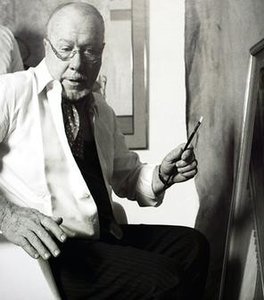
Jeffrey Smart
1921 - 2013 , Australia
Detalii rapide
- Artistic Movement Or Style: Precisionism
- Artists Who Influenced This Artist:
- Cézanne
- Piero della Francesca
- Rogier van der Weyden
- Date Of Birth: 1921
- Date Of Death: 2013
- Full Name: Jeffrey Smart
- Nationality: Australian
- Notable Artworks:
- Untitled (448)
- Untitled (727)
- Untitled (406)
- Place Of Birth: Adelaide, Australia