Odalisque
Reproducere manuală în ulei
Pictură în ulei pe pânză, pictată manual, la dimensiunea și ramele dorite de dumneavoastră, realizată la comandă de artiștii noștri. ( Comandă versiunea tipărită
Comută la imagine)
P118B $10
P118H $10
P118W $10
P438Z $10
P508JH $12
P508YH $12
P805H $10
P805Z $10
P919BZ $10
P919G $10
P919XJ $10
P959ZH $10
P968JZ $12
W106C $8
W218G $10
W218JH $8
W218Y $10
W307PJ $10
W316G $10
W316PJ $8
W316Y $10
W398PJ $8
W4111J $10
W500HY $15
W500JH $15
W692G $12
W849H $8
W940BG $15
W953PJ $8
Alegeți dintre dimensiunile noastre prestabilite, care respectă proporțiile originale ale operei de artă.
Puteți introduce propriile dimensiuni pentru a se potrivi unui anumit cadru sau spațiu. Dacă dimensiunea selectată nu corespunde proporțiilor imaginii originale, vom decupa opera de artă sau vom extinde pictura cu elemente suplimentare pictate manual. O simulare digitală vă va fi trimisă pentru aprobare înainte de începerea producției.
Vă rugăm să rețineți că previzualizarea de pe ecran nu reflectă decuparea sau extinderea reală. Doar macheta va arăta cu exactitate compoziția finală.
Deși sunt disponibile dimensiuni personalizate, vă recomandăm să selectați o dimensiune din lista predefinită pentru a păstra proporțiile originale.
După plasarea comenzii, echipa OriginalUniqueArt.com va contacta clientul prin e-mail pentru instrucțiuni și îi va furniza o previzualizare a machetei
Livrare în întreaga lume () în 3-4 săptămâni, în loc de cele 5 săptămâni standard. (5 August). Fără compromisuri în ceea ce privește calitatea.
Livrare expres gratuită la nivel mondial
Pânză de in premium
Asigurare completă pentru transport
Garanție de rambursare a taxelor vamale
Garanția fidelității culorilor
Politica de retur în 60 de zile (doar pentru defecte)
Garanție de rambursare 100%
Reducere pentru comenzi multiple
Odalisque
Tip de reproducere
Dimensiuni reproducere
-
Preț total
$ 300
Descriere operă
A Vision of Exotic Grace: Jean-Joseph Benjamin Constant’s Odalisque
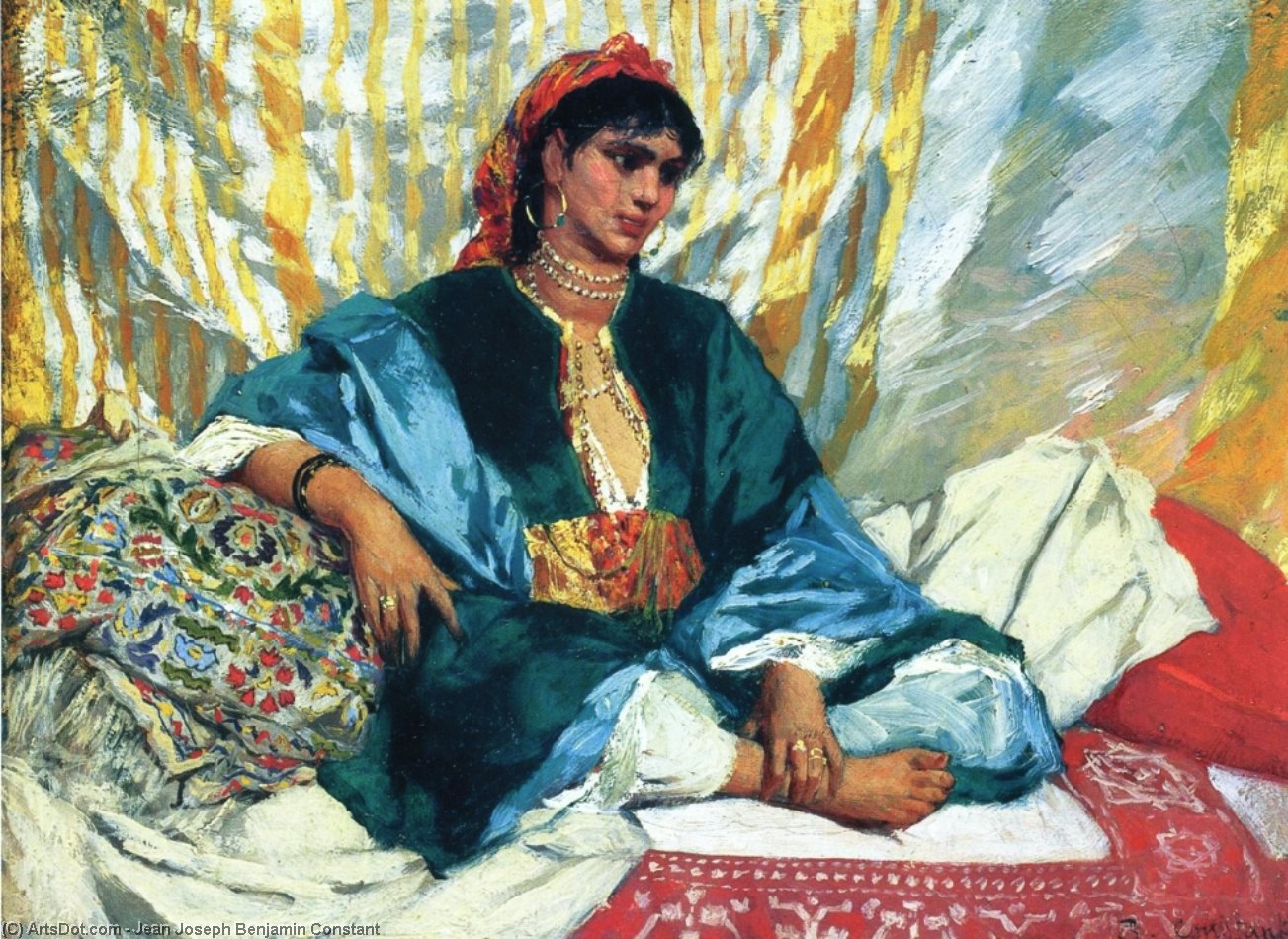
The painting “Odalisque” by Jean-Joseph Benjamin-Constant stands as a quintessential emblem of Orientalism—a movement that captivated European artists and intellectuals throughout the late 19th century. More than just a depiction of beauty, it embodies a complex interplay of artistic convention and Romantic fascination with the sensual allure of Ottoman culture. Created in 1880, this masterpiece resides within the Baltimore Museum of Art’s collection, offering visitors an opportunity to immerse themselves in Constant's masterful execution and profound artistic vision.- Artist’s Background: Jean-Joseph Benjamin-Constant (1845–1902) emerged from the École des Beaux-Arts in Toulouse, where he honed his skills under Alexandre Cabanel—a lineage steeped in classical tradition. However, Constant's artistic trajectory took an extraordinary turn during his voyage to Morocco in 1872, sparking a lifelong devotion to capturing the exotic splendor of the Orient.
- Style and Technique: Employing oil on canvas, Constant skillfully blended academic precision with Romantic sensibilities. His brushstrokes are deliberate yet fluid, conveying both textural detail and an ethereal quality that elevates the scene beyond mere representation. The artist’s meticulous attention to light and shadow creates a palpable atmosphere of intimacy and contemplation.
- Subject Matter: At its core, “Odalisque” portrays a woman reclining gracefully on a bed or couch—a motif prevalent in Orientalist art. This pose harkens back to depictions of Venus and Aphrodite in classical sculpture, symbolizing feminine beauty and idealized repose. The woman is adorned in a sumptuous blue dress accented by a vibrant red scarf, reflecting the opulent fabrics favored in Ottoman harems.
- Symbolism: Beyond its aesthetic appeal, “Odalisque” carries symbolic weight. The gold necklace encircling her neck represents wealth and status—a visual shorthand for the privileged lifestyle enjoyed by women within the harem. Furthermore, the subtle gaze of the woman suggests a quiet confidence and awareness, hinting at themes of desire and contemplation.
- Historical Context: Produced during a period of intense European interest in Ottoman culture, “Odalisque” reflects broader anxieties about sexuality and exoticism. It exemplifies the Romantic movement’s preoccupation with emotion and imagination—transforming historical observation into evocative artistic expression.
OriginalUniqueArt.’s Reproduction Expertise
Recognizing the enduring allure of Constant's “Odalisque,” OriginalUniqueArt.com specializes in crafting exceptional handmade oil paintings that faithfully reproduce this iconic artwork. Utilizing premium pigments and meticulous techniques—inherited from a tradition spanning centuries—our artisans meticulously recreate the painting’s luminous colors and intricate details, ensuring that collectors and enthusiasts alike experience its original splendor.Discover More About Jean-Joseph Benjamin Constant
To delve deeper into the life and artistic legacy of Jean-Joseph Benjamin-Constant, visit OriginalUniqueArt.com. Explore his broader oeuvre—spanning portraits, landscapes, and genre scenes—to appreciate the breadth of his creative vision. Furthermore, explore the Baltimore Museum of Art’s collection on OriginalUniqueArt.com to gain invaluable insight into “Odalisque” within its artistic context.A Timeless Masterpiece
“Odalisque” transcends mere visual representation; it embodies a profound exploration of beauty, desire, and the transformative power of art. Its captivating composition—combined with Constant’s masterful command of technique—continues to inspire admiration and provoke contemplation decades after its creation. Experience the artistry of Jean-Joseph Benjamin Constant through OriginalUniqueArt.’s exquisite reproductions—a testament to enduring artistic excellence.Biografie artist
Jean-Joseph Benjamin-Constant: A Master of Exotic Visions
Jean-Joseph Benjamin-Constant, a name synonymous with the captivating allure of Orientalism and the rigorous discipline of academic art, stands as a pivotal figure in 19th-century French painting. Born in Paris in 1845, his artistic journey began within the hallowed halls of the École des Beaux-Arts in Toulouse, under the tutelage of Alexandre Cabanel – an experience that instilled within him a profound respect for classical techniques and a meticulous approach to rendering detail. This foundational period shaped his early works, revealing a natural aptitude for dramatic composition rooted in historical painting, yet it was a transformative voyage to Morocco in 1872 that irrevocably altered the trajectory of his artistic vision, igniting a lifelong passion for the exotic and setting him on a path toward becoming one of the most celebrated Orientalist painters of his time. This journey wasn’t merely a change of scenery; it was an immersion into a world saturated with vibrant colors, unfamiliar customs, and a unique interplay of light – elements that would forever inform his artistic expression.The Moroccan Revelation: Capturing the Soul of the Orient
Upon returning from Morocco, Benjamin-Constant abandoned his previous focus on historical subjects and dedicated himself wholeheartedly to depicting the landscapes, people, and cultural nuances of North Africa. This shift wasn’t a rejection of his earlier training but rather an evolution—a harnessing of his technical skills to capture the sensory richness and emotional depth of this new world. Paintings like “Last Rebels,” “Justice in the Harem,” and “Moroccan Prisoners” quickly garnered attention, not simply for their visual beauty, but for their ability to evoke a sense of atmosphere, emotion, and intrigue. He possessed an extraordinary talent for translating the sights, sounds, and smells of Morocco onto canvas—the scent of spices hanging heavy in the air, the warmth of the North African sun bathing everything in golden light, the intricate patterns of textiles shimmering with color – all came alive under his brush. Beyond these intimate scenes of daily life, Benjamin-Constant also demonstrated a remarkable capacity for grand historical narratives, as evidenced by his monumental canvas “The Entrance of Mahomet II into Constantinople,” a work that showcased his mastery of composition and dramatic lighting and secured him recognition within the Parisian art world. His Orientalist works weren’t merely representations of a foreign land; they were explorations of themes—power, justice, faith, and the human condition – set against a backdrop of breathtaking beauty and profound mystery.Influences and Artistic Development
Benjamin-Constant's artistic development was shaped by a confluence of influences. His early training under Cabanel instilled in him a deep appreciation for classical techniques and a commitment to anatomical accuracy. However, he also drew inspiration from the Romantic movement, particularly the dramatic use of light and color championed by Eugène Delacroix. The influence of Rubens, with his dynamic compositions and rich palette, is also evident in many of his works. Crucially, his time in Morocco acted as a catalyst for artistic transformation, moving him away from purely historical subjects and towards a more subjective and emotionally resonant approach to painting. He studied the local customs, architecture, and people intensely, incorporating these observations into his paintings with remarkable detail and sensitivity. This synthesis of academic training and firsthand experience is what ultimately defined his unique style—a blend of precision and passion, realism and romanticism.Beyond Orientalism: Mural Decoration and Portraiture
Around 1880, Benjamin-Constant’s artistic focus underwent a significant shift. While his Orientalist paintings had established him as a rising star, he began to dedicate himself increasingly to mural decoration and portraiture, demonstrating an impressive versatility and adaptability. This transition wasn't a departure from his artistic principles but rather an expansion of them—a refinement of his skills applied to new mediums and subjects. He brought the same meticulous attention to detail and dramatic flair that characterized his earlier work to these new endeavors. His large-scale paintings, such as “Paris Convening the World” exhibited at the Musée de la Ville, showcased his skill in depicting complex scenes with numerous figures, creating dynamic compositions that drew viewers into a world of bustling activity and civic pride. This ability to handle grand scale and intricate detail led to commissions from some of the most prominent figures of the era—including Pope Leo XIII, Queen Alexandra of the United Kingdom, and Lord John Lumley-Savile – further cementing his reputation as a skilled portraitist capable of capturing not just physical likeness but also the essence of his subjects’ personalities.Legacy and Recognition
Throughout his career, Benjamin-Constant received numerous accolades for his artistic achievements. He was awarded a medal of honor at the Salon in 1896 for “Mons Fils André,” a testament to his enduring skill and innovation. His election to the Institute in 1893 and subsequent appointment as a Commander of the Legion d’Honneur further underscored his standing within the French art establishment. Today, his work is represented in prestigious collections worldwide—including the Metropolitan Museum of Art, the Musée des Augustins in Toulouse, and the U.S. National Gallery of Art in Washington D.C.—ensuring that his artistic vision continues to inspire and captivate audiences for generations to come. Benjamin-Constant’s legacy lies not only in his technical mastery but also in his ability to synthesize academic training with a romantic sensibility. He created compelling works that captured both the grandeur of historical narratives and the alluring mystique of distant lands, establishing himself as an important figure in 19th-century French art. He remains celebrated for his evocative depictions of Orientalist themes and his remarkable versatility as an artist.Jean-Joseph Benjamin-Constant
1845 - 1902 , Franța
Informații rapide
- Artistic Movement Or Style: Orientalism, Academic Art
- Artists Or Movements Influenced By This Artist: ['Watteau']
- Artists Who Influenced This Artist:
- Delacroix
- Cabanel
- Gérôme
- Date Of Birth: 10 Iun 1845
- Date Of Death: 26 Mai 1902
- Full Name: Jean-Joseph Benjamin-Constant
- Nationality: Francez
- Notable Artworks:
- Ultimii Rebeli
- Justiția în Harem
- Prizonieri Maroci
- Intrarea Mahometului II
- Place Of Birth: Paris, Franța


Opțiunea cu sticlă este disponibilă doar pentru dimensiuni sub 110 cm