Meniu
CONSULTAȚIE GRATUITĂ DE ARTĂ
Comandă tipăritul Comandă tipăritulCumpără imaginea Cumpără imaginea TrimiteTrimite
Detalii despre lucrareDetalii despre lucrare Adaugă la favorite Adaugă la favorite DescarcăDescarcă SimilareSimilare RadiografieRadiografie DiaporamaDiaporama

Farmhouse

Discover Jean-Baptiste Oudry’s ‘Farmhouse,’ a quintessential Rococo painting brimming with pastoral charm. Admire the elegant composition, vibrant colors & detailed animal scenes of 18th-century French rural life. Hand-painted reproductions available.

Explore Jean-Baptiste Oudry's impresionante opere de Rococo! Maestru în reprezentarea animalelor și a scenelelor de vânătoare regale, acest artist francez este cunoscut pentru eleganța stilului său și pentru contribuțiile sale semnificative la arta decorativă din epoca lui Ludovic XV.

Reproducere manuală în ulei

Pictură în ulei pe pânză, pictată manual, la dimensiunea și ramele dorite de dumneavoastră, realizată la comandă de artiștii noștri.

P118B $10
P118H $10
P118W $10
P438Z $10
P508JH $12
P508YH $12
P805H $10
P805Z $10
P919BZ $10
P919G $10
P919XJ $10
P959ZH $10
P968JZ $12
W106C $8
W218G $10
W218JH $8
W218Y $10
W307PJ $10
W316G $10
W316PJ $8
W316Y $10
W398PJ $8
W4111J $10
W500HY $15
W500JH $15
W692G $12
W849H $8
W940BG $15
W953PJ $8

Standard
custom
CM
INCH

Alegeți dintre dimensiunile noastre prestabilite, care respectă proporțiile originale ale operei de artă.

lățime
înălțime

Puteți introduce propriile dimensiuni pentru a se potrivi unui anumit cadru sau spațiu. Dacă dimensiunea selectată nu corespunde proporțiilor imaginii originale, vom decupa opera de artă sau vom extinde pictura cu elemente suplimentare pictate manual. O simulare digitală vă va fi trimisă pentru aprobare înainte de începerea producției.
Vă rugăm să rețineți că previzualizarea de pe ecran nu reflectă decuparea sau extinderea reală. Doar macheta va arăta cu exactitate compoziția finală.
Deși sunt disponibile dimensiuni personalizate, vă recomandăm să selectați o dimensiune din lista predefinită pentru a păstra proporțiile originale.

Exemple de elemente ce pot fi modificate: Înlocuiți fața cu fotografia clientului; Adăugați un animal de companie (de exemplu, înlocuiți pisica cu un câine); Includeți un mesaj ascuns în fundal; Schimbați peisajul sau elementele din fundal.
După plasarea comenzii, echipa OriginalUniqueArt.com va trimite clientului instrucțiuni prin e-mail și îi va furniza o previzualizare a machetei

Livrare în întreaga lume () în 3/4 săptămâni, în loc de cele 5 săptămâni standard. (22 Iulie). Fără compromisuri în ceea ce privește calitatea.

why_choose_icon
Livrare expres gratuită la nivel mondial
why_choose_icon
Pânză de in de înaltă calitate
why_choose_icon
Asigurare completă pentru transport
why_choose_icon
Garanție de rambursare a taxelor vamale
why_choose_icon
Garanția fidelității culorilor
why_choose_icon
Politica de retur de 60 de zile (doar pentru defecte)
why_choose_icon
Garanție 100% de rambursare
why_choose_icon
Reducere la comenzi multiple

Preț total

-

reproduction

Farmhouse

Tehnică de reproducere

Dimensiune reproducere

-

Preț total calculat

-

Informații rapide

  • Medium: Oil on canvas
  • Dimensions: 130 x 212 cm
  • Title: Farmhouse
  • Location: Louvre, Paris
  • Year: 1750
  • Artistic style: Elegant, naturalism
  • Influences: Rococo

Test de cunoștințe despre artă

Fiecare întrebare are un singur răspuns corect.

Întrebare 1:
What artistic style is ‘Farmhouse’ by Jean-Baptiste Oudry primarily associated with?
Întrebare 2:
The painting ‘Farmhouse’ depicts a scene set in which historical period?
Întrebare 3:
Which of the following best describes Oudry’s technique in ‘Farmhouse’?
Întrebare 4:
What is prominently featured in the foreground of ‘Farmhouse’?
Întrebare 5:
The painting 'Farmhouse' is currently housed in which museum?

Descriere operă de artă

A Pastoral Dream in Rococo Hues

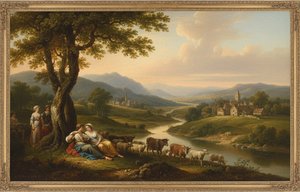
To gaze upon Jean-Baptiste Oudry's "Farmhouse" is to step directly into an idealized vision of 18th-century French rural life. This painting, executed in 1750, transcends a mere depiction of farmstead; it is a carefully orchestrated symphony of light, color, and pastoral tranquility. The Rococo style, with its inherent lightness and elegant exuberance, bathes the entire scene in a soft, almost dreamlike glow. One feels an immediate sense of calm wash over the viewer as the eye wanders from the rustic farmhouse, crowned with its thatched roof, across the fertile expanse of farmland stretching toward the horizon.

Mastery of Light and Detail

Oudry’s technical brilliance is immediately apparent in every meticulously rendered element. His handling of light is nothing short of masterful; it seems to emanate naturally from the scene itself, highlighting the textures of the wood, the softness of the sheep's wool, and the delicate folds of the clouds overhead. The composition is a study in balance, framed beautifully by lush trees that flank both sides, lending an almost theatrical depth to the foreground. Notice the scattered life—the contented cows grazing near the structure, the busy chickens pecking at the earth. These animals are not mere props; they imbue the scene with palpable vitality, suggesting the rhythm of daily existence.

Symbolism of Abundance and Harmony

Beyond its surface beauty, "Farmhouse" carries deep symbolic weight. It speaks to an era's idealized relationship with nature—a time when agricultural bounty was celebrated as a source of both sustenance and aesthetic pleasure. The combination of the thriving farmland, the sheltering farmhouse, and the gentle presence of human figures engaged in labor suggests themes of harmony, prosperity, and settled domestic bliss. Even the inclusion of farm implements hints at a life lived in respectful partnership with the land.

Bringing the Countryside Home

For the collector or designer seeking to infuse a space with timeless elegance, this piece offers unparalleled depth. The warm palette, dominated by rich earth tones punctuated by soft pastels, ensures that "Farmhouse" can anchor any room, whether it be a grand salon yearning for rustic charm or a sunlit breakfast nook desiring an air of cultivated serenity. Owning a reproduction allows one to possess not just a painting, but a tangible piece of 18th-century French artistry—a window into a bygone era of idyllic simplicity and exquisite craftsmanship.


Biografie artist

Jean-Baptiste Oudry: A Life in Art

Jean-Baptiste Oudry, born March 17, 1686, in the vibrant heart of Paris, France, was destined for a life steeped in artistic endeavor—a legacy inextricably linked to his father’s profession as painter and art dealer and his mother's connection to Jean-Baptiste-Michel Papillon, a celebrated engraver. This familial heritage instilled within him an early appreciation for visual artistry and propelled him toward formal training at the Académie de Saint-Luc, where he honed his skills under the watchful eye of Nicolas de Largillière from 1707 to 1712. Largillière’s guidance solidified Oudry's foundational understanding of portraiture and meticulous observation—skills that would serve as cornerstones throughout his illustrious career. Rapidly ascending through the ranks of artistic scholarship, Oudry swiftly transitioned into an assistant professor at Saint Luc in 1714 and achieved full professorship by 1717. This academic position wasn’t merely a symbol of prestige; it fostered continuous intellectual stimulation and provided him with invaluable access to artistic discourse—a crucible where his creative vision would flourish. Initially captivated by portraiture, Oudry embarked on a journey of stylistic exploration that ultimately yielded breathtaking results in the realm of still lifes, particularly depictions of fruits and animals. Simultaneously, he embraced religious subjects, demonstrating versatility and adapting his technique to convey profound spiritual themes. Oudry’s distinctive style—characterized by Rococo elegance, unwavering naturalism, and a playful portrayal of aristocratic leisure—became instantly recognizable. His unparalleled attention to detail—capturing the subtle textures and nuanced characteristics of animal specimens—established him as an innovator whose work transcended mere representation; it breathed life into his subjects with remarkable accuracy. He seamlessly blended painting and design, mastering both mediums to produce canvases and tapestries that epitomized the grandeur and refinement of the era. A pivotal moment arrived when Oudry was entrusted with designing a monumental series of tapestries for the Royal Beauvais Tapestry Manufactory—the Pastoral Amusements. These magnificent artworks transported viewers into idyllic landscapes brimming with hunting scenes, capturing the spirit of aristocratic pursuits and celebrating the beauty of rural life. Further cementing his reputation as the official painter of Louis XV’s royal hunt, Oudry produced “Louis XV Hunting a Deer in the Forest of Saint-Germain” (1730)—a painting that brilliantly conveyed both the majesty of the hunt and the serene splendor of its surroundings. This masterpiece underscored Oudry's mastery of composition and his ability to evoke emotion through visual storytelling. His contribution extended beyond individual paintings; Oudry spearheaded the creation of a second series of tapestries for Gobelins Manufactory—the Royal Hunts of Louis XV—further elevating his stature as a leading tapestry designer. Throughout his prolific artistic output, Oudry tirelessly executed commissions portraying deceased game animals—a testament to his anatomical precision and profound understanding of still life aesthetics. His work stands as an enduring symbol of French artistry during the reign of Louis XV, reflecting not only technical brilliance but also a deep engagement with humanist ideals. Jean-Baptiste Oudry’s influence resonated throughout Europe, particularly thanks to his collaboration with Rubens—a partnership that propelled Flemish art into new heights. Oudry's meticulous observation and masterful technique profoundly impacted subsequent generations of animal painters and tapestry designers, establishing him as an undisputed pioneer whose legacy continues to inspire admiration today. He passed away April 30, 1755, leaving behind a treasure trove of paintings and tapestries—testaments to his extraordinary talent and enduring contribution to the artistic heritage of France.
Jean-Baptiste Oudry

Jean-Baptiste Oudry

1686 - 1755 , Franța

Detalii rapide

  • Artistic Movement Or Style: Rococo
  • Artists Who Influenced This Artist: ['Nicolas de Largillière']
  • Date Of Birth: 17 martie 1686
  • Date Of Death: 30 aprilie 1755
  • Full Name: Jean-Baptiste Oudry
  • Nationality: Franțuzesc
  • Notable Artworks:
    • Les Amusements Champêtres
    • Louis XV hunting a deer in the forest of Saint-Germain
  • Place Of Birth: Paris, Franța
Explorați opere de artă organizate pe teme, stiluri și caracteristici.