 Trimite prin felicitare
 Distribuie
 Detalii despre lucrare
 Ghid
Ghid

 Descarcă imaginea
 Produse similare
 Galerie foto
 Q&A
Q&A Statistici
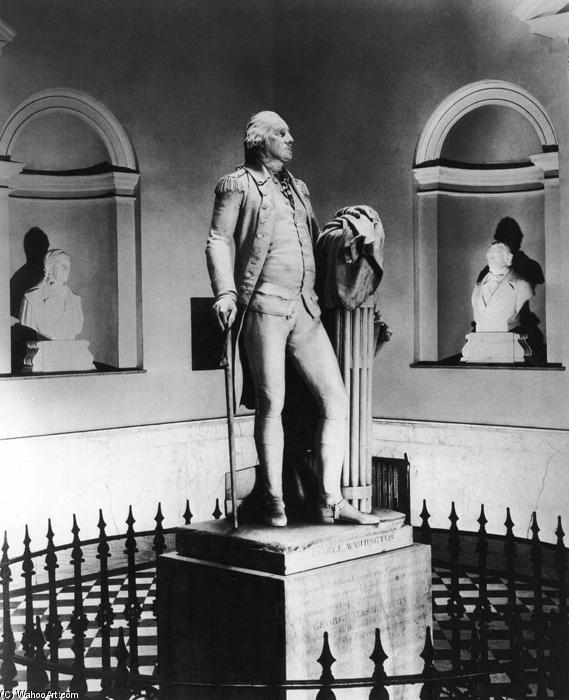
George Washington


 Vezi mai mult
Giclée / Imprimare artistică
Printuri giclée sau pe canvas de calitate muzeală, cu proces de producție rapid și opțiuni flexibile de finisare. ( Comandă pictură realizată manual Comută pe Imagine Digitală)




































Alegeți dintre dimensiunile noastre prestabilite, care respectă proporțiile originale ale operei de artă.

Introduceți lățimea și înălțimea necesare pentru a se potrivi ramei sau peretelui dumneavoastră. O printare poate fi doar tăiată, niciodată extinsă dincolo de dimensiunea imaginii originale, astfel încât o dimensiune cu o formă diferită va pierde o parte din imagine. Vă trimitem o simulare digitală pentru aprobare înainte de a imprima orice. Imaginea afișată pe această pagină nu prezintă tăierea reală — doar simularea arată acest lucru.
Livrare în întreaga lume () în 2 săptămâni, în loc de cele 4/5 săptămâni standard. (1 Noiembrie)

Livrare expres gratuită la nivel mondial

Pânză de in de înaltă calitate

Asigurare completă pentru transport

Garanție de rambursare a taxelor vamale

Garanția fidelității culorilor

Politica de retur în 100 de zile (doar pentru defecte de fabricație)

Garanție de rambursare 100%

Ofertă pentru comenzi multiple
 Opțiunea cu sticlă este disponibilă doar pentru dimensiuni de sub 110 cm

George Washington
Giclée / Imprimare artistică
Dimensiune reproducere
-


Preț total calculat
lei 379
The Stoic Statesman: Jean-Antoine Houdon’s Portrait of George Washington
Jean-Antoine Houdon's 1788 sculpture of George Washington stands as more than just a likeness; it is a profound distillation of the ideals upon which the nascent American republic was founded. Carved from luminous Carrara marble, this monumental figure transcends mere portraiture, embodying Washington’s leadership, intellect, and quiet dignity—qualities that continue to resonate centuries later. The statue resides within the Virginia State Capitol in Richmond, a testament to its enduring significance for the Commonwealth and the nation as a whole.
Houdon, a pivotal figure bridging the Rococo and Neoclassical eras, possessed an extraordinary ability to capture not simply outward appearance but the very essence of his subjects. Unlike many of his contemporaries who favored idealized depictions rooted in classical antiquity, Houdon sought to portray individuals as they truly were – with their strengths, vulnerabilities, and inner complexities. This approach is strikingly evident in Washington’s face: a subtle furrow above the brow hints at the weight of responsibility borne during the Revolutionary War, while the steady gaze conveys an unwavering resolve. The sculptor masterfully rendered the texture of the skin, capturing the lines etched by time and experience, lending the statue an astonishing sense of realism.
A Masterclass in Neoclassical Technique
The sculpture’s execution is a remarkable feat of technical skill. Houdon employed a subtractive method, beginning with a large block of marble and meticulously removing material to reveal the desired form. This process demanded immense patience and precision, allowing for gradual refinement of details—from the delicate folds of Washington's military coat to the powerful musculature of his arms. The use of light and shadow is particularly noteworthy; Houdon expertly manipulates the surface of the marble to create a dramatic interplay of highlights and recesses, adding depth and volume to the figure. The statue’s smooth, polished finish reflects the ambient light, further enhancing its visual impact.
Notably, Houdon's approach was revolutionary for his time. He eschewed the traditional practice of creating preparatory drawings, instead working directly from a life mask and measurements taken of Washington himself. This direct engagement with the subject ensured an unparalleled level of accuracy and immediacy in the final sculpture. The statue’s dimensions—standing nearly seven feet tall—were carefully calculated to convey a sense of authority and gravitas, reflecting Washington's stature as the first President of the United States.
Symbolism and Historical Context
Beyond its technical brilliance, the sculpture is rich in symbolic meaning. Washington’s attire – a military uniform reminiscent of Roman generals—references the ideals of republican virtue and civic duty that underpinned the American Revolution. The fasces, a bundle of rods symbolizing authority and unity, held by Washington, echoes the traditions of ancient Rome, suggesting his role as a leader guiding the nation towards a new era. The inclusion of agricultural implements – a plow and a sheaf of wheat – subtly alludes to Washington’s roots as a planter and farmer, grounding him in the values of hard work and self-sufficiency.
Commissioned during a period of profound political and social change, the statue reflects the hopes and aspirations of a nation forging its own identity. It embodies the spirit of Enlightenment ideals – reason, liberty, and civic virtue—that fueled the American Revolution. The fact that Washington chose to be depicted in contemporary attire, rather than adhering to classical conventions, signaled his commitment to practicality and progress over rigid adherence to tradition.
A Legacy of Inspiration
Houdon’s portrait of George Washington remains one of the most iconic representations of the Founding Father. Its enduring appeal lies not only in its technical mastery but also in its ability to capture the essence of a man who shaped the destiny of a nation. Numerous copies have been produced over the centuries, ensuring that this powerful image continues to inspire and remind us of the values upon which America was founded. Today, it stands as a poignant reminder of leadership, resilience, and the enduring pursuit of liberty.
Întrebări și răspunsuri
Ce utilizare și ce spațiu sunt recomandate pentru "George Washington" de Jean-Antoine Houdon?
„George Washington” este recomandat pentru Statement, iar spațiul ideal de expunere este o Living Room.
Cine a creat "George Washington" și în ce stil este realizată?
Opera „George Washington” este creată de Jean-Antoine Houdon și aparține mișcării Neoclassical Sculpture.
Unde pot vedea o previzualizare pentru „George Washington”?
Pagina de Previzualizare în spațiu pentru „George Washington” vă permite să vizualizați opera de artă înainte de a comanda.
Biografie artist
A Sculptor of the Enlightenment
Jean-Antoine Houdon, born in Versailles in 1741, stands as a pivotal figure bridging the Rococo and Neoclassical eras—a sculptor whose work embodies the intellectual fervor and evolving aesthetic sensibilities of the eighteenth century. His life unfolded amidst dramatic shifts in French society, from the waning opulence of the monarchy through the revolutionary upheaval and Napoleonic ascendance. Yet, Houdon remained remarkably consistent in his artistic vision: to capture not merely a likeness, but the very essence of his subjects—their intellect, character, and inner lives—in enduring marble and bronze. This dedication stemmed from an early aptitude for sculpture, nurtured by formal training at the Académie Royale de Peinture et de Sculpture beginning in 1752 under esteemed sculptors like René-Michel Slodtz, Jean-Baptiste Lemoyne, and Jean-Baptiste Pigalle. His subsequent enrollment at the École Royale des Élèves Protégés from 1761 to 1764 solidified his foundation, culminating in a triumphant win of the Prix de Rome competition in 1761—an award that granted him invaluable study time with classical art firsthand in Italy, an experience profoundly shaping his aesthetic sensibilities.The Art of Verisimilitude and Psychological Insight
Houdon’s sculptures are immediately recognizable for their breathtaking realism and meticulous attention to detail. He wasn't content with simply replicating physical features; he sought to penetrate the surface, revealing the personality and intellect within. This commitment to verisimilitude arose from a deep fascination with anatomy—evident in his celebrated *Muscleman Sideview* bronze sculpture—and an unwavering dedication to observation. Unlike many contemporaries who idealized their subjects, Houdon embraced imperfections, believing they contributed to a more truthful and compelling portrayal. He employed innovative techniques, including taking casts directly from life, allowing him to capture minute details with unparalleled accuracy. This approach was particularly evident in his portrait busts, which became his signature achievement. These weren’t merely static representations; they were dynamic studies of character, imbued with psychological depth and emotional resonance. Houdon's ability to convey not just *how* someone looked, but *who* they were, set him apart. He achieved this through subtle nuances in expression, posture, and the rendering of details like the eyes—often carved with a slight concavity to capture the play of light and suggest inner thought. His meticulous attention to detail extended beyond mere physical representation; he painstakingly studied musculature, bone structure, and facial expressions to convey not only appearance but also temperament and intellect.Immortalizing an Era: A Pantheon of Enlightenment Figures
The breadth of Houdon’s clientele reads as a veritable who's who of the Enlightenment. He immortalized some of the most influential thinkers, writers, politicians, and leaders of his time. His terracotta portrait of Denis Diderot captures the philosopher’s intellectual intensity and unconventional spirit with remarkable sensitivity. Benjamin Franklin, portrayed during his diplomatic mission to France, appears as a man of wisdom and pragmatism, his gaze both shrewd and benevolent. Jean-Jacques Rousseau, sculpted with characteristic empathy, embodies both the passion and melancholy that defined his philosophy. Perhaps most famously, Houdon sculpted Voltaire—creating multiple versions of the celebrated writer, including a dynamic seated figure for the Comédie-Française that captures his wit and intellectual energy. Beyond these intellectual giants, Houdon also received commissions from royalty, notably Louis XVI, and rising political figures like Napoleon Bonaparte. However, it was his sculpture of George Washington, commissioned by the Virginia General Assembly, that secured his place in American iconography. This life-size marble statue—based on meticulous measurements and a life mask taken during Washington’s presidency—became the definitive image of the nation's first president, serving as the model for countless engravings and reproductions, even appearing on U.S. postage stamps for decades. He also sculpted Thomas Jefferson, furthering cementing his legacy across the Atlantic.Technique and Innovation: Mastering Marble and Bronze
Houdon’s sculptural technique was revolutionary for its time. Rejecting traditional methods of idealized representation, he pioneered a new approach rooted in observation and anatomical accuracy. His method involved painstakingly studying cadavers—a controversial practice at the time—to gain an understanding of human musculature and bone structure. He utilized a process known as *L'Écorché*, which involved stripping away layers of flesh to reveal underlying muscle tissue, achieving unprecedented realism. This technique demanded immense patience and skill, but it allowed Houdon to capture not only physical form but also the subtle nuances of expression and emotion. Furthermore, he mastered bronze casting—a challenging medium that required precise calculations and meticulous craftsmanship. His bronzes are renowned for their fluidity and dynamism, capturing movement and conveying a sense of vitality rarely achieved in marble sculpture. He skillfully employed techniques like *lost wax casting*, ensuring exceptional detail and tonal variation.Legacy and Enduring Influence
Jean-Antoine Houdon’s impact on the world of sculpture is undeniable. He elevated portraiture to an art form capable of profound psychological insight and historical documentation. His dedication to realism, combined with his ability to capture the essence of his subjects, set a new standard for sculptural representation. Throughout his life, he received widespread recognition, being named a Chevalier de la Légion d'Honneur in 1804 and a Chevalier de l’Empire in 1809—testaments to his esteemed status within French society. Even in his later years, Houdon continued to create significant works, demonstrating an unwavering commitment to his craft until his death in Paris on July 15, 1828. His sculptures remain highly valued today, not only for their artistic merit but also for the invaluable glimpses they provide into the lives and times of the Enlightenment era. Houdon’s work serves as a powerful reminder of the enduring power of art to capture the human spirit and preserve it for generations to come. His influence can be seen in the works of countless artists who followed, solidifying his position as a master sculptor whose legacy continues to inspire awe and admiration.
Jean-Antoine Houdon
1741 - 1828 , Franța
Detalii rapide
- Artistic Movement Or Style: Neoclassical Realism
- Artists Or Movements Influenced By This Artist: ['Canova']
- Artists Who Influenced This Artist:
- Slodtz
- Lemoyne
- Pigalle
- Date Of Birth: 1741
- Date Of Death: 1828
- Full Name: Jean-Antoine Houdon
- Nationality: France
- Notable Artworks:
- George Washington statue
- Voltaire
- Benjamin Franklin
- Place Of Birth: Versailles, France
Articole similare

The Enduring Allure of Marble in Art History: From Classical Sculpture to Modern Abstraction
Explore the captivating history of marble sculpture from ancient Greece to modern art. Discover renowned artists like Canova & Michelangelo, carving techniques, and investment insights at OriginalUniqueArt.

Georges Braque: Cele Mai Iconice 25 De Opere – Artă Modernă pentru Decorul Tău
Descoperă cele mai importante 25 de opere ale lui Georges Braque, pionier al cubismului! Explorează istoria, tehnicile și semnificația fiecărei picturi. Reproduceri artă de calitate muzeală pentru decorul tău pe OriginalUniqueArt.com.

Georges Seurat: Cele Mai Remarcabile 25 de Opere – Artă, Decorațiuni și Inspirație
Descoperă cele mai frumoase 25 de picturi ale lui Georges Seurat! Explorează arta Pointillismului, culorile vibrante și stilul unic al acestui maestru impresionist. Reproduceri de calitate superioară pentru decor interior rafinat pe OriginalUniqueArt.com.

Timeless Elegance: A Complete Guide to the Sublime Beauty and Artistry of Marble Sculpture
Discover the sublime beauty of marble art through an expert exploration of Renaissance and Neoclassical masterpieces. From the delicate textures of Carpeaux to the grandeur of Sansovino, immerse yourself in a guide to timeless elegance and sculptural perfection.

Top 10 Capodopere din Bronz care au Revoluționat Arta – Inspirație pentru Decor
Descoperă Top 10 sculpturi din bronz care au schimbat istoria artei! Explorează operele lui Rodin, Michelangelo și alți maeștri, tehnicile lor unice și inspirația pentru decorul casei tale. Replici de calitate muzeală pe OriginalUniqueArt.com.


