
 Previzualizare
 Trimite
 Distribuie
 Detalii despre lucrare

 Descarcă
 Produse similare
 Radiografie
 Diapozitive automate
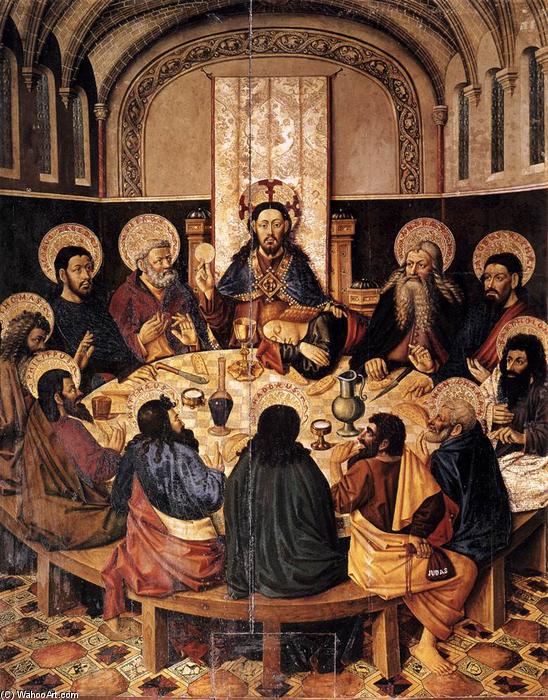
The Last Supper


 Vezi mai mult
Giclée / Imprimare artistică
Printuri giclée sau pe canvas de calitate muzeală, cu proces de producție rapid și opțiuni flexibile de finisare. ( Comandă pictură lucrată manual Cumpără imaginea)




































Alegeți dintre dimensiunile noastre prestabilite, care respectă proporțiile originale ale operei de artă.

Puteți introduce propriile dimensiuni pentru a se potrivi unui anumit cadru sau spațiu. Dacă dimensiunea selectată nu corespunde proporțiilor imaginii originale, vom decupa lucrarea de artă sau vom extinde imaginea cu margini oglindite sau cu o culoare uniformă. Un mockup digital va fi trimis pentru aprobarea dumneavoastră înainte de începerea producției.
Vă rugăm să rețineți că previzualizarea de pe ecran nu reflectă decuparea sau extinderea reală. Doar mockup-ul va arăta cu exactitate compoziția finală.
Deși dimensiunile personalizate sunt disponibile, vă recomandăm să selectați o dimensiune din lista predefinită pentru a păstra proporțiile originale.
Livrare în întreaga lume () în 2 săptămâni, în loc de cele 4/5 săptămâni standard. (16 August)

Livrare expres gratuită la nivel mondial

Pânză de in de înaltă calitate

Asigurare completă pentru transport

Garanție de rambursare a taxelor vamale

Garanția fidelității culorilor

Politica de retur în 60 de zile (doar pentru defecte)

Garanție de rambursare 100%

Ofertă pentru comenzi multiple
 Opțiunea cu sticlă este disponibilă doar pentru dimensiuni de sub 110 cm

The Last Supper
Giclée / Imprimare artistică
Dimensiune reproducere
-


Preț total calculat
$ 80
Biografie artist
Jaume Baco Jacomart: A Valencian Master Bridging Gothic and Renaissance
Jaume Baçó, also spelled Jaume Baco or Jacomart (c. 1410–1461), was a Spanish painter from Valencia whose life remains shrouded in relative obscurity, leaving much of his artistic output to speculation and scholarly reconstruction. Despite the paucity of biographical details, his distinctive style—characterized by an unwavering commitment to early Netherlandish traditions while simultaneously absorbing subtle echoes of Italian Renaissance aesthetics—solidifies his position as a pivotal figure within Valencian art history and a testament to the dynamism of fifteenth-century European painting.
Born around 1410 in Valencia, Baçó’s origins are traced back to a family of artisans, suggesting an upbringing steeped in craftsmanship. Precise information regarding his formative years is scarce; however, he began his artistic career in Valencia itself, honing his skills amidst the flourishing Gothic art scene of the time. By 1442, he accepted a commission from Alfonso V of Aragon, embarking on a journey to Naples where he encountered the burgeoning Renaissance fervor emanating from the papal court.
Naples proved to be a crucible for Baçó’s artistic evolution. The influence of Lorenzo Monaco and other Florentine masters became palpable in his palette and compositional choices—a deliberate departure from the austere formalism of Valencian Gothic, yet firmly rooted in established stylistic precedents. This period witnessed him producing significant works, notably altarpieces that showcased his burgeoning mastery of perspective and color theory.
Returning to Valencia in 1445, Baçó continued to serve as court painter for John II, furthering his artistic endeavors and establishing himself as a respected artist within the region. His subsequent travels to Rome and Tivoli in 1451 cemented his connection with papal patronage and exposed him to the intellectual currents shaping European culture. He returned to Valencia permanently in 1451 and remained there until his death in 1461.
Baçó’s artistic legacy rests primarily on two monumental achievements: the Retable of Saint Anne, now tragically lost, and the Borgia Triptych housed in the Collegiate Church of Xàtiva. These paintings exemplify Baçó's stylistic synthesis—a masterful blend of Netherlandish realism and Italian humanist ideals. Furthermore, his contribution to the Cathedral of Valencia’s decoration – specifically the panels depicting Saint Benedict and Saint Ildephonsus – represents a cornerstone of Valencian artistic heritage.
While Baçó’s oeuvre remains relatively limited compared to contemporaries like Colantonio or Juan Rexach, his influence extended far beyond his immediate productions. He served as mentor to younger artists, shaping the stylistic trajectory of the Valencian school and ensuring that the traditions of early Netherlandish painting persisted in a period increasingly dominated by Renaissance innovation. Jaume Baçó Jacomart’s enduring artistic vision continues to inspire admiration for its expressive power and technical sophistication—a testament to his singular contribution to the visual arts of the fifteenth century.

jaume baço jacomart
1410 - 1461 , Spain
Detalii rapide
- Artistic Movement Or Style: Early Netherlandish Painting
- Artists Or Movements Influenced By This Artist: ['Italian Renaissance']
- Artists Who Influenced This Artist: ['Colantonio']
- Date Of Birth: c. 1410
- Date Of Death: 1461
- Full Name: Jaume Baçó Jacomart
- Nationality: Spanish
- Notable Artworks:
- Retable of Catì
- Borgia Triptych
- Place Of Birth: Valencia, Spain

