

 Previzualizare
 Trimite prin felicitare
 Distribuie
 Detalii despre lucrare
 Ghid
Ghid

 Descarcă imaginea
 Produse similare
 Radiografie
 Galerie foto
 Q&A
Q&A Statistici
Number and Alphabet

 Vezi mai mult
Lucrarea de artă afișată pe această pagină este protejată de legile privind drepturile de autor, ceea ce înseamnă că nu putem crea sau vinde în mod legal o reproducere identică. Această protecție este garantată prin acorduri internaționale, precum Convenția de la Berna și de legile naționale, inclusiv cele prevăzute de Legea dreptului de autor din S.U.A. – Titlul 17. Toate drepturile rezervate. Orice reproducere neautorizată este interzisă.
Această metodă respectă pe deplin reglementările privind drepturile de autor, deoarece nu implică copierea sau duplicarea operei protejate. În schimb, este o reinterpretare creativă – o pictură nouă, influențată de original, dar care nu este identică cu acesta.
Giclée / Imprimare artistică
Printuri giclée sau pe canvas de calitate muzeală, cu proces de producție rapid și opțiuni flexibile de finisare. ( Comandă pictură realizată manual Comută pe Imagine Digitală)




P118B lei10

P118H lei10

P118W lei10

P438Z lei10

P508JH lei12

P508YH lei12

P805H lei10

P805Z lei10

P919BZ lei10

P919G lei10

P919XJ lei10

P959ZH lei10

P968JZ lei12

W106C lei8

W218G lei10

W218JH lei8

W218Y lei10

W307PJ lei10

W316G lei10

W316PJ lei8

W316Y lei10

W398PJ lei8

W4111J lei10

W500HY lei15

W500JH lei15

W692G lei12

W849H lei8

W940BG lei15

W953PJ lei8




Alegeți dintre dimensiunile noastre prestabilite, care respectă proporțiile originale ale operei de artă.

Introduceți lățimea și înălțimea necesare pentru a se potrivi ramei sau peretelui dumneavoastră. O printare poate fi doar tăiată, niciodată extinsă dincolo de dimensiunea imaginii originale, astfel încât o dimensiune cu o formă diferită va pierde o parte din imagine. Vă trimitem o simulare digitală pentru aprobare înainte de a imprima orice. Imaginea afișată pe această pagină nu prezintă tăierea reală — doar simularea arată acest lucru.
Livrare în întreaga lume () în 2 săptămâni, în loc de cele 4/5 săptămâni standard. (28 Octombrie)

Livrare expres gratuită la nivel mondial

Pânză de in de înaltă calitate

Asigurare completă pentru transport

Garanție de rambursare a taxelor vamale

Garanția fidelității culorilor

Politica de retur în 100 de zile (doar pentru defecte de fabricație)

Garanție de rambursare 100%

Ofertă pentru comenzi multiple
 Opțiunea cu sticlă este disponibilă doar pentru dimensiuni de sub 110 cm

Number and Alphabet
Giclée / Imprimare artistică
Dimensiune reproducere
-


Preț total calculat
lei 372
A Symphony of Symbols: Unpacking Jasper Johns’ “Number and Alphabet”
Jasper Johns' "Number and Alphabet," a vibrant explosion of color and form, isn’t merely a depiction of the alphabet; it’s an invitation to delve into the core tenets of Pop Art and the artist’s deeply personal exploration of American identity. Created during a period of significant artistic upheaval – the late 1950s and early 60s – this painting embodies Johns' radical departure from the abstract expressionism that preceded him, embracing instead a direct engagement with recognizable imagery and everyday symbols. The work immediately draws the eye with its audacious palette: bold reds, blues, yellows, greens, and oranges collide across the canvas, creating an energetic visual dance that feels both playful and subtly unsettling.
The technique employed is deceptively simple yet remarkably effective. Johns utilizes a collage-like approach, layering individual letters – some overlapping, others distinct – to construct a dynamic composition. This fragmentation mirrors the breakdown of traditional narratives in post-war America, reflecting a society grappling with rapid change and a shifting sense of self. The deliberate roughness of the application, hinting at both hand-painting and perhaps even stencil techniques, adds another layer of complexity, grounding the work within a tangible reality while simultaneously questioning its representational value.
Decoding the Language of Pop Art
“Number and Alphabet” is a quintessential example of Pop Art’s core principles. Johns wasn't interested in conveying abstract emotions or philosophical ideas; instead, he chose to confront viewers with familiar symbols – the alphabet itself – stripping them of their conventional meaning and presenting them in a new, deliberately jarring context. This act of appropriation was revolutionary at the time, challenging the established hierarchy between “high” art and “low” culture. The inclusion of color is equally significant, echoing the bright, commercial imagery prevalent in advertising and mass media—another hallmark of the Pop Art movement.
The overlapping letters create a sense of visual ambiguity, inviting the viewer to actively participate in deciphering the composition. Is it simply an arrangement of letters? Or does it represent a fragmented language, a distorted alphabet reflecting a fractured American identity? Johns deliberately avoids providing easy answers, forcing us to confront our own assumptions about meaning and representation.
The Artist’s Context: Identity and Iconography
Jasper Johns' artistic journey is inextricably linked to his personal experiences. Born in Augusta, Georgia, in 1930, he carried with him a sense of displacement stemming from his parents’ divorce – an experience that undoubtedly informed his later explorations of identity and belonging within the context of American iconography. His early years were marked by a restless spirit, moving frequently before settling in New York City in 1949, a pivotal moment that propelled him into the heart of the burgeoning art scene. His service during the Korean War further broadened his perspective, exposing him to a world far removed from the artistic circles he sought to join upon his return.
Works like “Number and Alphabet” can be understood as a response to this shifting landscape – a visual meditation on American culture, its symbols, and the complexities of individual identity. Johns’ fascination with everyday objects and familiar imagery—maps, targets, flags—became a recurring theme throughout his career, reflecting a desire to capture the essence of American experience in all its contradictory facets.
A Timeless Reflection: Reproduction and Beyond
OriginalUniqueArt offers exceptional high-quality reproductions of “Number and Alphabet,” allowing you to bring this iconic work into your home or office. The vibrant colors and dynamic composition translate beautifully to a faithful reproduction, capturing the energy and intellectual depth of Johns’ original vision. Whether you're an art enthusiast, a collector seeking to expand your collection, or an interior designer looking for a striking statement piece, this painting offers both aesthetic appeal and profound artistic significance. Consider it not just a decoration, but a window into the mind of one of America’s most influential artists – a testament to the power of symbols and the enduring legacy of Pop Art.
Întrebări și răspunsuri
Unde pot vedea o previzualizare pentru „Number and Alphabet”?
O previzualizare a lucrării "Number and Alphabet" de Jasper Johns este disponibilă pe pagina de Previzualizare în spațiu a acesteia.
Ce tip de operă de artă este "Number and Alphabet" de Jasper Johns?
"Number and Alphabet" de Jasper Johns este clasificată ca WallArt. Această categorie descrie tipul de operă de artă din care este compusă originalul.
Care este artistul și care este stilul din spatele operei "Number and Alphabet"?
Jasper Johns a creat "Number and Alphabet", parte a mișcării Pop Art.
Biografie artist
A Life Painted in Symbols: The World of Jasper Johns
Jasper Johns emerged as a pivotal figure in the landscape of American art, bridging the emotive intensity of Abstract Expressionism with the burgeoning Pop Art movement that would soon redefine artistic boundaries. Born in Augusta, Georgia, in 1930, his early life was marked by a sense of displacement following his parents’ divorce, an experience that perhaps subtly informed his later explorations of identity and belonging within the context of American iconography. His formative years unfolded across various schools before he briefly attended the University of South Carolina, but it wasn't until his move to New York City in 1949 that Johns truly began to forge his artistic path. A period of service during the Korean War further shaped his perspective, exposing him to a world far removed from the burgeoning art scene he was eager to embrace upon his return.Breaking with Abstraction: The Dawn of a New Visual Language
The post-war American art world was dominated by Abstract Expressionism—a style characterized by spontaneous gesture and deeply personal emotional expression. While initially influenced by this movement, Johns felt compelled to move beyond its purely non-representational approach. He sought a new visual language, one that incorporated recognizable imagery not as illustrations but as vehicles for deeper contemplation. This wasn’t simply about *depicting* the world; it was about questioning how we perceive and interpret symbols within it. Key influences guided his departure: Marcel Duchamp's radical readymades challenged conventional notions of art-making, demonstrating that ordinary objects could be elevated to the status of art through their presentation, while the emphasis on materiality in Abstract Expressionism informed Johns’ early techniques. However, it was the everyday objects and potent symbols of American culture—flags, targets, maps, numbers—that truly became central to his artistic vocabulary. He wasn’t interested in escaping representation; he wanted to dissect it, layer it with meaning, and ultimately reveal its inherent ambiguities. This deliberate shift away from pure abstraction signaled a profound change in the way art was conceived and created.Iconic Images: Flags, Targets, and the Language of Symbols
Johns' breakthrough works arrived in the mid-1950s, instantly establishing him as a force to be reckoned with. His paintings of flags, most notably *Flag* (1954–55), were not patriotic declarations but rather investigations into the very nature of representation. Rendered in a semi-abstract style, using encaustic—pigment mixed with hot wax—and collage techniques, these flags weren’t simply images; they were textured surfaces laden with symbolic weight. The image of the flag itself became a complex symbol, representing not just American identity but also notions of order, authority, and even the act of painting itself. The target series, beginning in 1958, further explored this fascination with recognizable forms, questioning perception and meaning through the seemingly straightforward image of a bullseye. *Map* (1961), with its fragmented and layered depictions of the United States, delved into themes of geography, identity, and the complexities of national representation. Works like *False Start* (1959) demonstrated his experimentation with language and visual codes, creating complex compositions that challenged viewers to decipher their underlying meanings. Even *White Flag* (1955), a seemingly simple monochrome canvas, prompted profound questions about absence, surrender, and the very act of seeing. These recurring motifs weren’t presented as literal depictions but rather as invitations to engage in a deeper, more critical examination of visual language.Technique and Materials: Encaustic, Collage, and Layering
Jasper Johns' artistic process was characterized by meticulous attention to detail and a willingness to experiment with various materials and techniques. He frequently employed encaustic—a mixture of pigment and hot wax—to create textured surfaces and layered effects, lending his paintings a tactile quality that contrasted sharply with the smooth surfaces often associated with Abstract Expressionism. Collage played a crucial role in many of his early works, incorporating elements such as newspaper clippings, maps, and photographs to disrupt traditional notions of representation and introduce layers of meaning. Johns’ use of these materials wasn't merely decorative; it was integral to his conceptual approach, forcing viewers to consider the relationship between image, object, and context. He often worked on multiple canvases simultaneously, revisiting and reworking elements over time—a process that reflected his deliberate and contemplative artistic practice. The layering of paint, collage, and other materials created a complex visual tapestry, inviting repeated viewing and encouraging viewers to uncover hidden meanings within each work.Recognition and Enduring Impact
Jasper Johns has received numerous accolades throughout his illustrious career. He was awarded the Golden Lion at the Venice Biennale in 1988, the National Medal of Arts in 1990, and the Presidential Medal of Freedom in 2011—recognizing his profound contribution to American art. His works are held in major museum collections worldwide—the Museum of Modern Art, the Whitney Museum of American Art, the Metropolitan Museum of Art in New York, and Tate Modern in London, to name just a few. Johns’ influence extends beyond individual artworks; he fundamentally shifted the boundaries of artistic practice, paving the way for subsequent generations of artists who embraced pop culture imagery and challenged traditional notions of representation. His legacy continues to inspire artists today, solidifying his position as one of the most important figures in 20th-century art. He remains an active artist, constantly evolving his approach and solidifying his place within the canon of modern masters.
Jasper Johns
1930 - , Statele Unite ale Americii
Detalii rapide
- Artistic Movement Or Style: Pop Art, Abstract Exp.
- Artists Or Movements Influenced By This Artist: ['Andy Warhol']
- Artists Who Influenced This Artist: ['Marcel Duchamp']
- Date Of Birth: 15 mai 1930
- Full Name: Jasper Johns
- Nationality: American
- Notable Artworks:
- Flag
- Target
- Map
- Place Of Birth: Augusta, USA
Articole similare

John Constable: Cele Mai Frumoase 25 de Capodopere – Artă Clasică pentru Decorul Casei Tale
Descoperă cele mai frumoase 25 de picturi ale lui John Constable, maestru al peisajului englezesc! Explorează stilul romantic, Dedham Vale și capodopere precum The Hay Wain. Reproduceri artă clasică pentru decorul casei tale – OriginalUniqueArt.com.

John Singer Sargent: Cele Mai Iconice Capodopere – Artă, Portrete și Decorațiuni de Lux
Descoperă cele mai frumoase 25 de picturi ale lui John Singer Sargent! Portrete elegante, acuarele rafinate și capodopere impresioniste. Află povestea fiecărei opere și găsește inspirație pentru decorul casei tale pe OriginalUniqueArt.com.

Crimson Threads of Narrative: Exploring Symbolism & Representation in Artworks Featuring the Red Dress
Explore the rich symbolism of the red dress in art history! From ancient power displays to iconic portraits like Cézanne’s 'Madame Cezanne', discover the cultural and artistic significance behind this captivating color. Expert analysis & insights.
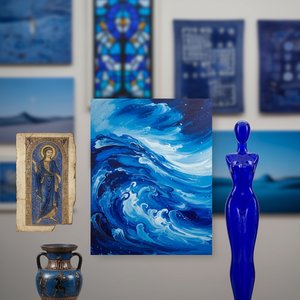
The Allure of Azure: Exploring the Symbolic & Aesthetic Depths of Blue in Art History
Explore the rich history of blue in art! Discover its symbolism, from ancient pigments to modern masterpieces by Kandinsky & Seurat. Uncover the psychological impact and cultural meanings behind this captivating hue.

Top 10 Capodopere Albastre: Picturi Celebre și Inspirație pentru Decor
Descoperă top 10 picturi celebre dominate de nuanțe subtile de albastru! Explorează poveștile din spatele capodoperelor Monet, Renoir și Van Gogh. Inspirație decor interior & reproducere tablouri pe OriginalUniqueArt.com


