

 Vezi în context
 Trimite
 Distribuie
 Detalii
 Ghidul

 Descarcă
 Produse similare
 Radiografie
 Diaporama
 Statistici
A Street Scene in Cologne
 Oil
Oil- WallArt
- Dutch Golden Age
 1684
1684- Early Modern
 32.0 x 41.0 cm
 Colecția Wallace
 Citește mai mult
Reproducere pictată manual în ulei
Pictură în ulei pe pânză, realizată manual de artiștii noștri la dimensiunea și ramele dorite de dumneavoastră, pe comandă. ( Comută pe versiunea Print Treci la imagine digitală)




P118B $10

P118H $10

P118W $10

P438Z $10

P508JH $12

P508YH $12

P805H $10

P805Z $10

P919BZ $10

P919G $10

P919XJ $10

P959ZH $10

P968JZ $12

W106C $8

W218G $10

W218JH $8

W218Y $10

W307PJ $10

W316G $10

W316PJ $8

W316Y $10

W398PJ $8

W4111J $10

W500HY $15

W500JH $15

W692G $12

W849H $8

W940BG $15

W953PJ $8




Alegeți dintre dimensiunile noastre prestabilite, care respectă proporțiile originale ale operei de artă.

Puteți introduce propriile dimensiuni pentru a se potrivi unui anumit cadru sau spațiu. Dacă dimensiunea selectată nu corespunde proporțiilor imaginii originale, vom decupa opera de artă sau vom extinde pictura cu elemente suplimentare pictate manual. O simulare digitală vă va fi trimisă pentru aprobare înainte de începerea producției.
Vă rugăm să rețineți că previzualizarea de pe ecran nu reflectă decuparea sau extinderea reală. Doar macheta va arăta cu exactitate compoziția finală.
Deși sunt disponibile dimensiuni personalizate, vă recomandăm să selectați o dimensiune din lista predefinită pentru a păstra proporțiile originale.
După plasarea comenzii, echipa OriginalUniqueArt.com va contacta clientul prin e-mail pentru instrucțiuni și îi va furniza o previzualizare a machetei
Livrare în întreaga lume () în 3-4 săptămâni, în loc de cele 5 săptămâni standard. (25 Septembrie). Fără compromisuri în ceea ce privește calitatea.

Livrare expres gratuită la nivel mondial

Pânză de in premium

Asigurare completă pentru transport

Garanție de rambursare a taxelor vamale

Garanția fidelității culorilor

Politica de retur în 100 de zile (doar pentru defecte)

Garanție de rambursare 100%

Reducere pentru comenzi multiple
 Opțiunea cu sticlă este disponibilă doar pentru dimensiuni de sub 110 cm

A Street Scene in Cologne
Tip de reproducere
Dimensiune reproducere
-


Preț total
$ 300
A Window into the Golden Age: The Vibrancy of Cologne
In the quiet intimacy of Jan van der Heyden’s 1684 masterpiece, "A Street Scene in Cologne," the viewer is not merely observing a landscape, but is transported across centuries to the beating heart of a burgeoning European metropolis. This exquisite work serves as a quintessential emblem of Dutch Baroque urban landscape painting, capturing with breathtaking clarity the dynamism and palpable energy of seventeenth-century life. As your eyes wander through the composition, you encounter a bustling cityscape dominated by sturdy brick buildings—architectural sentinels that testify to Cologne’s rising importance as a vital commercial hub. The streets are alive with the rhythmic motion of daily existence: merchants tending to their wares, laborers navigating the cobblestones, and passersby laden with bundles, all contributing to a sense of profound, lived-in reality.
The emotional resonance of the piece lies in its ability to freeze a moment of historical transition. Amidst the movement of a horse-drawn carriage traversing the thoroughfare, there is a subtle, poignant layer of symbolism found in the background. The sight of the Cologne Cathedral, captured in its unfinished state, serves as a powerful metaphor for the era’s boundless ambition and the monumental challenges of faith and craftsmanship. For the collector or interior designer, this painting offers more than just aesthetic beauty; it provides a narrative depth that invites contemplation on the passage of time and the enduring spirit of urban progress.
Mastery of Light and Meticulous Detail
Technically, Van der Heyden stands as a titan of precision, a skill likely honed during his early exposure to the reflective intricacies of mirror-making. The painting is a masterclass in the Baroque tradition, particularly through its sophisticated use of chiaroscuro. By skillfully manipulating light and shadow, the artist breathes life into the architectural forms, lending a three-dimensional depth that makes the brickwork and stone appear almost tactile. Every texture, from the ruggedness of the cobblestones to the smooth surfaces of passing carriages, is rendered with an unparalleled level of meticulous detail that was revolutionary for its time.
The composition itself is a triumph of balance and visual storytelling. By centering the horse-drawn carriage and framing the expansive cityscape within the verticality of the surrounding buildings, Van der Heyden creates a structured yet fluid experience. This careful arrangement draws the viewer’s gaze into the depths of the street, creating an immersive atmosphere that feels both grand and accessible. For those seeking to adorn a sophisticated space, this artwork offers a perfect blend of classical structure and lively movement, making it an ideal centerpiece for a gallery-style collection or a refined, traditional interior.
An Enduring Legacy for the Discerning Collector
Beyond its surface beauty, "A Street Scene in Cologne" reflects the remarkable versatility of Jan van der Heyden—a man who was as much an innovative engineer and urban planner as he was a celebrated painter. This duality of spirit is reflected in the painting's structural integrity and its atmospheric lightness. To possess a high-quality reproduction of this work is to hold a piece of the Dutch Golden Age, bringing the intellectual rigor and aesthetic splendor of the seventeenth century into a contemporary setting.
Whether you are an art lover drawn to the historical nuances of the Baroque period or an interior designer looking to infuse a room with a sense of history and prestige, this painting offers unparalleled inspiration. It is a work that does not merely decorate a wall; it enriches a space with the echoes of a vibrant past, offering a timeless window into the soul of a city caught in the beautiful throes of transformation.
Biografie artist
A Pioneer of Urban Landscapes: The Life and Art of Jan van der Heyden
Jan van der Heyden, born in the bustling Dutch town of Gorinchem in 1637, stands as a remarkably versatile figure in the history of art and engineering. His story isn’t simply one of a painter; it's a tale of an innovator who seamlessly blended artistic vision with practical ingenuity, leaving an indelible mark on both the visual arts and urban planning. Born into a family of Mennonites, Van der Heyden’s early life was shaped by his father’s relocation to Amsterdam in 1646 – a move that would irrevocably alter the course of his career and ultimately define his artistic legacy. His formative years likely involved training within the family workshop, possibly guided by his brother Goris, a skilled craftsman specializing in the intricate art of mirrors. This early exposure to precision, detail, and reflective surfaces seems to have subtly permeated Van der Heyden’s later work, contributing to the remarkable clarity and meticulousness that characterize his cityscapes. Some scholars suggest an apprenticeship with Jacob van der Ulft, a respected glass painter from Gorinchem, further honing his draftsmanship and color application skills – techniques initially employed in creating *verre eglomisé*, decorative paintings on glass, a method known for its shimmering depth and intricate detail.From Decorative Arts to Architectural Precision
Van der Heyden’s artistic journey took an unexpected turn as he transitioned from decorative arts towards a specialization that would secure his place in art history: the depiction of townscapes. He emerged as one of the first Dutch artists to dedicate himself almost entirely to this genre, becoming a leading architectural painter of his time. While many of his contemporaries focused on portraits or historical scenes – often commissioned by wealthy patrons – Van der Heyden chose to capture the vibrant energy and intricate details of Amsterdam and other Dutch, Flemish, and German urban centers. His canvases offer remarkably detailed views not only of his adopted city but also of a diverse range of locations, showcasing an impressive breadth of travel and observation. Works like *View of Oudezijds Voorburgwal with the Oude Kerk in Amsterdam* exemplify this dedication to realism, capturing the play of light on brickwork, the textures of cobblestone streets, and the lively atmosphere of 17th-century life with astonishing accuracy. He wasn’t simply documenting buildings; he was conveying a sense of place – the smells, sounds, and rhythms of urban existence. Notably, Van der Heyden didn't limit himself to existing locales; he also created “architectural fantasies,” imaginative compositions blending elements from different structures—a technique that foreshadowed later artistic developments. These works demonstrate a playful creativity alongside his technical mastery, suggesting an artist who was constantly experimenting with form and perspective. Beyond the purely representational, Van der Heyden’s paintings reveal a deep understanding of urban space and its inherent dynamism.An Engineer’s Vision: Innovation Beyond the Canvas
What truly distinguishes Jan van der Heyden from many of his artistic peers is his remarkable ingenuity as an engineer and inventor. He wasn't merely a painter capturing the world; he was actively seeking solutions to real-world problems, most notably in the area of firefighting – a critical concern for densely populated cities like Amsterdam. In 1672, collaborating with his brother Nicolaes – a skilled hydraulic engineer – Van der Heyden devised significant improvements to the fire hose, addressing a longstanding challenge in urban firefighting. This wasn’t a minor adjustment; it was a revolutionary advancement that dramatically increased the efficiency and reach of water delivery. He didn't stop there. Van der Heyden reorganized Amsterdam’s volunteer fire brigade in 1685, implementing more effective strategies and protocols – demonstrating a practical understanding of organizational structure and community responsibility. His dedication culminated in the publication of *Brandspuiten-boek* (Book on Firefighting Equipment) in 1690 – a comprehensive manual that outlined his innovations and provided detailed instructions for firefighters. This work wasn’t just a technical guide; it was a testament to his commitment to public safety, reflecting a deep concern for the well-being of his fellow citizens. Furthermore, he designed and implemented an innovative street lighting scheme for Amsterdam, illuminating the city's streets with strategically placed lanterns – a system that remained in operation for over a century and served as a model for other towns across Europe.Legacy and Lasting Influence
Jan van der Heyden died in 1712, leaving behind a substantial estate that included over seventy of his own paintings – a remarkable testament to both his productivity and the value placed on his work during his lifetime. His only known pupil was his son, Jan, who continued some aspects of his father’s artistic legacy. Van der Heyden's influence resonated through subsequent generations of artists, particularly those specializing in architectural painting. He provided valuable insights into 17th-century urban life and architecture, offering a visual record of cities as they existed during that period – a rare and invaluable resource for historians and art scholars alike. His detailed depictions serve as compelling evidence of the social, economic, and cultural dynamics of Amsterdam and other Dutch cities. Beyond his artistic achievements, Van der Heyden’s innovative approach to townscapes, combined with his practical engineering contributions, cemented his position as a truly unique and multifaceted figure in Dutch history. He wasn't simply an artist capturing the world around him; he was actively shaping it, improving the lives of those who inhabited it. His legacy endures not only through his captivating paintings but also through the enduring impact of his inventions on urban safety and infrastructure – a testament to a life dedicated to both art and service.Key Works
* *View of Oudezijds Voorburgwal with the Oude Kerk in Amsterdam* (c. 1667-1670) * *Still Life with Globe, Books and Chinese Silk* (c. 1669-70) * *Architectural Fantasy* (c. 1670) * *View of Delft* (circa 1670s) * *Huis ten Bosch at The Hague* (circa 1680s)
Jan van der Heyden
1637 - 1712 , Olanda
Informații rapide
- Artistic Movement Or Style: Aurul Dutch
- Artists Or Movements Influenced By This Artist: ['Pictori venetieni']
- Artists Who Influenced This Artist: ['Jacob van der Ulft']
- Date Of Birth: 1637
- Date Of Death: 1712
- Full Name: Jan van der Heyden
- Nationality: Olandez
- Notable Artworks:
- Vizualizare Amsterdam
- Still-Life cu glob
- Fantasie arhitecturală
- Vizualizare Delft
- Place Of Birth: Gorinchem, Olanda
Articole conexe

Epoca de Aur Olandeză: 10 Capodopere Care Au Definit Arta și Decorațiunea Interioară
Descoperiți Epoca de Aur Olandeză prin 10 capodopere Rembrandt, Vermeer și alți pictori olandezi. Aflați poveștile din spatele acestor tablouri baroce iconice și inspirați-vă pentru decorațiuni interioare unice. Explorează colecția completă pe OriginalUniqueArt.com!

Mastering Light & Shadow: A Journey Through the Dutch Golden Age's Luminous Legacy
Embark on a cultural journey through the Dutch Golden Age. Explore the masterful interplay of light and shadow in 17th-century masterpieces, from Rembrandt to Vermeer, and discover how this era of profound realism continues to inspire fine art collectors today.

Rembrandt van Rijn: Cele Mai Frumoase 25 de Capodopere – Artă, Istorie și Decorațiuni Interioare
Descoperă cele mai frumoase 25 de picturi ale lui Rembrandt van Rijn! Explorează capodopere baroce, portrete emoționante și peisaje iconice. Reproduceri de artă de calitate muzeală pentru un design interior rafinat. Descoperă toate operele pe OriginalUniqueArt.com!
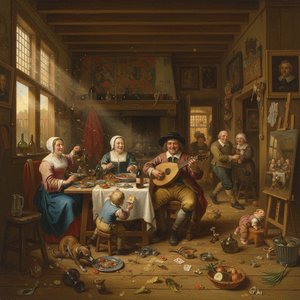
Jan Steen: A Master of Dutch Genre Painting & the Golden Age
Explore the life & art of Jan Steen, a leading Dutch Golden Age painter renowned for his humorous genre scenes & insightful social commentary. Discover his techniques, legacy, and collecting tips.

Golden Light & Dutch Skies: The Timeless Magic of Dutch Golden Age Landscapes
Discover the breathtaking beauty of Dutch Golden Age landscapes. Explore the mastery of light, chiaroscuro, and 17th-century realism through an expert art history lens, celebrating the enduring legacy of the Dutch Masters for discerning collectors and art lovers.