
 Previzualizare
 Trimite
 Distribuie
 Detalii despre lucrare

 Descarcă
 Produse similare
 Radiografie
 Diapozitive automate
The Ford
 Oil On Canvas
- WallArt
- Romanticism
 1672
1672 71.0 x 59.0 cm
 Muzeul de Artă Fine din Budapesta
 Vezi mai mult
Achiziționați o imagine digitală de înaltă rezoluție, îmbunătățită, mult superioară previzualizării online.
Fiecare fișier este pregătit cu meticulozitate de specialiștii noștri interni, utilizând instrumente avansate și retușare manuală expertă. Ne asigurăm că fiecare imagine beneficiază de o claritate excepțională, o acuratețe precisă a culorilor și detalii fine.
Fișierul final este livrat prin e-mail în termen de 72 de ore, optimizat pentru utilizare imediată în medii profesionale, editoriale și de imprimare. Aceasta este aceeași calitate în care au încredere studiouri de design, edituri și galerii de top.
Imagine Digitală
Descărcați un fișier la rezoluție înaltă pentru afișare personală, imprimare și proiecte creative. ( Cumpără print Cumpără pictură lucrată manual)
Inclus în fiecare comandă de imagini digitale
Livrare digitală de expertiză, garantată
Când alegeți OriginalUniqueArt.com, nu primiți doar o simplă imagine – primiți o operă de artă digitală îmbunătățită profesional, creată cu precizie și susținută de o garanție de satisfacție. Iată tot ceea ce primești odată cu comanda ta, în mod automat:

Livrare rapidă prin e-mail
Fișierul imaginii digitale la rezoluție înaltă vă va fi trimis prin e-mail în termen de 72 de ore de la finalizarea comenzii – gata pentru utilizare imediată.

Fișier digital optimizat prin IA
Opera ta de artă este optimizată profesional prin intermediul unor instrumente AI avansate și al editării manuale, asigurând un nivel maxim de detalii, claritate și acuratețe a culorilor.

Retransmitere gratuită pe viață
Ai șters sau ai pierdut din greșeală fișierul? Nu îți face griji – ți-l vom retrimite oricând, gratuit.

Fără taxe de import – Întotdeauna
Bucură-te instant de noua ta operă de artă, fără taxe vamale, taxe de import sau costuri de livrare – descărcările digitale sunt întotdeauna fără taxe.

Garanția acurateții culorilor
Asigurăm o reflectare cât mai fidelă a culorilor originale în imaginea ta digitală, prin utilizarea unor instrumente profesionale și a proceselor de gestionare a culorii.

Garanție de satisfacție de 60 de zile
Dacă nu sunteți mulțumit de imaginea digitală achiziționată, o vom revizui sau vă vom returna 100% în termen de 60 de zile – fără nicio explicație necesară.

Garanție de returnare 100% a banilor
Nu ești mulțumit? Obține o rambursare completă în termen de 60 de zile de la primirea fișierului tău digital – fără întrebări.

Reduceri pentru comenzi în volum
Cumpără 3 imagini, economisește 10% - Cumpără 5, economisește 15% - Cumpără 10+, economisește 20%. Ideal pentru proiecte creative, galerii și agenții.
Descriere obiect de colecție
Jan Siberechts’ “The Ford”: A Pastoral Vision of Elizabethan England
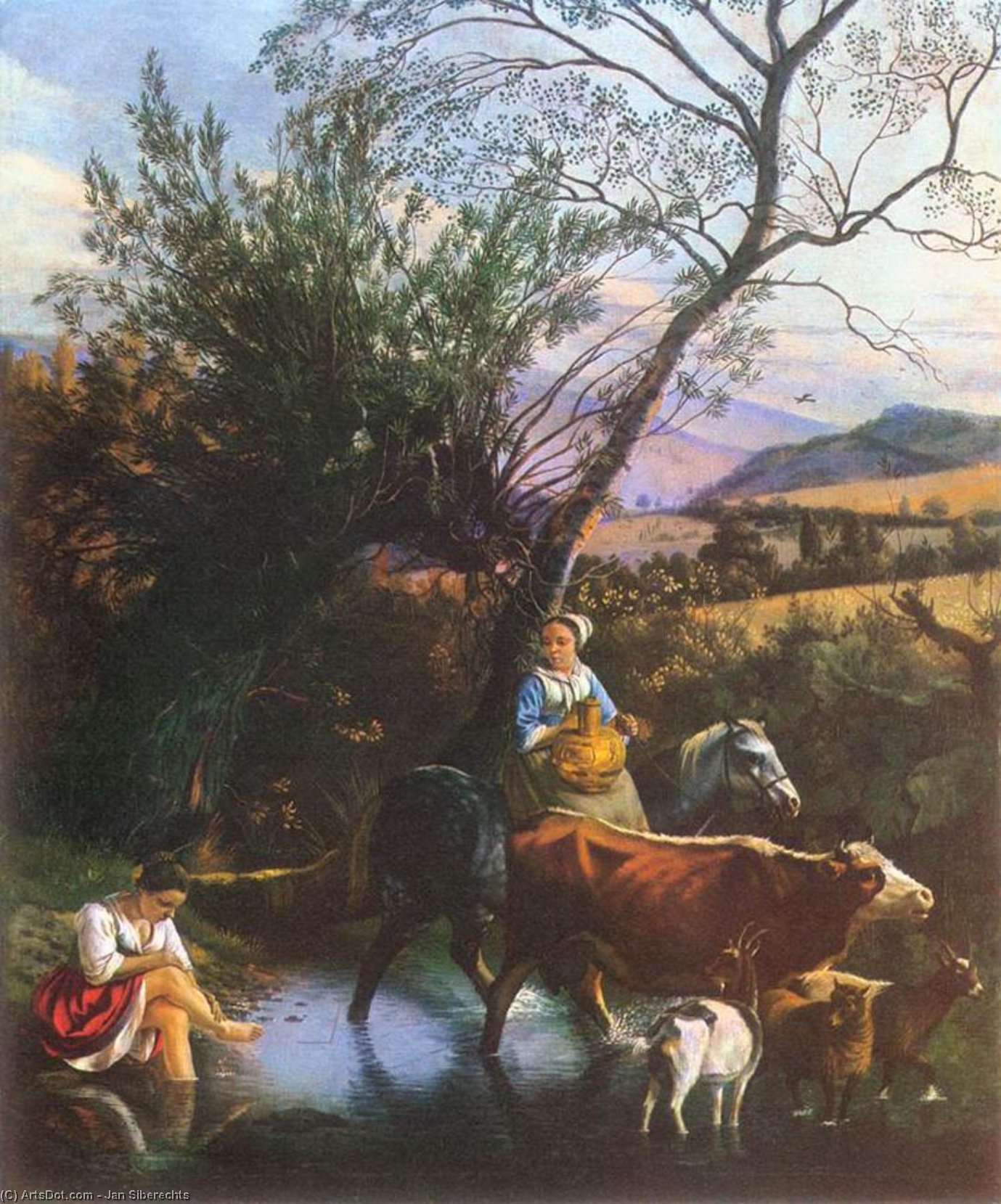
Jan Siberechts' "The Ford" (1672) stands as a testament to the burgeoning landscape tradition in England during the reign of Charles II, skillfully blending Flemish artistic sensibilities with an idealized depiction of rural tranquility. Painted in Antwerp, Belgium, this oil on canvas masterpiece captures a serene scene of pastoral life—a woman carrying water alongside livestock – cows, horses and a goat – nestled within rolling hills leading to distant mountains under a cloudy sky. The artwork’s enduring appeal lies not only in its exquisite detail but also in its profound symbolic resonance, reflecting the Romantic movement's fascination with nature as a source of spiritual contemplation.- Style & Technique: Siberechts employed a characteristic Flemish style—broad brushstrokes layered to build up rich textures and create an atmospheric haze—a technique that prioritizes capturing the essence of light and shadow rather than precise topographical accuracy. The meticulous rendering of foliage, livestock, and figures demonstrates mastery of chiaroscuro, enhancing the painting’s dramatic effect.
- Historical Context: Commissioned during Charles II's Restoration, “The Ford” embodies the revival of classical ideals following Puritan rule. Landscape painting gained prominence as a genre reflecting humanist values—harmony with nature and contemplation of beauty—a deliberate contrast to the austere moralizing tendencies of earlier Protestant art.
- Composition & Perspective: The horizontal lines dominating the hillside emphasize the expansive landscape, while vertical elements – notably the trees – contribute to depth perception. Siberechts skillfully utilizes atmospheric perspective, subtly diminishing colors and details in the background mountains to convey a sense of distance and grandeur.
- Materials: Traditional oil paints on canvas ensured durability and luminosity, preserving Siberechts’ vision for centuries to come.
Biografie artist
A Flemish Vision in England: The Life and Art of Jan Siberechts
Jan Siberechts, born in Antwerp in 1627, stands as a remarkable testament to artistic convergence—a pivotal figure bridging the expressive fervor of Flemish painting with the burgeoning landscape tradition blossoming across the English Channel. His life’s journey is marked by serendipitous encounters, astute patronage, and ultimately, an indelible imprint on British art history. The son of a sculptor also named Jan Siberechts, he imbibed artistic sensibilities from his father's workshop early in life, honing skills that would define his distinctive creative path. By 1648, he achieved master status within the esteemed Guild of Saint Luke in Antwerp—a prestigious recognition signifying his acknowledged proficiency as a craftsman and artist. While definitive documentation remains scarce, art historians posit a possible expedition to Italy during the late 1640s or early 1650s; this formative experience undoubtedly exposed him to Italianate landscape painting’s stylistic hallmarks—classical compositions and atmospheric perspective—influencing his evolving artistic vision.Early Training and Flemish Roots
His initial training centered around mastering sculptural techniques alongside his father, fostering a foundational understanding of form and materiality that would permeate his subsequent paintings. This grounding in Flemish craftsmanship is palpable in his early works, which demonstrate a careful balance between realism and stylistic considerations—a characteristic that distinguishes him from many of his contemporaries. The marriage to Maria-Anna Croes in 1652 provided stability during this period of artistic maturation, allowing Siberechts to refine his craft and explore diverse inspirations. Notably, he drew considerable influence from Dutch masters like Nicolaes Berchem and Karel Dujardin—artists celebrated for their pastoral scenes and masterful manipulation of light—whose techniques resonated deeply with his artistic inclinations. These painters’ depictions of tranquil landscapes populated by idealized figures instilled in Siberechts a desire to convey beauty and serenity through visual representation.The Dawn of English Landscape
The 1660s marked a decisive turning point in Siberechts’ artistic trajectory—a moment of profound stylistic transformation that propelled him toward a uniquely personal vision. He decisively shifted his focus towards the landscapes of Flanders, capturing the rhythms of rural life with unparalleled sensitivity. This wasn't merely topographical accuracy; it was an immersive portrayal imbued with emotional depth—scenes populated by robust figures—often women engaged in everyday tasks—dressed in brilliantly colored clothing that illuminated the verdant vistas. Siberechts skillfully employed water reflections, creating visual echoes and layering textures to heighten the atmospheric drama of his canvases. His compositions mirrored those championed by David Teniers the Younger, yet Siberechts infused them with a broader scope and an unparalleled mastery of light and color—a hallmark of his distinctive style.A Patron’s Recognition and Artistic Flourishing
Recognition arrived swiftly in 1670 when George Villiers, the Second Duke of Buckingham, encountered Siberechts’ work during a visit to Antwerp—an encounter that proved transformative for both artist and patron. Recognizing Siberechts' exceptional talent, Buckingham extended an invitation for him to travel to England—a gesture that irrevocably altered his artistic destiny. Embracing this opportunity, Siberechts accepted, embarking on a new chapter in a foreign land where he would solidify his reputation as a landscape painter of distinction. His commissions from the aristocracy—particularly the monumental decoration of Cliveden House—provided him with financial security and showcased his versatility as an artist.Legacy: Shaping British Landscape Painting
Siberechts’ contribution to English art history is undeniable—he established himself as the “father of British landscape,” pioneering a style that would profoundly influence generations of artists who followed. His topographical views transcended mere documentation; they were artistic interpretations imbued with beauty and conveying a sense of place—a characteristic that continues to captivate viewers today. He skillfully blended Flemish realism with Italianate ideals, creating canvases that captured the essence of both rural Flanders and stately English estates. Approximately one hundred works attributed to Siberechts survive—a remarkable testament to his prolific output and artistic evolution—offering invaluable insight into his creative process and stylistic development. His enduring legacy resides not only in his technical prowess but also in his ability to evoke emotion and inspire contemplation—a quality that secures his place as a cornerstone of British art heritage.
Jan Siberechts
1627 - 1703 , Belgia
Detalii rapide
- Artistic Movement Or Style: Baroc
- Artists Or Movements Influenced By This Artist: ['David Teniers cel Tânăr']
- Artists Who Influenced This Artist:
- Nicolaes Berchem
- Karel Dujardin
- Date Of Birth: 1627
- Date Of Death: 1703
- Full Name: Jan Siberechts
- Nationality: Flemish
- Notable Artworks:
- Ford
- Paisaj cu figuri
- Belsize
- Place Of Birth: Antwerp, Belgia

