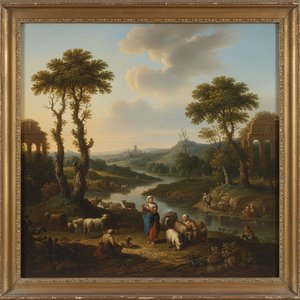
Jan Miel: Între Realismul Olandez și Măreția Barocului
Jan Miel (1599–1663) se impune ca o figură centrală în peisajul artistic al secolului al XVII-lea, întruchipând fuziunea fascinantă dintre tradiția flamandă și inovația italiană. Născut la Beveren, în Belgia — deși Anvers și ‘s-Hertogenbosch rămân पनि candidate pentru locul nașterii sale — primii ani ai lui Miel rămân acoperiți de o relativă obscuritate, lăsând detaliile biografice destul de rare. Totuși, ceea ce reiese din cercetările academice este o călătorie artistică remarcabilă, marcată de o evoluție stilistică și de eforturi colaborative care i-au consolidat locul în mediul cultural vibrant din Roma și Turin.
Anii săi de formare au fost petrecuți perfecționându-și măiestria în principal la Anvers, unde a absorbit influențele unor maeștri flamandi de renume, precum Anthony van Dyck. Deși amploarea exactă a instruirii sale rămâne greu de stabilit, aceasta i-a insuflat fără îndoială o apreciere pentru observația meticuloasă și pentru o tehnică rafinată — calități care vor caracteriza o mare parte din opera sa ulterioară. Această bază solidă în desenul clasic și în portretistică i-a oferit instrumentele esențiale pentru o carieră ce va transcende, în cele din urmă, granițele regionale.
Transformarea Romană și Spiritul Bamboccianti
Sosirea lui Miel la Roma, în jurul anului 1636, a semnalat un moment transformator în traiectoria sa artistică. El s-a alăturat rapid grupului Bentvueghels, o asociație influentă de artiști olandezi și flamandi rezidenți în Orașul Etern. În cadrul acestei fraternități, a adoptat porecla memorabilă ‘bieco’, un nume care reflecta privirea sa strâmbă, distinctivă — o trăsătură care avea să devină sinonimă cu persona sa artistică. Această apartenență a favorizat conexiuni profunde în cadrul unei comunități artistice mai largi, profund afectate de stilul Bamboccianti al lui Pieter van Laer.
Acest curent era dedicat reprezentării scenelor din viața de zi cu zi ale claselor de jos din Roma și împrejurimi, renunțând la măreția idealizată a artei Renașterii înalte în favoarea unui ceva mult mai visceral și imediat. Miel a îmbrățișat această tendință cu tot sufletul, creând tablouri de gen captivante care surprindeau spiritul existenței urbane cu un realism și o sensibilitate remarcabile. Operele sale includeau adesea:
- Scenarii stradale vibrante, populate de călători, comercianți și muncitori.
- O utilizare magistrală a luminii pentru a evoca atmosfera prăfoasă și însorită a străduțelor romane.
- Interacțiunea subtilă a emoțiilor umane în cadre aglomerate și haotice.
- O atenție meticuloasă la texturile țesăturilor, pietrei și pământului.
Evoluția către Clasicism și Măreția Curții
Pe măsură ce cariera sa a progresat, viziunea artistică a lui Miel a trecut printr-o metamorfoză semnificativă. Deși a rămas un maestru al picturii de gen, el a început să se îndepărteze de realismul aspru al stilului Bamboccianti către picturi istorice cu tendințe clasiciste. Această schimbare reflecta o tendință mai largă în arta europeană, unde energia brută a Barocului era din ce în ce mai temperată de o dorință pentru ordine, noblețe și alegorie clasică.
Această evoluție l-a condus în cele din urmă către numiri prestigioase, fiind cel mai notabil artist de curte al lui Charles Emanuel II, Duce de Savoia. În serviciul curții din Turin, munca lui Miel a căpătat un caracter mai formal și mai magnific. Intimitatea scenelor sale timpurii din Roma a cedat loc unor compoziții de o scară și complexitate mai mari, concepute pentru a reflectă puterea și prestigiul patronului său regal. Această perioadă reprezintă apogeul realizării sale profesionale, unde rădăcinile sale flamande în detaliu s-au întâlnit cu marile narațiuni de amploare cerute aristocrației europene.
Semnificația istorică a lui Jan Miel rezidă în capacitatea sa de a naviga între aceste lumi disparate. A fost un artist care putea găsi frumusețea în luptele umile ale unui copil stradal din Roma și demnitatea în poveștile epice ale antichității. Prin surparea prăpastiei dintre realismul meticulos al Nordului și clasicismul dramatic al Sudului, Miel a lăsat o amprentă indelibilă în canonul secolului al XVII-lea, asigurându-și moștenirea de adevărat cosmopolitan al erei Baroce.

 Comută pe versiunea Print
 Vezi mai mult







































 Pentru opere de artă sau reproduceri care depășesc 105 cm (aproximativ 41 de inch) pe oricare dintre laturi, cadrul va fi livrat demontat, sub formă de kit. Această metodă asigură o livrare sigură și previne deteriorarea în timpul transportului.


 Previzualizare
 Trimite prin felicitare
 Distribuie
 Detalii despre lucrare
 Ghid
Ghid

 Descarcă imaginea
 Produse similare
 Radiografie
 Galerie foto
 Întrebări și răspunsuri
 Statistici