Expressionist Orientalism
Chinoiseries (James Ensor)
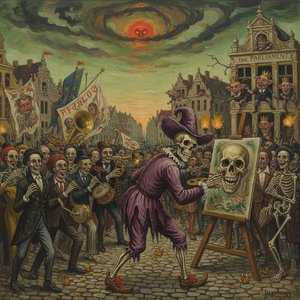
James Ensor (1860–1949) a realizat Chinoiseries. Face parte din mișcarea Expressionist Orientalism. Este realizată în Acrylic On Canvas.
- Acrylic On Canvas

 Previzualizare

 Tablou în ulei pictat manual
 Trimite prin felicitare
 Distribuie
 Fișă informativă


 Descarcă imaginea
 Produse similare
 Radiografie
 Galerie foto
 Întrebări și răspunsuri

 Statistici
Chinoiseries, pe scurt
- Titlu
- Chinoiseries
- Artist
- James Ensor (1860–1949)
- Artist născut în
- Oostende, Belgia
- Medium
- Acrylic On Canvas
- Mișcare
- Expressionist Orientalism
- Subiect
- chinoiseries, james ensor, masks, figures, exoticism, belgium
Ce reprezintă Chinoiseries?
A World Within Walls: Unpacking James Ensor’s “Chinoiseries”
James Ensor's "Chinoiseries," painted in 1880, isn’t merely a depiction of an interior scene; it’s a carefully constructed psychological landscape. This captivating work, residing within the Royal Museums of Fine Arts of Belgium in Brussels, offers a glimpse into the artist’s uniquely unsettling and intensely personal vision. Ensor, born in Ostend to an English father and Belgian mother, possessed a sensibility deeply shaped by his upbringing amidst the vibrant chaos of a seaside resort town – a place saturated with masks, curiosities, and a potent sense of theatricality. This early exposure profoundly influenced his artistic trajectory, leading him away from conventional academic training and toward a fiercely independent style that would forever challenge the established norms of art.
The Dance of Form and Feeling: Style and Technique
“Chinoiseries” is a masterclass in Expressionist technique, subtly blended with elements of Orientalism. Ensor’s brushstrokes are not delicate or refined; they are bold, assertive, and often deliberately rough, conveying an underlying sense of unease and emotional intensity. The color palette—dominated by deep blues and greens—creates a claustrophobic atmosphere, intensifying the feeling of being trapped within the confines of the room. Notice how he utilizes contrasting colors – the vibrant reds and yellows of the decorative objects against the somber background – to draw the eye and heighten the drama. The composition itself is deliberately unbalanced, with the figures positioned in ways that disrupt any sense of harmony or stability. This deliberate distortion reflects Ensor’s interest in exploring the darker aspects of human experience.
- Oil on Canvas: The medium lends itself perfectly to Ensor's expressive style, allowing for rich textures and a dynamic application of paint.
- Bold Brushwork: Visible brushstrokes contribute significantly to the painting’s emotional impact.
- Color Palette: Deep blues and greens create an atmosphere of mystery and introspection.
Decoding the Symbols: Orientalism, Masks, and Human Connection
The title itself, “Chinoiseries,” immediately signals Ensor’s fascination with the exotic – specifically, Chinese-inspired motifs. The table laden with porcelain vases, bowls, and cups isn't simply decorative; it represents a deliberate attempt to introduce an element of the ‘other’ into a European setting. This reflects a broader trend in 19th-century art, where artists sought to explore and interpret foreign cultures through visual representation. However, Ensor doesn’t offer a romanticized view of the Orient. Instead, he presents these objects within a context that is unsettling and ambiguous. The two figures present – one standing, the other seated – are deliberately undefined, their faces obscured or averted, suggesting a lack of genuine connection. The cat, perched on the floor, adds another layer of intrigue, embodying mystery and perhaps even a touch of foreboding.
A Portrait of an Artist’s Mind: Context and Legacy
“Chinoiseries” is often compared to the work of Clyfford Still, a pioneer of Abstract Expressionism, due to their shared emphasis on emotional intensity and non-representational forms. However, Ensor's approach is far more rooted in psychological observation than pure abstraction. His paintings are not simply about depicting objects; they’re about conveying feelings – anxiety, isolation, and the unsettling nature of human relationships. The painting’s creation coincided with a period of significant social and artistic change, mirroring the growing anxieties of modern life. It's a testament to Ensor’s ability to capture the complexities of the human condition through a uniquely personal and often disturbing lens. Reproductions of “Chinoiseries” offer a remarkable opportunity to experience this powerful work firsthand, bringing its enigmatic atmosphere into any space.
Explore more captivating works by James Ensor and discover high-quality reproductions at OriginalUniqueArt.com. For deeper insights into the artist’s life and oeuvre, visit his Wikipedia profile: https://en.wikipedia.org/wiki/James_Ensor.
Imagini la înaltă rezoluție ale lui Chinoiseries

Domeniu public: artistul a decedat în 1949.
Alte dimensiuni, cadrări și citări →James Ensor, Chinoiseries. Domeniu public
Culorile sunt adaptate după original de către un expert digital, iar fișierul este fin retușat, fiind fidel picturii artistului.
Cumpără fișierul la rezoluție înaltăÎntrebări despre Chinoiseries, răspunsuri
Ce tehnică a fost utilizată pentru "Chinoiseries" de James Ensor?
James Ensor a utilizat tehnica Acrylic On Canvas pentru "Chinoiseries". Tehnica definește natura materială a lucrării originale.
Ce reprezintă "Chinoiseries" de James Ensor?
Temele prezente în "Chinoiseries" de James Ensor includ chinoiseries, james ensor, masks, figures, exoticism, belgium, carnival, symbolism. Împreună, acestea definesc subiectul întregii opere de artă.
"Chinoiseries" de James Ensor face parte din domeniul public?
"Chinoiseries" de James Ensor este în domeniul public (în domeniul public – drepturile de autor au expirat). Acest statut reglementează modul în care imaginea lucrării poate fi reprodusă.
Cine a creat "Chinoiseries"?
Artistul din spatele operei „Chinoiseries” este James Ensor. Lucrarea este catalogată sub numele lui James Ensor.
Din ce curent artistic face parte "Chinoiseries" de James Ensor?
Mișcarea asociată cu "Chinoiseries" de James Ensor este Expressionist Orientalism. Această clasificare plasează lucrarea printre artiști și opere de artă conexe.
Din ce perioadă a carierei lui James Ensor face parte „Chinoiseries”?
În cariera lui James Ensor, „Chinoiseries” aparține perioadei Mature Period. Această etapă facilitează compararea sa cu celelalte opere ale artistului.
Care este motivul statutului drepturilor de autor pentru "Chinoiseries"?
Statutul drepturilor de autor pentru "Chinoiseries" - în domeniul public – drepturile de autor au expirat - este determinat de data decesului artistului, în anul 1949.
Unde se încadrează "Chinoiseries" în întreaga creație a lui James Ensor?
"Chinoiseries" face parte din perioada Expressionist Orientalism a lui James Ensor, ale cărei teme recurente includ expressionist distortion, oriental motifs, belgian identity, cultural fusion, masks, hidden emotions, satire, ensor’s unique visual language.
Cum se încadrează "Chinoiseries" în rândul temelor recurente ale lui James Ensor?
"Chinoiseries" înfățișează chinoiseries, james ensor, masks, figures, exoticism, belgium, carnival, symbolism, în timp ce temele recurente ale lui James Ensor sunt expressionist distortion, oriental motifs, belgian identity, cultural fusion, masks, hidden emotions, satire, ensor’s unique visual language. Compararea celor două relevă modul în care această lucrare se raportează la subiectele obișnuite ale artistului.
Despre artistul James Ensor

1860–1949, Belgia
James Ensor
Tinerețea, Familia și Formarea Artistică James Ensor s-a născut pe 13 aprilie 1860, în Ostend, Belgia. Identitatea sa a fost modelată de o intersecție culturală specifică: tatăl său, James Frederic Ensor, s-a născut în Bruxelles de părinți englezi, în timp ce mama sa, Maria Catherina Haegheman, era belgiană. Această moștenire duală a oferit fundamentul unei perspective care s-a situat adesea în afara limitelor înguste ale tradiției locale. Crescând, artistul a trăit în cadrul unei magazine de suveniruri gestionate de părinții săi în Ostend.
Alte lucrări ale lui James Ensor
 Intrarea lui Cristin în Bruxelles1888
 Autoportret cu măști1899
 Baile de la Ostend
 Schelete care se încălzesc1889

Eseuri despre Chinoiseries
 Raw Emotion & Bold Strokes: Top 10 Neo-Expressionism MasterpiecesExplore iconic Neo-Expressionist works by Basquiat and Baselitz. Discover museum-quality art at OriginalUniqueArt.com.
 James Ensor's Grotesque Visions: Social Commentary & Artistic InnovationExplore the unsettling yet captivating world of James Ensor, a pioneer of Expressionism. Discover his satirical masterpieces, symbolic imag…
 Capturing the Exotic: A Journey Through the Allure and Complex Legacy of Orientalist ArtExplore the mesmerizing world of Orientalist art. From Napoleon's influence to Renoir's exotic textures, discover the history, beauty, and …