Viața și Arta lui Jacques-Louis David
Născut în Paris, Franța, pe 30 august 1748, Jacques-Louis David a apărut într-o perioadă de profundă transformare politică și estetică. El a devenit principalul exponent al stilului neoclasic de la sfârșitul secolului al XVIII-lea, un mișcare care a căutat să înlocuiască capriciile decorative ale stilului Rococo cu un sentiment de ordine și claritate morală. Cariera sa a fost definită de capacitatea de a naviga prin cele mai turbulente schimbări din istoria Franței, trecând de la ierarhiile structurate ale Vechiului Regim la radicalismul Revoluției și măreția imperială a erei napoleoniene.
În calitate de pictor preeminent al epocii sale, David a făcut mai mult decât a surprinde trăsăturile subiectelor sale; el a oferit un limbaj vizual idealurilor în continuă schimbare ale națiunii sale. Opera sa s-a concentrat adesea pe teme istorice și clasice, utilizând contururi riguroase și o abordare disciplinată a compoziției. Această dedicare clarității a ajutat la consolidarea neoclasicismului ca forță artistică dominantă în Franța. Pânzele sale erau frecvent de dimensiuni mari, concepute pentru a capta atenția și pentru a transmite gravitatea scenelor pe care le pictau.
Producția sa artistică a fost vastă și diversificată, variind de la drame istorice intense până la portretul formal. Printre subiectele sale emblematice se numără:
Tinerețea, Familia și Formarea
Născut în rândul clasei de mijloc de comercianți și artizani din Paris, primii ani ai lui Jacques-Louis David au fost marcați de o întorsătură bruscă și profundă a destinului. La vârsta de nouă ani, tatăl său a fost ucis într-un duel, lăsând tânărul băiat să fie crescut de unii ochi de arhitecți înstoriți. În timpul educației sale formale, acesta s-a dovedit a fi un elev indiferent, mintea sa fiind adesea absorbită de procesul desenului, în loc să fie concentrată pe lecțiile de școală. Această preferință timpurie pentru creion și cărbune a sugerat un temperament mult mai potrivit pentru studioul de pictură decât pentru sala de clasă.
Calea sa către măiestria profesională a început sub îndrumarea lui François Boucher, un pictor reprezentativ al stilului Rococo. Deși Boucher i-a oferit prima etapă de ucenicie, Jacques-Louis David a căutat în cele din urmă o direcție diferită, îndreptându-se spre învățăturile lui Joseph-Marie Vien. În calitate de profesor la Academia Regală de Pictură și Sculptură, Vien a oferit o abordare mai clasică, care avea să definească, în cele din urmă, estetica lui David. Această perioadă de studiu nu a fost una de ascensiune rapidă, ci un proces plin de încercări și erori. El a înfruntat frustrarea a trei încercări eșuate de a obține prestigiosul Prix de Rome, o piedică ce i-a pus la încercare determinarea. În cele din urmă, a cucerit premiul în anul 1774, o victorie care avea să schimbe fundamental cursul carierei sale.
Ascensiunea Neoclassicismului și studiile italiene
Traiectoria dezvoltării lui Jacques-Louis David a suferit o cotitură decisivă în anul 1775, odată cu călătoria sa în Italia alături de mentorul său, Joseph Vien. Această perioadă de studiu i-a oferit distanța necesară față de tendințele decorative ale curții franceze, permițându-i să înfrunte direct măreția antichității. Sub umbra Romei, artistul și-a îndreptat atenția către maeștrii secolului al XVII-lea, absorbind compozițiile structurate ale lui Poussin și lumina dramatică a lui Caravaggio. De asemenea, a studiat operele familiei Carracci, găsind în abordarea lor un echilibru între formă și naturalism care avea să îi modeleze propriul stil în devenire.
În acei ani, Jacques-Louis David a fost introdus în cercul lui Raphael Mengs, o figură care susținea o studiere riguroasă și disciplinată a surselor clasice. Această întâlnire intelectuală a ajutat la îndepărtarea tânărului pictor de capriciile persistente ale stilului Rococo. Focalizarea sa s-a mutat către un neoclassicism mai auster și mai profund orientat spre moralitate, un stil care privilegia claritatea și ordinea în detrimentul ornamentării excesive. Experiența italiană nu a rafinat doar tehnica sa, ci a oferit fundamentul filozofic pentru o carieră dedicată căutării virtuții civice și a gravității istorice.
Rolul artistic în timpul Revoluției Franceze
Agitația politică din 1789 l-a găsit pe Jacques-Louis David profund implicat în curenții schimbători ai societății franceze. Acesta a fost un susținător activ al revoluției, ieșind din liniștea atelierului pentru a se implica direct în forțele radicale care remodelau națiunea. În calitate de membru al grupării jacobine, angajamentul său față de cauză a fost atât ideologic, cât și personal. El a menținut o prietenie strânsă cu Maximilien Robespierre, o conexiune care l-a plasat chiar în centrul celor mai intense machinații politice ale epocii.
Influența sa s-a extins până în inima administrativă a noii republici, unde a servit ca director artistic. În această capacitate, el a ajutat la modelarea limbajului vizual al unui mișcare care căuta să înlocuiască vechile ierarhii cu noi ideale de civicitate. Opera sa din acești ani a funcționat adesea ca o oglindă a fervorii de pe străzi, capturând gravitatea martiriului și greutatea datoriei republicane. El nu s-a limitat doar la a picta revoluția; el a ajutat la direcționarea imaginii sale publice.
Patronaj și serviciul dedicat lui Napoleon
Fluxurile politice care, odinioară, alimentaseră ferveur revoluționară a lui Jacques-Louis David, s-au așezat în cele din urmă în măreția structurată a Imperiului. Pe măsură ce Napoleon Bonaparte urca la putere, artistul a parcurs o tranziție profundă, de la a fi un partisan al Republicii, la a deveni pictorul oficial al noilor regimuri de la curte. Această schimbare de paradigmă a fost formalizată în anul 1804, când a fost numit Pictor Prim al Împăratului. Rolul său era de a oferi un limbaj vizual autorității lui Napoleon, traducând triumfurile militare și demnitatea imperială într-o scară grandioasă, destinată publicului.
Această perioadă de serviciu a adus cu sine o evoluție subtilă în estetica sa. Claritatea austeră, uneori severă, a lucrărilor sale neoclasice timpurii s-a îndulcit, făcând loc stilului de la Imperiu. Paleta sa de culori a devenit mai complexă, integrând nuanțe venetiene calde care conferau compozițiilor sale un sentiment de bogăție și profundime. El s-a îndepărtat de asprimea anilor revoluționari, adoptând în schimb un vocabular vizual mai opulent, perfect adaptat nevoilor ceremoniale ale curții imperiale.
- Napoleon Traversând Alpii (1801-1805)
- Coroana lui Napoleon (1807)
Tehnică și Stilul Neoclasic
Păturile de vopsea ale lui Jacques-Louis David au respins excesele decorative și mișcarea de vârtej a stilului Rococo, alegând în locul lor o claritate structurală și disciplinată. Compozițiile sale se sprijineau pe contururi riguroase și forme sculptate, care conferau figurilor sale un sentiment de permanență, de parcă ar fi fost sculptate din marmură, mai degrabă decât pictate în ulei. Această precizie era completată de o preferință pentru suprafețe lucioase, unde mâna artistului dispărea adesea în spatele unei apariții impecabile și finite. El a căutat să surprindă esența antichității printr-un limbaj vizual al ordinii și al reținerii.
Lumina și umbra funcționau ca instrumente primordiale ale dramatismului în atelierul său. El a utilizat un tenebrism ascuțit și dramatic, o tehnică ce folosea contraste puternice pentru a scoate subiectele din întuneric. Această abordare, combinată cu un realism caravaggesc, i-a permis să ancoreze scenele sale istorice și mitologice într-o realitate palpabilă, fizică. În loc să se bazeze pe un tumult de culori, a utilizat adesea o paletă temperată, dominată de tonuri pământii, care orienta atenția privitorului către greutatea morală a scenei, în loc să se concentreze pe simpla ornamentare.
- The Oath of the Horatii (1784)
- The Death of Socrates (1787)
- The Death of Marat (1793)
- Portrait of Madame Récamier (1800)
Opere Cheie și Capodopere
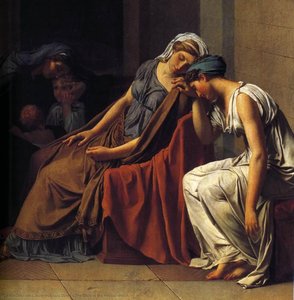
Traiectoria carierei lui Jacques-Louis David este marcată de o capacitate extraordinară de a traduce curentii politici și morali ai Franței în forme rigide, sculpturale. În anul 1784, el a finalizat Jurământul lui Horațiu, o operă care a semnalat o plecare definitivă de la capriciile decorative ale erei anterioare. Înlocuind curbele moi cu o precizie liniară și ascuțită, artistul a oferit un limbaj vizual dedicat datoriei civice. Această noțiune de gravitate morală a continuat în 1787 cu Moartea lui Socrate, unde a redat ultimele momente ale filosofului cu o claritate calmă și disciplinată, care pune accentul pe convingerea intelectuală în detrimentul emoției haotice.
Pe măsură ce Revoluția a devenit violentă, pensula lui David a devenit un instrument pentru documentarea prezentului imediat și a trăgismului. Reprezentarea din 1793 a picturii Moartea lui Marat a transformat o asasinare politică într-o scenă de o liniște profundă și tăcută. Corpul palid și leneș al jurnalistului, sprijinit de o masă improvizată, a eliminat zgomotul Terorii pentru a se concentra pe o realitate singulară și tulburătoare. Această abilitate de a surprinde greutatea unui moment i-a definit rolul de cronicar vizual al epocii.
Trecerea de la fervoarea revoluționară la măreția imperială a făcut ca atenția lui David să se îndrepte către omul care urma să remodelizeze Europa. Între 1801 și 1805, el a pictat Napoleon Traversând Alpii, prezentându-l pe lider ca pe o figură de o forță mitică. Aceasta a fost urmată de imensa pânză din 1807, Coroana lui Napoleon, care a documentat opulența ceremoniei imperiale. Chiar și în portretele sale mai intime, precum reprezentarea din 1800 a lui Madame Récamier, angajamentul său față de compoziția structurată și de demnitatea formală a rămas constant.
- Moartea lui Socrate (1787)
- Moartea lui Marat (1793)
- Madame Récamier (1800)
- Napoleon Traversând Alpii (1801-1805)
- Coroana lui Napoleon (1807)
Discipoli, Elevi și Influența Artistică
Atelierul lui Jacques-Louis David a funcționat ca un centru vital pentru transmiterea principiilor neoclasicismului, atrăgând un grup divers de studenți care, în timp, vor modela secolul al XIX-lea. Printre cei mai strălucitori elevi ai săi s-a numărat Jean-Auguste-Dominique Ingres, care avea să emergă ulterior ca o forță formidabilă în propria sa carieră. Moștenirea educațională a lui David a inclus, de asemenea, pe Antoine-Jean Gros și pe François Gérard, amândoi navigând printre gusturile schimbătoare ale epocii, purtând în același timp greutatea unei instruiri riguroase. Chiar și Jérôme-Martin Langlois și-a găsit locul în acest mediu disciplinat, absorbind precizia tehnică impusă de estetica dominantă de la acea vreme.
Această prezență pedagogică s-a extins mult dincolo de limitele imediate ale sălii de clasă. Structurile formale și distorsiunile expresive pe care David le utiliza în compozițiile sale au lăsat o amprentă care a rezonat în generațiile următoare. Influența sa a ajuns până la schimbările radicale ale erei moderne, găsind ecouri neașteptate în opera lui Henri Matisse și a lui Pablo Picasso. Deși discipolii săi direcți au căutat adesea să rafineze sau chiar să se revolte împotriva respectării sale stricte a ordinii clasice, accentul fundamental pus pe desen și pe claritatea structurală a rămas un fir conductor constant în evoluția artei franceze.
Exilul și moartea în Bruxelles
Fluxurile politice care îl purtaseră odinioară în culminele favorizării imperiale s-au întors, în cele din urmă, împotriva sa. În urma prăbușirii lui Napoleon, peisajul politic în continuă schimbare al Franței a mai lăsat puțin loc fostului pictor de curte. În 1816, Jacques-Louis David a fost trimis în exil la Bruxelles, un gest care semnala sfârșitul influenței sale directe asupra statului francez. Totuși, acesta nu s-a retras în tăcere. În acest oraș belg, și-a păstrat rigoarea profesională, continuând să picteze și să își îndrume elevii până în ultimele sale zile.
Prezența sa în Bruxelles a rămas o constantă pe parcursul ultimei decenii a vieții sale. A trăit tranziția puterii europene, fiind martor la însăși istoria pe care, odinioară, o ajutase să documenteze pe pânză. Pe 29 decembrie 1825, viața sa a ajuns la sfârșit. A murit la Bruxelles, departe de saloanele pariziene și de curțile imperiale care îi definesc cele mai active ani.
Un monument marchează locul odihnei sale. În cimitirul din Bruxelles, un obelisc stă ca un omagiu pentru omul care fusese, odinioară, arhitectul vizual al unei epoci. Acest marker de piatră servește ca o concluzie liniștită pentru o carieră ce a cuprins cele mai turbulente transformări ale statului francez.
Unde pot fi admirate astăzi operele sale
Prezența fizică a întregului opus creat de Jacques-Louis David este împrăștiată printre marile depozite de artă europene și internaționale. Muzeul Louvre din Paris rămâne principalul păstrător al creației sale, găzduind o parte semnificativă din cele mai influente pântece ale sale. În New York, Metropolitan Museum of Art păstrează mai multe dintre piesele sale, permițând o studiere a preciziei sale chiar departe de străzile Franței. Amprenta sa se extinde și spre Est, Muzeul de Stat Pushkin din Moscova deținând un portret al lui Ingres, o operă ce reflectă conexiunile complexe dintre David și cel mai faimos elev al său.
În sudul Franței, Musée Fabre din Montpellier oferă o perspectivă diferită asupra evoluției sale. Între zidurile acestuia, se poate descoperi Hector, o lucrare din 1778 care surprinde un naturalism mai dramatic și aflat în plină formare. Această piesă oferă o fereastră către tendințele stilistice timpurii ale artistului, înainte de îmbrățișarea deplină a clarității austere care îi va defini anii de maturitate. A vedea opera sa în aceste diverse cadre înseamnă a retrasa răspândirea geografică a unui stil care a dictat, odinioară, limbajul vizual al unei întregi epoci.
- The Death of Socrates, 1787
- The Oath of the Horatii, 1784
- The Death of Marat, 1793

 Comută pe versiunea Print
 Vezi mai mult







































 Pentru opere de artă sau reproduceri care depășesc 105 cm (aproximativ 41 de inch) pe oricare dintre laturi, cadrul va fi livrat demontat, sub formă de kit. Această metodă asigură o livrare sigură și previne deteriorarea în timpul transportului.


 Previzualizare
 Trimite prin felicitare
 Distribuie
 Detalii despre lucrare
 Ghid
Ghid

 Descarcă imaginea
 Produse similare
 Radiografie
 Galerie foto
 Întrebări și răspunsuri
 Statistici