

 Vezi în context
 Trimite
 Distribuie
 Detalii
 Ghidul

 Descarcă
 Produse similare
 Radiografie
 Diaporama
 Statistici
War Series: The Letter


 Citește mai mult
Lucrarea de artă afișată pe această pagină este protejată de legile privind drepturile de autor, ceea ce înseamnă că nu putem crea sau vinde în mod legal o reproducere identică. Această protecție este garantată prin acorduri internaționale, precum Convenția de la Berna și de legile naționale, inclusiv cele prevăzute de Legea dreptului de autor din S.U.A. – Titlul 17. Toate drepturile rezervate. Orice reproducere neautorizată este interzisă.
Această metodă respectă pe deplin reglementările privind drepturile de autor, deoarece nu implică copierea sau duplicarea operei protejate. În schimb, este o reinterpretare creativă – o pictură nouă, influențată de original, dar care nu este identică cu acesta.
Giclée / Imprimare artistică
Printuri giclée sau pe canvas de calitate muzeală, cu proces de producție rapid și opțiuni flexibile de finisare. ( Comandă pictură realizată manual Treci la imagine digitală)




P118B lei10

P118H lei10

P118W lei10

P438Z lei10

P508JH lei12

P508YH lei12

P805H lei10

P805Z lei10

P919BZ lei10

P919G lei10

P919XJ lei10

P959ZH lei10

P968JZ lei12

W106C lei8

W218G lei10

W218JH lei8

W218Y lei10

W307PJ lei10

W316G lei10

W316PJ lei8

W316Y lei10

W398PJ lei8

W4111J lei10

W500HY lei15

W500JH lei15

W692G lei12

W849H lei8

W940BG lei15

W953PJ lei8




Alegeți dintre dimensiunile noastre prestabilite, care respectă proporțiile originale ale operei de artă.

Puteți introduce propriile dimensiuni pentru a se potrivi unui anumit cadru sau spațiu. Dacă dimensiunea selectată nu corespunde proporțiilor imaginii originale, vom decupa lucrarea de artă sau vom extinde imaginea cu margini oglindite sau cu o culoare uniformă. Un mockup digital va fi trimis pentru aprobarea dumneavoastră înainte de începerea producției.
Vă rugăm să rețineți că previzualizarea de pe ecran nu reflectă decuparea sau extinderea reală. Doar mockup-ul va arăta cu exactitate compoziția finală.
Deși dimensiunile personalizate sunt disponibile, vă recomandăm să selectați o dimensiune din lista predefinită pentru a păstra proporțiile originale.
Livrare în întreaga lume () în 2 săptămâni, în loc de cele 4/5 săptămâni standard. (14 Octombrie)

Livrare expres gratuită la nivel mondial

Pânză de in premium

Asigurare completă pentru transport

Garanție de rambursare a taxelor vamale

Garanția fidelității culorilor

Politica de retur în 100 de zile (doar pentru defecte)

Garanție de rambursare 100%

Reducere pentru comenzi multiple
 Opțiunea cu sticlă este disponibilă doar pentru dimensiuni de sub 110 cm

War Series: The Letter
Giclée / Imprimare artistică
Dimensiune reproducere
-


Preț total
lei 365
A Study in Somber Grief: Jacob Lawrence's "The Letter"
Jacob Lawrence’s “The Letter,” part of his monumental “War Series” created in 1946, is not merely a depiction of sorrow; it’s an embodiment of profound human experience distilled into its most potent form. This work, rendered with the artist's signature flattened planes and stark geometry, immediately commands attention with its emotionally charged atmosphere. The central figure, hunched and isolated within a confined space, speaks volumes about the devastating impact of war – not just on battlefields, but on the very fabric of domestic life and personal relationships. Lawrence’s deliberate simplification of form, characteristic of his Social Realist style, amplifies the raw emotion, forcing the viewer to confront the uncomfortable realities of loss and despair.
Composition and Technique: A Graphic Narrative
- Geometric Precision: The composition relies heavily on geometric shapes – rectangles defining both the backdrop and the floor, a stage for this silent drama. These forms contribute to the artwork’s graphic quality, reminiscent of woodcuts or lithographs, emphasizing clarity and directness over illusionistic realism.
- Controlled Application: Lawrence employs a technique characterized by smooth, even layers of paint, applied with minimal blending. This creates a surface that is both visually striking and subtly textured, avoiding the impression of brushstrokes while still conveying a sense of physicality. The deliberate lack of gradations in tone further intensifies the emotional impact, focusing attention on the stark contrasts between light and shadow.
- Vertical Emphasis: The prominent vertical lines flanking the central figure create a powerful sense of enclosure, reinforcing the feeling of isolation and vulnerability that permeates the entire scene.
Symbolism and Historical Context – Echoes of War’s Impact
Created in the aftermath of World War II, “The Letter” is inextricably linked to Lawrence's exploration of African-American experiences during this turbulent period. The title itself—"The Letter"—immediately evokes the devastating news that would have accompanied such a communication: the loss of a loved one on the front lines. The hunched posture of the figure isn’t simply an indication of grief; it represents defeat, resignation, and the crushing weight of unimaginable sorrow. The limited color palette – dark browns, blacks, and muted reds – mirrors the bleakness of wartime and the emotional desolation experienced by those left behind. This work reflects Lawrence's broader engagement with themes of social justice and the human cost of conflict, aligning him firmly within the Social Realist movement.
Emotional Resonance and Artistic Legacy
"The Letter" transcends a simple depiction of sadness; it’s a timeless meditation on loss, isolation, and the enduring power of human emotion. Lawrence's ability to convey such profound feeling through simplified forms and restrained color is a testament to his artistic genius. This piece remains a powerful example of his commitment to social commentary and his mastery of narrative painting. Its stark beauty and emotional depth continue to resonate with viewers today, solidifying its place as a cornerstone of American art history.
NoneÎntrebări și răspunsuri
Unde se situează "War Series: The Letter" în rândul subiectelor recurente ale lui Jacob Lawrence?
Temele recurente ale lui Jacob Lawrence includ lawrence’s cubism, harlem renaissance, african american history, remembrance, emotional depth; „War Series: The Letter” se concentrează pe grief, loss, warfare, isolation, depression, remembrance, mourning, cubism.
Este disponibil un link de descărcare pentru "War Series: The Letter"?
Imaginea pentru "War Series: The Letter" de Jacob Lawrence poate fi descărcată de pe pagina dedicată lucrării, Descarcă: descărcare imagine digitală de înaltă rezoluție.
Ce dimensiune este recomandată pentru "War Series: The Letter" într-un Living Room?
Într-o Living Room, pentru "War Series: The Letter", recomandăm o dimensiune de tipar de Large.
"War Series: The Letter" de Jacob Lawrence este o pictură, un desen sau o printă?
"War Series: The Letter" este o piesă de tip WallArt.
Din ce este realizată "War Series: The Letter" și în ce stil?
"War Series: The Letter" este realizată în Acrylic On Canvas, în stilul Social Realism.
Ce sentiment creează culorile din "War Series: The Letter" de Jacob Lawrence?
În "War Series: The Letter", culorile Earthy acompaniază o senzație Melancholic.
Care sunt data și stilul pentru "War Series: The Letter" de Jacob Lawrence?
"War Series: The Letter" de Jacob Lawrence datează din 1946 și aparține mișcării Social Realism.
Este "War Series: The Letter" de Jacob Lawrence o operă de artă cunoscută?
"War Series: The Letter" de Jacob Lawrence are un nivel de popularitate Iconic. Această clasificare reflectă cât de larg este recunoscută lucrarea.
Biografie artist
A Life Painted in Story: The World of Jacob Lawrence
Jacob Armstead Lawrence, born in Atlantic City, New Jersey, in 1917, wasn’t simply an artist; he was a storyteller—a visual chronicler of the African American experience during a period of profound transformation. His life unfolded as a vibrant tapestry woven with movement, resilience, and an unwavering commitment to documenting his community's history and struggles. Following his parents’ divorce in 1924, Lawrence experienced a childhood marked by displacement and adaptation, spending time in foster care in Philadelphia before finding stability with his mother in Harlem during the exhilarating years of the Harlem Renaissance. This immersion into the heart of Black America—its culture, its music, its spirit—became the very foundation upon which he built his artistic vision. It was within the bustling streets and communal spaces of Harlem that Lawrence first encountered art, attending classes at Utopia Children’s House and later studying under Charles Alston at the Harlem Art Workshop – a formative experience that ignited a lifelong passion and shaped his distinctive approach to painting.Dynamic Cubism: A Style Forged in Experience
Lawrence didn't merely adopt artistic styles; he meticulously crafted his own, famously describing it as “dynamic cubism.” This wasn’t a superficial imitation of European avant-garde movements like Cubism; rather, it was a deeply personal synthesis—a unique blend of modernist principles and the lived realities of his community. He drew inspiration from the bold colors and flattened forms of African sculpture – objects that prioritized narrative and social commentary – as well as the vibrant murals of Mexican artists who sought to engage with their nation’s history and identity. Lawrence translated these influences into a visual language characterized by strong, simplified shapes, a dazzling array of colors, and a deliberate rejection of traditional perspective. This wasn't simply an aesthetic choice; it was a conscious decision to emphasize the emotional weight of his subjects and create a sense of immediacy and accessibility for viewers. He aimed not to replicate reality with photographic precision but to distill its essence—to capture the spirit of a people and their experiences in a way that resonated deeply.The Migration Series: A Monumental Narrative
Lawrence’s most celebrated achievement, and arguably his most significant contribution to American art, is undoubtedly *The Migration Series*. Beginning in 1940-41, during a period of immense social upheaval and economic hardship, Lawrence embarked on a monumental undertaking—a sequence of sixty panels that documented the Great Migration – the mass movement of millions of African Americans from the rural South to the industrial North. This wasn’t just a historical record; it was a deeply empathetic exploration of the hopes, dreams, challenges, and sacrifices faced by those who sought a better life beyond the confines of Jim Crow segregation. The series is remarkable for its scale, its vibrant color palette, and its innovative use of captions – short, evocative phrases that provided context and deepened the narrative. Lawrence’s decision to paint on small hardboard panels, rather than traditional canvas, further enhanced the intimacy and immediacy of the work. *The Migration Series* catapulted Lawrence to national acclaim, earning him critical recognition and establishing him as a leading voice in American art. It remains a powerful testament to the resilience and determination of African Americans during a pivotal period in their history.Beyond the Migration: Exploring Diverse Themes
While *The Migration Series* cemented Lawrence’s reputation, his artistic output extended far beyond this single monumental work. He continued to explore a wide range of themes—from the lives of historical figures like Toussaint L'Ouverture, Frederick Douglass, and Harriet Tubman – transforming their stories into accessible visual narratives – to everyday scenes of barbershops, diners, and domestic life in Harlem. Lawrence’s paintings weren’t simply representations; they were imbued with a profound sense of humanity—a celebration of Black culture, community, and identity. He also engaged with contemporary issues, documenting the Civil Rights Movement of the 1960s, capturing the spirit of protest and the struggle for equality. His work consistently demonstrated a commitment to social justice and a deep understanding of the complexities of American society.Legacy & Enduring Influence
Jacob Lawrence’s impact on American art is undeniable. He was not only a gifted artist but also a dedicated educator, teaching at institutions like Black Mountain College and the University of Washington for sixteen years. Through his teaching, he nurtured generations of artists, encouraging them to find their own voices and explore themes relevant to their experiences. Lawrence paved the way for countless African-American artists who followed, challenging prevailing norms and expanding the boundaries of American art. His work continues to resonate today, prompting critical conversations about race, history, and social justice. Featured in prominent museums such as the Smithsonian American Art Museum and the University of Washington’s collection, his paintings serve as enduring testaments to the power of art to illuminate the human condition and inspire change. He left behind a legacy not just of beautiful images but of courageous storytelling—a visual chronicle of a people's journey toward freedom and self-determination.
Jacob Lawrence
1917 - 2000 , Statele Unite ale Americii
Informații rapide
- Artistic Movement Or Style: Cubism dinamică
- Artists Or Movements Influenced By This Artist: ['Artă africană']
- Date Of Birth: 7 septembrie 1917
- Date Of Death: 9 iunie 2000
- Full Name: Jacob Armstead Lawrence
- Nationality: American
- Notable Artworks:
- Migrația Neagră
- Bar și Grătar
- Place Of Birth: Atlantic City, USA
Articole conexe

Romantic Realism's Finest: 10 Masterpieces for Your Home | OriginalUniqueArt
Explore 10 defining masterpieces of Romantic Realism! Discover Courbet, Millet & Daumier's powerful paintings—capturing emotion and social realities. Find museum-quality reproductions for your home at OriginalUniqueArt.com.
Jacob Kainen: A Pioneer of American Color Field Painting & Abstract Expressionism
Explore the life & work of Jacob Kainen, a pivotal figure in American Abstract Expressionism and Color Field painting. Discover his journey from Social Realism to vibrant abstraction and lasting influence on 20th-century art.
Echoes of Society: Exploring Social Realism's Enduring Legacy in Art
Explore the powerful world of Social Realism art! Discover key artists, masterpieces & its profound social commentary. Expert insights into this influential movement's history and enduring legacy.
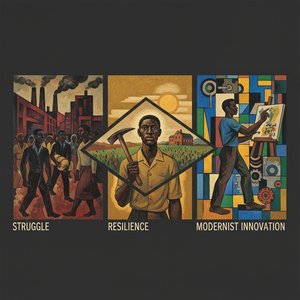
Jacob Lawrence: Narratives of Struggle, Resilience & Modernist Innovation
Explore the powerful narratives of Jacob Lawrence, a pivotal African American artist of the Harlem Renaissance. Discover his iconic 'Migration Series,' dynamic cubism style, and lasting impact on American art history.

Vasily Vereshchagin: Realism, War & Subversion in 19th-Century Russian Painting
Explore the powerful realism of Vasily Vereshchagin's war paintings & Central Asian scenes. Discover how this Russian master challenged artistic conventions and offered a brutal, honest depiction of 19th-century conflict. Learn about his legacy for discerning collectors.