

 Vezi în context
 Trimite
 Distribuie
 Detalii
 Ghidul

 Descarcă
 Produse similare
 Radiografie
 Diaporama
 Statistici
Tombstones


 Citește mai mult
Giclée / Imprimare artistică
Printuri giclée sau pe canvas de calitate muzeală, cu proces de producție rapid și opțiuni flexibile de finisare. ( Comandă pictură realizată manual Treci la imagine digitală)




P118B $10

P118H $10

P118W $10

P438Z $10

P508JH $12

P508YH $12

P805H $10

P805Z $10

P919BZ $10

P919G $10

P919XJ $10

P959ZH $10

P968JZ $12

W106C $8

W218G $10

W218JH $8

W218Y $10

W307PJ $10

W316G $10

W316PJ $8

W316Y $10

W398PJ $8

W4111J $10

W500HY $15

W500JH $15

W692G $12

W849H $8

W940BG $15

W953PJ $8




Alegeți dintre dimensiunile noastre prestabilite, care respectă proporțiile originale ale operei de artă.

Puteți introduce propriile dimensiuni pentru a se potrivi unui anumit cadru sau spațiu. Dacă dimensiunea selectată nu corespunde proporțiilor imaginii originale, vom decupa lucrarea de artă sau vom extinde imaginea cu margini oglindite sau cu o culoare uniformă. Un mockup digital va fi trimis pentru aprobarea dumneavoastră înainte de începerea producției.
Vă rugăm să rețineți că previzualizarea de pe ecran nu reflectă decuparea sau extinderea reală. Doar mockup-ul va arăta cu exactitate compoziția finală.
Deși dimensiunile personalizate sunt disponibile, vă recomandăm să selectați o dimensiune din lista predefinită pentru a păstra proporțiile originale.
Livrare în întreaga lume () în 2 săptămâni, în loc de cele 4/5 săptămâni standard. (27 Septembrie)

Livrare expres gratuită la nivel mondial

Pânză de in premium

Asigurare completă pentru transport

Garanție de rambursare a taxelor vamale

Garanția fidelității culorilor

Politica de retur în 100 de zile (doar pentru defecte)

Garanție de rambursare 100%

Reducere pentru comenzi multiple
 Opțiunea cu sticlă este disponibilă doar pentru dimensiuni de sub 110 cm

Tombstones
Giclée / Imprimare artistică
Dimensiune reproducere
-


Preț total
$ 80
A Poignant Meditation on Mortality and Community
In the somber, evocative landscape of Jacob Lawrence’s 1942 masterpiece, Tombstones, we are invited into a profound visual dialogue between life and death. Painted during the turbulent era following Pearl Harbor, this work serves as much more than a mere depiction of a graveyard; it is a soulful testament to the collective experience of African Americans in Harlem. Lawrence, a master of narrative storytelling, utilizes his signature dynamic cubism to weave a tapestry of remembrance that feels both deeply personal and universally resonant. The scene unfolds with a sense of quiet dignity, where the presence of crosses and headstones does not evoke terror, but rather a meditative stillness—a communal space where memory is held sacred amidst the shifting tides of history.
The composition is masterfully structured to guide the viewer through a cycle of existence. A central staircase dominates the frame, acting as a powerful metaphor for the human journey; its ascent suggests aspiration and the upward reach of the spirit, while the descent reminds us of the inevitable return to the earth. Lawrence employs a flattened perspective that eschews traditional depth in favor of a rhythmic, layered arrangement. Figures are positioned throughout this architectural landscape—some ascending toward the light of upper windows, others lingering near the gravesites below—creating a sense of a community bound together by shared history and the shared reality of loss.
The Language of Line and Earthy Tones
Technically, Tombstones is a triumph of precision and restraint. Executed in tempera, the artwork relies on the deliberate application of color blocking and sharp, defining lines to construct its world. Lawrence avoids the distraction of heavy textures or realistic shading, opting instead for a geometric clarity that lends the piece an enduring, monumental quality. The lines that delineate the stair railings, the building's silhouette, and the very tombstones themselves are rendered with an unwavering certainty, providing a sense of structural order to the complex emotional narrative.
The color palette is intentionally muted, grounded in an earthy spectrum of browns, deep greens, ochre yellows, and somber blues. These tones evoke the soil and the weathered stone of a memorial site, reinforcing the theme of mortality. Yet, within this subdued field, Lawrence introduces subtle contrasts that breathe life into the composition, ensuring that the eye remains engaged by the interplay of light and shadow across the flattened planes. For the collector or interior designer, this palette offers a sophisticated versatility, providing a focal point that commands attention through its tonal depth and historical weight rather than through garishness.
A Timeless Legacy for the Modern Collector
To possess a reproduction of Tombstones is to hold a piece of American Social Realism. Lawrence’s ability to blend the avant-garde techniques of modernism with the urgent social realities of his time creates an artwork that remains strikingly contemporary. The painting does not merely depict a moment in 1942; it captures the eternal rhythm of community, resilience, and the cyclical nature of life. It is a piece that invites long periods of contemplation, making it an ideal acquisition for those seeking to infuse their spaces with intellectual depth and emotional resonance.
Whether displayed in a curated gallery setting or as a cornerstone of a thoughtfully designed residential interior, this work serves as a bridge between the past and the present. It offers a window into the heart of Harlem and the enduring strength of the human spirit, making it an incomparable choice for art lovers who value works that possess both aesthetic mastery and a profound, lingering soul.
Biografie artist
A Life Painted in Story: The World of Jacob Lawrence
Jacob Armstead Lawrence, born in Atlantic City, New Jersey, in 1917, wasn’t simply an artist; he was a storyteller—a visual chronicler of the African American experience during a period of profound transformation. His life unfolded as a vibrant tapestry woven with movement, resilience, and an unwavering commitment to documenting his community's history and struggles. Following his parents’ divorce in 1924, Lawrence experienced a childhood marked by displacement and adaptation, spending time in foster care in Philadelphia before finding stability with his mother in Harlem during the exhilarating years of the Harlem Renaissance. This immersion into the heart of Black America—its culture, its music, its spirit—became the very foundation upon which he built his artistic vision. It was within the bustling streets and communal spaces of Harlem that Lawrence first encountered art, attending classes at Utopia Children’s House and later studying under Charles Alston at the Harlem Art Workshop – a formative experience that ignited a lifelong passion and shaped his distinctive approach to painting.Dynamic Cubism: A Style Forged in Experience
Lawrence didn't merely adopt artistic styles; he meticulously crafted his own, famously describing it as “dynamic cubism.” This wasn’t a superficial imitation of European avant-garde movements like Cubism; rather, it was a deeply personal synthesis—a unique blend of modernist principles and the lived realities of his community. He drew inspiration from the bold colors and flattened forms of African sculpture – objects that prioritized narrative and social commentary – as well as the vibrant murals of Mexican artists who sought to engage with their nation’s history and identity. Lawrence translated these influences into a visual language characterized by strong, simplified shapes, a dazzling array of colors, and a deliberate rejection of traditional perspective. This wasn't simply an aesthetic choice; it was a conscious decision to emphasize the emotional weight of his subjects and create a sense of immediacy and accessibility for viewers. He aimed not to replicate reality with photographic precision but to distill its essence—to capture the spirit of a people and their experiences in a way that resonated deeply.The Migration Series: A Monumental Narrative
Lawrence’s most celebrated achievement, and arguably his most significant contribution to American art, is undoubtedly *The Migration Series*. Beginning in 1940-41, during a period of immense social upheaval and economic hardship, Lawrence embarked on a monumental undertaking—a sequence of sixty panels that documented the Great Migration – the mass movement of millions of African Americans from the rural South to the industrial North. This wasn’t just a historical record; it was a deeply empathetic exploration of the hopes, dreams, challenges, and sacrifices faced by those who sought a better life beyond the confines of Jim Crow segregation. The series is remarkable for its scale, its vibrant color palette, and its innovative use of captions – short, evocative phrases that provided context and deepened the narrative. Lawrence’s decision to paint on small hardboard panels, rather than traditional canvas, further enhanced the intimacy and immediacy of the work. *The Migration Series* catapulted Lawrence to national acclaim, earning him critical recognition and establishing him as a leading voice in American art. It remains a powerful testament to the resilience and determination of African Americans during a pivotal period in their history.Beyond the Migration: Exploring Diverse Themes
While *The Migration Series* cemented Lawrence’s reputation, his artistic output extended far beyond this single monumental work. He continued to explore a wide range of themes—from the lives of historical figures like Toussaint L'Ouverture, Frederick Douglass, and Harriet Tubman – transforming their stories into accessible visual narratives – to everyday scenes of barbershops, diners, and domestic life in Harlem. Lawrence’s paintings weren’t simply representations; they were imbued with a profound sense of humanity—a celebration of Black culture, community, and identity. He also engaged with contemporary issues, documenting the Civil Rights Movement of the 1960s, capturing the spirit of protest and the struggle for equality. His work consistently demonstrated a commitment to social justice and a deep understanding of the complexities of American society.Legacy & Enduring Influence
Jacob Lawrence’s impact on American art is undeniable. He was not only a gifted artist but also a dedicated educator, teaching at institutions like Black Mountain College and the University of Washington for sixteen years. Through his teaching, he nurtured generations of artists, encouraging them to find their own voices and explore themes relevant to their experiences. Lawrence paved the way for countless African-American artists who followed, challenging prevailing norms and expanding the boundaries of American art. His work continues to resonate today, prompting critical conversations about race, history, and social justice. Featured in prominent museums such as the Smithsonian American Art Museum and the University of Washington’s collection, his paintings serve as enduring testaments to the power of art to illuminate the human condition and inspire change. He left behind a legacy not just of beautiful images but of courageous storytelling—a visual chronicle of a people's journey toward freedom and self-determination.
Jacob Lawrence
1917 - 2000 , Statele Unite ale Americii
Informații rapide
- Artistic Movement Or Style: Cubism dinamică
- Artists Or Movements Influenced By This Artist: ['Artă africană']
- Date Of Birth: 7 septembrie 1917
- Date Of Death: 9 iunie 2000
- Full Name: Jacob Armstead Lawrence
- Nationality: American
- Notable Artworks:
- Migrația Neagră
- Bar și Grătar
- Place Of Birth: Atlantic City, USA
Articole conexe
Top 10 Tablouri Celebre pentru un Living de Poveste | OriginalUniqueArt.ro
Descoperă top 10 tablouri celebre perfecte pentru livingul tău! De la Van Gogh la Da Vinci, explorează istoria și frumusețea fiecărei opere de artă. Reproduceri de calitate muzeală pe OriginalUniqueArt.ro. Inspiră-te acum!
Transforming Spaces: A Comprehensive Exploration of Wall Decor Through Art History & Contemporary Practice
Explore the art of transforming spaces with our comprehensive guide to wall decor. From historical movements to contemporary trends, discover how to curate impactful interiors and commission bespoke artwork for a truly personalized aesthetic.
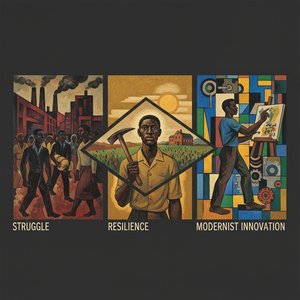
Jacob Lawrence: Narratives of Struggle, Resilience & Modernist Innovation
Explore the powerful narratives of Jacob Lawrence, a pivotal African American artist of the Harlem Renaissance. Discover his iconic 'Migration Series,' dynamic cubism style, and lasting impact on American art history.

Reîntoarcerea Frescei: De Ce Muralurile Devină Noua Declarație de Lux
Descoperă reîntoarcerea frescelor și muralurilor de lux! Ghid complet cu istorie, tehnici, design interior și sfaturi de întreținere. Reproduceri de calitate pe .
Cubist Expression: A Professional Guide to Integrating Geometric Abstraction into Modern Hospitality Design
Elevate hospitality interiors with Cubist art. Our expert guide explores integrating geometric abstraction into hotel design through high-quality, large-scale oil reproductions and custom multi-panel commissions tailored for professional designers and procurement managers.