

 Previzualizare
 Trimite
 Distribuie
 Detalii despre lucrare

 Descarcă
 Produse similare
 Radiografie
 Diapozitive automate
 Stats
StatsGenesis Creation Sermon VI: And God Created All the Beasts of the Earth


 Vezi mai mult
Giclée / Imprimare artistică
Printuri giclée sau pe canvas de calitate muzeală, cu proces de producție rapid și opțiuni flexibile de finisare. ( Comandă pictură lucrată manual Switch to Digital Image)




P118B $10

P118H $10

P118W $10

P438Z $10

P508JH $12

P508YH $12

P805H $10

P805Z $10

P919BZ $10

P919G $10

P919XJ $10

P959ZH $10

P968JZ $12

W106C $8

W218G $10

W218JH $8

W218Y $10

W307PJ $10

W316G $10

W316PJ $8

W316Y $10

W398PJ $8

W4111J $10

W500HY $15

W500JH $15

W692G $12

W849H $8

W940BG $15

W953PJ $8




Alegeți dintre dimensiunile noastre prestabilite, care respectă proporțiile originale ale operei de artă.

Puteți introduce propriile dimensiuni pentru a se potrivi unui anumit cadru sau spațiu. Dacă dimensiunea selectată nu corespunde proporțiilor imaginii originale, vom decupa lucrarea de artă sau vom extinde imaginea cu margini oglindite sau cu o culoare uniformă. Un mockup digital va fi trimis pentru aprobarea dumneavoastră înainte de începerea producției.
Vă rugăm să rețineți că previzualizarea de pe ecran nu reflectă decuparea sau extinderea reală. Doar mockup-ul va arăta cu exactitate compoziția finală.
Deși dimensiunile personalizate sunt disponibile, vă recomandăm să selectați o dimensiune din lista predefinită pentru a păstra proporțiile originale.
Livrare în întreaga lume () în 2 săptămâni, în loc de cele 4/5 săptămâni standard. (8 Septembrie)

Livrare expres gratuită la nivel mondial

Pânză de in de înaltă calitate

Asigurare completă pentru transport

Garanție de rambursare a taxelor vamale

Garanția fidelității culorilor

Politica de retur de 100 de zile (doar pentru defecte)

Garanție de rambursare 100%

Ofertă pentru comenzi multiple
 Opțiunea cu sticlă este disponibilă doar pentru dimensiuni de sub 110 cm

Genesis Creation Sermon VI: And God Created All the Beasts of the Earth
Giclée / Imprimare artistică
Dimensiune reproducere
-


Preț total calculat
$ 80
A Sermon in Color: Jacob Lawrence's Genesis Creation
To stand before a piece from Jacob Lawrence’s Genesis Creation Sermon series is to be enveloped by a vibrant confluence of scripture, community spirit, and the enduring power of the spoken word. This particular panel, depicting "And God Created All the Beasts of the Earth," transcends mere religious illustration; it is a monumental act of storytelling rendered in paint. Lawrence, whose life was so deeply intertwined with the cultural pulse of Harlem, channels that energy here. The scene pulses with life—a gathering where knowledge is imparted and wonder is witnessed. One can almost hear the resonant voice of the preacher, guiding the congregation through the magnificent scope of God's creation, making the biblical narrative feel immediate, visceral, and profoundly personal.
The Resonance of Community and Narrative
Lawrence masterfully constructs a space that feels both sacred and intensely communal. At the heart of the composition stands the preacher figure, whose expressive gestures draw the viewer into an immediate foreground engagement. He is not merely reciting scripture; he is embodying revelation. Surrounding him, the congregation—a tapestry of faces rendered with deep humanity—listens in rapt attention. Their postures, the way they hold books, and their collective gaze all direct our focus toward the central act of teaching. Yet, the narrative expands beyond the pulpit. Scattered throughout this vibrant gathering are the very subjects of the sermon: horses, cows, sheep, and birds. These animals are not mere props; they are characters in a grand, unfolding drama, grounding the theological concept of creation in tangible, observable life.
Style, Symbolism, and Technique
Technically, Lawrence employs a style rooted in American realism, yet infused with the rhythmic energy characteristic of Harlem Renaissance art. The bright, saturated colors are not decorative choices; they are emotional amplifiers, lending an almost ecstatic quality to the proceedings. Symbolically, the painting operates on multiple levels. The sermon itself represents the transmission of culture and history—a vital act for any community. The inclusion of the exterior scene visible through the arched windows suggests that this divine narrative is not confined within the church walls but permeates the entire world outside. It speaks to a universal truth: creation is boundless, and understanding it requires both deep study and open-hearted reception.
Bringing the Spirit Home
For those who seek art that does more than simply adorn a wall—art that demands participation—this reproduction offers an unparalleled connection to American artistic history. Owning this piece allows one to curate a space imbued with intellectual vigor, spiritual depth, and undeniable warmth. It is a celebration of oral tradition as much as it is a depiction of divine power. Whether placed in a study meant for contemplation or a gathering room designed for fellowship, the energy emanating from Lawrence’s brushwork promises to elevate the atmosphere, inviting every viewer to pause, listen, and marvel at the sheer scope of what has been created.
Biografie artist
A Life Painted in Story: The World of Jacob Lawrence
Jacob Armstead Lawrence, born in Atlantic City, New Jersey, in 1917, wasn’t simply an artist; he was a storyteller—a visual chronicler of the African American experience during a period of profound transformation. His life unfolded as a vibrant tapestry woven with movement, resilience, and an unwavering commitment to documenting his community's history and struggles. Following his parents’ divorce in 1924, Lawrence experienced a childhood marked by displacement and adaptation, spending time in foster care in Philadelphia before finding stability with his mother in Harlem during the exhilarating years of the Harlem Renaissance. This immersion into the heart of Black America—its culture, its music, its spirit—became the very foundation upon which he built his artistic vision. It was within the bustling streets and communal spaces of Harlem that Lawrence first encountered art, attending classes at Utopia Children’s House and later studying under Charles Alston at the Harlem Art Workshop – a formative experience that ignited a lifelong passion and shaped his distinctive approach to painting.Dynamic Cubism: A Style Forged in Experience
Lawrence didn't merely adopt artistic styles; he meticulously crafted his own, famously describing it as “dynamic cubism.” This wasn’t a superficial imitation of European avant-garde movements like Cubism; rather, it was a deeply personal synthesis—a unique blend of modernist principles and the lived realities of his community. He drew inspiration from the bold colors and flattened forms of African sculpture – objects that prioritized narrative and social commentary – as well as the vibrant murals of Mexican artists who sought to engage with their nation’s history and identity. Lawrence translated these influences into a visual language characterized by strong, simplified shapes, a dazzling array of colors, and a deliberate rejection of traditional perspective. This wasn't simply an aesthetic choice; it was a conscious decision to emphasize the emotional weight of his subjects and create a sense of immediacy and accessibility for viewers. He aimed not to replicate reality with photographic precision but to distill its essence—to capture the spirit of a people and their experiences in a way that resonated deeply.The Migration Series: A Monumental Narrative
Lawrence’s most celebrated achievement, and arguably his most significant contribution to American art, is undoubtedly *The Migration Series*. Beginning in 1940-41, during a period of immense social upheaval and economic hardship, Lawrence embarked on a monumental undertaking—a sequence of sixty panels that documented the Great Migration – the mass movement of millions of African Americans from the rural South to the industrial North. This wasn’t just a historical record; it was a deeply empathetic exploration of the hopes, dreams, challenges, and sacrifices faced by those who sought a better life beyond the confines of Jim Crow segregation. The series is remarkable for its scale, its vibrant color palette, and its innovative use of captions – short, evocative phrases that provided context and deepened the narrative. Lawrence’s decision to paint on small hardboard panels, rather than traditional canvas, further enhanced the intimacy and immediacy of the work. *The Migration Series* catapulted Lawrence to national acclaim, earning him critical recognition and establishing him as a leading voice in American art. It remains a powerful testament to the resilience and determination of African Americans during a pivotal period in their history.Beyond the Migration: Exploring Diverse Themes
While *The Migration Series* cemented Lawrence’s reputation, his artistic output extended far beyond this single monumental work. He continued to explore a wide range of themes—from the lives of historical figures like Toussaint L'Ouverture, Frederick Douglass, and Harriet Tubman – transforming their stories into accessible visual narratives – to everyday scenes of barbershops, diners, and domestic life in Harlem. Lawrence’s paintings weren’t simply representations; they were imbued with a profound sense of humanity—a celebration of Black culture, community, and identity. He also engaged with contemporary issues, documenting the Civil Rights Movement of the 1960s, capturing the spirit of protest and the struggle for equality. His work consistently demonstrated a commitment to social justice and a deep understanding of the complexities of American society.Legacy & Enduring Influence
Jacob Lawrence’s impact on American art is undeniable. He was not only a gifted artist but also a dedicated educator, teaching at institutions like Black Mountain College and the University of Washington for sixteen years. Through his teaching, he nurtured generations of artists, encouraging them to find their own voices and explore themes relevant to their experiences. Lawrence paved the way for countless African-American artists who followed, challenging prevailing norms and expanding the boundaries of American art. His work continues to resonate today, prompting critical conversations about race, history, and social justice. Featured in prominent museums such as the Smithsonian American Art Museum and the University of Washington’s collection, his paintings serve as enduring testaments to the power of art to illuminate the human condition and inspire change. He left behind a legacy not just of beautiful images but of courageous storytelling—a visual chronicle of a people's journey toward freedom and self-determination.
Jacob Lawrence
1917 - 2000 , Statele Unite ale Americii
Detalii rapide
- Artistic Movement Or Style: Cubism dinamică
- Artists Or Movements Influenced By This Artist: ['Artă africană']
- Date Of Birth: 7 septembrie 1917
- Date Of Death: 9 iunie 2000
- Full Name: Jacob Armstead Lawrence
- Nationality: American
- Notable Artworks:
- Migrația Neagră
- Bar și Grătar
- Place Of Birth: Atlantic City, USA
Articole similare

Alfred Jacob Miller: Chronicling the American West Through Artistic Observation & Narrative
Explore the captivating art of Alfred Jacob Miller, chronicler of the American West. Discover his iconic paintings, techniques & lasting legacy – a valuable addition to any serious collection. Learn more at OriginalUniqueArt.

Angelo Chiacchio: A Mid-Century American Illustration Master & the Rise of Commercial Art
Explore the captivating world of Angelo Chiacchio, a master of mid-century American illustration. Discover his evolution, signature style, and lasting impact on commercial art & design. Learn about his legacy at the Museum of American Illustration.

Grant Wood & American Regionalism: Identity, Myth & the Rural Landscape
Explore the world of Grant Wood & American Regionalism with OriginalUniqueArt. Discover the symbolism behind 'American Gothic', recurring themes, and the movement's lasting impact on art history. High-quality reproductions available.
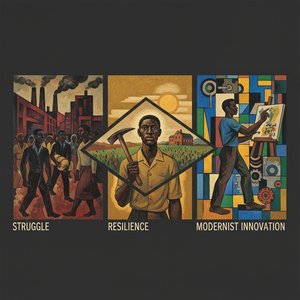
Jacob Lawrence: Narratives of Struggle, Resilience & Modernist Innovation
Explore the powerful narratives of Jacob Lawrence, a pivotal African American artist of the Harlem Renaissance. Discover his iconic 'Migration Series,' dynamic cubism style, and lasting impact on American art history.
Henry Ossawa Tanner: Pioneering African American Representation in 19th-Century Art
Explore the life and groundbreaking work of Henry Ossawa Tanner, a pioneering African American artist who achieved international acclaim with his deeply spiritual and realistic paintings. Discover his legacy at OriginalUniqueArt.