Previzualizare
 Trimite prin felicitare
 Distribuie
 Detalii despre lucrare
 Ghid
Ghid

 Descarcă imaginea
 Produse similare
 Radiografie
 Galerie foto
 Întrebări și răspunsuri
 Statistici
Surf

- 43.0 x 34.0 cm


 Vezi mai mult
Giclée / Imprimare artistică
Printuri giclée sau pe canvas de calitate muzeală, cu proces de producție rapid și opțiuni flexibile de finisare. ( Comandă pictură realizată manual Comută pe Imagine Digitală)




































Alegeți dintre dimensiunile noastre prestabilite, care respectă proporțiile originale ale operei de artă.

Introduceți lățimea și înălțimea necesare pentru a se potrivi ramei sau peretelui dumneavoastră. O printare poate fi doar tăiată, niciodată extinsă dincolo de dimensiunea imaginii originale, astfel încât o dimensiune cu o formă diferită va pierde o parte din imagine. Vă trimitem o simulare digitală pentru aprobare înainte de a imprima orice. Imaginea afișată pe această pagină nu prezintă tăierea reală — doar simularea arată acest lucru.
Livrare în întreaga lume () în 2 săptămâni, în loc de cele 4/5 săptămâni standard. (8 Noiembrie)

Livrare expres gratuită la nivel mondial

Pânză de in de înaltă calitate

Asigurare completă pentru transport

Garanție de rambursare a taxelor vamale

Garanția fidelității culorilor

Politica de retur în 100 de zile (doar pentru defecte de fabricație)

Garanție de rambursare 100%

Ofertă pentru comenzi multiple
 Opțiunea cu sticlă este disponibilă doar pentru dimensiuni de sub 110 cm

Surf
Giclée / Imprimare artistică
Dimensiune reproducere
-


Preț total calculat
lei 386
A Vision of Nature's Power: Ivan Aivazovsky’s "Surf"
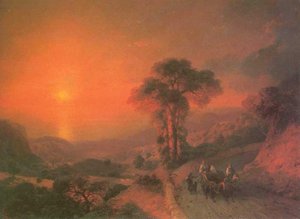
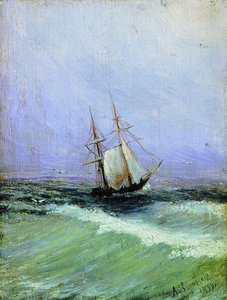
This captivating painting, “Surf,” created by Ivan Konstantinovich Aivazovsky in 1888, presents a dramatic and serene depiction of nature's raw power. The artwork showcases a majestic mountain cascading with water, rendered in striking hues of red that imbue the scene with an almost theatrical quality. Above this powerful landscape, birds soar through the sky, adding a dynamic sense of movement and life to the composition. Two figures are subtly included within the scene, hinting at human presence amidst this grand spectacle – perhaps explorers or simply observers captivated by the waterfall’s beauty. The overall effect is one of tranquil awe, inviting viewers into a world where adventure and wonder intertwine.The Romantic Style & Aivazovsky's Technique
“Surf” exemplifies the hallmarks of Romanticism, an artistic movement prevalent in the 19th century that emphasized emotion, individualism, and the sublime power of nature. Aivazovsky, considered one of the greatest masters of marine art, skillfully translates these ideals onto canvas. While primarily known for his seascapes, this work demonstrates his versatility in capturing other natural elements with equal intensity. His technique is characterized by a masterful use of light and color to create atmospheric depth and dramatic effect. The bold application of red on the mountain face isn't realistic but serves to heighten the emotional impact, drawing the eye and conveying a sense of grandeur. The loose brushwork in the sky suggests movement and vastness, while the details of the figures are rendered with a delicate touch, emphasizing their smallness against the backdrop of nature’s immensity.Historical Context & Aivazovsky's Legacy
Born in Feodosia, Crimea, to an Armenian family, Ivan Aivazovsky (1817-1900) spent his life immersed in the beauty of the Black Sea and surrounding landscapes. He received formal training at the Imperial Academy of Arts in Saint Petersburg but developed a unique style that transcended academic conventions. During the 19th century, Russia experienced significant cultural shifts, embracing Romantic ideals and fostering a renewed appreciation for national identity and artistic expression. Aivazovsky’s prolific output – estimated to be around 6,000 paintings – reflects this vibrant period. He achieved international acclaim, exhibiting his works across Europe and the United States, solidifying his reputation as a leading figure in Russian Romantic art. His ability to capture the essence of light and atmosphere made him highly sought after by collectors and institutions alike.Symbolism & Emotional Resonance
Beyond its aesthetic appeal, "Surf" carries symbolic weight. The mountain itself can be interpreted as representing strength, resilience, and enduring power. The cascading water symbolizes the constant flow of time and change, while the birds in flight represent freedom and aspiration. The inclusion of human figures subtly underscores humanity's relationship with nature – a sense of both awe and humility. Emotionally, the painting evokes feelings of serenity, wonder, and perhaps even a touch of melancholy as we contemplate the vastness of the natural world. The dramatic use of color—particularly the striking red—amplifies these emotions, creating a visually arresting and deeply moving experience for the viewer.A Timeless Addition to Any Space
This reproduction of "Surf" offers an opportunity to bring Aivazovsky’s masterful vision into your home or office. Its captivating imagery and rich symbolism make it a compelling conversation starter, while its serene atmosphere creates a sense of tranquility and inspiration. Whether you are an avid art collector, an interior designer seeking a statement piece, or simply someone who appreciates the beauty of nature, this painting is sure to resonate with you.Întrebări și răspunsuri
Pot folosi realitatea augmentată pentru a vedea "Surf" de Ivan Aivazovski în camera mea?
Pagina Previzualizare în AR pentru "Surf" de Ivan Aivazovski folosește realitatea augmentată pentru a vizualiza opera de artă în propriul tău spațiu, pe un dispozitiv compatibil.
Unde pot descărca "Surf" de Ivan Aivazovski?
Imaginea pentru "Surf" de Ivan Aivazovski poate fi descărcată de pe pagina dedicată lucrării, Descărcare: descărcare imagine digitală de înaltă rezoluție.
"Surf" de Ivan Aivazovski este o operă de artă luminoasă sau întunecată?
În ceea ce privește luminozitatea percepută, "Surf" de Ivan Aivazovski este balanced.
Biografie artist
A Life Embraced by the Waves
Ivan Konstantinovich Aivazovsky, born Hovhannes Aivazian in 1817, was more than a painter of seascapes; he was a conduit to the ocean’s soul. His very existence seemed inextricably linked to the Black Sea—a vast, unpredictable expanse that would forever dominate his artistic vision and fuel an extraordinary career spanning nearly six decades. Born in the Crimean port city of Feodosia, Aivazovsky didn't merely observe the sea; he felt it – its raw energy, sublime beauty, and inherent danger becoming the very essence of his art. From a young age, this connection was nurtured, initially by local architect Jacob Koch who recognized the boy’s talent, then blossoming within the rigorous academic environment of the Imperial Academy of Arts in Saint Petersburg. Yet, formal training alone couldn't account for the depth of Aivazovsky’s understanding; it was the constant presence of salt-laced air and the cries of gulls that truly shaped his artistic sensibility. His Armenian heritage also played a significant role, as he was baptized at the St. Sargis Armenian Church in Feodosia and maintained strong cultural ties throughout his life, occasionally incorporating Armenian themes into his expansive body of work. This dual identity—a Crimean-born Armenian artist deeply connected to both Russian and Armenian traditions—shaped his unique perspective and informed his artistic choices.The Early Years and Artistic Foundations
Aivazovsky’s early years in Feodosia were formative, providing him with an unparalleled connection to the sea. The rugged coastline, the vibrant port life, and the ever-changing moods of the Black Sea served as constant inspiration. His family's modest circumstances fostered a strong work ethic and instilled in him a deep appreciation for the simple beauty of his surroundings. Recognizing his exceptional talent at a young age, Jacob Koch, a local architect, encouraged Aivazovsky’s artistic pursuits, providing him with basic instruction and fostering his nascent abilities. This early mentorship proved crucial, laying the foundation for his future success. Subsequently, he enrolled in the Imperial Academy of Arts in Saint Petersburg, where he received formal training in classical painting techniques. While adhering to academic standards, Aivazovsky never fully embraced rigid formalism, retaining a rebellious streak that would later manifest in his innovative approach to color and composition. His time at the academy exposed him to the works of established masters, but it was his own experiences—his intimate knowledge of the sea—that ultimately shaped his artistic style.A Journey Through Europe and the Rise of a Naval Artist
In 1840, Aivazovsky embarked on a transformative journey through Europe, seeking new landscapes and artistic influences. Italy proved particularly influential, immersing him in the vibrant colors and dramatic light of the Mediterranean region. He spent several years studying with renowned Italian artists, absorbing their techniques and expanding his palette. This period marked a significant shift in his style—he began to experiment with looser brushstrokes and brighter colors, moving away from the more restrained approach of academic painting. Upon returning to Russia, Aivazovsky’s artistic trajectory took an unexpected turn when he was appointed as the main painter of the Russian Navy in 1845. This appointment provided him with unprecedented access to naval life—ships, sailors, battles, and firsthand observations—transforming his art forever. He became intimately acquainted with maritime culture, lending an unparalleled authenticity to his depictions of naval scenes. The role afforded him a unique opportunity to document significant historical events, such as the Battle of Navarino, solidifying his reputation as a leading artist of his time.Masterpieces and Artistic Style
Aivazovsky’s paintings are instantly recognizable for their romantic sensibility and technical brilliance. He possessed an extraordinary ability to capture the fleeting effects of light on water—the shimmering reflections, the dramatic contrasts between dark and light, and the ethereal beauty of a stormy sea. His seascapes are not merely representations of physical reality; they are emotional experiences—evocations of awe, wonder, and even terror. Key works such as *The Ninth Wave* (1850) exemplify his mastery of atmospheric perspective and dramatic composition, depicting a harrowing scene of shipwreck survivors battling the relentless power of the ocean. Other notable paintings include *Seascape with Full Moon*, which captures the magical quality of moonlight on the water, and *A Ship in a Stormy Sea*, showcasing his ability to convey the raw energy of a violent storm. Aivazovsky’s use of color was particularly innovative—he employed a vibrant palette of blues, greens, and whites to create luminous effects that seemed to shimmer with life. He often worked en plein air, directly from nature, capturing fleeting light effects. His technique involved applying paint in thin layers, building up the image gradually and creating a sense of depth and atmosphere.Legacy and Enduring Influence
Ivan Konstantinovich Aivazovsky stands as one of the greatest masters of marine art in Russian history—a legacy cemented by his technical skill, emotional depth, and prolific output. His paintings are celebrated not only for their aesthetic beauty but also for their ability to evoke powerful emotions and capture the essence of the sea. He significantly contributed to the development of Russian landscape painting, influencing generations of artists with his innovative techniques and dramatic compositions. Aivazovsky’s work continues to resonate with audiences worldwide, exhibited in museums and galleries across the globe. His paintings are a testament to the enduring power of nature and the human spirit—a reminder of our vulnerability in the face of the elements and our capacity for resilience and hope. He wasn't simply a painter of seascapes; he was a poet of the ocean, translating its moods, mysteries, and majesty onto canvas with unparalleled skill and passion. His influence can still be seen in contemporary marine art, demonstrating the lasting impact of this remarkable artist.
Ivan Aivazovski
1817 - 1900 , Ucraina
Detalii rapide
- Artistic Movement Or Style: Romanticism, Artă marină
- Artists Or Movements Influenced By This Artist: ['Pictură rusă romantică']
- Artists Who Influenced This Artist: ['Pictori ruși de peisaj']
- Date Of Birth: 1817
- Date Of Death: 1900
- Full Name: Ivan Konstantinovich Aivazovsky
- Nationality: Rusă-Armeană
- Notable Artworks:
- A Năvița
- Scumpie în Marea Vântoasă
- Peisaj cu Lună Plină
- Place Of Birth: Feodosia, Rusia
Articole similare
Alexei Bogolyubov: Bridging Realism & Romanticism in the Russian Landscape Tradition
Explore the captivating world of Alexei Bogolyubov, a master of Russian Realism & Romanticism. Discover his stunning landscapes, maritime scenes, and lasting influence on 19th-century art. Learn more at OriginalUniqueArt.
Fyodor Vasilyev: A Poetic Vision of Russian Landscape – Life, Legacy, and the Transience of Nature
Explore the captivating world of Fyodor Vasilyev, a pioneering Russian landscape painter. Discover his lyrical style, influential works like 'Clouds' & lasting legacy. Learn about his life, artistic journey & impact on Russian art history.

Evocations of Place: A Historical Journey Through Landscape Art
Explore the rich history of landscape art with OriginalUniqueArt. Discover renowned artists, movements like Impressionism & Romanticism, and expert guidance for collecting timeless pieces. Find your perfect serene escape today!

Peisaje Romantice Iconice: 10 Capodopere Artistice pentru Decorul de Lux
Descoperă 10 capodopere romantice iconice de Caspar David Friedrich, Turner și alți maeștri. Explorează istoria artei, emoțiile din peisaje și găsește tablouri canvas perfecte pentru decorul tău pe OriginalUniqueArt.com!

John Constable: Cele Mai Frumoase 25 de Capodopere – Artă Clasică pentru Decorul Casei Tale
Descoperă cele mai frumoase 25 de picturi ale lui John Constable, maestru al peisajului englezesc! Explorează stilul romantic, Dedham Vale și capodopere precum The Hay Wain. Reproduceri artă clasică pentru decorul casei tale – OriginalUniqueArt.com.